The short answer
Thailand held three 500-seat House elections between 2019 and 2026. Pheu Thai, Move Forward and Bhumjaithai led the respective seat counts, but only the 2026 first-place party also led the government formed immediately after the vote. Changes to the electoral formula and the expiry of the Senate’s temporary prime-minister power explain much of the difference.
Side-by-side results
How Thailand’s three elections compare
The largest House party did not always lead the government. The final column separates the prime-minister vote from the election result itself.
| Election | Electoral system | Largest House party | Seats | Turnout | Prime-minister selection |
|---|---|---|---|---|---|
| 2019 election | 350 constituency + 150 list; one ballot | Pheu Thai | 136 | 74.9% | Prayut won 500–244; House + Senate |
| 2023 election | 400 constituency + 100 list; two ballots | Move Forward | 151 | 75.7% | Pita received 324 and fell short; House + Senate |
| 2026 election | 400 constituency + 100 list; two ballots | Bhumjaithai | 192 | 71.42% | Anutin won 293–119; House only |
Chronology
A timeline of the turning points
Pheu Thai wins the largest House bloc
Thailand’s first election after the 2014 coup gives Pheu Thai 136 seats, Palang Pracharath 116 and the new Future Forward Party 81.
The joint sitting returns Prayut as prime minister
Prayut Chan-o-cha defeats Thanathorn Juangroongruangkit by 500 votes to 244 with appointed senators participating.
Future Forward is dissolved
The Constitutional Court dissolves the third-largest party, and most remaining MPs later regroup under the Move Forward name.
Move Forward finishes first
The reform party wins 151 of 500 seats under a restored two-ballot system; Pheu Thai follows with 141.
Pita falls short in the joint PM vote
Pita Limjaroenrat receives 324 votes, including only thirteen from senators, below the 375 then required.
Parliament selects Srettha Thavisin
Pheu Thai forms a different coalition without Move Forward, and the joint sitting approves its prime-ministerial candidate.
Move Forward is dissolved
The Constitutional Court dissolves the 2023 election winner; its surviving parliamentary organisation moves into the People’s Party.
The House selects Paetongtarn Shinawatra
Pheu Thai retains the premiership after Srettha’s removal, this time through a House vote held after the Senate’s transitional power expired.
Anutin becomes prime minister
Bhumjaithai leader Anutin Charnvirakul wins temporary People’s Party support under an agreement linked to dissolution and constitutional change.
The House is dissolved early
The legislature elected in 2023 ends before its full term, opening the campaign for a February election.
Bhumjaithai becomes the largest party
Bhumjaithai wins 192 seats, the People’s Party 120 and Pheu Thai 74 as turnout reaches 71.42 percent.
The elected House returns Anutin
With no Senate participation, Anutin defeats People’s Party leader Natthaphong Ruengpanyawut by 293 votes to 119, with 86 abstentions.
What changed across Thailand’s three elections?
The 2019, 2023 and 2026 contests each filled a 500-member House, but they did not operate under identical rules. In 2019, one ballot selected a constituency candidate and also contributed to a party’s overall seat entitlement. The House had 350 constituency MPs and 150 party-list MPs. Constitutional amendments changed the next two contests to separate constituency and party ballots, with 400 local seats and 100 list seats.
The route from election result to premiership changed just as importantly. Transitional section 272 of the 2017 Constitution allowed the appointed Senate to join MPs in the 2019 and 2023 prime-minister votes. That five-year authority later expired. By 2026, only the elected House selected the premier, separating the third contest from the first two even though the 2017 Constitution still governed the broader system.
Why did Pheu Thai win the most seats in 2019 but not govern?
Pheu Thai won 136 seats in 2019, the largest total, while Palang Pracharath won 116 and Future Forward 81. Pheu Thai and Future Forward announced an opposition alliance, but their final combined bloc held 245 seats. Palang Pracharath assembled a broader coalition with Bhumjaithai, the Democrat Party and smaller parties, making the House arithmetic much closer than the first-place ranking alone suggested.
The decisive vote used the combined House and Senate. Prayut, the 2014 coup leader and Palang Pracharath nominee, received 500 votes against 244 for Future Forward leader Thanathorn. The constitutional procedure was valid under the transitional charter, but the appointed chamber gave the post-coup camp an advantage that cannot be understood from House seats alone. In this cycle, the largest party, coalition leader and selected prime minister were three different ideas.
Why did Move Forward’s 2023 victory not produce a government?
Move Forward won 151 seats in 2023 and formed an eight-party alliance controlling 313 elected MPs. Pheu Thai placed second with 141, followed by Bhumjaithai on 71. Under a House-only majority rule, the alliance had enough votes. Transitional section 272, however, still applied to the prime-minister selection because the initial National Assembly’s five-year window had not yet ended.
Pita received 324 votes at the 13 July joint sitting—311 from MPs and thirteen from senators—and therefore missed the 375 then required. After parliament blocked another nomination, Pheu Thai left the alliance and built a coalition with parties linked to the outgoing government. Srettha Thavisin became prime minister. Move Forward remained the largest opposition party until its 2024 dissolution, when most surviving MPs continued as the People’s Party.
What made the 2026 result different?
Bhumjaithai’s 192 seats in 2026 made it the largest party by a wider margin than any first-place party in the previous two contests. The People’s Party won 120, Pheu Thai 74 and Kla Tham 58. Bhumjaithai still fell short of the 251 needed for a House majority, so Anutin formed a coalition with Pheu Thai and smaller partners rather than governing alone.
The prime-minister vote was now confined to the elected chamber. On 19 March, Anutin received 293 votes, Natthaphong 119 and 86 MPs abstained. This did not turn Thailand into a direct presidential system: voters still elected MPs, parties negotiated a coalition and the House selected the premier. It did mean that appointed senators no longer supplied votes in the final choice.
How did the electoral system affect party seats?
The 2019 single-ballot formula tried to relate each party’s total House entitlement to its nationwide constituency vote, then subtracted constituency seats already won. Pheu Thai’s strength in local races left it with no party-list seats, while the allocation spread representation across twenty-six parties. Critics argued that the formula favoured small parties and made coalition formation more fragmented.
The 2023 and 2026 systems separated the choices. A voter could select one constituency candidate and a different party on the list ballot. Constituency success no longer reduced list allocation through the old compensatory calculation. That is why the comparison should not treat raw national party votes or the split between local and list seats as directly interchangeable across all three elections.
What does turnout reveal?
Turnout stayed above seventy percent in all three contests: 74.9 percent in 2019, 75.7 percent in 2023 and 71.42 percent in 2026. The 2023 election therefore recorded the highest rate of the three, with 39,514,973 voters from a register of 52,195,920 in the IPU record. These figures show sustained mass participation despite repeated party dissolutions, coalition reversals and constitutional disputes.
Turnout is not a complete measure of electoral quality. Election observers also examine campaign freedoms, institutional neutrality, counting transparency, legal pressure and whether voters can translate preferences into government. The 2019 and 2026 ANFREL reports raised different concerns while recognising real participation and functioning polling. A comparison should preserve both the official totals and the wider conditions in which they were produced.
What does “winning” a Thai election mean?
Three measures are commonly compressed into the word winner: the party with the most seats, the coalition able to command the House and the candidate eventually selected as prime minister. Pheu Thai led the seat count in 2019, but a Palang Pracharath-led coalition supported Prayut. Move Forward led in 2023, but Pheu Thai reorganised the coalition and installed Srettha. Bhumjaithai led in 2026 and also led the coalition that returned Anutin.
This distinction is essential for search summaries and historical writing. Saying only that one party “won” can conceal why another party governed. Saying that the result was simply reversed can conceal legitimate coalition bargaining. The accurate account reports seat leadership first, then explains majority formation, constitutional thresholds and the separate prime-minister vote.
What political continuity connects the three cycles?
A reform-party lineage runs from Future Forward’s 81-seat breakthrough in 2019 to Move Forward’s 151-seat victory in 2023 and the People’s Party’s 120 seats in 2026. Each organisation was legally distinct, and two predecessor parties were dissolved. The continuity lies in many MPs, voters and policy themes rather than an unchanged legal entity.
A second line connects Pheu Thai’s continuing electoral strength with changing coalition roles, while a third traces Bhumjaithai’s growth from 51 seats in 2019 to 71 in 2023 and 192 in 2026. Across all three cycles, election rules, courts, appointed institutions and coalition strategy mattered alongside voter choice. That combination explains why Thailand’s political history cannot be reduced to a single party ranking.
Continue the chronology
Related history guides
The 2019 Thai General Election
Read the final seats, single-ballot formula, coalition arithmetic and Prayut’s joint parliamentary vote.
Read the timeline14 May 2023The 2023 Thai General Election
Follow Move Forward’s victory, Pita’s failed vote, Pheu Thai’s coalition and later court rulings.
Read the timeline7–9 August 2024The Dissolution of the Move Forward Party
Examine the legal break between Move Forward’s 2023 victory and the People’s Party’s appearance in the 2026 contest.
Read the timeline8 February 2026The 2026 Thai General Election
Examine Bhumjaithai’s first-place result, final party seats and Anutin’s House-only return.
Read the timeline6 April 2017–presentThailand’s 2017 Constitution
Understand the House design, transitional Senate power, amendment rules and electoral changes.
Read the timeline2020–2021The 2020 Thai Youth Protests
Connect Future Forward’s dissolution to a wider movement for political and constitutional reform.
Read the timeline8 February 2026The 2026 Constitutional Referendum
Read the separate new-charter question decided on the same day as the third election.
Read the timeline1932–presentPrime Ministers of Thailand
Compare the routes to office of Prayut, Srettha, Paetongtarn, Anutin and every earlier premier.
Read the timeline1851–presentThailand History Timeline
Place the elections inside the longer history of constitutions, coups, protest and coalition government.
Read the timelineBiography context
Explore Thailand through connected lives
Connected biographies
Ten biographies connecting the largest parties, coalition reversals and three prime-minister selections
 Thailand · Politics
1954—
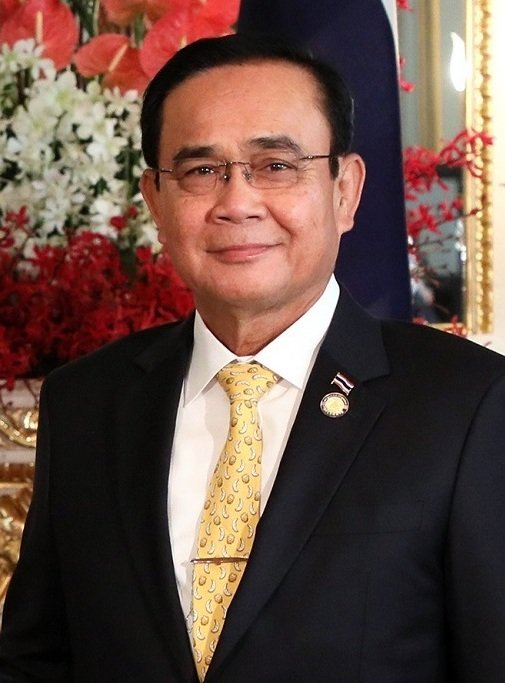
Prayut Chan-o-cha
29th Prime Minister of Thailand, 2014–2023The army commander who seized power in 2014, led Thailand’s military government and remained prime minister after the 2019 election until 2023.Read biography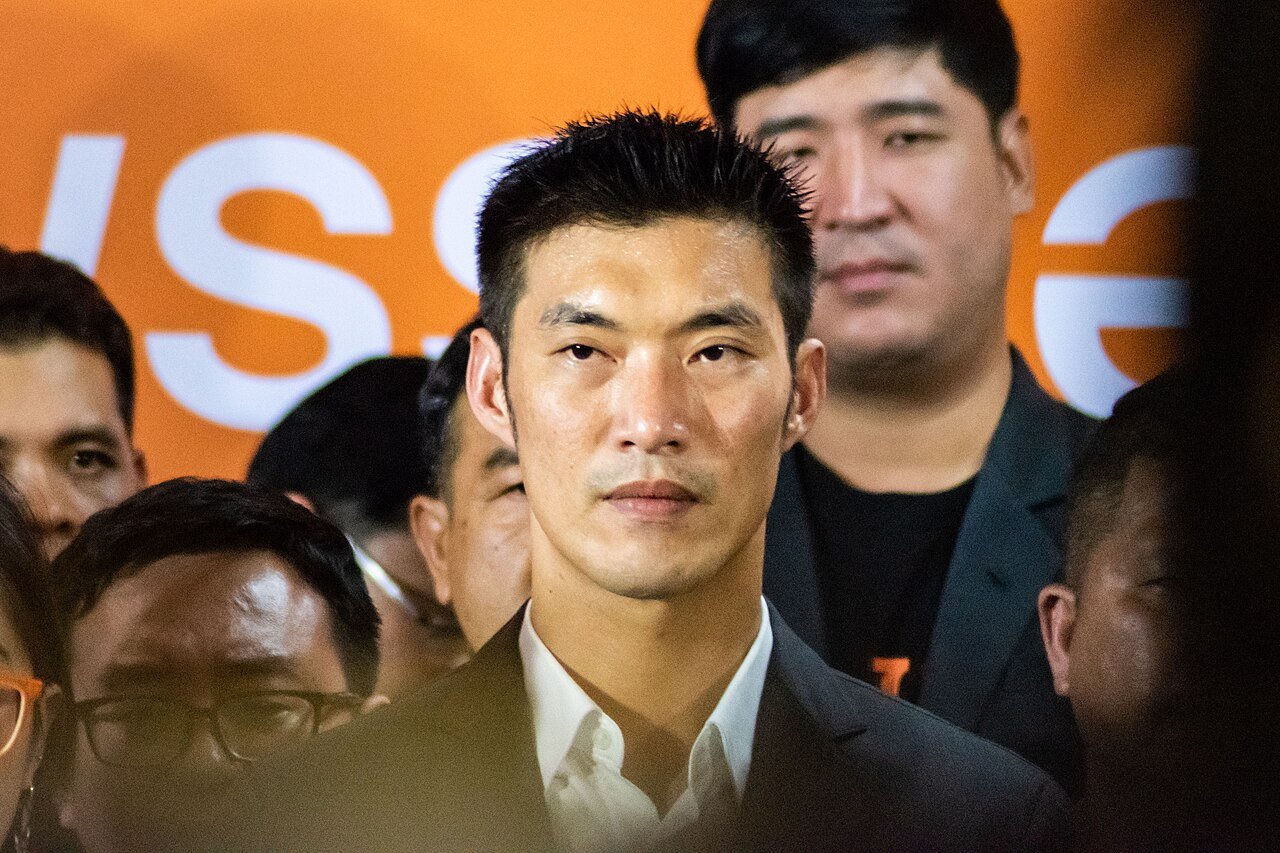 Thailand · Politics
1978—
Thanathorn Juangroongruangkit
Founder of Future Forward and leader of the Progressive MovementThe former automotive executive who founded Future Forward, challenged military influence and continued reform campaigning after the party’s dissolution.Read biography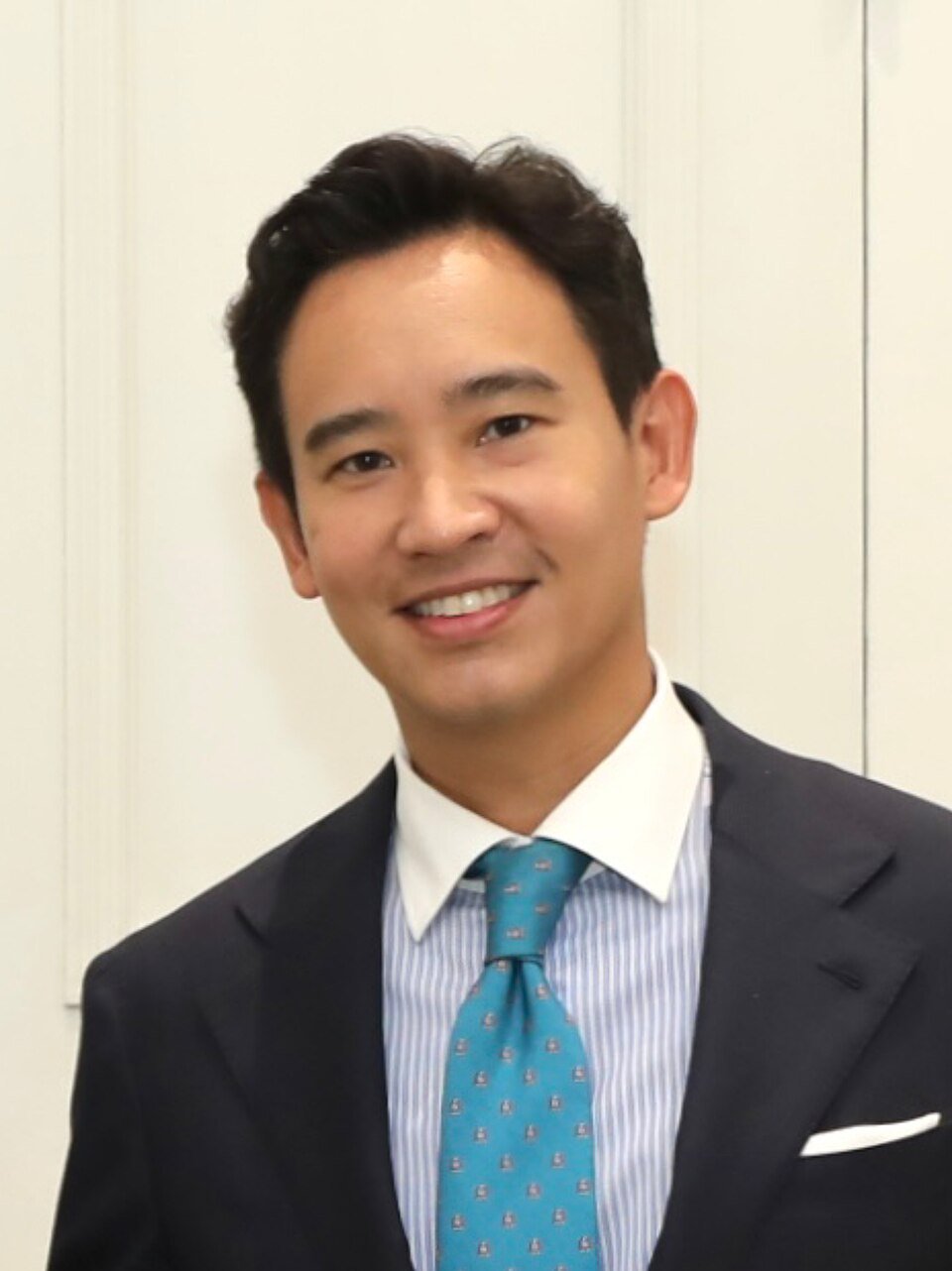 Thailand · Politics
1980—
Pita Limjaroenrat
Former Move Forward Party leader and 2023 prime-ministerial candidateThe business-trained reform politician who led Move Forward to 151 House seats in 2023 but was blocked from the premiership before the party was dissolved.Read biography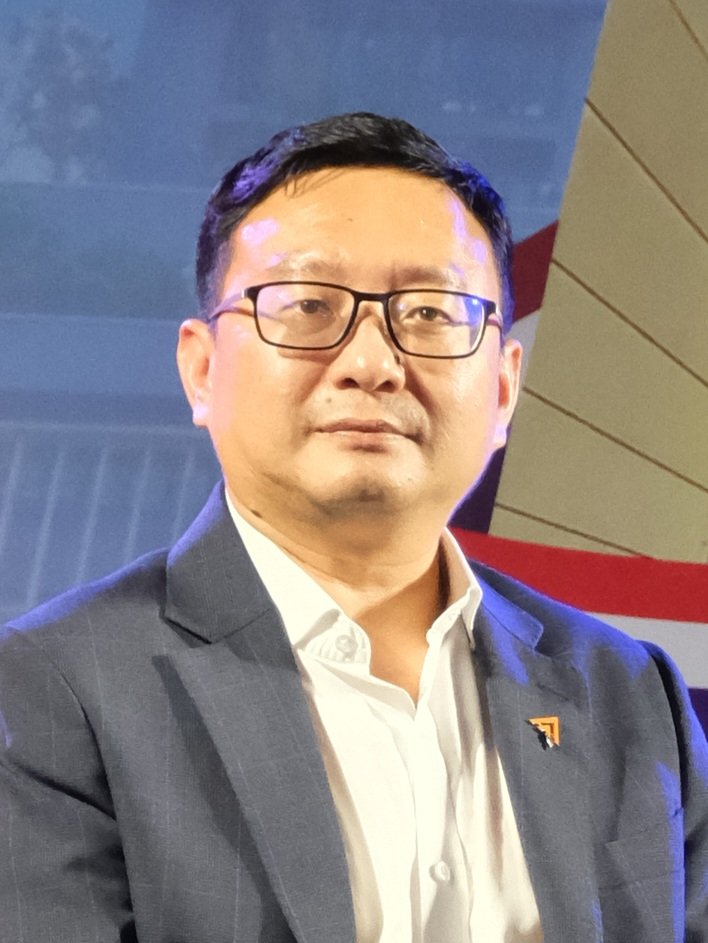 Thailand · Politics
1978—
Chaithawat Tulathon
Former Move Forward Party leader and leader of the oppositionThe engineer, editor and political organiser who became Move Forward’s secretary-general, party leader and Thailand’s tenth formal leader of the opposition.Read biography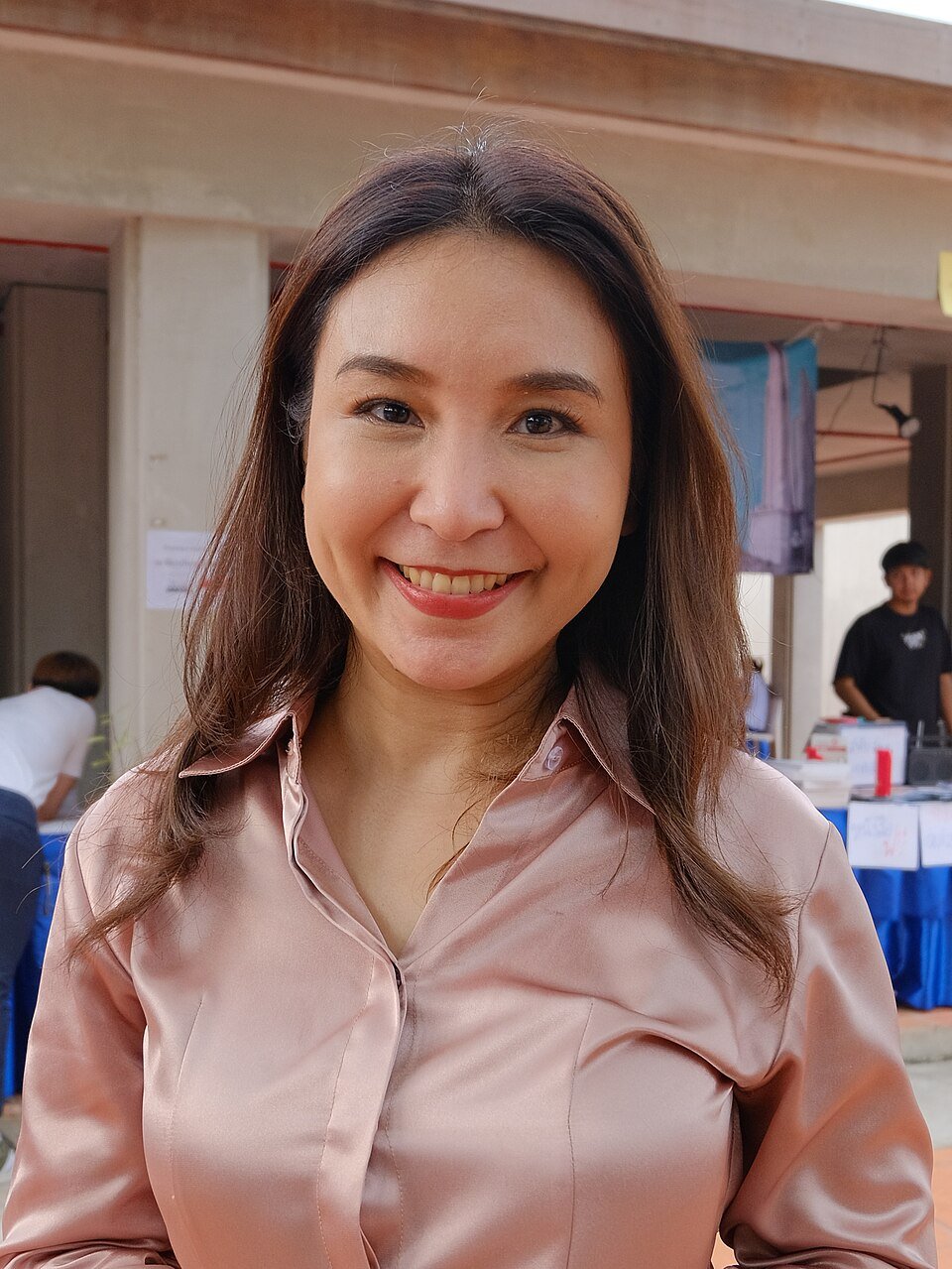 Thailand · Politics
1981—
Sirikanya Tansakun
Deputy leader of the People’s Party and party-list MPThe economist and policy researcher who became one of Thailand’s most visible parliamentary budget critics, a 2026 prime-ministerial candidate and the People’s Party lead on state reform.Read biography Thailand · Politics
1987—
Natthaphong Ruengpanyawut
Leader of Thailand’s People’s Party and opposition leaderA computer engineer and cloud entrepreneur who became leader of Thailand’s People’s Party, led it to 120 House seats in 2026 and remained the central opposition figure.Read biography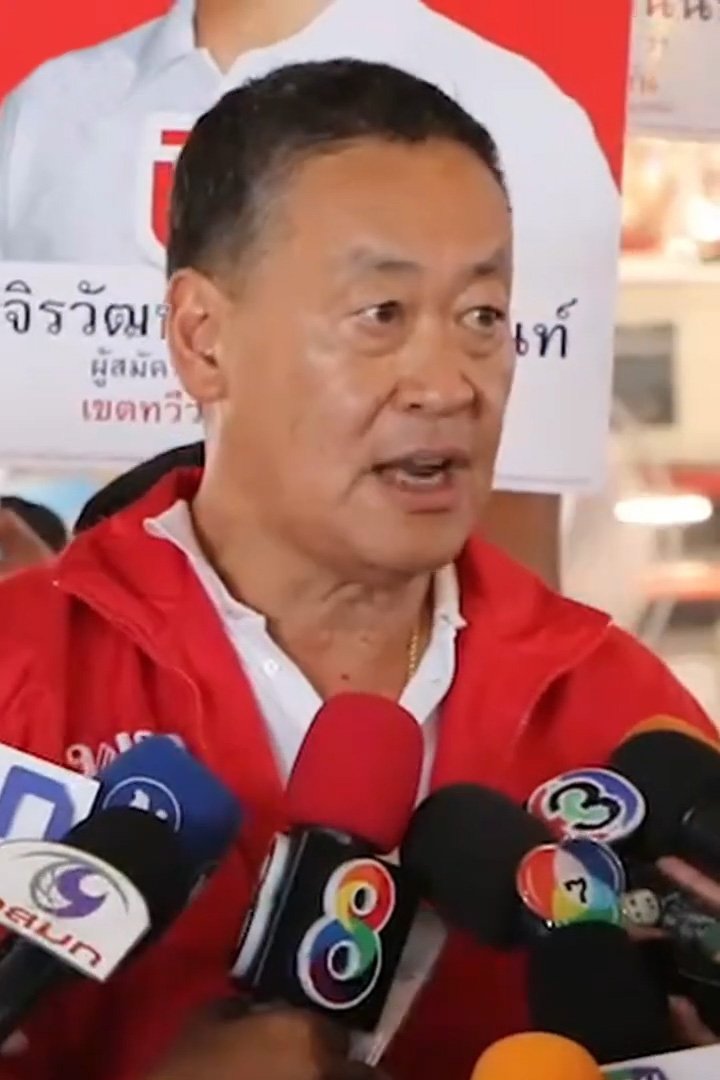 Thailand · Politics
1962—
Srettha Thavisin
30th Prime Minister of Thailand, 2023–2024The property executive who entered party politics in 2022, became Thailand’s 30th prime minister after the 2023 election and was removed by the Constitutional Court in 2024.Read biography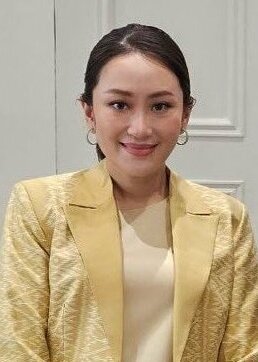 Thailand · Politics
1986—
Paetongtarn Shinawatra
31st Prime Minister of Thailand, 2024–2025The hotel executive and Pheu Thai leader who became Thailand’s youngest prime minister in 2024 before a Constitutional Court ethics ruling ended her tenure in 2025.Read biography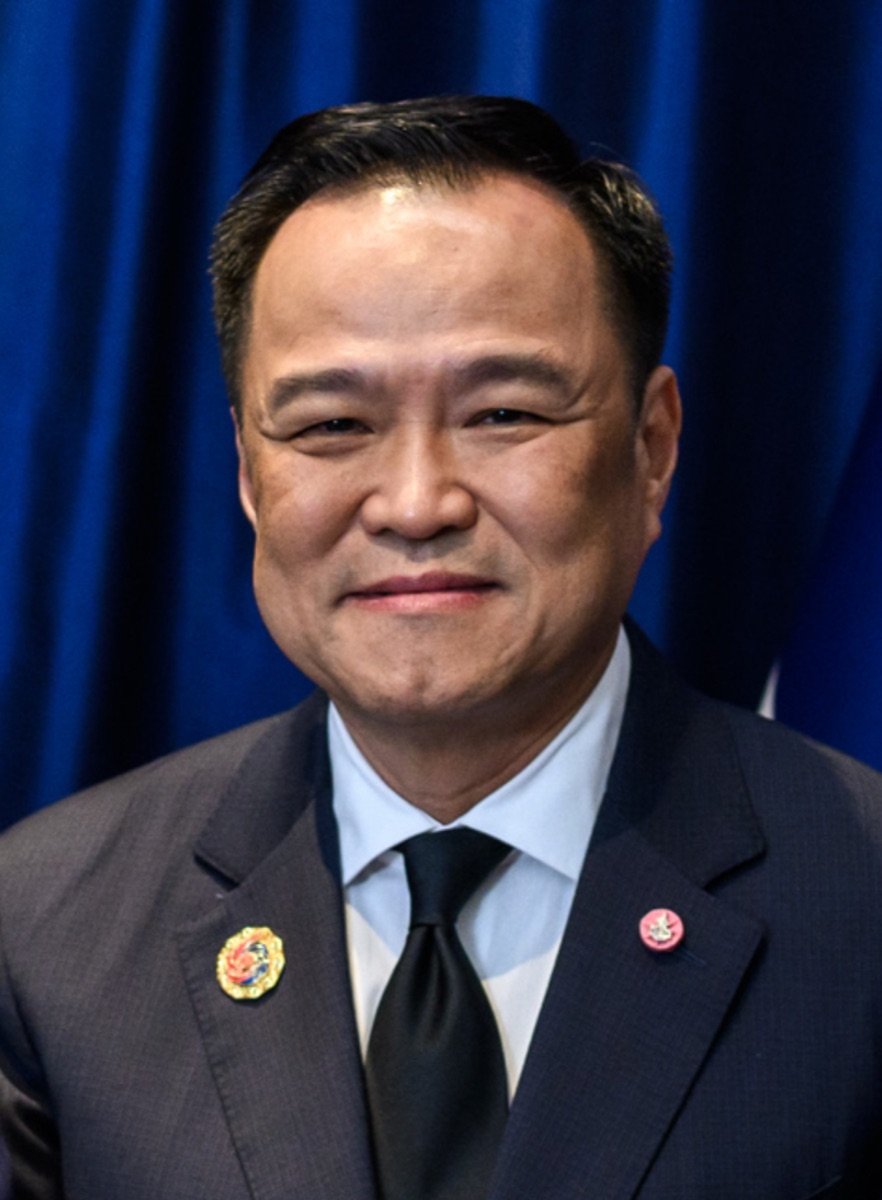 Thailand · Politics
1966—
Anutin Charnvirakul
32nd Prime Minister of ThailandA businessman-turned-politician who led Bhumjaithai through successive coalitions, became Thailand’s 32nd prime minister in 2025 and won a second appointment after the 2026 election.Read biography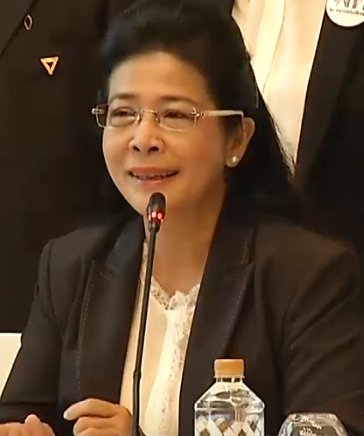 Thailand · Politics
1961—
Sudarat Keyuraphan
Former public health minister and party leaderA former public health and agriculture minister who helped implement Thailand’s universal coverage scheme before later leading Pheu Thai’s 2019 campaign and Thai Sang Thai.Read biographyQuick answers
Common questions
- Which party won the most seats in Thailand’s 2019, 2023 and 2026 elections?
- Pheu Thai won the most seats in 2019 with 136, Move Forward led in 2023 with 151, and Bhumjaithai led in 2026 with 192.
- Which of the three elections had the highest turnout?
- The 2023 election had the highest turnout at 75.7 percent, compared with 74.9 percent in 2019 and 71.42 percent in 2026.
- How did Thailand’s election system change after 2019?
- The 2019 election used one ballot to fill 350 constituency and 150 party-list seats. The 2023 and 2026 elections used separate constituency and party ballots for 400 constituency and 100 list seats.
- Did Thailand’s Senate vote for prime minister after every election?
- No. The appointed Senate joined the House in the 2019 and 2023 selections under a temporary constitutional provision. That power had expired before the 2026 post-election vote, so only the House participated.
- Why did the largest party not always form the government?
- Thailand is a parliamentary system requiring majority support and coalition bargaining. In 2019 and 2023, the appointed Senate also joined the prime-minister vote, so leading the House seat count did not guarantee control of government.
- Who became prime minister after each election?
- Prayut Chan-o-cha remained prime minister after the 2019 vote, Srettha Thavisin was selected after the 2023 coalition reversal, and Anutin Charnvirakul was returned after the 2026 election.
Primary and institutional sources
How this history was checked
Dates, legal milestones and historical claims are checked against the official and institutional records below. This article was reviewed on 3 October 2026.
- Inter-Parliamentary UnionThailand House of Representatives election, 24 March 2019
- Inter-Parliamentary UnionThailand House of Representatives election, 14 May 2023
- Inter-Parliamentary UnionThailand House of Representatives election, 8 February 2026
- Election Commission of ThailandOfficial summary of 2026 constituency and party-list results
- Election Commission of ThailandConstitution of the Kingdom of Thailand B.E. 2560 (2017)
- National Assembly of ThailandJoint sitting report for the prime-minister vote, 13 July 2023
- Public Relations Department of ThailandAnutin Charnvirakul elected prime minister with 293 votes
- Asian Network for Free ElectionsThe 2019 Thai General Election: A Missed Opportunity for Democracy
- Asian Network for Free ElectionsQuestions of Trust, Demands for Accountability: Thailand 2026
- Wikimedia CommonsPita Limjaroenrat portrait and public-domain record