The short answer
Thailand’s 2020 protest movement began with campus flash mobs and returned from a pandemic pause as a nationwide, youth-led challenge to the post-coup political order. Its three demands soon opened an unprecedented public debate about monarchy reform. The movement was decentralised, politically diverse and independent of the reform parties whose rise helped create its context.
Chronology
A timeline of the turning points
The Constitutional Court dissolves Future Forward
The court dissolved the third-largest House party over loans from its leader, Thanathorn Juangroongruangkit, and banned sixteen executives for ten years.
Campus flash mobs spread
Students at universities and some secondary schools organised decentralised demonstrations against the dissolution and the wider post-coup political order.
A COVID-19 emergency decree takes effect
Public-health restrictions and fear of infection paused street mobilisation; emergency powers later also shaped official responses when rallies resumed.
Free Youth returns to Democracy Monument
A large Bangkok rally demanded dissolution of parliament, a new constitution and an end to official intimidation of government critics.
Monarchy reform enters open protest debate
At a Harry Potter-themed rally, lawyer Arnon Nampa publicly called for reform of the monarchy, expanding the movement’s agenda beyond the three initial demands.
Thammasat rally presents ten proposals
Students at Rangsit campus read ten proposals for changing the monarchy’s legal, financial and political relationship with democratic government.
A mass rally occupies Sanam Luang
Tens of thousands gathered near the Grand Palace, and organisers installed a symbolic plaque declaring that the country belonged to the people.
March, motorcade encounter and severe emergency
A mass march coincided with an encounter between protesters and a royal motorcade; the government then imposed a severe emergency and cleared the protest camp.
Police use water cannon at Pathumwan
Police dispersed a largely peaceful crowd with water cannon containing chemical irritants, prompting criticism from rights groups and UN experts.
Clashes occur near parliament
Police used water cannon and tear gas as protesters sought to reach parliament, while confrontations also occurred between reform protesters and royalist groups.
Article 112 prosecutions resume
Authorities began bringing lèse-majesté cases against protest leaders and participants after several years without new prosecutions under the provision.
Why did a youth-led movement emerge in 2020?
The immediate catalyst was the Constitutional Court’s dissolution of the Future Forward Party on 21 February. Future Forward had won 81 House seats in the 2019 election and attracted many younger voters with proposals to reduce military influence, decentralise government and rewrite the constitution. Its removal convinced many students that an election alone had not displaced institutions created after the 2014 coup.
The party case was a catalyst rather than a complete cause. Young organisers also criticised Prime Minister Prayut Chan-o-cha’s continuation in office through a constitution written under military rule, the 250-member appointed Senate, economic inequality and official pressure on dissidents. Campus flash mobs appeared without one central command, then stopped as COVID-19 restrictions made large gatherings unsafe and legally difficult.
What were the protesters’ three core demands?
When Free Youth organised a major rally at Bangkok’s Democracy Monument on 18 July, the movement presented three demands: dissolve parliament, prepare a genuinely democratic constitution and end harassment of government critics. These demands linked an immediate change of government to institutional reform and protection for people using political speech.
The networked movement had no single leader able to bind every group. Free Youth, Free People, United Front of Thammasat and Demonstration, Bad Student and local coalitions used different names, tactics and priorities. Social media made rapid coordination possible, while the three-finger salute, pop-culture references and rotating stages allowed participation without reproducing a conventional party hierarchy.
How did monarchy reform become part of the agenda?
Lawyer Arnon Nampa broke a powerful political taboo at the 3 August Harry Potter-themed rally by arguing openly for reform of the monarchy. On 10 August, the United Front of Thammasat and Demonstration presented ten proposals, including constitutional limits, transparency over royal finances, ending official promotion of one-sided royal publicity and abolishing or reforming laws used against criticism.
The proposals asked for institutional reform rather than abolition, but opponents accused organisers of threatening the constitutional order. Many demonstrators accepted the slogan that the monarchy should exist under the constitution; others preferred to remain with the original three demands. A careful account therefore distinguishes the ten-point statement from every participant’s personal position and attributes legal or political characterisations to the institutions making them.
Who participated and how broad was the coalition?
University students supplied many visible organisers, but the movement widened to secondary-school pupils, LGBTQ+ groups, labour activists, lawyers, artists and older democracy campaigners. Bad Student challenged authoritarian school rules alongside national politics. Pride symbolism and calls for gender equality made the gatherings socially broader than a single constitutional campaign.
Turnout varied by date and source. The 19 September rally at Sanam Luang drew tens of thousands and became one of the largest demonstrations since the 2014 coup. It did not, however, reproduce the durable provincial machinery of the Red Shirt movement. The 2020 coalition was strongest as a flexible public arena: many networks shared a democratic direction while retaining separate identities and strategies.
How did the government respond?
Authorities used emergency rules, public-assembly law, sedition provisions and other offences to arrest or charge organisers. After the 14 October march and the royal motorcade encounter, the government declared a severe emergency in Bangkok, banned gatherings of five or more people and restricted publication of material said to threaten security. Police cleared the main protest site early the next morning.
On 16 October, police used water cannon and chemical irritants against a crowd that included many students. Force and arrests did not immediately end mobilisation, but repeated cases raised the cost of participation. From late November, authorities again used Penal Code Article 112, which carries severe penalties for insulting or threatening the king, queen, heir or regent. Human-rights monitors documented extensive prosecutions of leaders and ordinary participants over the following years.
What did the 2020 protests change?
The movement did not secure parliament’s dissolution or its proposed constitution. It did change the boundaries of public discussion by making monarchy reform, military power, school authority and generational inequality subjects of sustained mass debate. Parliamentary consideration of constitutional amendments and official investigations unfolded within that new pressure, even when the protesters’ preferred institutional changes were blocked.
The protests also formed part of the political setting for Move Forward’s first-place finish in the 2023 election, but they were not a party campaign and cannot be credited to Thanathorn, Pita or any single organisation. Their legacy lies in independent networks, new political language and a large prosecution record, as well as the unresolved question of how demands raised on the street can be translated into durable constitutional change.
Continue the chronology
Related history guides
The 2019 Thai General Election
Trace Future Forward’s breakthrough and dissolution before the youth-led mobilisation began.
Read the timeline22 May 2014The 2014 Thai Coup
Trace the military takeover and constitutional system that shaped the protesters’ demands.
Read the timeline6 April 2017–presentThailand’s 2017 Constitution
Examine the charter whose amendment or replacement became a central protest demand.
Read the timeline14 May 2023The 2023 Thai General Election
Follow the reform vote, Pita’s blocked premiership and the later dissolution of Move Forward.
Read the timeline7–9 August 2024The Dissolution of the Move Forward Party
Connect the movement after Future Forward’s dissolution to Move Forward’s later ruling and parliamentary successor.
Read the timeline8 February 2026The 2026 Constitutional Referendum
Continue to the national vote authorising the start of a new-constitution process.
Read the timeline1851–todayThailand History Timeline
Place the demonstrations inside a longer chronology of constitutional rupture and civic mobilisation.
Read the timeline1932–todayThai Political Turning Points
Compare the people and institutions involved in Thailand’s major changes of political direction.
Read the timelineConnected biographies
Four biographies connecting party dissolution, protest-era reform and the government in power
 Thailand · Politics
1978—
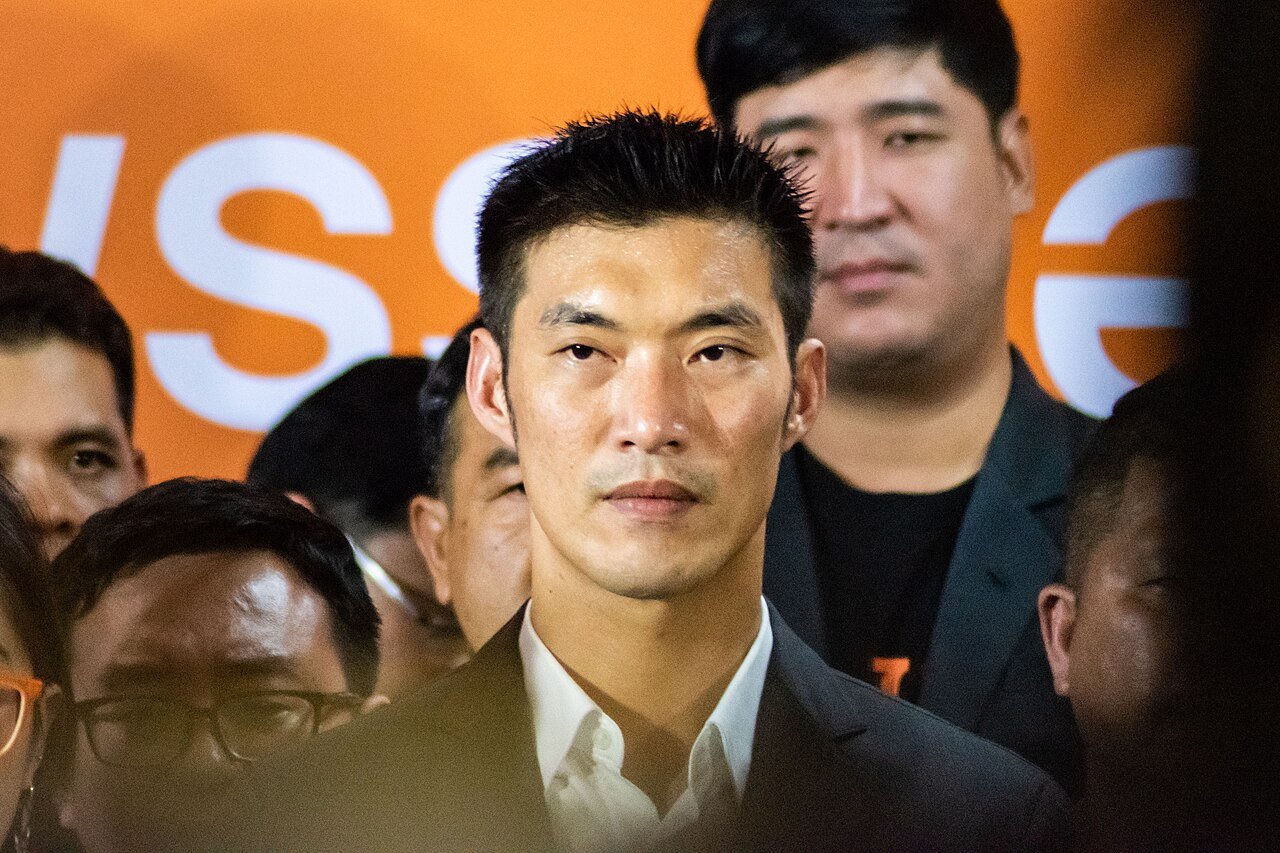
Thanathorn Juangroongruangkit
Founder of Future Forward and leader of the Progressive MovementThe former automotive executive who founded Future Forward, challenged military influence and continued reform campaigning after the party’s dissolution.Read biography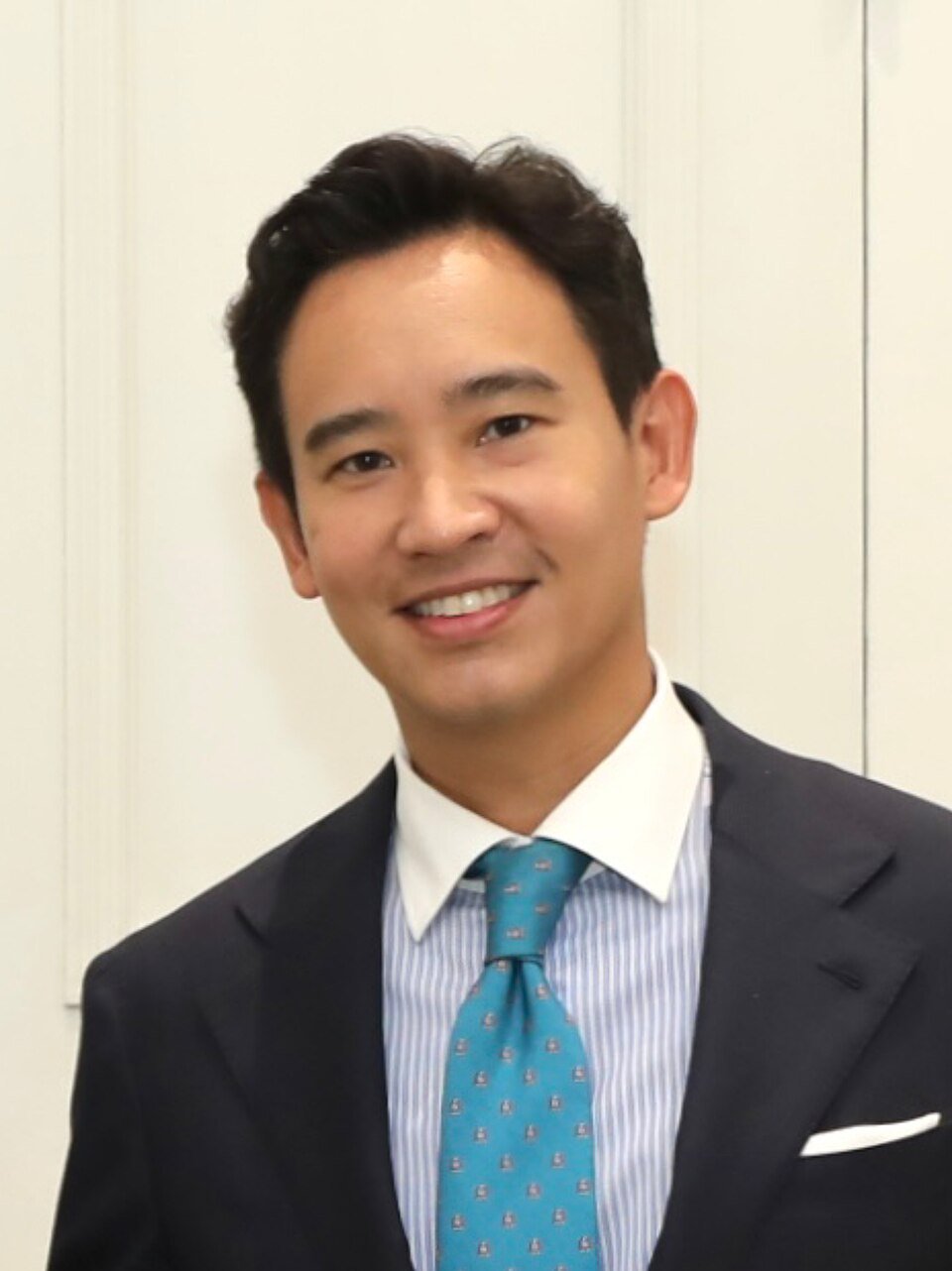 Thailand · Politics
1980—
Pita Limjaroenrat
Former Move Forward Party leader and 2023 prime-ministerial candidateThe business-trained reform politician who led Move Forward to 151 House seats in 2023 but was blocked from the premiership before the party was dissolved.Read biography Thailand · Politics
1978—
Chaithawat Tulathon
Former Move Forward Party leader and leader of the oppositionThe engineer, editor and political organiser who became Move Forward’s secretary-general, party leader and Thailand’s tenth formal leader of the opposition.Read biography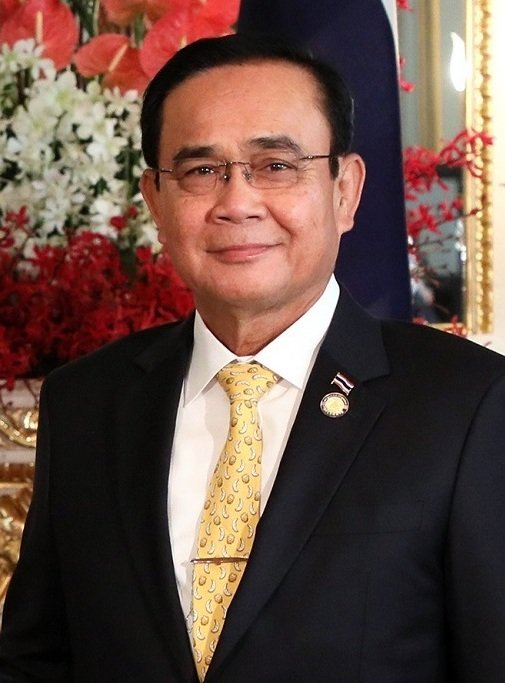 Thailand · Politics
1954—
Prayut Chan-o-cha
29th Prime Minister of Thailand, 2014–2023The army commander who seized power in 2014, led Thailand’s military government and remained prime minister after the 2019 election until 2023.Read biographyQuick answers
Common questions
- What started the 2020 Thai protests?
- Future Forward’s dissolution in February helped trigger campus flash mobs, but the wider movement also opposed the post-2014 political system, the appointed Senate, constitutional rules and official harassment of critics.
- What were the three demands of Thailand’s youth protesters?
- The July movement demanded dissolution of parliament, a new democratic constitution and an end to intimidation or harassment of people criticising the government.
- What were the ten monarchy-reform proposals?
- A student group proposed changes involving constitutional authority, royal finances, political intervention, official publicity and laws restricting criticism. The proposals advocated institutional reform rather than abolition of the monarchy.
- Were the 2020 protests organised by Future Forward?
- No. The party’s dissolution was an important catalyst, but student and activist networks organised the demonstrations independently. Thanathorn and allied reformers supported democratic change without controlling the movement.
- Why did police use water cannon on 16 October?
- Authorities said the gathering violated the severe emergency declaration. Rights groups and UN experts criticised the use of water cannon and chemical irritants against a largely peaceful crowd as unnecessary and disproportionate.
- What happened to the protest movement after 2020?
- Rallies continued with lower and fluctuating turnout while organisers and participants faced extensive criminal cases. The demands also remained visible in later parliamentary politics and the 2023 election.
Primary and institutional sources
How this history was checked
Dates, legal milestones and historical claims are checked against the official and institutional records below. This article was reviewed on 3 October 2026.
- Human Rights WatchWorld Report 2021: Thailand
- Human Rights WatchWorld Report 2022: Thailand
- UN Special ProceduresCommunication concerning the 2020 protest response in Thailand
- Human Rights WatchThailand’s Rights Crisis Rapidly Worsens
- Inter-Parliamentary UnionThailand House election, March 2019
- Constitutional Court of ThailandRuling No. 1/2563 rejecting an allegation that Future Forward sought to overthrow the constitutional order
- Wikimedia CommonsThanathorn Juangroongruangkit portrait and licence record