
The short answer
Thailand’s 2026 referendum gave a nationwide mandate to begin replacing the 2017 Constitution. More than 21.6 million voters agreed, but the ballot did not contain a finished new charter. Parliament must still establish a lawful drafting process, and voters must later approve the completed text.
Complete result
How every referendum ballot was classified
Publishing all four categories avoids inflating approval by silently excluding no-opinion and invalid ballots.
| Ballot category | Votes | Share of participants |
|---|---|---|
| Agree | 21,622,029 | 58.64% |
| Disagree | 11,231,161 | 30.46% |
| No opinion | 3,074,462 | 8.34% |
| Invalid | 942,648 | 2.56% |
Chronology
A timeline of the turning points
The Constitutional Court requires public approval
A ruling establishes that replacing the entire constitution must begin with a referendum rather than ordinary parliamentary amendment alone.
The Court clarifies a multi-referendum process
The Court says Parliament may initiate a new charter but public votes are required at key stages; the first two questions may be combined.
Constitutional reform enters the government bargain
Anutin Charnvirakul becomes prime minister with opposition support tied to dissolution and a public vote on a new constitution.
The House is dissolved
A new general election timetable allows the constitutional question to be placed before voters on the same national polling day.
The referendum date is formally announced
A Royal Gazette notice confirms 8 February as election and referendum day.
Thailand votes on beginning a new charter
Voters receive a separate referendum ballot alongside constituency and party-list election ballots.
The Election Commission publishes final totals
Official figures record 21,622,029 agree votes and 11,231,161 disagree votes from 36,870,302 participants.
The Commission defends the result process
The Election Commission explains that announcement of the referendum outcome followed the governing statute.
ANFREL publishes its final observation report
The regional observer mission describes an orderly polling day while identifying communication and transparency weaknesses.
The 2017 Constitution remains in force
The referendum has authorised a replacement process, but drafting and later approval stages are not yet a promulgated new constitution.
Why did Thailand hold another constitutional referendum in 2026?
The 2017 Constitution was drafted under the post-2014 military order. Its first appointed Senate joined MPs in selecting prime ministers, its amendment thresholds gave the upper chamber substantial leverage and its national strategy preserved parts of the junta’s policy framework. Although the Senate’s special prime-minister power expired in 2024, campaigns for a fully rewritten charter continued.
Constitutional Court rulings required public consent before Parliament could replace the whole text. After another period of government instability, the political agreement that brought Anutin Charnvirakul to office in September 2025 included an early dissolution and a referendum on beginning a new constitution. The vote was scheduled with the 8 February 2026 general election.
What exactly did the referendum ask voters?
The referendum asked whether voters agreed that Thailand should have a new constitution. It was a question of principle, not approval of a completed draft. Voters were deciding whether the formal replacement process should begin; they were not choosing the final wording of rights, institutions, electoral rules or the monarchy chapters.
This distinction prevents two opposite errors. A yes vote was more consequential than an opinion poll because it supplied the public authorisation required for redrafting. It was also less final than the 2016 vote, which placed a complete draft before voters. The 2017 Constitution did not disappear when the 2026 result was announced.
What were the official 2026 referendum results?
The Election Commission’s final press release records 52,355,610 eligible voters and 36,870,302 participants, a turnout of 69.65 percent. There were 21,622,029 agree votes, equal to 58.64 percent of participants, and 11,231,161 disagree votes, about 30.46 percent.
A further 3,074,462 ballots expressed no opinion and 942,648 were invalid, representing about 8.34 and 2.56 percent of participants. Reporting only the share among yes and no votes produces a larger approval percentage, so this page uses the Commission’s full-participation denominator and publishes every ballot category.
How did holding an election and referendum together matter?
Voters received separate ballots for constituency MP, party preference and the constitutional question. A concurrent national poll reduced the need for another standalone voting day and placed institutional reform directly beside competition for government. It also meant campaign messages about parties, prime-minister choices and the charter could influence one another.
ANFREL observed the election and referendum across thirty-one provinces. Its final report described committed voters, competent polling staff and generally open polling stations, while also raising concerns about Election Commission communication, access to tabulation and broader trust. The assessment supports treating election-day administration and the longer information environment as separate questions.
Why were further referendums expected after the yes vote?
The Constitutional Court’s September 2025 clarification described three required moments of public approval: consent in principle to replace the charter, approval connected to the amendment route and approval of the completed new text. It also said the first and second referendum stages could be combined, reducing the number of separate polling days under an appropriate process.
The February 2026 vote supplied the first public mandate. Parliament still has to create a lawful drafting mechanism and settle questions about who selects the drafters, what parts of the charter may be revised and how the draft reaches final approval. A later vote on the finished text remains essential because voters have not yet seen the constitution that could replace the existing one.
Did voters elect a constituent assembly?
No. The referendum ballot asked whether a new constitution should be created; it did not directly elect constitutional drafters. The Constitutional Court’s 2025 ruling also complicated proposals for Parliament simply to arrange a direct popular election of a sovereign drafting assembly. Political actors have therefore debated indirect, parliamentary and mixed forms of public participation.
The composition of a drafting body matters because process shapes trust in the resulting text. A body dominated by the governing coalition, Senate or appointed experts could reproduce concerns attached to earlier post-coup charters. A broader process could improve representation but must still operate within the Court’s rulings and valid constitutional amendments.
What happens to the 2017 Constitution now?
It remains the supreme law while the replacement process proceeds. The House, Senate, courts, independent agencies and cabinet continue to exercise powers under the existing amended text. Ordinary legislation and government action do not wait for a future draft, and the referendum itself did not suspend any current constitutional provision.
If Parliament establishes a drafting route, a new text must still be prepared, debated and submitted for final public approval before royal promulgation. If those stages fail, the 2017 Constitution continues. The result is therefore best understood as a strong mandate to begin replacement, not a completed constitutional transition.
Continue the chronology
Related history guides
Thailand’s 2017 Constitution
Understand the charter the referendum process is intended to replace.
Read the timeline7 August 2016The 2016 Constitutional Referendum
Compare a vote on a complete post-coup draft with the 2026 question of principle.
Read the timeline8 February 2026The 2026 Thai General Election
Read the separate House result, party seat totals and coalition formed from the same polling day.
Read the timeline2019–2026Thailand Elections Compared
See how three elections changed under the charter that voters agreed to begin replacing.
Read the timeline14 May 2023The 2023 Thai General Election
Trace the election and Senate conflict that intensified demands for constitutional replacement.
Read the timeline2020–2021The 2020 Thai Youth Protests
Read the reform movement that placed a new constitution at the centre of public debate.
Read the timeline1851–presentThailand History Timeline
Place the vote in Thailand’s longer sequence of constitutions, elections and military interventions.
Read the timelineConnected biographies
Nine biographies connecting the post-coup constitution, reform campaign and governments preceding the 2026 vote
 Thailand · Politics
1966—
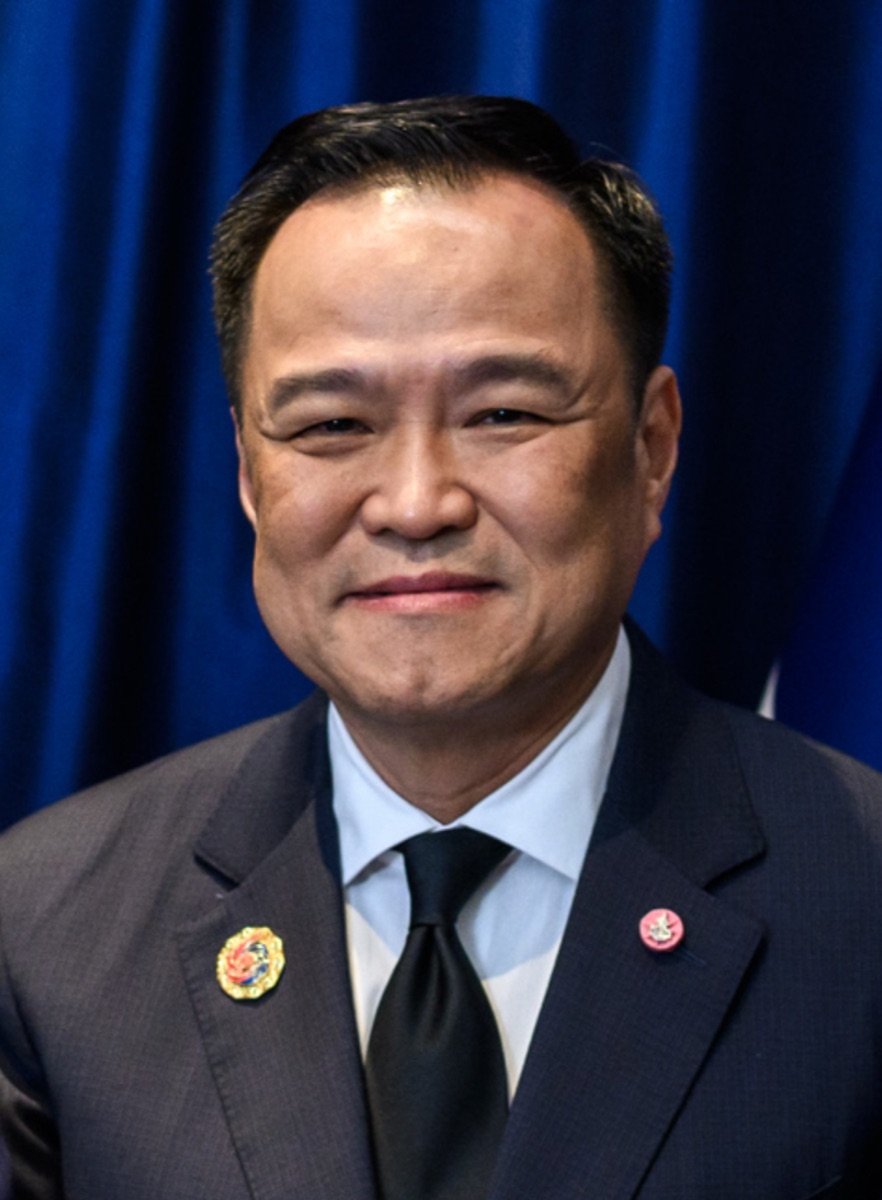
Anutin Charnvirakul
32nd Prime Minister of ThailandA businessman-turned-politician who led Bhumjaithai through successive coalitions, became Thailand’s 32nd prime minister in 2025 and won a second appointment after the 2026 election.Read biography Thailand · Politics
1987—
Natthaphong Ruengpanyawut
Leader of Thailand’s People’s Party and opposition leaderA computer engineer and cloud entrepreneur who became leader of Thailand’s People’s Party, led it to 120 House seats in 2026 and remained the central opposition figure.Read biography Thailand · Politics
1986—
Paetongtarn Shinawatra
31st Prime Minister of Thailand, 2024–2025The hotel executive and Pheu Thai leader who became Thailand’s youngest prime minister in 2024 before a Constitutional Court ethics ruling ended her tenure in 2025.Read biography Thailand · Politics
1980—
Pita Limjaroenrat
Former Move Forward Party leader and 2023 prime-ministerial candidateThe business-trained reform politician who led Move Forward to 151 House seats in 2023 but was blocked from the premiership before the party was dissolved.Read biography Thailand · Politics
1978—
Chaithawat Tulathon
Former Move Forward Party leader and leader of the oppositionThe engineer, editor and political organiser who became Move Forward’s secretary-general, party leader and Thailand’s tenth formal leader of the opposition.Read biography Thailand · Politics
1981—
Sirikanya Tansakun
Deputy leader of the People’s Party and party-list MPThe economist and policy researcher who became one of Thailand’s most visible parliamentary budget critics, a 2026 prime-ministerial candidate and the People’s Party lead on state reform.Read biography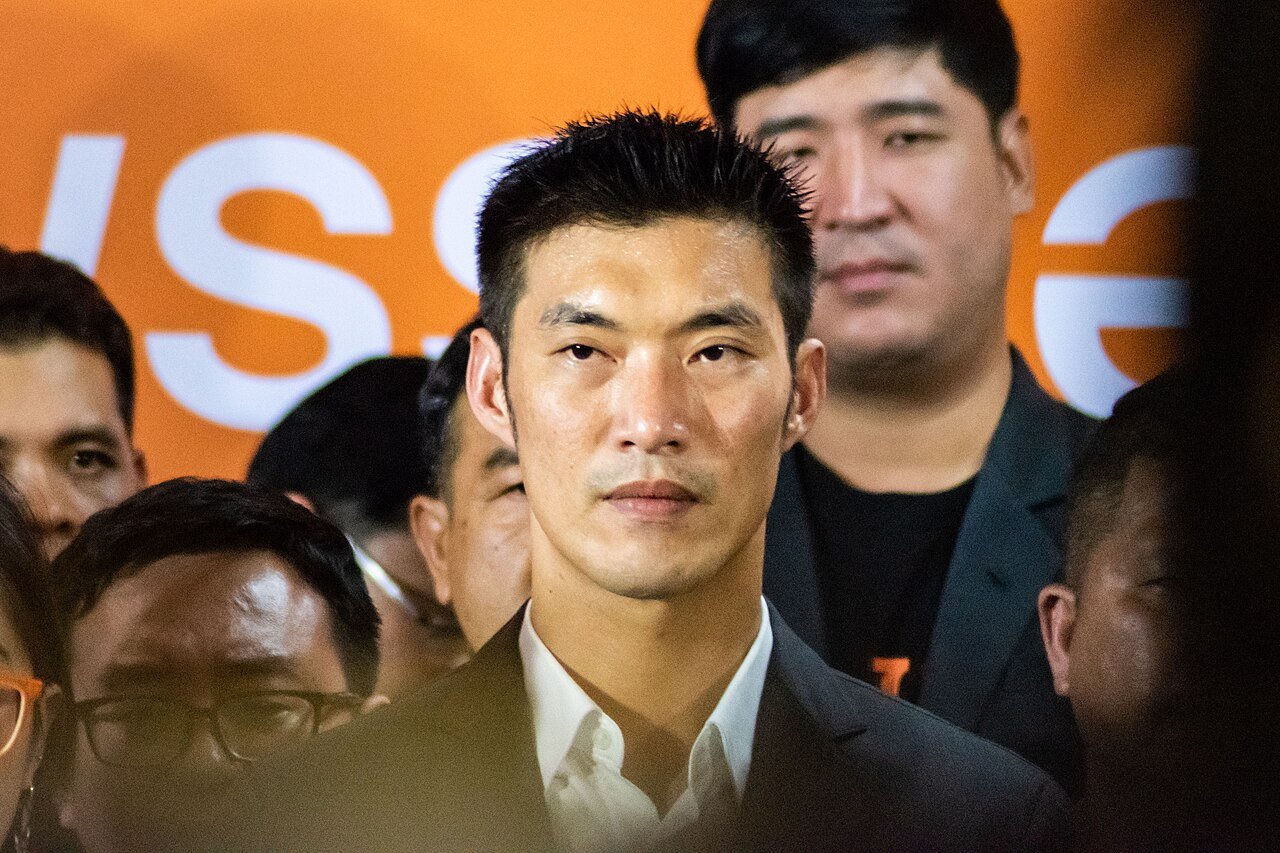 Thailand · Politics
1978—
Thanathorn Juangroongruangkit
Founder of Future Forward and leader of the Progressive MovementThe former automotive executive who founded Future Forward, challenged military influence and continued reform campaigning after the party’s dissolution.Read biography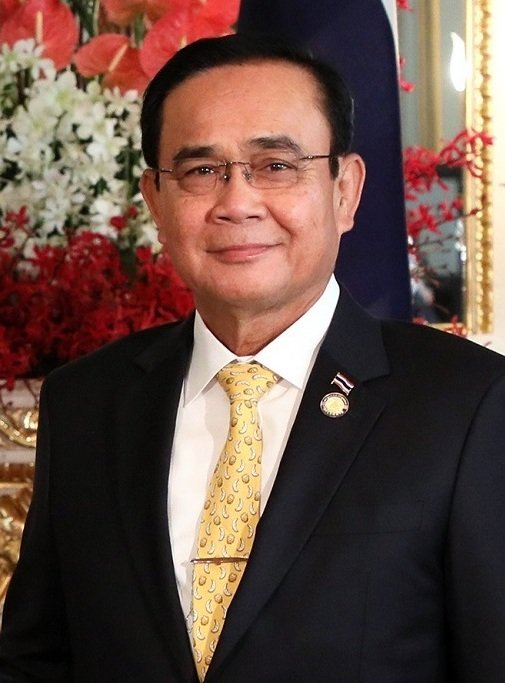 Thailand · Politics
1954—
Prayut Chan-o-cha
29th Prime Minister of Thailand, 2014–2023The army commander who seized power in 2014, led Thailand’s military government and remained prime minister after the 2019 election until 2023.Read biography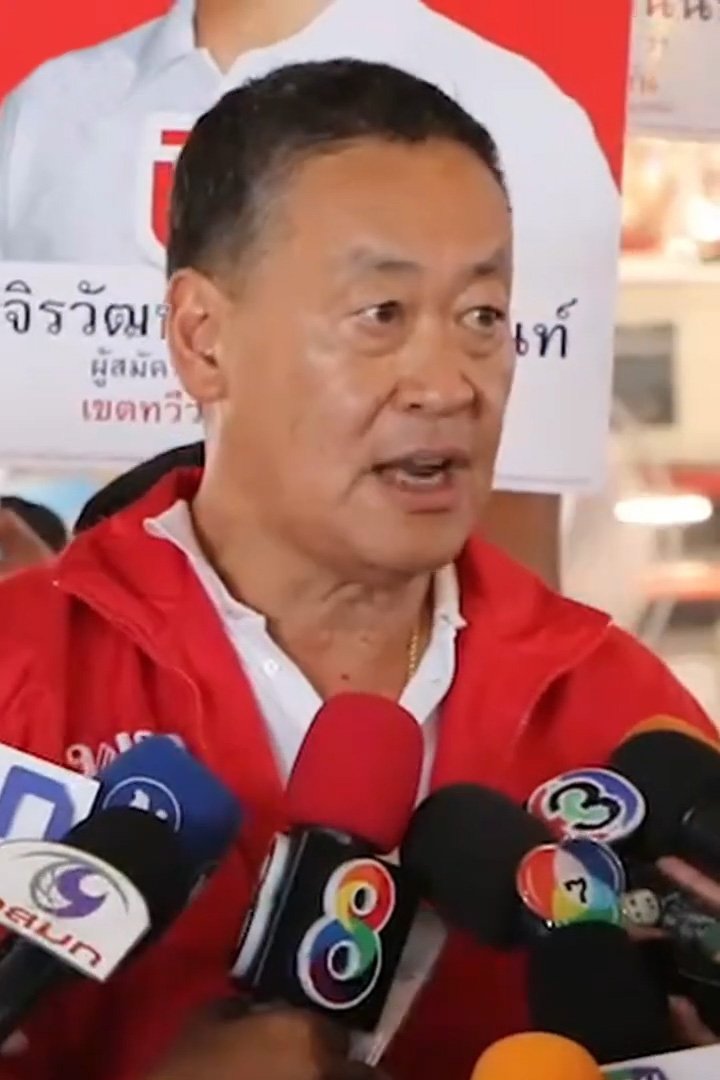 Thailand · Politics
1962—
Srettha Thavisin
30th Prime Minister of Thailand, 2023–2024The property executive who entered party politics in 2022, became Thailand’s 30th prime minister after the 2023 election and was removed by the Constitutional Court in 2024.Read biographyQuick answers
Common questions
- When was Thailand’s 2026 constitutional referendum?
- It was held on 8 February 2026 alongside the general election.
- What was the official referendum result?
- The Election Commission recorded 21,622,029 agree votes and 11,231,161 disagree votes, plus 3,074,462 no-opinion ballots and 942,648 invalid ballots.
- What was turnout in the referendum?
- Turnout was 69.65 percent: 36,870,302 participants from 52,355,610 eligible voters.
- Did the vote immediately replace the 2017 Constitution?
- No. It authorised the start of a new-constitution process. The existing Constitution remains in force until a completed replacement passes the required stages and is promulgated.
- Was a complete new constitution on the ballot?
- No. Voters answered a question of principle about whether Thailand should have a new constitution.
- Will Thailand need another constitutional referendum?
- Yes. A completed replacement text still requires public approval under the constitutional process described by the Court.
Primary and institutional sources
How this history was checked
Dates, legal milestones and historical claims are checked against the official and institutional records below. This article was reviewed on 3 October 2026.
- Election Commission of ThailandOfficial final results of the 8 February 2026 referendum
- Election Commission of ThailandClarification that announcement of the referendum result followed the law
- Public Relations Department of ThailandGeneral election and constitutional referendum on 8 February 2026
- Constitutional Court of ThailandConstitutional rulings and legal materials
- Asian Network for Free Elections2026 Thailand election and constitutional referendum final report
- Election Commission of ThailandConstitution of the Kingdom of Thailand B.E. 2560 (2017) — English translation
- Wikimedia CommonsAnutin Charnvirakul photograph and licence record