
The short answer
Thailand’s Constitutional Court dissolved the Move Forward Party on 7 August 2024 after treating its campaign to amend Penal Code Article 112 as conduct covered by the party-dissolution law. Eleven executives received ten-year electoral and party-organising restrictions, while 143 surviving MPs regrouped as the People’s Party two days later.
Political lineage
Three legally distinct reform-party vehicles
The organisations were not the same legal party, but much of the parliamentary group, voter coalition and reform programme continued after each dissolution.
| Party | Active under this name | Key House result | Legal outcome or status | Parliamentary continuation |
|---|---|---|---|---|
| Future Forward | 2018–2020 | 81 seats in 2019 | Dissolved 21 February 2020 | Most surviving MPs moved to Move Forward |
| Move Forward | 2020–2024 | 151 seats in 2023 | Dissolved 7 August 2024 | 143 surviving MPs regrouped |
| People’s Party | Since 9 August 2024 | 120 seats in 2026 | Active at review date | Largest opposition party after 2026 |
Chronology
A timeline of the turning points
Pita and 44 MPs submit an Article 112 amendment bill
The proposal to amend the royal-defamation law later becomes central to the Constitutional Court’s two rulings.
Move Forward wins the most House seats
The party takes 151 of 500 seats—112 constituencies and 39 party-list places—and finishes first in the general election.
Pita falls short in the prime-minister vote
His eight-party alliance controls a House majority, but he receives 324 votes in the joint House–Senate sitting and misses the required threshold.
Chaithawat succeeds Pita as party leader
Pita steps aside while facing a separate shareholding case, and Chaithawat Tulathon leads Move Forward in opposition.
The Court orders Pita and Move Forward to stop the campaign
Ruling No. 3/2567 characterises the Article 112 amendment campaign as an exercise of rights intended to subvert the constitutional order.
The Election Commission seeks dissolution
The Commission resolves to petition the Constitutional Court under section 92 of the Organic Act on Political Parties.
The Constitutional Court dissolves Move Forward
Ruling No. 20/2567 ends the party and imposes ten-year electoral and party-organising restrictions on eleven relevant executives.
The surviving bloc launches the People’s Party
All 143 remaining MPs enter a new party vehicle and select Natthaphong Ruengpanyawut as leader.
Natthaphong becomes opposition leader
A royal command appoints the People’s Party leader to the constitutional role held by the head of the largest non-government party.
The People’s Party wins 120 seats
The successor organisation finishes second overall and remains the largest opposition force after the early general election.
Natthaphong contests the prime-minister vote
He receives 119 House votes against 293 for Anutin Charnvirakul, with 86 abstentions.
What did the Constitutional Court decide on 7 August 2024?
In Ruling No. 20/2567, Thailand’s Constitutional Court ordered the dissolution of the Move Forward Party. The Court relied on section 92 paragraph one (1) and (2) of the 2017 Organic Act on Political Parties, which permits dissolution for conduct directed at overthrowing or hostile to the democratic regime with the King as Head of State. It treated its January judgment about the party’s Article 112 campaign as final and binding evidence for the later dissolution case.
The Court also revoked the right to stand for election of eleven executive committee members connected to the conduct for ten years. Under section 94, those people were barred for the same period from registering a new party, serving on a party executive committee or participating in the formation of a new party. The order did not remove every Move Forward MP from parliament; the sanction attached differently to the party, the affected executives and the remaining legislators.
Why was Penal Code Article 112 central to the case?
Article 112 criminalises defamation, insult or threat against the King, Queen, Heir-apparent or Regent. Move Forward proposed amendments intended to change who could complain, adjust penalties and alter the law’s operation. Pita and 44 party MPs submitted a bill on 25 March 2021, and the party later included reform of the provision in its political campaign.
Ruling No. 3/2567 characterised the proposal and associated campaigning as an attempt to subvert the democratic regime with the King as Head of State under section 49 of the Constitution. The Court ordered Pita and the party to stop advocating repeal or amendment through the forms of communication described in its judgment, while referring to a legitimate legislative process in its final order. Move Forward rejected the claim that its reform proposal was an attempt to overthrow the constitutional system.
How did the January ruling lead to party dissolution?
The January case did not itself dissolve Move Forward. It was a constitutional petition seeking an order to stop conduct. The Election Commission then used that judgment as the foundation for a separate application under the Organic Act on Political Parties. On 12 March, the Commission announced that it would seek dissolution and restrictions on the relevant executives.
In August, the Court reasoned that the earlier factual and legal findings were final under section 211 paragraph four of the Constitution. It therefore did not begin the entire Article 112 dispute again from zero. The second case asked what sanction followed under the party law, and the Court concluded that dissolution and the statutory ten-year restrictions applied.
Who received ten-year restrictions?
The order covered eleven former or serving party executives connected to the period identified by the Court. They included Pita Limjaroenrat and the party’s final leader, Chaithawat Tulathon. Five were sitting party-list MPs—Pita, Chaithawat, Apichart Sirisunthon, Bencha Saengchantra and Suthep U-on—so their House memberships ended when they lost eligibility.
Calling the order a general ban on every kind of public activity would be imprecise. The ruling revoked electoral candidacy rights and prohibited specified roles in founding or running political parties for ten years. It did not apply the same restrictions to all Move Forward members or voters, and it did not automatically end the mandates of MPs who were not among the sanctioned executives.
What happened to Move Forward’s 143 remaining MPs?
Thailand’s Constitution allows an MP whose party is dissolved to preserve the parliamentary mandate by joining another party within sixty days. Move Forward’s 143 surviving MPs therefore had a route to remain in the House. On 9 August, they entered an existing legal party vehicle, changed its public identity to the People’s Party and selected Natthaphong Ruengpanyawut as leader.
The rapid transfer preserved the largest opposition bloc, staff networks and much of the policy programme. It did not reverse the dissolution or recreate Move Forward as the same legal person. Party assets, executive positions and formal registration belonged to different organisations. The distinction matters: political continuity can survive while legal continuity does not.
How are Future Forward, Move Forward and the People’s Party connected?
Future Forward entered parliament with 81 seats in 2019 and was dissolved in February 2020 over a loan from founder Thanathorn Juangroongruangkit. Many of its remaining MPs continued through Move Forward. Move Forward then expanded the reform electorate and won 151 seats in 2023 before its own dissolution in August 2024. The People’s Party inherited the surviving parliamentary bloc and selected a leader who had served in both predecessor movements.
The three parties should not be described as one uninterrupted legal entity. They used different registered organisations and were subject to different court cases. Their continuity lies in personnel, supporters, reform themes and parliamentary organisation. Their differences include leaders, legal status, election platforms and the institutional conditions each faced.
Why did rights groups criticise the ruling?
Human Rights Watch and Amnesty International argued that dissolving a party for proposing legal reform violated freedom of expression, association and political participation. They emphasised that Move Forward had received the most votes and seats in 2023 and said the sanction weakened pluralism. United Nations experts also expressed concern about the consequences for democratic representation.
The Court’s reasoning was different. It presented party dissolution as a defensive mechanism of “militant democracy” and held that the earlier conduct was hostile to the constitutional order. A source-led account must state both positions accurately: the dissolution was an enforceable judgment under Thai constitutional and party law, while its necessity, proportionality and compatibility with international rights standards remained sharply contested.
What did the dissolution change by the 2026 election?
The People’s Party entered the 2026 election without Pita and Chaithawat as eligible candidates and with Natthaphong as its prime-ministerial nominee. It won 120 seats—88 constituencies and 32 party-list places—behind Bhumjaithai’s 192. The result was lower than Move Forward’s 151 seats in 2023 but kept the reform movement as the largest opposition force.
On 19 March, Natthaphong received 119 votes in the House selection for prime minister, while Anutin received 293 and 86 MPs abstained. The appointed Senate no longer participated. The sequence shows both disruption and resilience: the 2024 ruling removed a winning party and its leading generation from formal party leadership, yet most of its parliamentary organisation survived and contested the next national election under a new name.
Continue the chronology
Related history guides
The 2023 Thai General Election
Start with Move Forward’s 151 seats, Pita’s failed prime-minister vote and the cases that followed.
Read the timeline2019–2026Thailand Elections Compared
Place the dissolution between three contests and compare the reform bloc’s changing party names and seat totals.
Read the timeline2020–2021The 2020 Thai Youth Protests
Understand the broader reform movement that followed Future Forward’s earlier dissolution.
Read the timeline6 April 2017–presentThailand’s 2017 Constitution
Read the constitutional provisions, institutions and amendment barriers surrounding the case.
Read the timeline24 March 2019–21 February 2020The 2019 Thai General Election
Compare Future Forward’s 81-seat breakthrough and the first dissolution in the reform-party lineage.
Read the timeline8 February 2026The 2026 Thai General Election
Continue to the People’s Party’s 120 seats and Natthaphong’s House-only prime-minister vote.
Read the timeline1851–presentThailand History Timeline
Place the ruling within Thailand’s longer history of constitutions, courts, coups and party change.
Read the timelineBiography context
Explore Thailand through connected lives
Connected biographies
Nine biographies connecting the winning party, two dissolutions and the opposition that survived
 Thailand · Politics
1980—
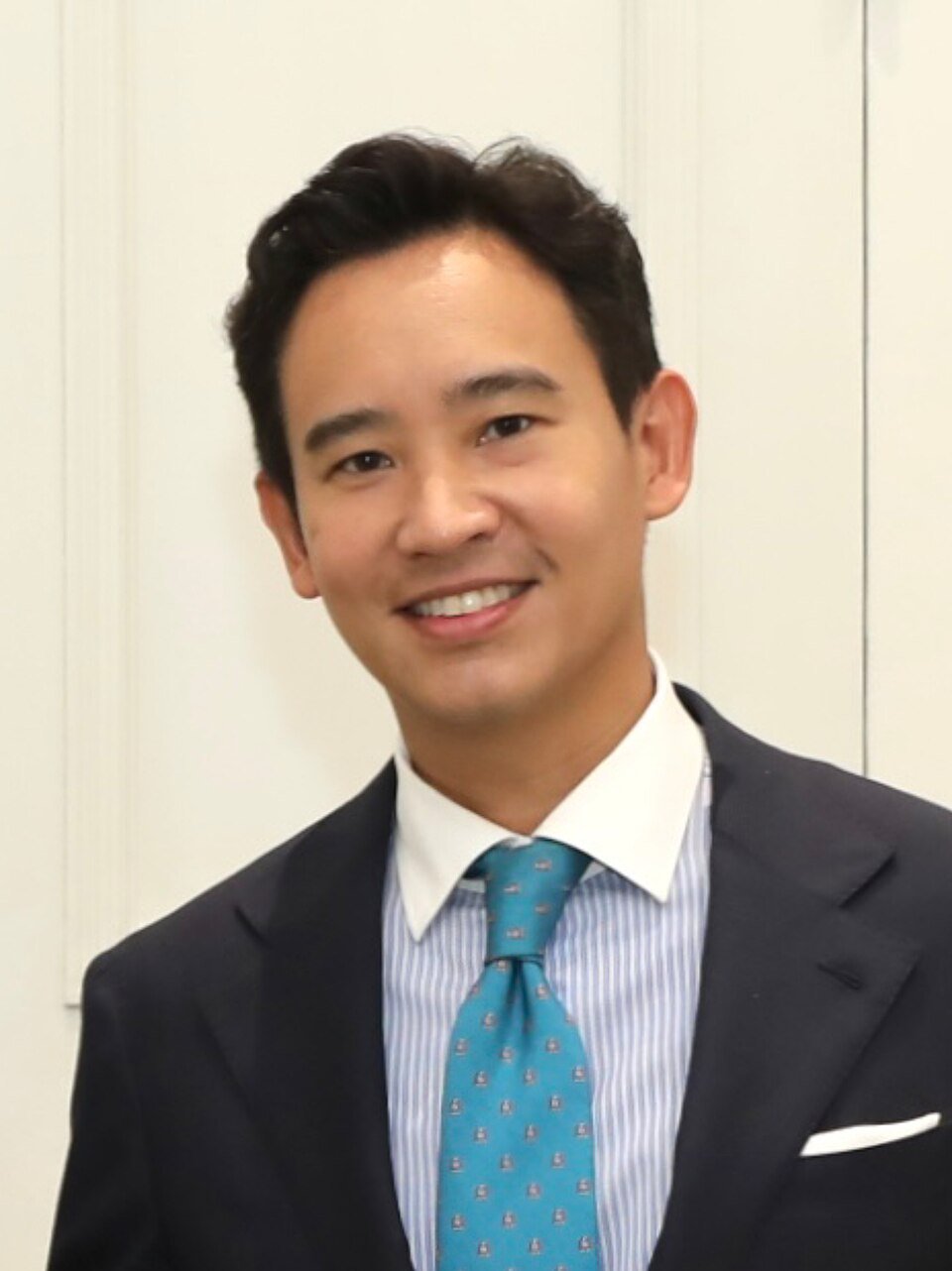
Pita Limjaroenrat
Former Move Forward Party leader and 2023 prime-ministerial candidateThe business-trained reform politician who led Move Forward to 151 House seats in 2023 but was blocked from the premiership before the party was dissolved.Read biography Thailand · Politics
1978—
Chaithawat Tulathon
Former Move Forward Party leader and leader of the oppositionThe engineer, editor and political organiser who became Move Forward’s secretary-general, party leader and Thailand’s tenth formal leader of the opposition.Read biography Thailand · Politics
1981—
Sirikanya Tansakun
Deputy leader of the People’s Party and party-list MPThe economist and policy researcher who became one of Thailand’s most visible parliamentary budget critics, a 2026 prime-ministerial candidate and the People’s Party lead on state reform.Read biography Thailand · Politics
1987—
Natthaphong Ruengpanyawut
Leader of Thailand’s People’s Party and opposition leaderA computer engineer and cloud entrepreneur who became leader of Thailand’s People’s Party, led it to 120 House seats in 2026 and remained the central opposition figure.Read biography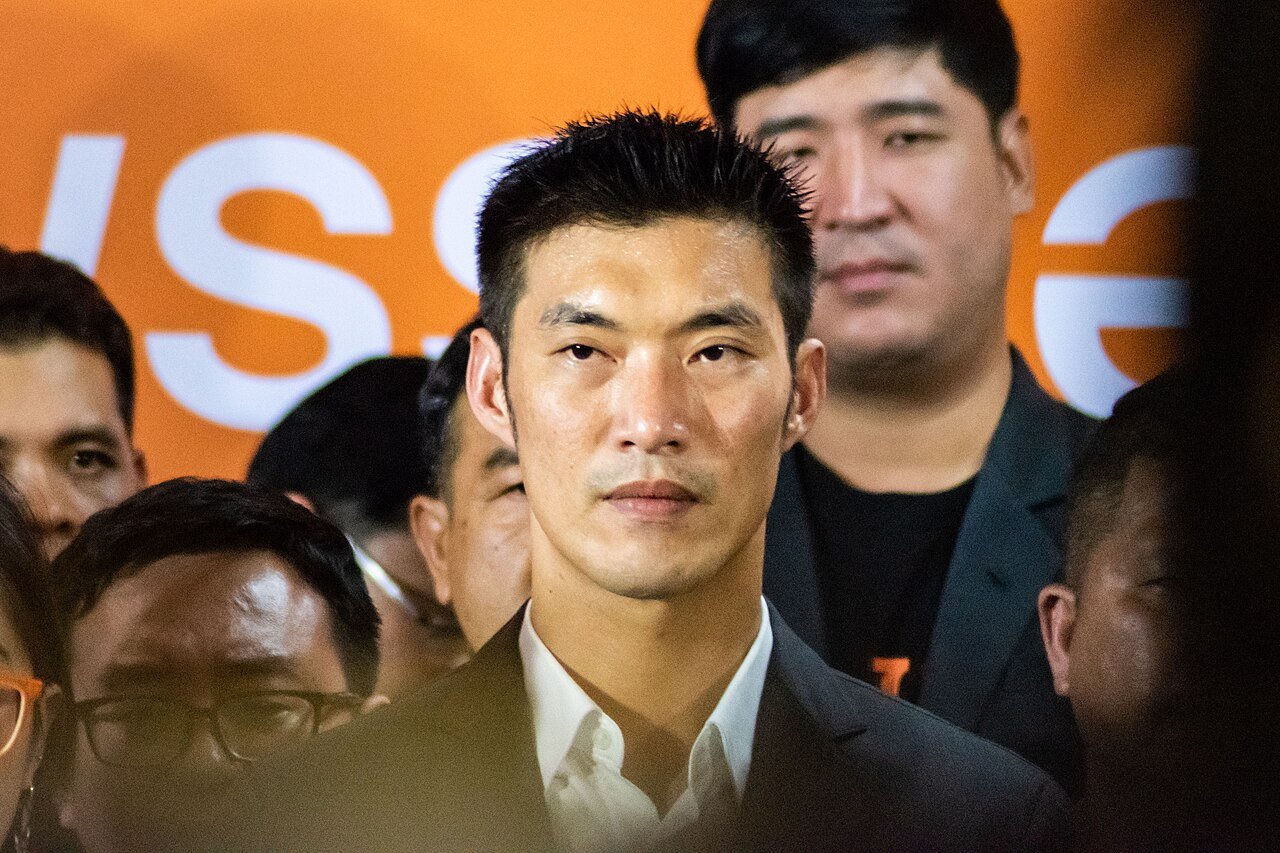 Thailand · Politics
1978—
Thanathorn Juangroongruangkit
Founder of Future Forward and leader of the Progressive MovementThe former automotive executive who founded Future Forward, challenged military influence and continued reform campaigning after the party’s dissolution.Read biography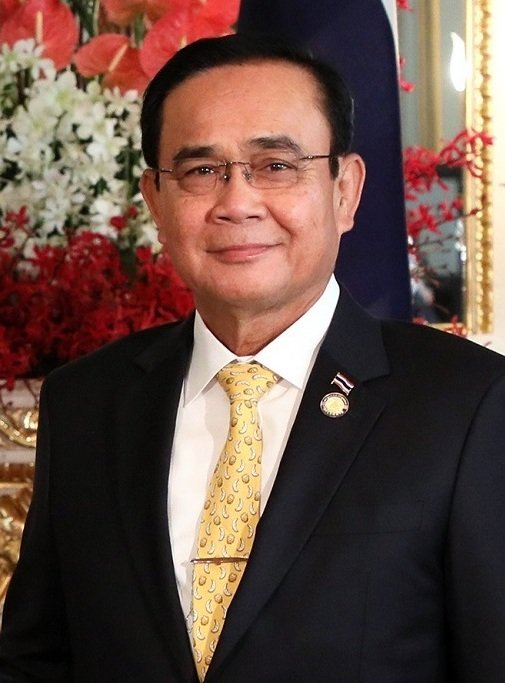 Thailand · Politics
1954—
Prayut Chan-o-cha
29th Prime Minister of Thailand, 2014–2023The army commander who seized power in 2014, led Thailand’s military government and remained prime minister after the 2019 election until 2023.Read biography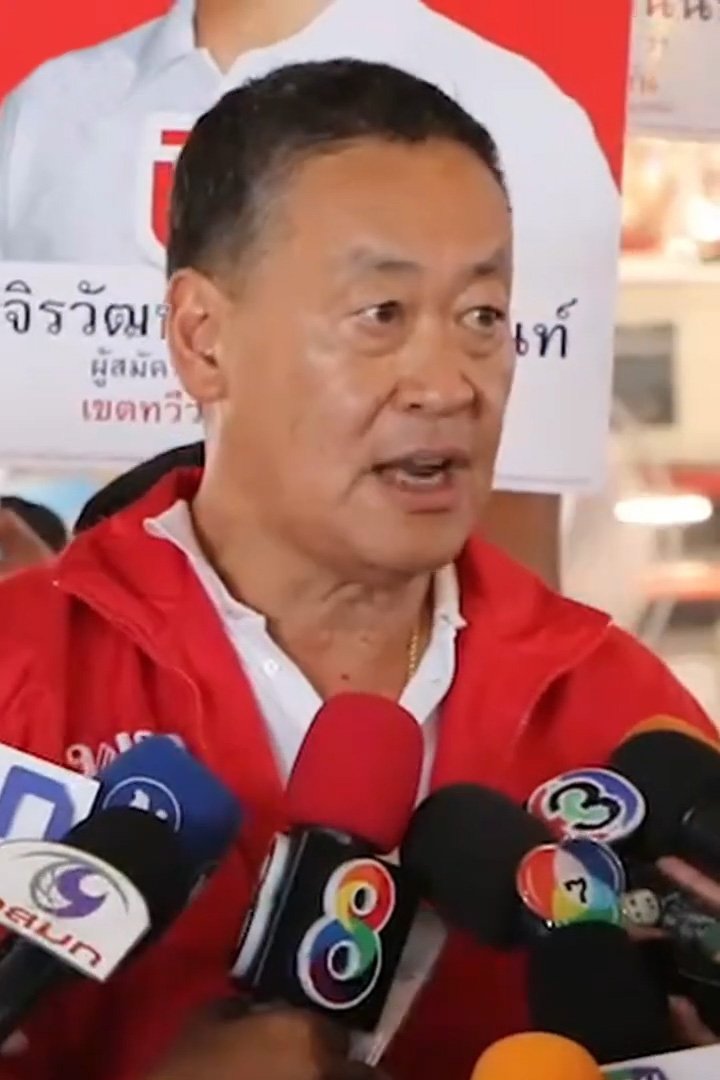 Thailand · Politics
1962—
Srettha Thavisin
30th Prime Minister of Thailand, 2023–2024The property executive who entered party politics in 2022, became Thailand’s 30th prime minister after the 2023 election and was removed by the Constitutional Court in 2024.Read biography Thailand · Politics
1986—
Paetongtarn Shinawatra
31st Prime Minister of Thailand, 2024–2025The hotel executive and Pheu Thai leader who became Thailand’s youngest prime minister in 2024 before a Constitutional Court ethics ruling ended her tenure in 2025.Read biography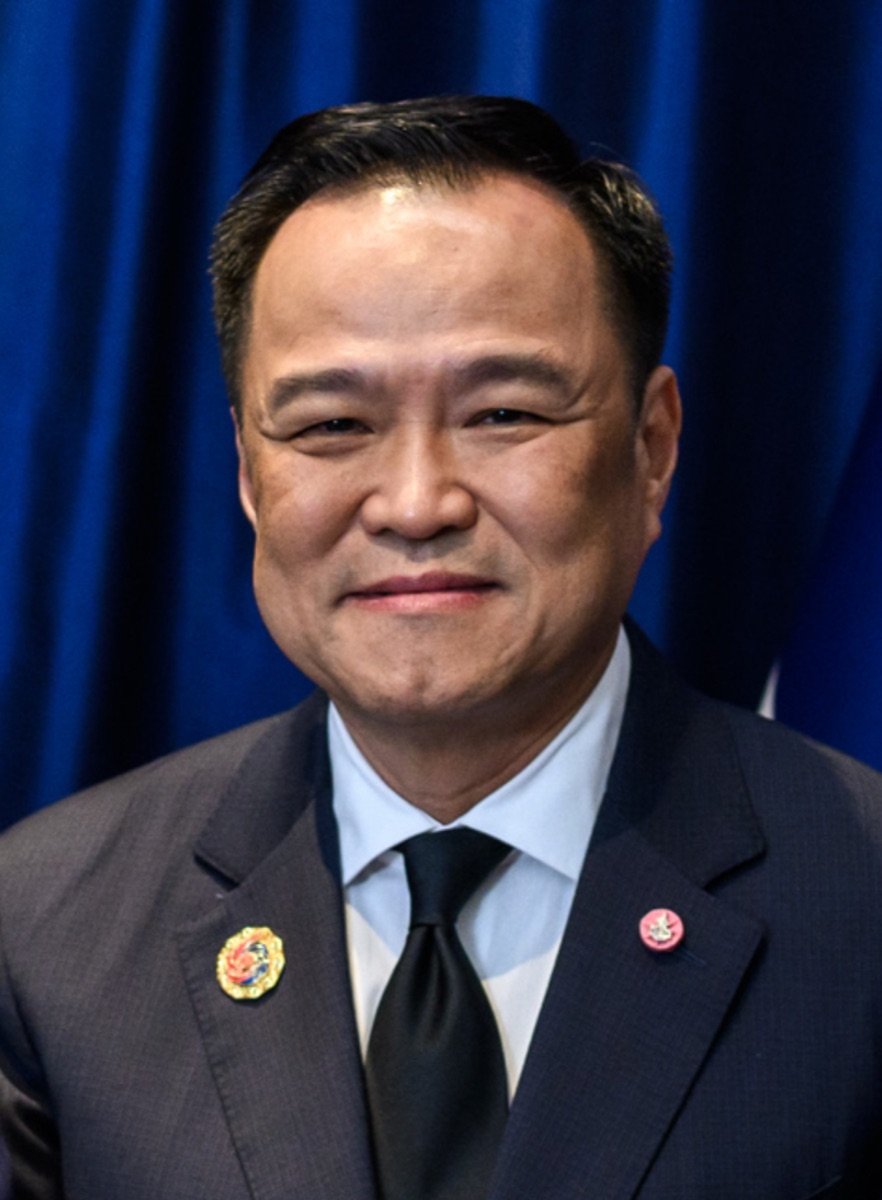 Thailand · Politics
1966—
Anutin Charnvirakul
32nd Prime Minister of ThailandA businessman-turned-politician who led Bhumjaithai through successive coalitions, became Thailand’s 32nd prime minister in 2025 and won a second appointment after the 2026 election.Read biographyQuick answers
Common questions
- When was Thailand’s Move Forward Party dissolved?
- The Constitutional Court dissolved the Move Forward Party on 7 August 2024 in Ruling No. 20/2567.
- Why was the Move Forward Party dissolved?
- The Court held that the party’s campaign to amend Penal Code Article 112 fell within conduct hostile to the constitutional regime, relying on its earlier Ruling No. 3/2567 and section 92 of the Organic Act on Political Parties.
- How many Move Forward executives received ten-year restrictions?
- Eleven former or serving executives lost the right to stand for election and were prohibited for ten years from specified roles in registering, forming or running a political party.
- Was Pita Limjaroenrat banned from politics?
- Pita was among the eleven affected executives. The order revoked his right to stand for election and barred him for ten years from specified party-founding and executive roles.
- What happened to Move Forward’s MPs?
- The 143 remaining MPs preserved their mandates by moving to a different registered party within the constitutional deadline. On 9 August 2024, that organisation became the People’s Party under Natthaphong Ruengpanyawut.
- Is the People’s Party the same legal party as Move Forward?
- No. It is a different registered political party, although it carried forward Move Forward’s surviving MPs, much of its organisation and many of its policy themes.
Primary and institutional sources
How this history was checked
Dates, legal milestones and historical claims are checked against the official and institutional records below. This article was reviewed on 3 October 2026.
- Constitutional Court of ThailandRuling No. 20/2567 dissolving the Move Forward Party
- Constitutional Court of ThailandRuling No. 3/2567 on Pita, Move Forward and Article 112
- Election Commission of ThailandConstitution of the Kingdom of Thailand B.E. 2560 (2017)
- Election Commission of ThailandBriefing on the petition to dissolve the Move Forward Party
- Inter-Parliamentary UnionThailand House of Representatives election, 14 May 2023
- People’s PartyHistory of the People’s Party and its predecessor movements
- House of Representatives of ThailandAppointment of Natthaphong Ruengpanyawut as opposition leader
- Inter-Parliamentary UnionThailand House of Representatives election, 8 February 2026
- The Nation ThailandEleven executives restricted and 143 MPs given a transfer window
- Human Rights WatchThailand: Constitutional Court Dissolves Opposition Party
- Amnesty InternationalDissolution of Move Forward Party an untenable decision
- United Nations Human Rights OfficeUN experts concerned about the dissolution of Move Forward
- UK House of Commons LibraryThailand: Political developments and the banning of Move Forward
- Wikimedia CommonsNatthaphong Ruengpanyawut photograph and CC BY-SA 4.0 licence