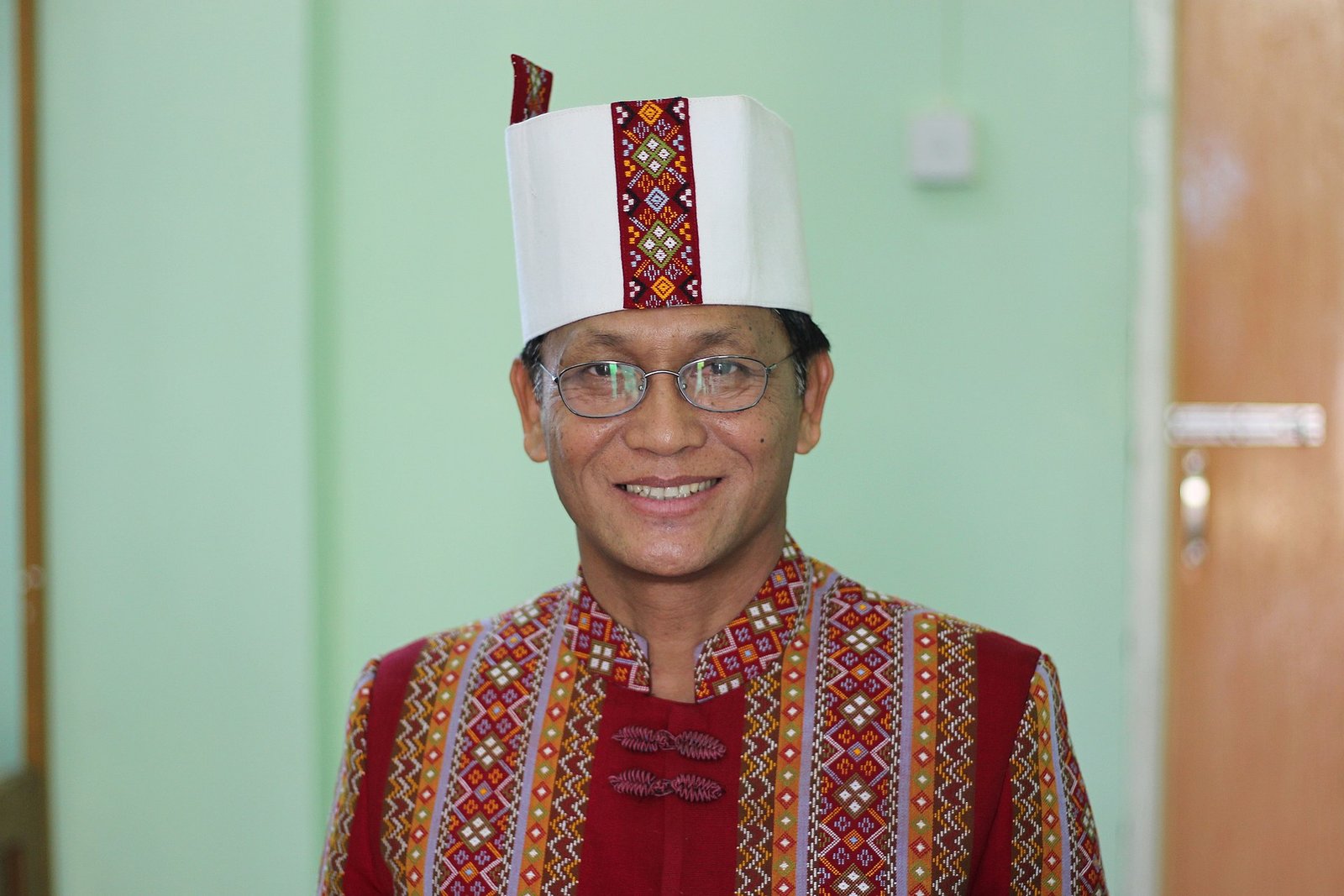
In this biography
Quick facts
- Born
- 17 August 1950
- Birthplace
- Muse, Shan State, Burma
- Country
- Myanmar
- Nationality
- Burmese
- Known for
- Serving as the ethnic Shan civilian nominee in Thein Sein’s executive and winning a disputed Lashio race in 2015
- Profession
- Physician
- Community
- Ethnic Shan
- Second vice president
- 30 March 2011–1 July 2012
- First vice president
- 1 July 2012–30 March 2016
Why this life matters
Sai Mauk Kham’s career connects the military-backed 2010 transition, ethnic representation in the executive and the electoral disputes that accompanied the more competitive 2015 vote.
Timeline
Key moments
Born in Muse
Born on 17 August in northern Shan State.
Worked as a physician and cultural organiser
Practised medicine in Lashio and chaired a Shan literature and culture association.
Chosen as a vice president
Entered the executive through the upper-house presidential nomination group.
Became first vice president
Moved to the senior vice-presidential position after Tin Aung Myint Oo resigned.
Won the Lashio lower-house seat
Late advance ballots produced a disputed victory that election authorities upheld.
Served in parliament
Left the vice presidency when the NLD government took office and represented Lashio until the coup.
Medicine, Shan cultural work and entry into politics
Sai Mauk Kham was born in Muse in northern Shan State in 1950 and trained as a physician at the Institute of Medicine in Mandalay. He built his professional life in Lashio, where he operated a clinic and hospital. He also chaired the Shan Literature and Culture Association, giving him a public role connected to language and community organisation before he entered national office.
The Union Solidarity and Development Party recruited him during the military government’s controlled transition to the 2008 Constitution. Unlike President Thein Sein and many other senior USDP leaders, Sai Mauk Kham was not a retired general. His selection allowed the new executive to include an ethnic Shan civilian, although analysts questioned how much independent authority the position would carry inside a system dominated by former officers.
The upper house sends a Shan physician to the executive
After the deeply flawed 2010 election, each elected chamber and the appointed military bloc nominated a candidate to the presidential electoral college. The upper-house group selected Sai Mauk Kham. Parliament chose Thein Sein as president in February 2011, with Tin Aung Myint Oo and Sai Mauk Kham becoming first and second vice president when the government took office on 30 March.
Tin Aung Myint Oo resigned for health reasons in July 2012, moving Sai Mauk Kham into the first vice presidency. The office placed him in the senior civilian leadership during prisoner releases, economic reopening, ceasefire negotiations and the 2012 entry of Aung San Suu Kyi’s NLD into parliament. Yet the army remained institutionally autonomous and the president, not the vice presidents, set the main reform programme.
The contested Lashio result in the 2015 election
Sai Mauk Kham contested the Pyithu Hluttaw seat in Lashio as the USDP faced the NLD and Shan parties in a much more competitive national election. Reports from the count described 11,815 advance ballots arriving after ordinary polling had closed, with nearly all favouring him. The NLD, Shan Nationalities League for Democracy and Shan Nationalities Democratic Party challenged the result.
The Union Election Commission upheld his victory. The controversy did not overturn the national result—the NLD won 390 elected Union Parliament seats—but it highlighted the weakness of out-of-constituency advance voting. The Carter Center called that process the least transparent part of the election and recommended reforms, especially for military, police and civil-service ballots cast away from ordinary polling stations.
From outgoing vice president to opposition-side legislator
The USDP nominated Sai Mauk Kham during the lower house’s internal presidential selection in March 2016, but the NLD majority chose Htin Kyaw. The combined parliament ultimately elected Htin Kyaw president, Myint Swe first vice president and Henry Van Thio second vice president. Sai Mauk Kham left the executive when the new government was sworn in on 30 March.
He then served as the Lashio representative in a parliament dominated by the NLD until the military prevented the newly elected legislature from convening on 1 February 2021. His career illustrates two different electoral orders: the controlled 2010 framework that elevated a USDP executive and the competitive 2015 vote that displaced it, while leaving individual constituency disputes and the military’s constitutional power unresolved.
Quick answers
Frequently asked questions about Sai Mauk Kham
- Who is Sai Mauk Kham?
- Sai Mauk Kham is a physician and vice president of Myanmar from 2011 to 2016. Sai Mauk Kham’s career connects the military-backed 2010 transition, ethnic representation in the executive and the electoral disputes that accompanied the more competitive 2015 vote.
- What is Sai Mauk Kham best known for?
- Sai Mauk Kham is best known for serving as the ethnic Shan civilian nominee in Thein Sein’s executive and winning a disputed Lashio race in 2015.
- When and where was Sai Mauk Kham born?
- Sai Mauk Kham was born on 17 August 1950 in Muse, Shan State, Burma.
Sources and further reading
Explore the evidence
These references support the biography and offer further reading. Official records, first-person accounts and independent reporting provide different perspectives; image records document attribution and licensing.
- 1. International Crisis GroupMyanmar’s Post-Election Landscape · Asia Briefing No. 118
- 2. Burma News InternationalBurma’s Vice President Accused of Rigging His Re-Election
- 3. The Carter CenterObserving Myanmar’s 2015 General Elections · final report
- 4. Radio Free AsiaAung San Suu Kyi Picks Long-time Aide as Proxy President
- 5. Wikimedia Commons2015 portrait and GODL-India licensing record