In this biography
Quick facts
- Born
- 20 July 1946
- Birthplace
- Rangoon, British Burma
- Country
- Myanmar
- Nationality
- Burmese
- Known for
- Becoming the first civilian president in more than five decades after the NLD’s 2015 election victory
- President
- 30 March 2016–21 March 2018
- Parliamentary vote
- 360 of 652 ballots · 15 March 2016
- Profession
- Economist, civil servant and writer
- Pen name
- Dalaban
Why this life matters
Htin Kyaw’s presidency represented a peaceful electoral transfer while also revealing how the State Counsellor office and military safeguards limited the presidency’s independent political role.
Timeline
Key moments
Born in Rangoon
Born on 20 July to the poet and scholar Min Thu Wun and Kyi Kyi.
Studied economics and computing
Completed economics study in Rangoon and later trained in computer science in London.
Left government service
Resigned after a career in economic planning and foreign-affairs administration.
Detained during an attempted NLD journey
Spent several months in prison after accompanying Aung San Suu Kyi toward Mandalay.
Elected and inaugurated president
Parliament selected him on 15 March and he took office on 30 March.
Resigned for health reasons
Stepped down on 21 March and was succeeded by Win Myint.
Economics, public service and a literary inheritance
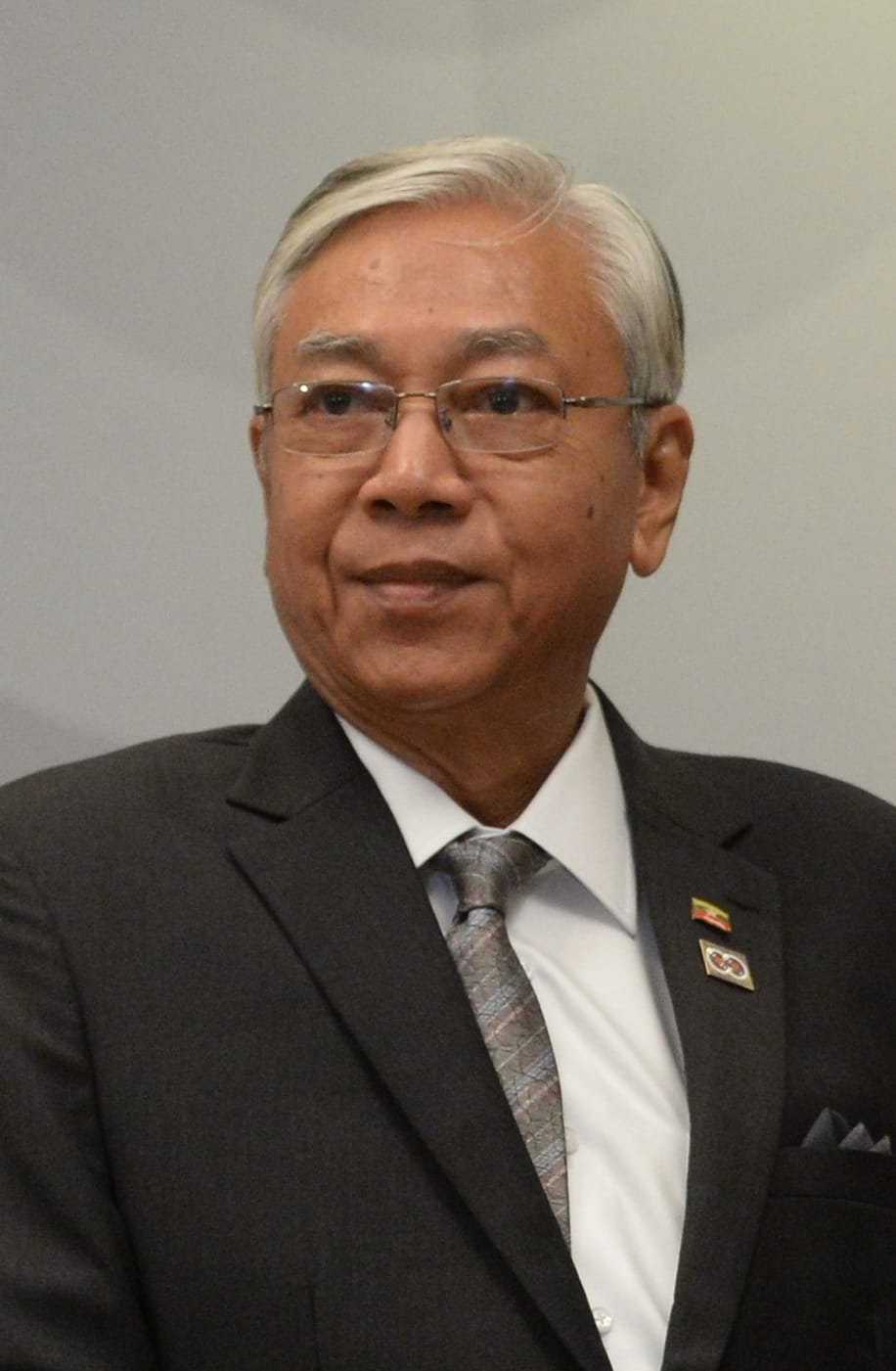
Htin Kyaw was born in Rangoon in 1946. His father Min Thu Wun was one of Myanmar’s leading modern poets and later an elected NLD parliamentarian; Htin Kyaw also published under the pen name Dalaban. He studied economics in Rangoon, pursued computer-science training at the University of London and completed further study connected to management and development.
He worked in government economic planning and later in the Ministry of Foreign Affairs before leaving public service in 1992. He became closely associated with Aung San Suu Kyi and the Daw Khin Kyi Foundation, named for her mother. In 2000 authorities detained him after he accompanied Suu Kyi during an attempted journey outside Yangon, an episode that demonstrated the practical constraints surrounding NLD leaders even when they were not formally under house arrest.
How parliament selected the first civilian president in decades
The NLD’s overwhelming 2015 election victory gave it enough elected seats to dominate the presidential electoral college, but Section 59(f) barred Aung San Suu Kyi because her children held foreign citizenship. The party nominated Htin Kyaw from the lower-house group. On 15 March 2016 the combined parliament elected him with 360 of 652 votes, and he was inaugurated on 30 March.
The United Nations described him as the first civilian president in more than five decades and treated the handover as a major democratic milestone. The description referred to his lack of a military career, not to a fully civilian state. The constitution still guaranteed the armed forces 25% of parliamentary seats, control over three security ministries and extensive autonomy under Commander-in-Chief Min Aung Hlaing.
President alongside the State Counsellor
Parliament created the office of State Counsellor for Aung San Suu Kyi in April 2016, allowing her to coordinate across ministries and parliament. Htin Kyaw remained constitutional head of state, signed legislation, appointed ministers through formal procedures and represented Myanmar abroad, while Suu Kyi was publicly understood to lead the elected government’s political programme. Their arrangement worked through trust rather than a separation between rival power centres.
The administration organised the Twenty-First Century Panglong peace conferences and pursued economic reform, but fighting continued and the military retained command of security operations. The 2017 expulsion of more than 700,000 Rohingya into Bangladesh occurred during his presidency. Although the armed forces conducted the operations independently of civilian command, the elected government also faced international criticism for denial, restrictions on access and failure to protect the minority.
Resignation and the meaning of a limited presidency
Htin Kyaw resigned on 21 March 2018, with the presidency announcing that he wished to rest from his duties. Win Myint, then speaker of the lower house and another senior NLD figure, succeeded him. Htin Kyaw did not build a separate party faction or seek to convert the office into a personal power base, remaining consistent with the political arrangement established after the 2015 election.
His short presidency matters because it combined two realities often collapsed into one. It was a genuine peaceful transfer to an elected, civilian-led administration and ended a sequence of presidents drawn from the military establishment. At the same time, the constitutional presidency did not control the armed forces, and the parallel State Counsellor role made the government’s actual political leadership more complex than the title alone suggested.
Quick answers
Frequently asked questions about Htin Kyaw
- Who is Htin Kyaw?
- Htin Kyaw is a president of Myanmar from 2016 to 2018. Htin Kyaw’s presidency represented a peaceful electoral transfer while also revealing how the State Counsellor office and military safeguards limited the presidency’s independent political role.
- What is Htin Kyaw best known for?
- Htin Kyaw is best known for becoming the first civilian president in more than five decades after the NLD’s 2015 election victory.
- When and where was Htin Kyaw born?
- Htin Kyaw was born on 20 July 1946 in Rangoon, British Burma.
Sources and further reading
Explore the evidence
These references support the biography and offer further reading. Official records, first-person accounts and independent reporting provide different perspectives; image records document attribution and licensing.
- 1. TIMEHtin Kyaw · early life and presidential selection
- 2. United Nations Secretary-GeneralUN statement on the election of Htin Kyaw
- 3. White House archiveStatement on the inauguration of President Htin Kyaw
- 4. United NationsSecretary-General’s joint press stakeout in Myanmar
- 5. Asian Development Bank Law and Policy Reform ProgramConstitution of the Republic of the Union of Myanmar (2008)
- 6. Wikimedia Commons2016 portrait and CC BY 4.0 licensing record