In this biography
Quick facts
- Born
- 12 August 1902
- Died
- 14 March 1980
- Birthplace
- Bukittinggi, West Sumatra
- Country
- Indonesia
- Nationality
- Indonesian
- Known for
- Co-proclaiming independence and shaping Indonesia’s republican and cooperative traditions
- Office
- Vice President, 1945–1956
- Historic act
- Co-proclaimer of independence
- Earlier role
- Prime Minister, 1948–1950
- Also known as
- Bung Hatta
Why this life matters
Hatta joined revolutionary legitimacy to economic thinking and constitutional government, offering an important counterpoint to Sukarno’s increasingly centralised presidency.
Timeline
Key moments
Led Perhimpunan Indonesia
Became a leader of the Indonesian students’ association in the Netherlands.
Sent into exile
Was exiled by the Dutch colonial government after sustained independence activity.
Co-proclaimed independence
Signed the proclamation with Sukarno, who read it aloud, and became first vice president.
Led the Indonesian delegation
Played a central role in negotiations that produced Dutch recognition of sovereignty.
Resigned as vice president
Left office amid growing differences over political direction and presidential power.
An international education
Mohammad Hatta was born in Bukittinggi, West Sumatra, on 12 August 1902. His education led from schools in the Dutch East Indies to commercial and economic studies in Rotterdam, completed in 1932. Political organisation developed alongside study: he joined the Indonesian students’ association in the Netherlands and became a leading advocate of independence abroad.
His defence during a Dutch prosecution was published as Indonesia Vrij, or Indonesia Free. An education-ministry account places this writing within his international nationalist activity. On returning home, he worked with the movement associated with political education rather than accepting colonial rule as permanent. Colonial imprisonment and exile followed, interrupting but not ending his political work.
Revolution and negotiation
Hatta’s vice presidency began as the new republic organised itself in August 1945. During the subsequent struggle against Dutch attempts to re-establish control, he also took on cabinet leadership. The National Library’s chronology identifies his combined vice-presidential, prime-ministerial and defence responsibilities from January 1948.
In 1949 he led the Indonesian delegation to the Round Table Conference in The Hague and received the transfer of sovereignty in December. This was a diplomatic stage in the independence struggle, not a replacement date for the August 1945 proclamation. His role illustrates the combination of an asserted republican independence with negotiations over its international recognition.
The Cabinet Secretariat separately dates the federal Republic of the United States of Indonesia cabinet from 20 December 1949 to 6 September 1950, listing Hatta as prime minister and foreign minister. “Prime minister, 1948–1950” therefore compresses different constitutional settings; it should not imply one unchanged cabinet throughout those years.
Why cooperatives mattered to Hatta
Hatta treated cooperative organisation as part of economic democracy, not merely a charity programme. The Ministry of Cooperatives dates his recognition as Father of Indonesian Cooperatives to the Bandung congress on 17 July 1953. That honour is distinct from the annual Cooperative Day observed on 12 July.
The accessible abstract of Benjamin Higgins’s 1958 assessment describes Hatta’s preference for cooperatives over corporate concentration, while questioning whether that long-term programme could meet urgent development needs. It is a contemporary outside interpretation, not proof that cooperative policy achieved his aims. This tension gives the economic legacy substance: Hatta offered a vision of participation and ownership, while the pace and practical results remained questions for debate.
Constitutionalism and cooperatives
Hatta resigned as vice president on 1 December 1956, ending an office he had held since 18 August 1945. His departure marked a major change in the partnership with Sukarno. It preceded the 1959 introduction of Guided Democracy, rather than being a resignation from that later system after it was already established.
Outside office, he continued to write and teach. The National Library’s record lists university teaching, public advisory work and later writings; he died in Jakarta on 14 March 1980. His legacy joins several roles that should remain distinct: co-proclaimer, vice president, cabinet leader, diplomatic negotiator and advocate of cooperative economic organisation.
Quick answers
Frequently asked questions about Mohammad Hatta
- What was Mohammad Hatta’s role in Indonesian independence?
- He and Sukarno signed the proclamation of 17 August 1945, which Sukarno read aloud. Hatta became the republic’s first vice president the following day.
- When did Hatta serve as vice president?
- His first vice-presidential tenure ran from 18 August 1945 until his resignation on 1 December 1956.
- Was Mohammad Hatta also prime minister?
- Yes. He headed republican cabinets from 1948 and later the federal Republic of the United States of Indonesia cabinet, whose recorded service dates are 20 December 1949–6 September 1950.
- Why is Hatta called the Father of Indonesian Cooperatives?
- He advocated cooperative economic organisation and was honoured by the cooperative congress in Bandung on 17 July 1953. The title recognises that work; it is not evidence that every cooperative policy achieved its aims.
Keep exploring
Lives connected to this story
- Sukarno
Compare the co-proclaimers’ shared independence work and divergent approaches to governing.
- Sutan Sjahrir
Compare a fellow nationalist’s separate role in revolutionary cabinet leadership and negotiation.
- Agus Salim
Explore another diplomatic contribution to international recognition rather than assigning it to one negotiator.
- Mohammad Natsir
Compare the 1950 parliamentary initiative with the constitutional transition Hatta helped implement.
Sources and further reading
Explore the evidence
These references support the biography and offer further reading. Official records, first-person accounts and independent reporting provide different perspectives; image records document attribution and licensing.
- 1. National Library of IndonesiaMohammad Hatta: presidential library profile and career chronology
The library chronology distinguishes vice-presidential service, republican cabinet responsibilities and later public work. Some fine-grained exile and association dates vary across institutional accounts, so they are not assigned unsupported precision here.
- 2. Ministry of Education and Culture, BPMP RiauMengenal Sosok Bung Hatta, Sang Proklamator Indonesia
- 3. Cabinet Secretariat of IndonesiaCabinet of the Republic of the United States of Indonesia
The cabinet’s printed service dates are 20 December 1949–6 September 1950. These refer to the federal cabinet, not the entire 1948–1950 sequence of Hatta’s prime-ministerial work.
- 4. Ministry of Cooperatives of IndonesiaMohammad Hatta’s cooperative ideas
The ministry dates the Bandung cooperative honour to 17 July 1953, distinct from the annual 12 July Cooperative Day.
- 5. Wikimedia CommonsMohammad Hatta: image and reuse record
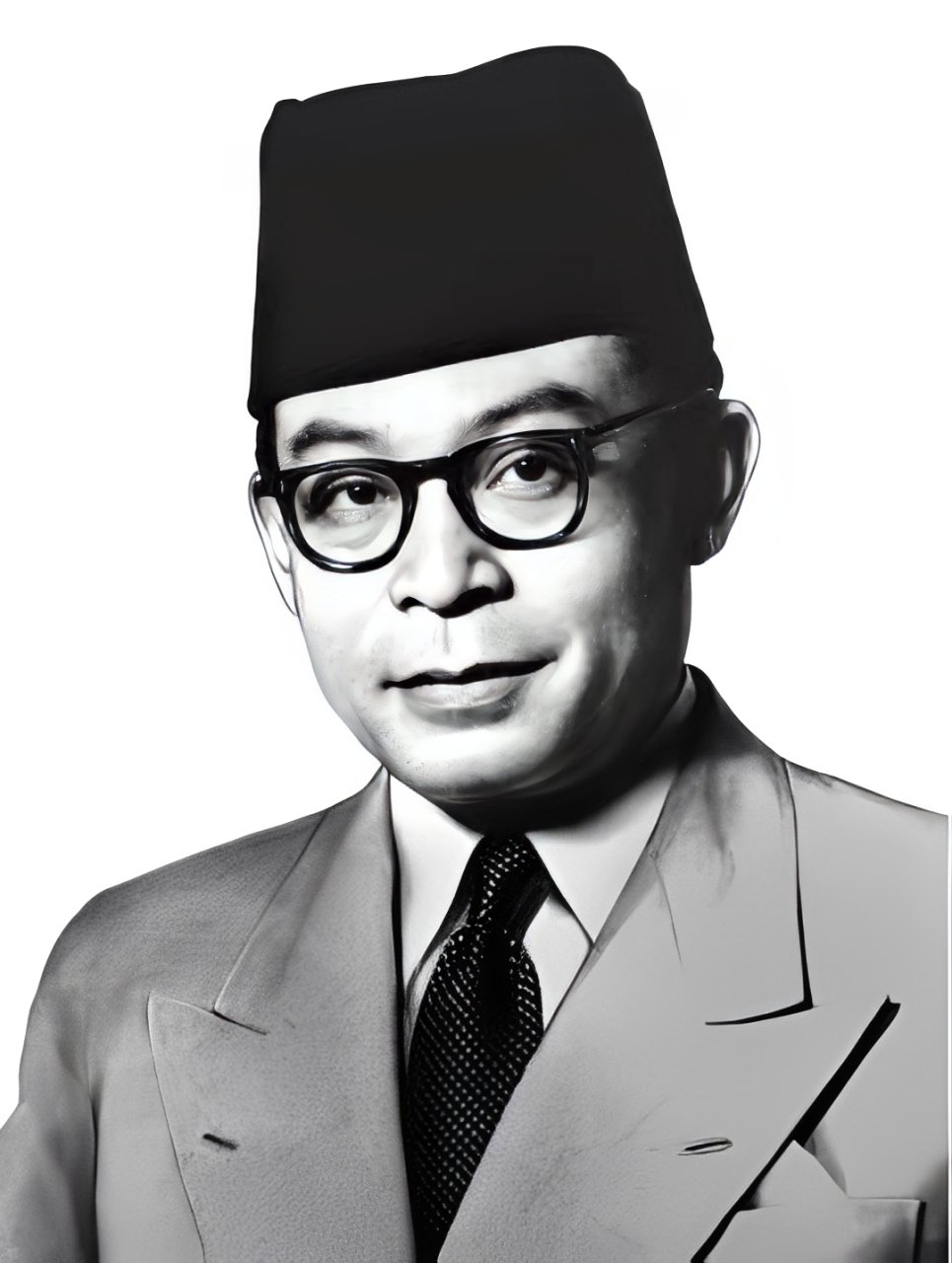
Commons traces this portrait to Indonesia’s Ministry of Finance (DJKN) but does not name the original photographer or date. Its Indonesian public-domain rationale cites Article 43 of Law 28/2014; that jurisdiction-specific rationale is not a worldwide copyright clearance.
- 6. Directorate of Cultural Heritage Protection, IndonesiaProklamasi di Pegangsaan Timur
The museum account documents Hatta’s shared role in the proclamation and his appointment as vice president, distinct from Sukarno’s presidency.
- 7. Directorate General of Culture, IndonesiaRengasdengklok historical account of the independence proclamation
Government heritage account specifies that Sukarno read the proclamation aloud on 17 August 1945 with Hatta at his side; the two men signed the text.
- 8. The ANNALS of the American Academy of Political and Social ScienceHatta and Co-operatives: The Middle Way for Indonesia?
The accessible abstract of Benjamin Higgins’s 1958 assessment supplies the interpretation of Hatta’s economic programme; the complete paywalled article was not read. Its judgements are not established policy outcomes.