The short answer
Southeast Asia does not have one decolonisation sequence. The shortest useful answer is a country-by-country table; the accurate answer also distinguishes declarations from recognition, federation from separation and first proclamation from restored independence.
The direct comparison
Independence dates for all 11 Southeast Asian countries
The primary marker is the date most useful for a quick answer. The other column preserves the declaration, recognition or constitutional milestone that explains why reliable sources may show another date.
| Country | Primary marker | Other date readers see | Why both matter |
|---|---|---|---|
| Brunei | 1 January 1984 | 29 September 1959 | The 1959 Constitution created internal self-government; Britain relinquished defence and foreign-affairs responsibilities in 1984. |
| Cambodia | 9 November 1953 | 21 July 1954 | French authority was transferred in 1953; the Geneva settlement confirmed Cambodia’s independent international position in 1954. |
| Indonesia | 17 August 1945 | 27 December 1949 | The republic proclaimed independence in 1945; the Netherlands transferred sovereignty after four years of revolution and negotiation. |
| Laos | 22 October 1953 | 12 October 1945 · 21 July 1954 | Lao Issara proclaimed independence in 1945, France recognised full sovereignty in 1953 and Geneva confirmed the settlement in 1954. |
| Malaysia | 31 August 1957 | 16 September 1963 | The Federation of Malaya became independent in 1957; Malaysia was formed with Sabah, Sarawak and Singapore in 1963. |
| Myanmar | 4 January 1948 | 12 February 1947 | Independence from Britain followed the Panglong federal agreement and constitution-making of 1947. |
| Philippines | 12 June 1898 | 4 July 1946 | The First Republic grew from the 1898 declaration; the United States relinquished sovereignty in 1946. The official holiday moved to 12 June in 1964. |
| Singapore | 9 August 1965 | 3 June 1959 · 16 September 1963 | Self-government preceded merger with Malaysia; separation in 1965 created the sovereign republic. |
| Thailand | No colonial independence date | 24 June 1932 · 1937–1938 | Siam avoided direct European colonial rule; constitutional change and treaty revisions ended major limits imposed by unequal treaties. |
| Timor-Leste | 20 May 2002 | 28 November 1975 | The 1975 proclamation preceded Indonesian occupation; sovereignty was restored after the 1999 vote and UN transition. |
| Vietnam | 2 September 1945 | 21 July 1954 · 2 July 1976 | The declaration founded the Democratic Republic; Geneva ended French rule, while reunification created today’s Socialist Republic. |
Chronology
A timeline of the turning points
Philippine independence declared
Emilio Aguinaldo proclaimed independence from Spain, a claim followed by the First Philippine Republic and war with the United States.
Siam became a constitutional monarchy
A revolution replaced absolute monarchy; treaty revisions later recovered fuller judicial and fiscal sovereignty without a colonial transfer.
Indonesia proclaimed independence
Sukarno and Mohammad Hatta announced the republic after Japan’s surrender.
Vietnam declared independence
Ho Chi Minh proclaimed the Democratic Republic of Vietnam at Ba Dinh Square.
Lao Issara proclaimed an independent Laos
The nationalist government sought to prevent the return of French colonial authority.
United States relinquished Philippine sovereignty
The Third Republic was inaugurated under President Manuel Roxas.
Burma became independent
The Union of Burma left the British Empire with Sao Shwe Thaik as president and U Nu as prime minister.
Dutch–Indonesian sovereignty transfer
The transfer brought international recognition after the Indonesian National Revolution.
Laos and Cambodia completed major transfers
France recognised full Lao sovereignty in October; Cambodia celebrated full independence on 9 November.
Federation of Malaya became independent
Tunku Abdul Rahman proclaimed Merdeka after elections, negotiation and constitutional agreement.
Singapore became an independent republic
Separation from Malaysia created a sovereign state after self-government and two years of merger.
Brunei achieved full independence
Britain relinquished responsibility for defence and foreign affairs under the 1979 treaty.
Timor-Leste restored independence
UNTAET transferred authority after the 1975 declaration, Indonesian occupation and the 1999 popular consultation.
Timor-Leste became ASEAN’s eleventh member
ASEAN’s membership expanded to include all eleven sovereign states in Southeast Asia.
Why is there no single Southeast Asian independence pattern?
The region moved out of empire through revolutions, negotiated transfers, war, federation and separation. British rule ended through different constitutional arrangements in Burma, Malaya, Singapore and Brunei. Dutch recognition of Indonesia followed an armed and diplomatic revolution. French Indochina broke apart through overlapping declarations, treaties and international settlements.
The Philippines passed from Spanish to American rule, making 1898 and 1946 both essential. Timor-Leste declared independence from Portugal in 1975 but was invaded days later, so the restored sovereignty of 2002 cannot be understood without the earlier proclamation.
Why can one country have more than one independence date?
A declaration establishes a political claim; it does not guarantee effective control or international recognition. Indonesia’s 17 August 1945 proclamation is the republic’s founding date, while 27 December 1949 records the Dutch transfer of sovereignty. Vietnam’s 1945 declaration preceded war with France and later national division.
Other pairs distinguish constitutional events. Malaya became independent in 1957, while Malaysia was formed in 1963. Singapore gained self-government in 1959, joined Malaysia in 1963 and became a separate sovereign republic in 1965. Clear biography and history pages must name which event a date represents rather than choosing one without explanation.
Was Thailand ever colonized?
Thailand—then Siam—was not placed under direct European colonial rule. Its rulers preserved formal independence through diplomacy, state reform and territorial concessions while British and French empires expanded around it.
Independence did not mean complete freedom from unequal power. Extraterritorial courts and limits on taxation constrained sovereignty until treaties were revised in the late 1930s. Thailand therefore has no modern decolonisation day comparable to its neighbours, but it does have a history of defending and recovering dimensions of sovereignty.
How did independent states become a regional system?
Indonesia, Malaysia, the Philippines, Singapore and Thailand founded ASEAN on 8 August 1967. Brunei joined in 1984, Vietnam in 1995, Laos and Myanmar in 1997, and Cambodia in 1999. The sequence followed decolonisation but also the wars and ideological divisions of the Cold War.
Timor-Leste became ASEAN’s eleventh member on 26 October 2025. Membership does not erase different constitutional orders or historical disputes; it provides a shared institution linking every sovereign Southeast Asian state for the first time.
Continue the chronology
Related history guides
Connected biographies
Eight lives across declaration, negotiation, federation and restoration
 Philippines · Politics
1869—1964
Emilio Aguinaldo
Revolutionary leader and first president of the PhilippinesA revolutionary commander who declared independence from Spain and became president of the First Philippine Republic.Read biography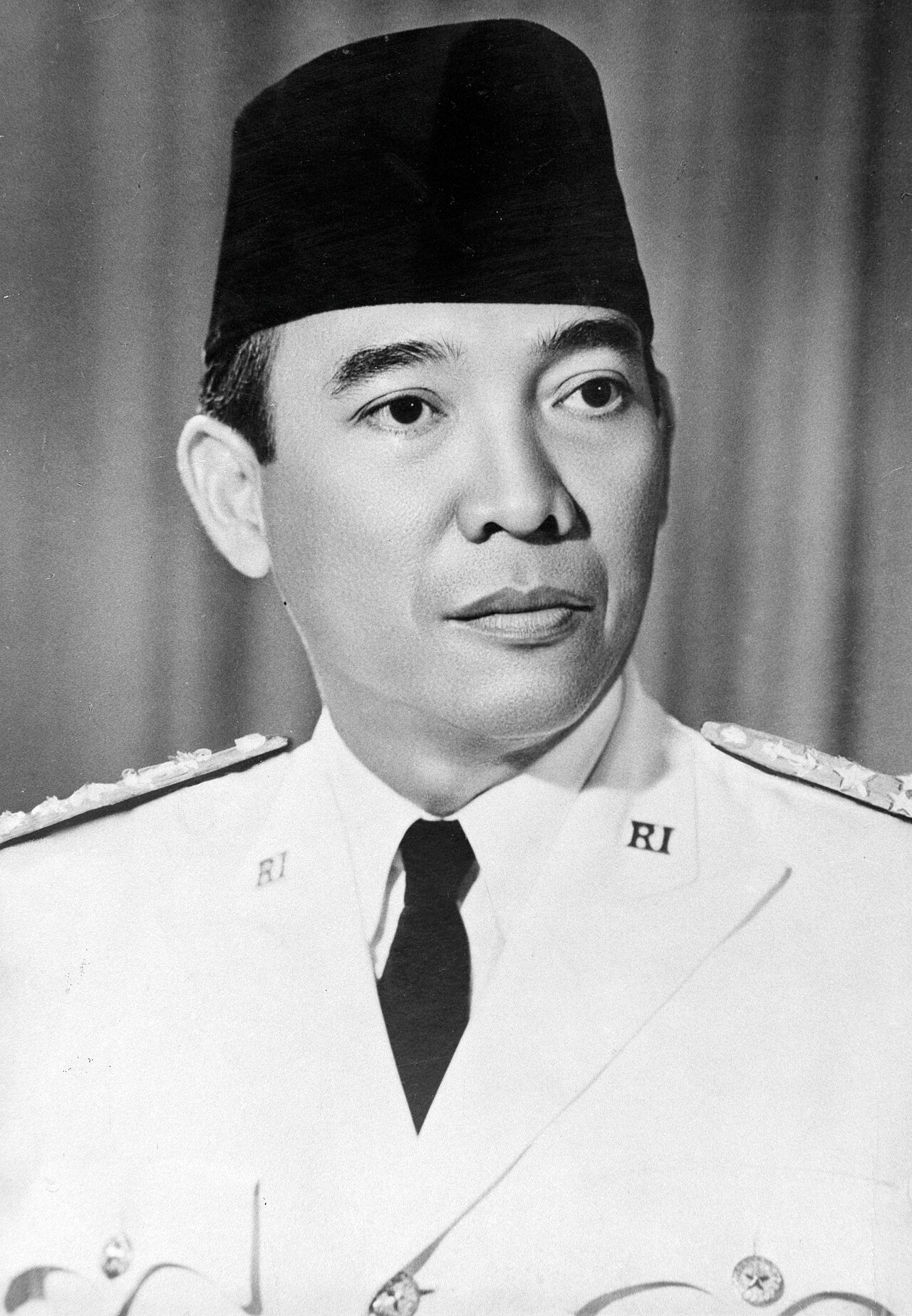 Indonesia · Politics
1901—1970
Sukarno
First President of IndonesiaAn independence leader, orator and Indonesia’s first president, who helped unite a vast archipelago around a new republic.Read biography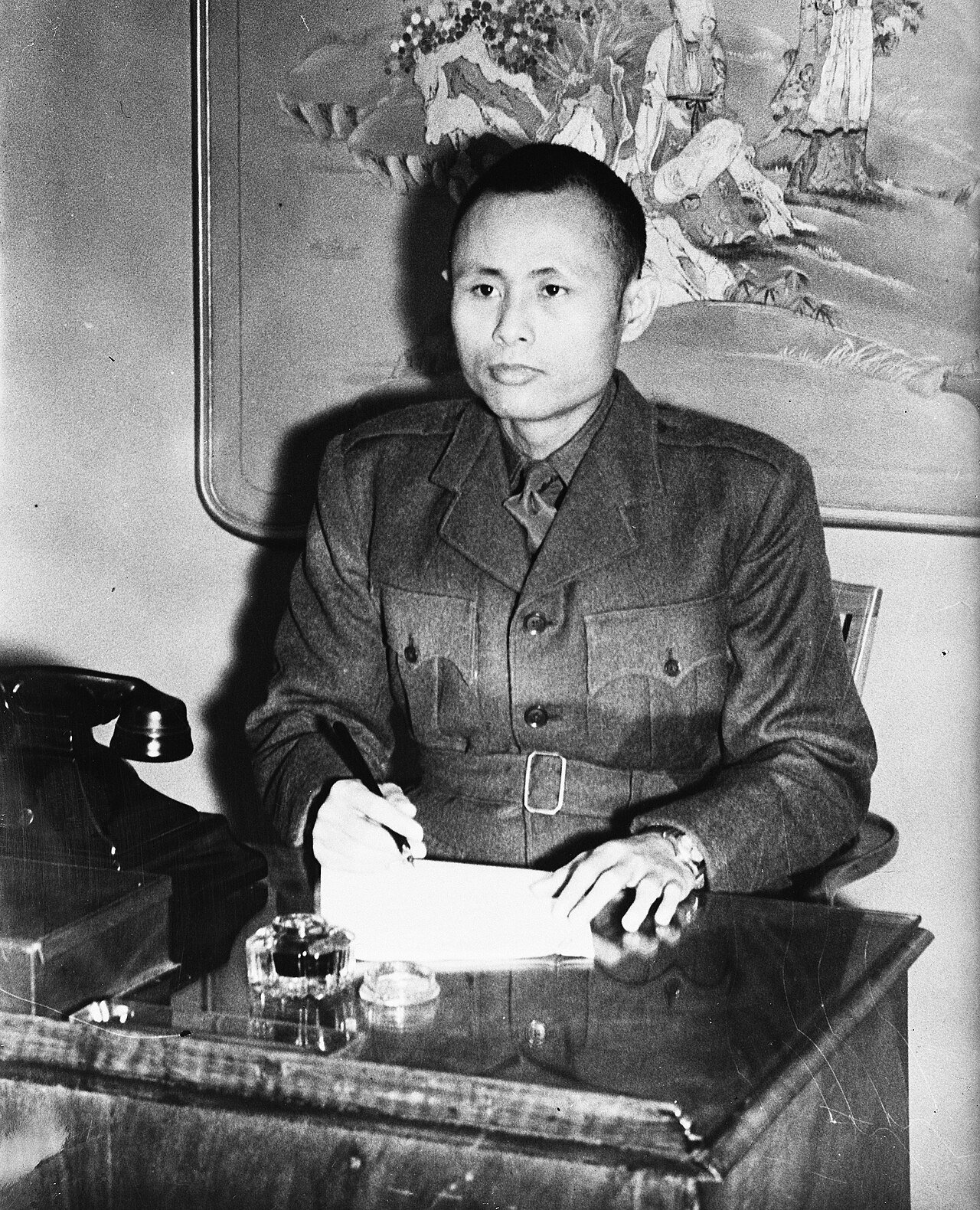 Myanmar · Politics
1915—1947
Aung San
Independence leader and architect of modern BurmaThe nationalist organiser and military leader who negotiated Burma’s route to independence but was assassinated before sovereignty arrived.Read biography Cambodia · Politics
1922—2012
Norodom Sihanouk
King, head of state and independence leaderThe king, independence campaigner and head of state whose long public career crossed colonial rule, neutrality, civil war, exile and Cambodia’s restored monarchy.Read biography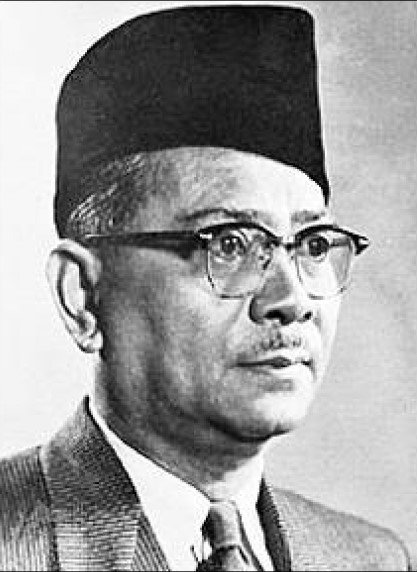 Malaysia · Politics
1903—1990
Tunku Abdul Rahman
First Prime Minister of MalaysiaThe independence leader who became Malaya’s first prime minister and helped define the federation that would become modern Malaysia.Read biography Singapore · Politics
1923—2015
Lee Kuan Yew
Founding Prime Minister of SingaporeSingapore’s founding prime minister, who led the country through self-government, merger with Malaysia, separation and its first decades of independence.Read biography Brunei · Politics
1946—
Hassanal Bolkiah
29th Sultan and prime minister of BruneiThe 29th Sultan who led Brunei into full independence in 1984 and has combined the offices of monarch and prime minister.Read biography Timor-Leste · Politics
1946—
Xanana Gusmão
Resistance leader, president and prime ministerA resistance commander, political prisoner and state-builder who became Timor-Leste’s first elected president and later returned to government as prime minister.Read biographyQuick answers
Common questions
- Which Southeast Asian country became independent first?
- The answer depends on the definition. The Philippines declared independence in 1898, but U.S. sovereignty ended in 1946. Indonesia and Vietnam made enduring national declarations in 1945.
- Which Southeast Asian country was never colonized?
- Thailand, formerly Siam, avoided direct European colonial rule, although unequal treaties and territorial concessions limited parts of its sovereignty.
- What was the last Southeast Asian country to gain independence?
- Timor-Leste restored independence on 20 May 2002 after Indonesian occupation and a United Nations transition.
- Why does Indonesia have two independence dates?
- 17 August 1945 marks the Indonesian proclamation; 27 December 1949 marks the Dutch transfer of sovereignty after four years of revolution.
- Why does the Philippines celebrate 12 June instead of 4 July?
- 12 June commemorates the 1898 declaration. The United States relinquished sovereignty on 4 July 1946, but a 1964 law designated 12 June as Philippine Independence Day.
- When did Malaysia become independent?
- The Federation of Malaya became independent on 31 August 1957. Malaysia was formed on 16 September 1963 with Malaya, Sabah, Sarawak and Singapore.
- Are all Southeast Asian countries now ASEAN members?
- Yes. Timor-Leste became ASEAN’s eleventh member on 26 October 2025, completing membership across the region’s eleven sovereign states.
Primary and institutional sources
How this history was checked
Dates, legal milestones and historical claims are checked against the official and institutional records below. This article was reviewed on 9 September 2026.
- National Archives of MalaysiaDeclaration of Independence of the Federation of Malaya
- National Library Board SingaporeSingapore separates from Malaysia and becomes independent
- State Secretariat of the Republic of IndonesiaThe Moments of the Proclamation, 17 August 1945
- Ministry of Foreign Affairs of ThailandComplete Independence: treaty revision after 1932
- The Lawphil ProjectRepublic Act No. 4166: Philippine Independence Day
- Government of VietnamIndependence — Freedom — Happiness
- Extraordinary Chambers in the Courts of CambodiaHistorical context: Cambodia achieves independence
- Office of the Historian, U.S. Department of StateRecognition and diplomatic relations with Laos
- Information Department of Brunei DarussalamBrunei in Brief 2017
- UK LegislationBurma Independence Act 1947
- United Nations PeacekeepingUNTAET background, mandate and transfer of authority
- ASEANASEAN history and eleven member states