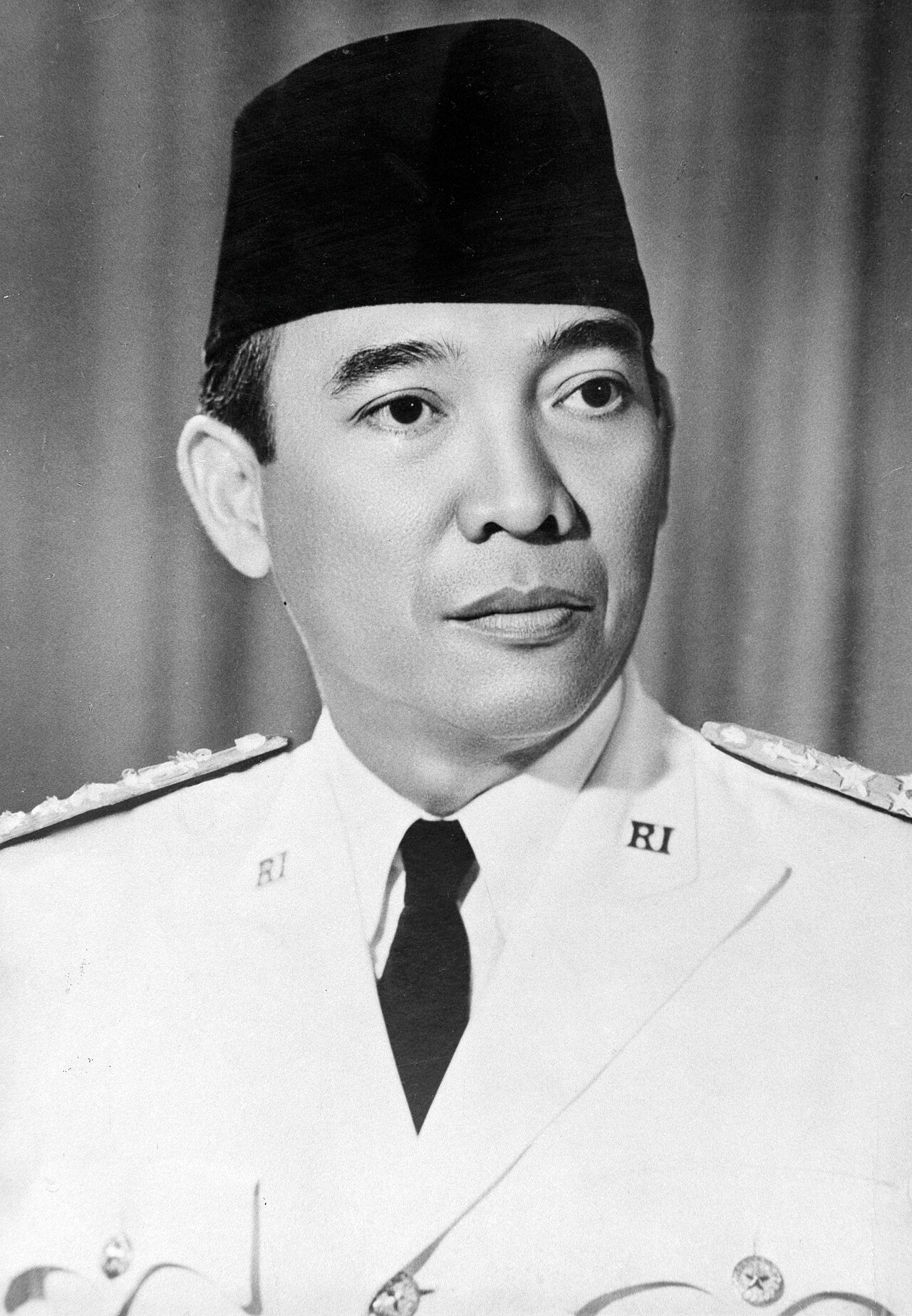
In this biography
Quick facts
- Born
- 6 June 1901
- Died
- 21 June 1970
- Birthplace
- Surabaya, East Java
- Country
- Indonesia
- Nationality
- Indonesian
- Known for
- Proclaiming Indonesian independence and serving as the republic’s founding president
- Office
- President, 1945–1967
- Historic act
- Proclamation of Independence, 17 August 1945
- Political concept
- Guided Democracy
- Also known as
- Bung Karno
Why this life matters
Sukarno made anti-colonial nationalism, Pancasila and a commanding presidential voice central to Indonesia’s founding era, while his later rule and regional confrontation remain contested.
Timeline
Key moments
Founded the PNI
Helped establish the Indonesian National Party and became a leading voice against Dutch colonial rule.
Proclaimed independence
Read the proclamation with Mohammad Hatta on 17 August and became the republic’s first president.
Hosted the Bandung Conference
Welcomed Asian and African leaders to a landmark meeting of post-colonial states.
Introduced Guided Democracy
Restored the 1945 Constitution and concentrated authority in the presidency.
Lost presidential authority
Was replaced by Suharto after the political and military crisis that followed 1965.
The voice of independence
Born in Surabaya and trained as an engineer in Bandung, Sukarno emerged as one of the most visible leaders of Indonesian nationalism. Colonial authorities imprisoned and exiled him, but his speeches helped give a shared political language to a diverse independence movement.
Founding a republic
Sukarno and Mohammad Hatta proclaimed independence in August 1945. During the revolution against Dutch rule, Sukarno served as the new republic’s central symbol; after sovereignty was transferred in 1949, he worked to hold together a large, multilingual archipelago through Pancasila and national institutions.
Guided Democracy and a divided legacy
Frustrated by parliamentary instability, Sukarno moved toward Guided Democracy in 1959. His international leadership and anti-colonial appeal were accompanied by economic disorder, limits on political competition and Konfrontasi against Malaysia. The crisis of 1965 shifted power to Suharto and ended Sukarno’s rule.
Quick answers
Frequently asked questions about Sukarno
- Who was Sukarno?
- Sukarno was a first President of Indonesia. Sukarno made anti-colonial nationalism, Pancasila and a commanding presidential voice central to Indonesia’s founding era, while his later rule and regional confrontation remain contested.
- What is Sukarno best known for?
- Sukarno is best known for proclaiming Indonesian independence and serving as the republic’s founding president.
- When and where was Sukarno born?
- Sukarno was born on 6 June 1901 in Surabaya, East Java.
- When did Sukarno die?
- Sukarno died on 21 June 1970.
Sources and further reading
How this biography was checked
Core dates and offices are checked against the sources below. This profile was last reviewed on 8 September 2026.