In this biography
Quick facts
- Born
- 22 July 1917
- Died
- 5 September 1984
- Birthplace
- Pematangsiantar, North Sumatra
- Country
- Indonesia
- Nationality
- Indonesian
- Known for
- Co-founding Antara, helping establish ASEAN and leading the UN General Assembly
- Office
- Vice President, 1978–1983
- Foreign minister
- 1966–1977
- Founded
- Antara news agency, 1937
- UN role
- President of the 26th General Assembly session, 1971
Why this life matters
Adam Malik’s career connects youth activism and journalism with the regional reconciliation that created ASEAN and Indonesia’s increasingly confident multilateral diplomacy.
Timeline
Key moments
Co-founded Antara
Created a nationalist press bureau that became Indonesia’s national news agency.
Joined the independence generation
Worked with younger activists around the events preceding the 17 August proclamation.
Helped negotiate the West New Guinea settlement
Led an Indonesian negotiating team in talks with the Netherlands; the August agreement then set out a UN transition and a promised act of free choice.
Became foreign minister
Entered the office during the transition from Sukarno to Suharto and moved to repair regional relations.
Signed the ASEAN Declaration
Represented Indonesia among five signatories who founded ASEAN in Bangkok; Malaysia’s signatory was Deputy Prime Minister Tun Abdul Razak.
Presided over the UN General Assembly
Served as president of the General Assembly’s twenty-sixth session, which met from September to December.
Led the assembly and became vice president
Chaired Indonesia’s People’s Consultative Assembly in 1977–1978, then served as the third vice president from 1978 to 1983.
From North Sumatra to the news desk
Adam Malik was born in Pematang Siantar, North Sumatra, in 1917. He attended a Dutch-run primary school and a religious school, then entered nationalist politics while still a teenager. A United Nations biography prepared for his 1971 General Assembly presidency records his election as a local Partai Indonesia chairman in 1934. He subsequently moved to Java, where journalism and political organisation became intertwined.
On 13 December 1937, Malik and colleagues founded the Antara press bureau. The agency supplied a channel for Indonesian reporting at a time when colonial information networks shaped much of the public record. Antara later became the national news agency. Malik did not leave politics for journalism: his 1940–1941 Gerindo executive role and subsequent independence-era activities show the two paths developing together.
Independence, parliament and West New Guinea
After the 1945 proclamation, Malik worked in the young republic’s representative institutions and helped establish political parties, including Murba in 1948. He won a seat in the House of Representatives in 1956. His diplomatic career began with an ambassadorship to the Soviet Union and Poland in 1959, carrying a nationalist organiser into negotiations between states.
In March 1962 Malik led Indonesian talks with the Netherlands over West New Guinea. Those negotiations formed part of a wider process that produced the August New York Agreement. The agreement provided for a United Nations transitional administration and promised the territory’s inhabitants an opportunity to exercise freedom of choice. Describing Malik’s negotiating role is not the same as saying he alone settled the territory’s later political future; the agreement’s self-determination provisions remained a separate issue.
Reconciliation and ASEAN
Malik became foreign minister in March 1966, during Indonesia’s political transition from Sukarno to Suharto. The following year he signed the Bangkok Declaration for Indonesia alongside Narciso Ramos of the Philippines, Tun Abdul Razak of Malaysia, S. Rajaratnam of Singapore and Thanat Khoman of Thailand. Their five governments established ASEAN as a framework for regular regional cooperation after years of confrontation and mistrust.
ASEAN’s own account says Malik had explored the idea of such an organisation with Malaysian and Thai counterparts after 1966 peace talks in Bangkok. Khoman later recalled the early discussion and attributed the name ASEAN to Malik. That naming detail is a participant’s retrospective account, while the five signatures and the declaration’s date are established by the founding document and ASEAN’s institutional history.
A UN presidency and an Indonesian vice presidency
In 1971 Malik presided over the twenty-sixth session of the United Nations General Assembly. The UN Yearbook dates the session from 21 September to 22 December and identifies him as its president. The role was an elected assembly presidency, not the post of UN Secretary-General. It placed an Indonesian diplomat in the chair during a significant period of global realignment.
Back in Indonesia, Malik chaired the People’s Consultative Assembly in 1977–1978 before becoming the republic’s third vice president. The vice-presidential secretariat dates his term to 1978–1983. His career had therefore crossed the press, party politics, parliament, diplomacy and executive office. That range is the clearest way to understand his public importance without crediting any one person with the whole of Indonesia’s independence or ASEAN’s creation.
Quick answers
Frequently asked questions about Adam Malik
- Who was Adam Malik?
- An Indonesian journalist and diplomat who co-founded Antara, became foreign minister and later served as the country’s third vice president.
- When did Adam Malik help found Antara?
- Antara’s institutional history dates its founding to 13 December 1937 and names Malik among four founders.
- Was Adam Malik a UN Secretary-General?
- No. He was president of the twenty-sixth session of the UN General Assembly in 1971, a different office.
- When was Adam Malik vice president of Indonesia?
- He was the third vice president from 1978 to 1983, after chairing the People’s Consultative Assembly in 1977–1978.
Keep exploring
Lives connected to this story
- S. Rajaratnam
Singapore’s ASEAN founding signatory and long-serving foreign minister.
- Abdul Razak Hussein
Malaysia’s ASEAN founding signatory during regional reconciliation.
- H.R. Darsono
Distinguish ASEAN’s 1967 founding signatory from the first head of its permanent Secretariat in 1976.
Sources and further reading
Explore the evidence
These references support the biography and offer further reading. Official records, first-person accounts and independent reporting provide different perspectives; image records document attribution and licensing.
- 1. United NationsAdam Malik biography as President of the 26th General Assembly
The UN biography was written in 1971. It supports Malik’s earlier life and offices through that date, not his later vice presidency.
- 2. ASEAN SecretariatThe Founding of ASEAN
- 3. ASEAN SecretariatASEAN Conception and Evolution by Thanat Khoman
Khoman’s account of the organisation’s naming is a participant memoir, distinct from the contemporary declaration and ASEAN’s five-signatory record.
- 4. National Archives of IndonesiaAdam Malik archival source-volume launch
- 5. United Nations PeacemakerAgreement concerning West New Guinea, 1962
Articles XVII–XVIII of the 1962 agreement promised an act of free choice; Malik’s role in negotiations is not presented as resolving the later self-determination dispute.
- 6. United NationsUN Yearbook: 1971 General Assembly officers
- 7. People’s Consultative Assembly of IndonesiaFormer chairs of the People’s Consultative Assembly
- 8. Office of the Vice President of IndonesiaIndonesian vice presidents by term
- 9. Indonesian National Heroes Families AssociationAdam Malik national hero profile
- 10. Wikimedia CommonsAdam Malik official portrait and public-domain record
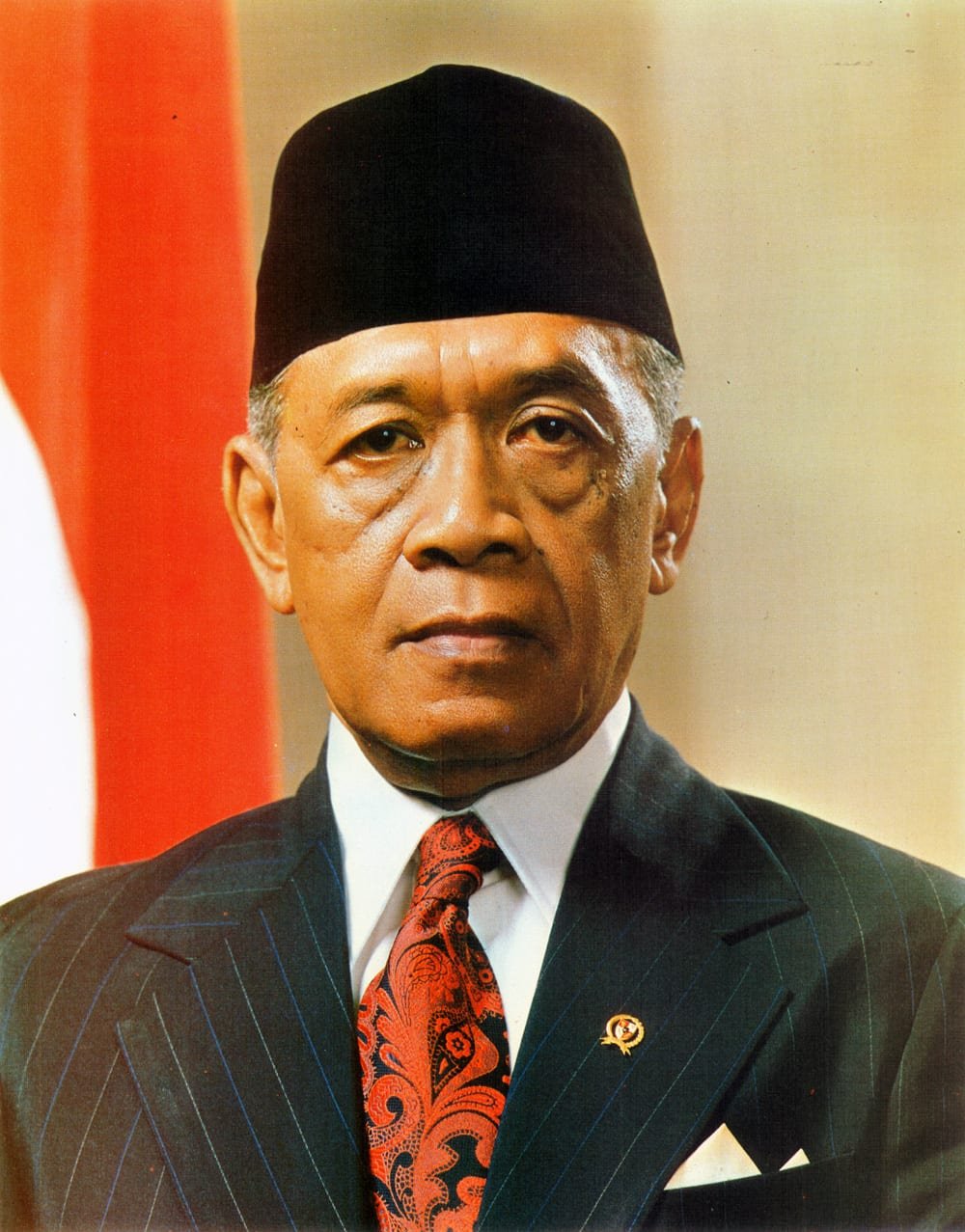
Commons attributes the portrait to Indonesia’s Vice Presidential Secretariat. Its 2015 camera metadata appears to describe a later reproduction or digitisation, not an original sitting by Malik, who died in 1984. The local image is resized and is not byte-identical to the Commons file.
- 11. ANTARASejarah Singkat: four founders and the 13 December 1937 foundation
The agency’s own history lists four founders. Malik is described as a co-founder, not the sole creator of Antara.
- 12. National Archives of IndonesiaPresidential archives: Adam Malik Batubara as vice president
The presidential archive corroborates the fuller Adam Malik Batubara name. The UN presidency remains the 26th General Assembly session, not Secretary-General or the wrapper’s inconsistent 62nd-session label.