In this biography
Quick facts
- Born
- 20 April 1911
- Died
- 9 October 1995
- Birthplace
- In Buri, Sing Buri, Thailand
- Country
- Thailand
- Nationality
- Thai
- Known for
- Leading a multiparty coalition in 1975–1976 and writing Four Reigns
- Prime minister
- 14 March 1975 – 20 April 1976
- Political party
- Social Action Party
- Newspaper founded
- Siam Rath, 1950
- Major novel
- Four Reigns
Why this life matters
Kukrit connected literature and public commentary to a short but consequential premiership that decentralised rural spending, established relations with China and accelerated the departure of United States forces.
Timeline
Key moments
Born in Sing Buri
Born on 20 April into a family connected to the Chakri dynasty while his father was travelling to a new military posting.
Worked in finance and entered public life
Returned from Oxford to work in government and banking before taking political office after the Second World War.
Founded Siam Rath
Created a newspaper that became the principal platform for his commentary, criticism and serialised fiction.
Led the appointed legislature
Served as president of the National Legislative Assembly during the transition after the October 1973 uprising.
Built a coalition and became prime minister
Turned the Social Action Party’s eighteen seats into the centre of a multiparty government after Seni Pramoj’s minority cabinet fell.
Established diplomatic relations with China
Signed the joint communiqué with Chinese premier Zhou Enlai in Beijing.
Left office after an early election
Dissolved the House amid coalition instability; the Democrats won the April election and Seni returned as prime minister.
Received the Fukuoka Prize
Received the inaugural Special Commemorative Prize for his work as a writer, journalist and statesman.
Died in Bangkok
Died on 9 October at the age of 84.
Finance, journalism and an unusually broad public career
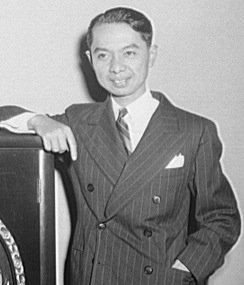
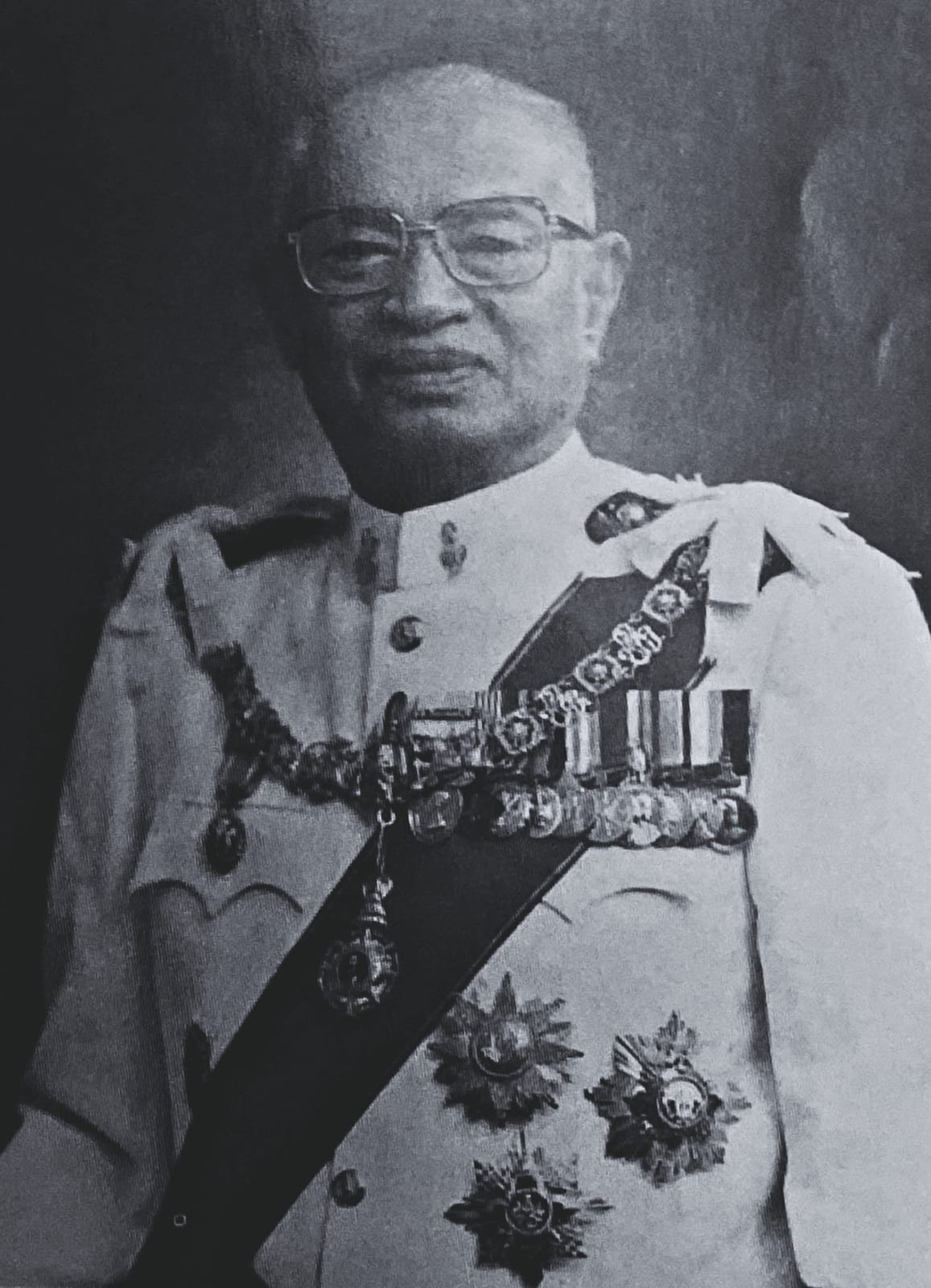
Kukrit Pramoj was born in Sing Buri in 1911 into a junior branch of the Chakri royal family. He studied in England and read philosophy, politics and economics at the Queen’s College, Oxford. Back in Siam, he worked in the Finance Ministry and commercial banking, then moved between business, state service and politics during the unsettled years surrounding the Second World War.
In 1950 he founded Siam Rath, combining ownership and editorial leadership with a prolific daily writing practice. His fiction included Four Reigns, Many Lives and Red Bamboo, works that used households, villages and changing institutions to examine Thai history and social life. The Fukuoka Prize later honoured the range of a career that also included classical dance, theatre, teaching and cultural criticism.
From the 1973 opening to the 1975 coalition
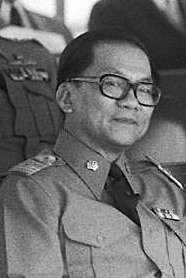
After the October 1973 uprising ended Thanom Kittikachorn’s military government, Kukrit presided over the appointed National Legislative Assembly during the preparation of a new constitution. He then led the Social Action Party into the general election of 26 January 1975. The Democrats won seventy-two of 269 seats, while Social Action won only eighteen; more than twenty parties entered the House and neither conservative nor centrist groupings commanded a majority.
Seni Pramoj, Kukrit’s older brother, first formed a minority cabinet, but it soon fell. Kukrit assembled a broader coalition and became prime minister in mid-March. The outcome demonstrated both the possibility and the fragility of parliamentary bargaining: a small party could construct a government, yet the number of coalition partners made cabinet discipline and a stable legislative programme exceptionally difficult.
Rural policy and a more independent foreign policy
Kukrit’s coalition programme emphasised inequality between Bangkok and the provinces. Its tambon development initiative directed central funds toward local projects, making decentralised rural spending one of the government’s most remembered domestic policies. The administration also proposed income support, agricultural investment and expanded services, although its short life and divided parliamentary base limited implementation.
Foreign policy produced clearer landmarks. On 1 July 1975 Kukrit and Zhou Enlai signed the communiqué establishing diplomatic relations between Thailand and the People’s Republic of China. His government also pressed for the withdrawal of United States forces based in Thailand after the Vietnam War. Negotiations continued into 1976, when the government announced that remaining forces would have to leave within four months after talks over a residual presence failed.
An early election and a cultural legacy beyond office
Coalition disputes led Kukrit to dissolve the House in January 1976. The April election strengthened the Democrats, returned Seni to the premiership and cost Kukrit his own parliamentary seat. Six months later, the Thammasat massacre and military coup ended the democratic opening in which both brothers had governed. Kukrit’s premiership therefore belongs to a brief interval between military regimes rather than a consolidated parliamentary era.
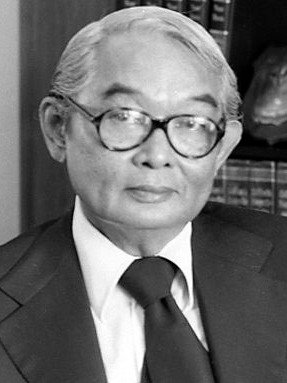
He remained an influential writer and commentator long after leaving office. Four Reigns in particular became a major literary route into the social and political transformations spanning four reigns. Remembering Kukrit only as a prime minister misses that wider cultural influence; remembering only the novelist, however, obscures the coalition choices, rural-development ideas and foreign-policy realignment attached to his year in government.
Quick answers
Frequently asked questions about Kukrit Pramoj
- Who was Kukrit Pramoj?
- Kukrit Pramoj was the 13th Prime Minister of Thailand and writer. Kukrit connected literature and public commentary to a short but consequential premiership that decentralised rural spending, established relations with China and accelerated the departure of United States forces.
- What is Kukrit Pramoj best known for?
- Kukrit Pramoj is best known for leading a multiparty coalition in 1975–1976 and writing Four Reigns.
- When and where was Kukrit Pramoj born?
- Kukrit Pramoj was born on 20 April 1911 in In Buri, Sing Buri, Thailand.
- When did Kukrit Pramoj die?
- Kukrit Pramoj died on 9 October 1995.
Sources and further reading
How this biography was checked
Core dates and offices are checked against the sources below. This profile was last reviewed on 3 October 2026.
- Secretariat of the Prime Minister of ThailandDirectory of Prime Ministers of Thailand
- Inter-Parliamentary UnionThailand parliamentary election, 26 January 1975
- Fukuoka PrizeKukrit Pramoj — Special Commemorative Prize 1990
- Ministry of Foreign Affairs of ThailandGolden Jubilee of Thailand–China Friendship
- Office of the Historian, U.S. Department of StateU.S. force withdrawal negotiations with the Kukrit government
- Wikimedia CommonsKukrit Pramoj portrait and CC BY 2.0 licence record