
The short answer
On 20 October 1977, the same military establishment that had closed Thailand’s elected order in 1976 removed its own appointed prime minister. Kriangsak Chamanan then replaced Thanin Kraivichien, relaxed parts of the repressive system and oversaw a controlled return to elections without ending military influence.
Chronology
A timeline of the turning points
Massacre and coup close the elected order
Police and armed right-wing groups attacked Thammasat University before the National Administrative Reform Council removed Seni Pramoj’s government.
Thanin Kraivichien becomes prime minister
The anti-communist judge was appointed to head a civilian cabinet inside the coup-created system.
An attempted coup fails
A military faction tried to remove the government, but loyal forces regained control within hours.
Military dissatisfaction becomes explicit
Contemporary reporting described growing conflict over repression, the slow transition and Thanin’s unwillingness to change his cabinet.
Troops move on Government House
The armed forces went on alert, and infantry troops with a tank informed Thanin and his ministers that the cabinet had been dismissed.
Radio Thailand announces the takeover
A Revolutionary Party led by Admiral Sangat Chaloryu declared military control and issued orders abolishing the existing governing structure.
Kriangsak Chamanan becomes prime minister
The senior general and coup participant received appointment to lead the new government.
An amnesty ends the 6 October trial
Eighteen detained defendants were released, but the law also closed the central proceedings before responsibility for the massacre was tested.
A new constitution is promulgated
The charter restored an elected House while preserving an appointed Senate and extensive transitional military influence.
Thailand holds a general election
Party competition returned to the House, and Kriangsak continued as prime minister with legislative support despite not contesting a seat.
Kriangsak resigns and Prem succeeds him
Energy-price protests and declining support prompted resignation; the Assembly backed Prem Tinsulanonda under constitutional procedure.
Why did the military remove a government it had installed?
The armed forces had overthrown Seni Pramoj’s elected cabinet on 6 October 1976 and placed Thanin Kraivichien at the head of a new appointed order. Thanin was a civilian judge, but his authority rested on the coup and the National Administrative Reform Council. The arrangement soon produced conflict because the cabinet was less responsive to military direction than its sponsors expected.
Thanin pursued strict censorship, restrictions on labour and universities, removal of suspected leftists and an extended timetable often described as a twelve-year route back to elections. Military officers increasingly argued that this strategy was alienating the public, damaging relations abroad and sending students and activists toward the Communist Party of Thailand. The dispute was not between a democratic military and an authoritarian civilian; it was a struggle inside a coup-created regime over how authoritarian power should be managed.
What happened on 20 October 1977?
The sequence is unusually well documented in a United States embassy telegram sent the next day. The military went on alert around noon. By late afternoon, troops and a tank had taken positions at Government House, where Thanin had convened ministers. The prime minister and cabinet were told they had been dismissed, and Radio Thailand announced at 18:00 that the armed forces had assumed control.
The takeover group called itself the Revolutionary Party and was led publicly by Admiral Sangat Chaloryu, who had also headed the 1976 coup council. Kriangsak Chamanan appeared that evening with the service commanders and police chief after an audience with the king. Thanin and his ministers were not arrested, and contemporary reporting described the transfer as orderly and without major bloodshed.
Who led the 1977 coup?
Sangat was the formal leader of the Revolutionary Party, but the takeover was a collective action by the senior armed-forces command rather than the project of one officer. Kriangsak, then supreme commander, was among its central figures and emerged as the political successor. The composition largely reproduced the military advisory council that had stood behind Thanin.
This distinction matters because Kriangsak did not become prime minister on the night of the coup. Military leaders first removed the cabinet and governed through the Revolutionary Party; Kriangsak received royal appointment on 11 November. Describing the episode as simply “Kriangsak’s coup” captures the outcome but hides the coalition of officers that made the takeover possible.
How did Kriangsak’s government differ from Thanin’s?
Kriangsak’s government remained military-backed and began without an elected legislature, but it adopted a more conciliatory strategy. Press controls were relaxed, the promised political transition was shortened and the government pursued accommodation with some opponents. An amnesty in September 1978 released the defendants still on trial over the 6 October crisis.
The amnesty had two consequences that should be kept together. It freed people detained and prosecuted after the massacre, correcting a central injustice of the Thanin period. It also ended the trial before evidence about organisers, officials and perpetrators could be fully examined, helping leave responsibility for the violence unresolved.
Did the coup lead back to democracy?
A constitution promulgated on 22 December 1978 created an elected House, and voters went to the polls on 22 April 1979. The election was therefore a real institutional reopening after the appointed system of 1976–1978. Parties returned to the legislature, and the government once again needed a working relationship with elected representatives.
The settlement was not full civilian control. The Senate was appointed, transitional provisions protected military influence and Kriangsak remained prime minister without contesting the election. The period is better understood as a controlled parliamentary reopening: electoral politics returned, but unelected institutions continued to shape who could govern and how authority was exercised.
How did war and refugees change the government’s priorities?
Vietnam’s invasion of Cambodia at the end of 1978 transformed Thailand’s security environment. Fighting approached the border, displaced people entered Thailand in large numbers and Bangkok feared that conflict among Vietnam, China, the Soviet Union and Cambodian factions could spread. Kriangsak worked through ASEAN while maintaining defence ties with the United States and communication with China.
His public position emphasised Thai sovereignty and opposition to foreign domination of Cambodia. At the same time, the government sought international assistance for refugees and managed intense pressure over border access, resettlement and security screening. These choices made the 1977–1980 transition part of a regional history, not only a domestic constitutional sequence.
Why did Kriangsak resign in 1980?
Rising oil costs, shortages, inflation and a worsening trade balance weakened public confidence. The government’s large petroleum-price increase triggered student, labour and parliamentary opposition. Military backing also shifted toward Army commander and defence minister Prem Tinsulanonda, making a confidence defeat or wider unrest increasingly likely.
Kriangsak resigned on 29 February rather than force a parliamentary showdown. The National Legislative Assembly coalesced around Prem, who received appointment on 3 March. No new coup was required. That peaceful succession was one of the most important legacies of the post-1977 framework, even though the framework still gave military leaders powers unavailable to ordinary elected politicians.
Continue the chronology
Related history guides
The Thammasat Massacre
Begin with the violence and coup that created the Thanin government.
Read the timeline1975–1976The 1975 Thai General Election
Trace the elected opening and Pramoj governments that preceded military rule.
Read the timeline22 December 1978The 1978 Constitution of Thailand
Continue to the charter that defined Kriangsak’s controlled parliamentary reopening.
Read the timeline22 April 1979The 1979 Thai General Election
Follow the election promised after the coup and the fragmented House it produced.
Read the timeline23 April 1980Order 66/2523 and the Prem Era
Trace Kriangsak’s succession by Prem and the new political approach to counterinsurgency.
Read the timeline1–3 April 1981The 1981 Young Turks Coup Attempt
See how the military coalition behind the 1977 order fractured under Prem.
Read the timeline1932–presentPrime Ministers of Thailand
Compare Thanin, Kriangsak and Prem with every officially numbered premier.
Read the timeline1851–todayThailand History Timeline
Place the coup inside the longer contest over military and parliamentary power.
Read the timelineConnected biographies
Seven biographies connecting the elected opening, two coups, controlled transition and Prem succession
 Thailand · Politics
1927—2025
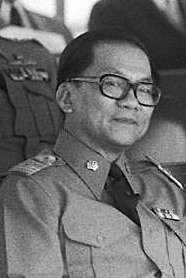
Thanin Kraivichien
14th Prime Minister of Thailand and judgeThe judge and law professor appointed prime minister after the 1976 coup, whose hard-line anti-communist government was removed by another military takeover a year later.Read biography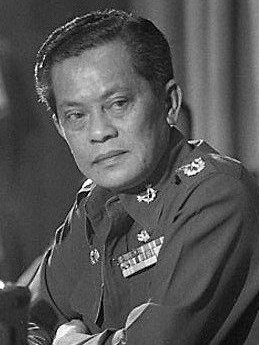 Thailand · Politics
1917—2003
Kriangsak Chamanan
15th Prime Minister of Thailand and military officerThe general who emerged from the October 1977 coup, relaxed parts of Thanin-era repression, restored an elected House and governed during the Indochina refugee crisis.Read biography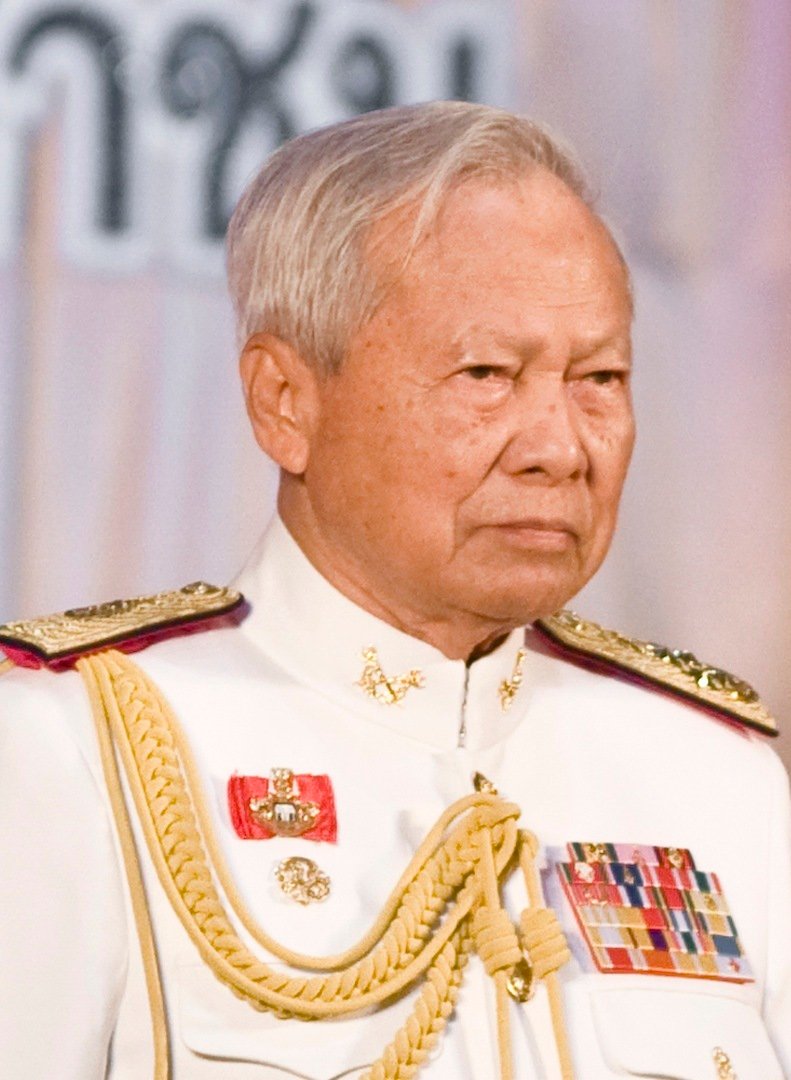 Thailand · Politics
1920—2019
Prem Tinsulanonda
16th Prime Minister of Thailand, 1980–1988The army commander who led Thailand through eight years of parliamentary coalition government before becoming a long-serving royal adviser and regent.Read biography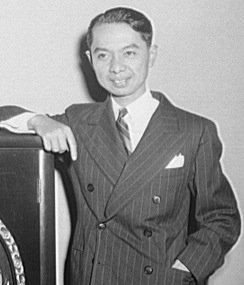 Thailand · Politics
1905—1997
Seni Pramoj
6th Prime Minister of Thailand and Free Thai diplomatThe lawyer and wartime diplomat who refused to deliver Thailand’s declaration of war to Washington, organised Free Thai resistance abroad and later led three governments.Read biography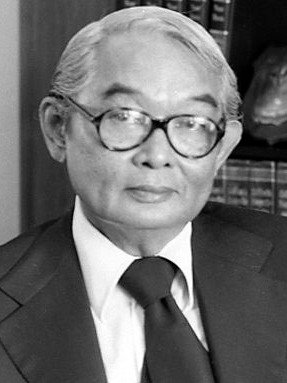 Thailand · Politics
1911—1995
Kukrit Pramoj
13th Prime Minister of Thailand and writerThe writer, newspaper founder and Social Action Party leader who assembled Thailand’s fragmented 1975 coalition and became its thirteenth prime minister.Read biography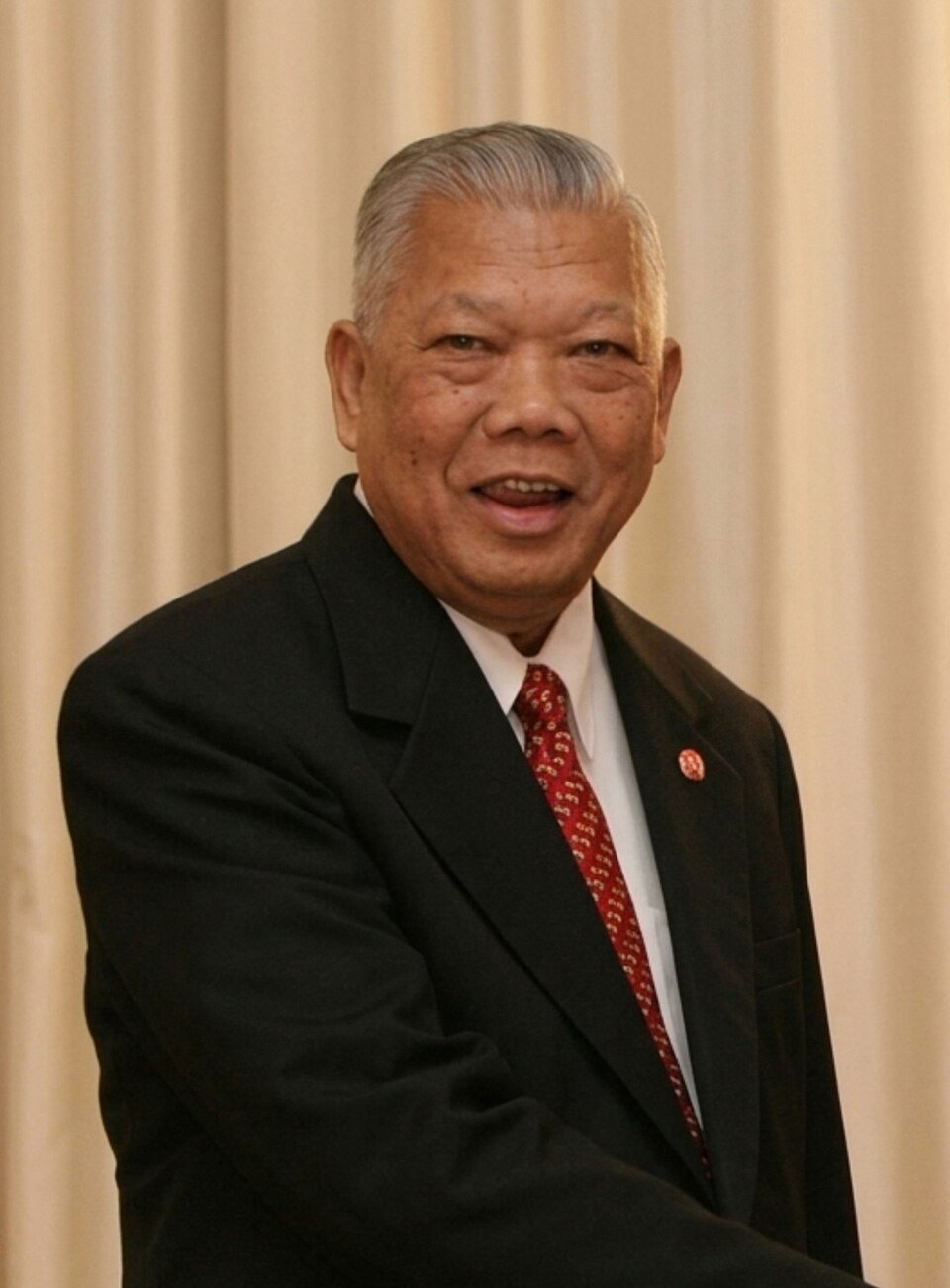 Thailand · Politics
1935—2009
Samak Sundaravej
25th Prime Minister of Thailand, January–September 2008The combative veteran politician, Bangkok governor and television cook who led the first elected government after the 2006 coup before a court ended his premiership.Read biography Thailand · Politics
1927—2016
Bhumibol Adulyadej
King of Thailand, 1946–2016Thailand’s longest-reigning monarch, whose seven decades on the throne spanned rapid development, repeated political crises and profound social change.Read biographyQuick answers
Common questions
- When was the 1977 Thai coup?
- The coup took place on 20 October 1977. Troops moved to Government House in the afternoon, and Radio Thailand announced the removal of Thanin Kraivichien’s cabinet at 18:00.
- Who led the 1977 coup in Thailand?
- Admiral Sangat Chaloryu formally led the Revolutionary Party. General Kriangsak Chamanan was a central member of the senior military group and became prime minister on 11 November.
- Why was Thanin Kraivichien removed?
- Military leaders had become dissatisfied with severe repression, the slow timetable for elections, cabinet inflexibility and the belief that these policies were increasing instability and communist recruitment.
- Was the 1977 coup violent?
- The transfer itself occurred without major bloodshed according to contemporary diplomatic reporting. That does not separate it from the coercive order created after the deadly 1976 massacre and coup.
- When did elections return after the 1977 coup?
- A new constitution was promulgated on 22 December 1978, and a general election for the House was held on 22 April 1979.
- How did Kriangsak Chamanan leave office?
- He resigned on 29 February 1980 amid energy-price protests, parliamentary opposition and declining military support. Prem Tinsulanonda succeeded him on 3 March.
Primary and institutional sources
How this history was checked
Dates, legal milestones and historical claims are checked against the official and institutional records below. This article was reviewed on 3 October 2026.
- Office of the Historian, U.S. Department of StateThai coup: sequence of events, 20 October 1977
- Office of the Historian, U.S. Department of StateMilitary dissatisfaction with Thanin in September 1977
- Office of the Historian, U.S. Department of StateKriangsak’s resignation and the next Thai government
- United Nations Digital LibraryThailand human-rights and constitutional record, 1977–1978
- Inter-Parliamentary UnionThailand general election, 22 April 1979
- World BankThailand’s Macroeconomic Miracle: Stable Adjustment and Sustained Growth
- Secretariat of the Prime Minister of ThailandDirectory of Prime Ministers of Thailand
- Wikimedia CommonsKriangsak Chamanan portrait and CC BY 2.0 licence record