
The short answer
Thailand’s 1983 election followed parliament’s rejection of amendments intended to preserve temporary military and Senate privileges. Social Action won the largest bloc in a 324-seat House, but the non-party General Prem Tinsulanonda remained prime minister through a new coalition—an essential example of the decade’s hybrid political order.
Election results
The leading groups in the 1983 House
Three parties expanded strongly, but the result remained too fragmented for any party leader to claim an automatic premiership.
| Political group | Seats | Share of House | Change from 1979 |
|---|---|---|---|
| Social Action Party | 92 | 28.4% | +10 |
| Chart Thai Party | 73 | 22.5% | +35 |
| Democrat Party | 56 | 17.3% | +24 |
| Prachakorn Thai Party | 36 | 11.1% | +4 |
| Independents | 24 | 7.4% | −39 |
Chronology
A timeline of the turning points
A constitution creates a four-year transition
Temporary rules protected an appointed Senate’s influence and allowed serving officials to hold political office.
The first House under the charter is elected
A fragmented 301-seat chamber later supported Prem’s succession to Kriangsak without a new coup.
Military-backed amendments meet resistance
Proposals sought to preserve transition arrangements that were due to expire in April.
Parliament rejects the amendment bill
The defeat threatened to end joint Senate voting on key questions and political posts for serving officers.
The House is dissolved
Prem brought polling forward from June, leaving the old electoral rules in force for the April contest.
Voters elect a 324-seat House
Turnout was 50.76 per cent, and fourteen parties plus independent candidates contested the election.
Social Action wins the largest bloc
Kukrit Pramoj’s party took 92 seats, ahead of Chart Thai on 73 and the Democrats on 56.
The constitutional transition expires
The appointed Senate lost some of the exceptional joint-voting powers protected during the first four years.
Prem announces a new coalition
Social Action, Democrat, Prachakorn Thai and National Democracy supported the unelected premier.
Parliamentary bargaining becomes more durable
Prem balanced elected parties, technocrats, the palace and military factions until the next early dissolution.
Why did a constitutional dispute trigger the 1983 election?
Thailand’s 1978 Constitution contained transition clauses that preserved a large role for the appointed Senate and permitted serving civil and military officials to occupy political posts. Those provisions were due to expire on 21 April 1983. Prem Tinsulanonda and military allies supported amendments that would retain important parts of the arrangement.
Elected representatives blocked the bill on 16 March. The Inter-Parliamentary Union recorded that the government dissolved the House three days later and moved an election originally expected in June to 18 April. Because polling came before the transition expired, it was conducted under the existing constituency rules rather than a revised system.
How was the election conducted?
All 324 House seats were contested across 126 constituencies, an increase of twenty-three seats from 1979. Provinces generally formed multi-member districts, and voters could cast as many votes as the number of representatives assigned to their constituency. Voting was not compulsory.
The IPU counted 1,450 party candidates from fourteen parties and another 412 independents. The leading organisations were Social Action under former premier Kukrit Pramoj, Chart Thai and the Democrat Party, but personal and provincial networks remained at least as important as national programmes.
What were the principal results?
Social Action won 92 seats and became the largest party. Chart Thai expanded to 73, the Democrats won 56, Prachakorn Thai took 36 and independents won 24. Kriangsak Chamanan’s new National Democracy Party secured 15 seats. No group approached the 163 required for a majority.
The result strengthened the three largest parties compared with 1979, but it did not produce a direct mandate for a party leader to become prime minister. Seat totals describe election-day representation; subsequent defections and party realignments could change parliamentary strength without another national vote.
How many people voted?
There were 24,224,470 registered electors and 12,295,339 voters, giving turnout of 50.76 per cent. The IPU recorded 11,797,167 valid votes and 498,172 blank or void ballots. Participation increased from 43.9 per cent in 1979.
Higher turnout did not erase the structural limits on electoral choice. Voters selected representatives rather than a prime minister, while the appointed Senate, armed forces and royal appointment process remained central to forming a government.
Why did Prem remain prime minister?
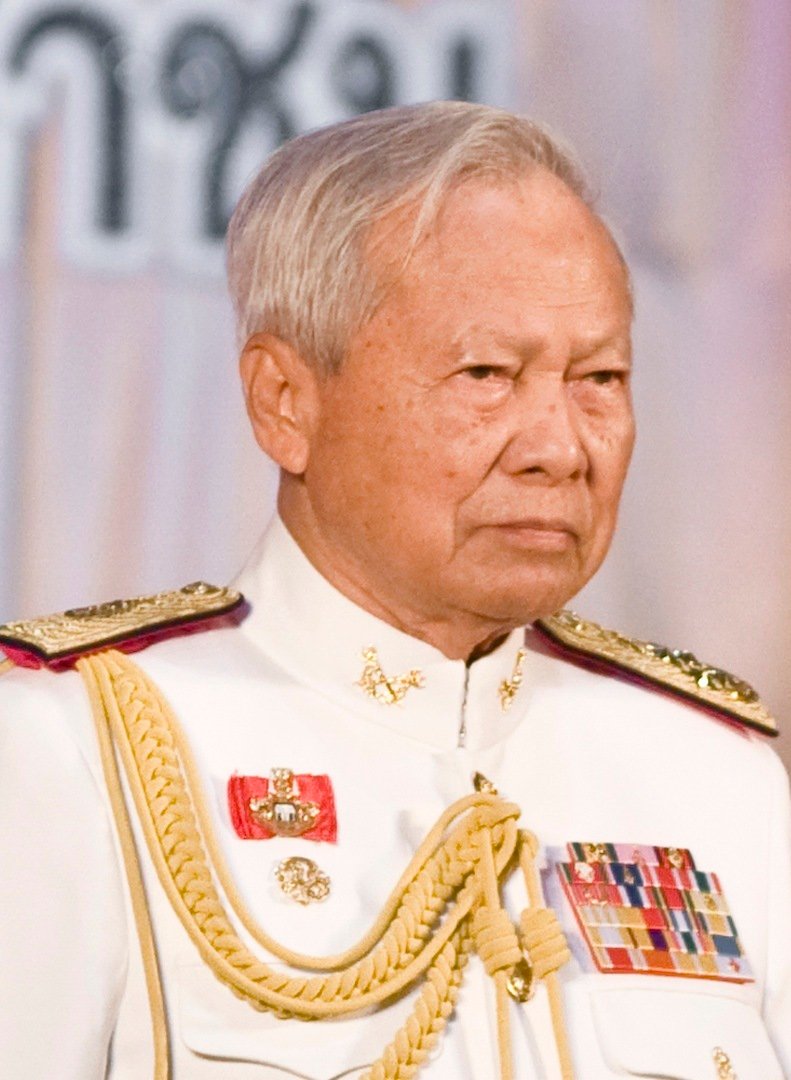
Prem did not stand for a House seat and did not lead a political party. Under the constitutional system, however, the prime minister did not have to be an elected representative. His position depended on a coalition acceptable to elected parties and powerful unelected institutions.
On 7 May he announced a government supported by Social Action, the Democrats, Prachakorn Thai and National Democracy. Chart Thai, despite finishing second, remained outside the coalition. The arrangement showed that winning seats and selecting the executive were connected but not identical processes.
Did the election reduce military power?
The failure to extend the transition clauses limited some formal advantages of the military and Senate. The House had demonstrated that it could reject a measure strongly associated with senior officers, and three consecutive elected legislatures from 1979 onward gave parliamentary bargaining greater continuity.
Military influence nevertheless remained substantial. Prem was a former army commander, active and retired officers occupied important state positions, and General Arthit Kamlang-ek developed an independent command faction. The system is often described as semi-democratic or “Premocracy” because electoral competition operated within an unelected power balance.
What is the election’s longer significance?
The election converted a threatened constitutional confrontation into parliamentary competition. It did not resolve who should control the executive, but it made continued civilian-party participation harder to reverse. Coalition government after 1983 proved more durable than the unstable experiments of the mid-1970s.
That durability remained contingent. Prem survived a violent coup attempt in 1985 and dissolved the House after losing an economic-policy vote in 1986. The 1983 contest therefore marks neither full democratisation nor simple military rule: it is evidence of a hybrid order in which elected institutions acquired leverage without gaining supremacy.
Continue the chronology
Related history guides
The 1981 Young Turks Coup Attempt
Begin with the failed military challenge that strengthened Prem before the constitutional dispute.
Read the timeline22 December 1978The 1978 Constitution of Thailand
Read the charter and transition clauses at the centre of the 1983 confrontation.
Read the timeline9 September 1985The 1985 Thai Coup Attempt
Continue to the violent military challenge that tested the post-election coalition.
Read the timeline27 July 1986The 1986 Thai General Election
Follow the next early dissolution, Democrat plurality and Prem’s final coalition.
Read the timeline1932–presentPrime Ministers of Thailand
Compare Prem’s non-party premiership with every officially numbered Thai premier.
Read the timelineConnected biographies
Six biographies connecting party competition, the unelected premiership and the constitutional transition
 Thailand · Politics
1920—2019
Prem Tinsulanonda
16th Prime Minister of Thailand, 1980–1988The army commander who led Thailand through eight years of parliamentary coalition government before becoming a long-serving royal adviser and regent.Read biography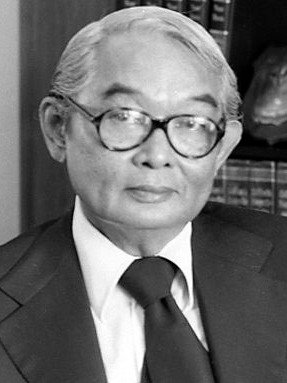 Thailand · Politics
1911—1995
Kukrit Pramoj
13th Prime Minister of Thailand and writerThe writer, newspaper founder and Social Action Party leader who assembled Thailand’s fragmented 1975 coalition and became its thirteenth prime minister.Read biography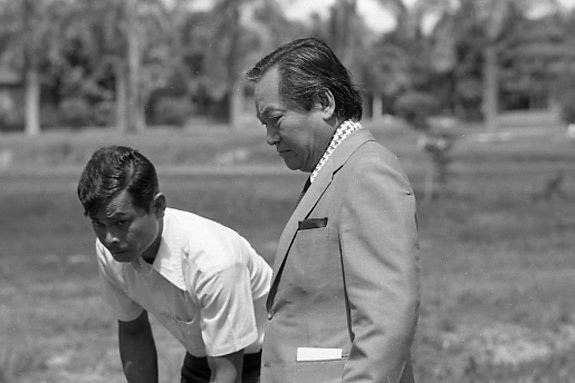 Thailand · Politics
1920—1998
Chatichai Choonhavan
Diplomat, party leader and former prime ministerThe elected prime minister who accelerated economic diplomacy with Indochina and led a booming coalition government until the military removed it in February 1991.Read biography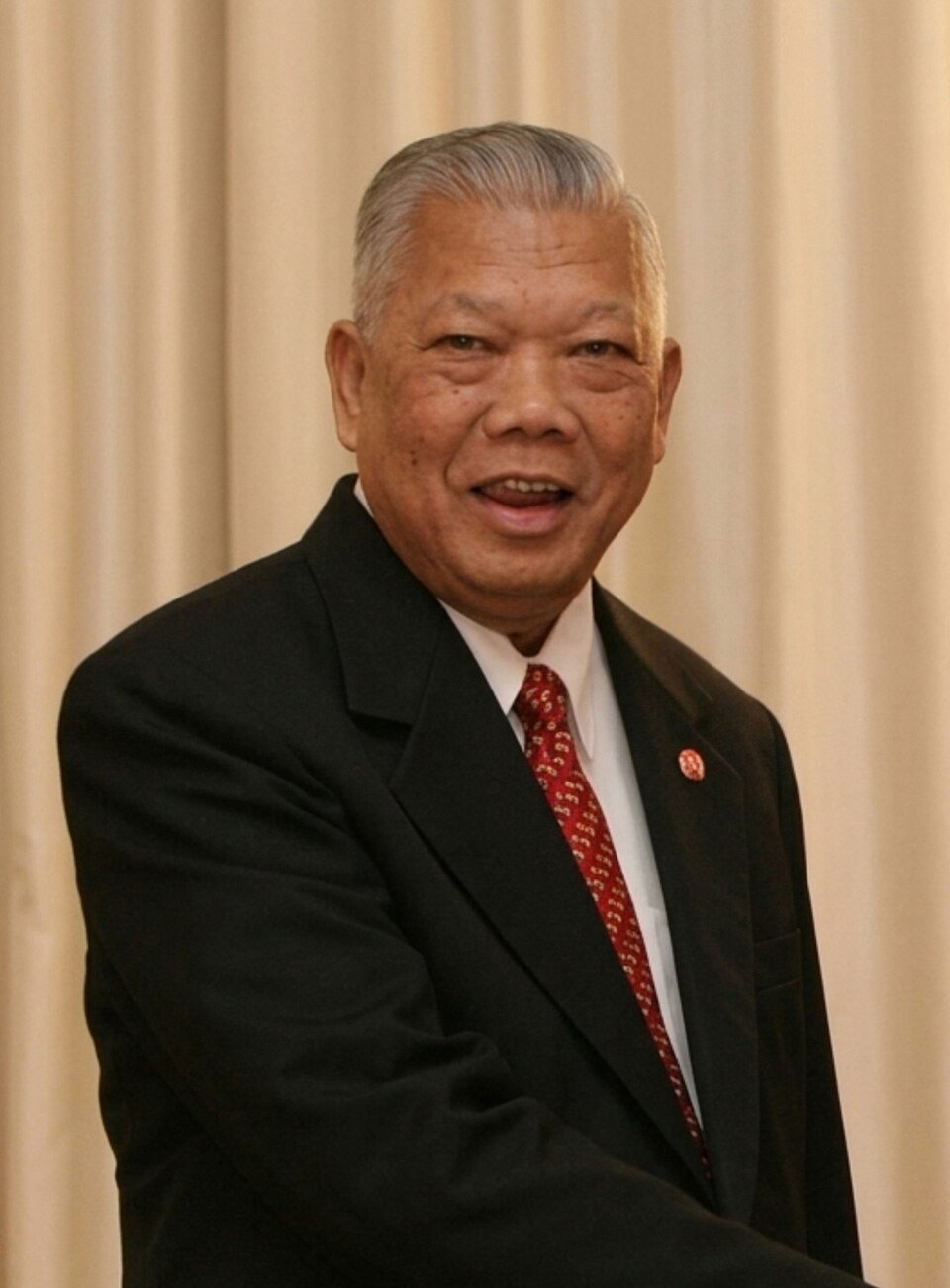 Thailand · Politics
1935—2009
Samak Sundaravej
25th Prime Minister of Thailand, January–September 2008The combative veteran politician, Bangkok governor and television cook who led the first elected government after the 2006 coup before a court ended his premiership.Read biography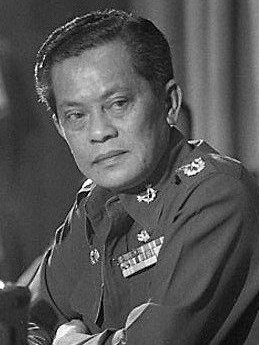 Thailand · Politics
1917—2003
Kriangsak Chamanan
15th Prime Minister of Thailand and military officerThe general who emerged from the October 1977 coup, relaxed parts of Thanin-era repression, restored an elected House and governed during the Indochina refugee crisis.Read biography Thailand · Politics
1927—2016
Bhumibol Adulyadej
King of Thailand, 1946–2016Thailand’s longest-reigning monarch, whose seven decades on the throne spanned rapid development, repeated political crises and profound social change.Read biographyQuick answers
Common questions
- When was the 1983 Thai general election?
- It was held on 18 April 1983 after the House was dissolved during a dispute over amendments to the 1978 Constitution.
- How many House seats were contested?
- All 324 seats were contested, twenty-three more than in the 1979 election.
- Which party won the most seats?
- Kukrit Pramoj’s Social Action Party won 92 seats, but no party secured a majority.
- What was voter turnout?
- The IPU recorded 12,295,339 voters from 24,224,470 registered electors, a turnout of 50.76 per cent.
- Did Prem Tinsulanonda contest the election?
- No. Prem remained outside party competition and returned as prime minister with support from a multiparty coalition.
- Why was the election constitutionally important?
- It followed parliament’s rejection of amendments intended to preserve temporary military and Senate privileges that were due to expire in April 1983.
Primary and institutional sources
How this history was checked
Dates, legal milestones and historical claims are checked against the official and institutional records below. This article was reviewed on 3 October 2026.
- Inter-Parliamentary UnionThailand general election, 18 April 1983
- Parliament Museum of ThailandConstitution of the Kingdom of Thailand, B.E. 2521 (1978)
- Library of CongressThailand: A Country Study
- International Journal of Constitutional LawConstitutional civil–military dynamics in Southeast Asia
- Australian National University PressThe military, society and democratisation in Thailand
- Institute of East Asian Studies, UC BerkeleyThailand’s constitutional amendment crisis and the 1983 election
- Secretariat of the Prime Minister of ThailandOfficial directory of prime ministers of Thailand
- Wikimedia CommonsPrem Tinsulanonda portrait and CC BY 2.0 licence record