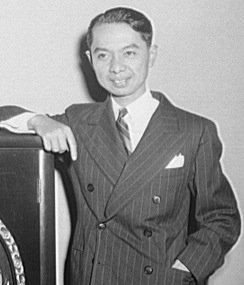
In this biography
Quick facts
- Born
- 26 May 1905
- Died
- 28 July 1997
- Birthplace
- Nakhon Sawan, Thailand
- Country
- Thailand
- Nationality
- Thai
- Known for
- Leading the Free Thai movement in the United States and serving three periods as prime minister
- Prime minister
- 1945–1946, February–March 1975 and April–October 1976
- Wartime office
- Thai minister in Washington
- Political party
- Democrat Party
- Profession
- Lawyer, judge, diplomat and professor
Why this life matters
Seni linked wartime diplomacy to postwar constitutional government and the fragile parliamentary opening of 1975–1976, which ended with the Thammasat massacre and military coup.
Timeline
Key moments
Born in Nakhon Sawan
Born on 26 May into a junior branch of the Chakri royal family.
Studied law and entered public service
Read law at Worcester College, Oxford, trained at Gray’s Inn and returned to judicial and teaching work in Siam.
Posted to Washington
Became Thailand’s minister to the United States shortly before Japan entered the Pacific War.
Refused to deliver the declaration of war
Rejected Bangkok’s instruction and organised a Free Thai network in the United States to cooperate with the Allies.
Became the first postwar prime minister
Returned from Washington to lead a short civilian government during difficult Allied negotiations and domestic realignment.
Helped establish the Democrat Party
Joined the new party that became one of Thailand’s longest-lasting parliamentary organisations.
Led a short minority government
Formed a cabinet after the Democrats placed first in the fragmented January election, but lost House support within weeks.
Returned after the 1976 election
Led a larger coalition until the Thammasat massacre and military coup removed the elected government on 6 October.
Died in Bangkok
Died on 28 July at the age of 92.
Law, diplomacy and a wartime break with Bangkok
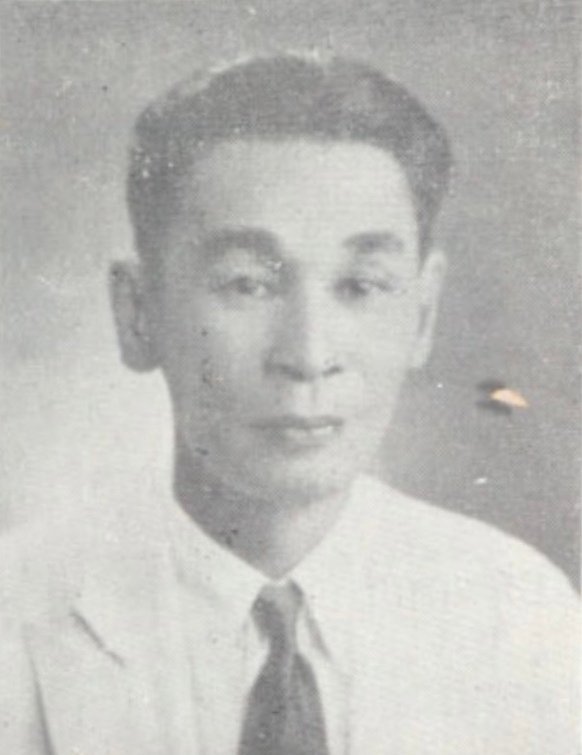
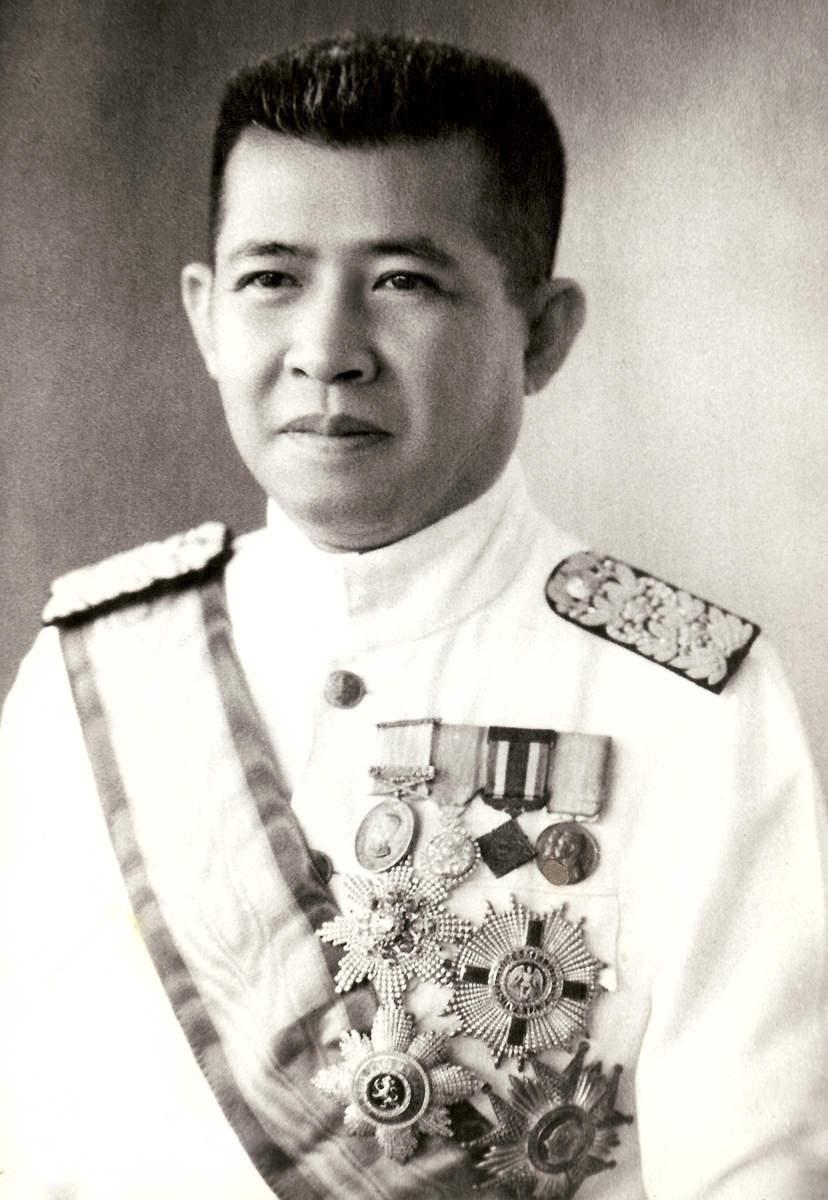
Seni Pramoj was born in Nakhon Sawan in 1905 into a family connected to the Chakri dynasty. He studied in Britain at Trent College, Worcester College, Oxford, and Gray’s Inn, then returned to work in the courts, teach law and serve in the foreign ministry. In 1940 he was sent to Washington as Thailand’s minister to the United States.
Japan entered Thailand in December 1941, and the Phibun government aligned the country with Tokyo. When Bangkok declared war on Britain and the United States in January 1942, Seni refused to deliver the declaration to the US government. He instead organised Thai students and expatriates into a Free Thai network that worked with American authorities while Pridi Banomyong coordinated resistance inside Thailand.
Free Thai diplomacy and the first postwar cabinet
The Free Thai movement gave Allied governments a Thai organisation distinct from the wartime administration, but it was not a one-man operation. Pridi’s domestic network, Thai volunteers abroad and shifting Allied policy all contributed to the country’s postwar position. Seni’s role was especially important in Washington, where he maintained that the declaration of war did not represent a free national decision.
Seni returned in September 1945 and became the first postwar prime minister. His government had to manage relations with Britain, the United States and regional neighbours while restoring civilian politics after military-led wartime rule. It lasted only until January 1946, but the appointment connected wartime resistance credentials with the renewed parliamentary order. He later helped establish the Democrat Party and returned to legal practice, teaching and opposition politics.
A first 1975 government that could not hold the House
Seni became Democrat Party leader in 1968 and returned to the centre of politics after the October 1973 uprising ended Thanom Kittikachorn’s military government. In the 26 January 1975 election, the Democrats won seventy-two of 269 seats, more than any other party but far short of a majority. More than twenty parties entered the House, making coalition arithmetic decisive.
He formed a minority government with the nineteen-seat Social Agrarian Party in February. The cabinet could not secure durable parliamentary support and fell within weeks. Kukrit Pramoj, Seni’s younger brother, then assembled a wider coalition despite the Social Action Party holding only eighteen seats. The sequence showed that finishing first did not itself decide the premiership under parliamentary rules.
Election victory, polarisation and the 6 October coup
An early election on 4 April 1976 gave the Democrats 114 of 279 seats. Seni returned with a coalition controlling at least 206 seats, a much stronger parliamentary base than he had held the previous year. Yet the government operated amid labour conflict, communist insurgency, regional upheaval and increasingly violent competition between student, left-wing and right-wing organisations.
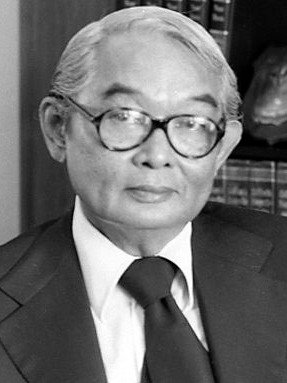
Former dictator Thanom Kittikachorn’s return in September triggered protest. On 6 October, police and armed right-wing groups attacked people inside and around Thammasat University. A military council removed Seni’s cabinet that afternoon, abolished parliament and the constitution, and installed Thanin Kraivichien two days later. Seni left party leadership in 1979 and died in 1997. His career joins two distinct democratic transitions: the uncertain order after the Second World War and the elected opening closed in 1976.
Quick answers
Frequently asked questions about Seni Pramoj
- Who was Seni Pramoj?
- Seni Pramoj was the 6th Prime Minister of Thailand and Free Thai diplomat. Seni linked wartime diplomacy to postwar constitutional government and the fragile parliamentary opening of 1975–1976, which ended with the Thammasat massacre and military coup.
- What is Seni Pramoj best known for?
- Seni Pramoj is best known for leading the Free Thai movement in the United States and serving three periods as prime minister.
- When and where was Seni Pramoj born?
- Seni Pramoj was born on 26 May 1905 in Nakhon Sawan, Thailand.
- When did Seni Pramoj die?
- Seni Pramoj died on 28 July 1997.
Sources and further reading
How this biography was checked
Core dates and offices are checked against the sources below. This profile was last reviewed on 3 October 2026.
- Secretariat of the Prime Minister of ThailandDirectory of Prime Ministers of Thailand
- United States CongressCongressional tribute to Seni Pramoj and the Free Thai movement
- Ministry of Foreign Affairs of ThailandThai foreign policy and the Siamese resistance movement
- Inter-Parliamentary UnionThailand parliamentary election, 26 January 1975
- Inter-Parliamentary UnionThailand parliamentary election, 4 April 1976
- Library of CongressSeni Pramoj photograph and public-domain record