
The short answer
Thailand’s 1975 election turned the political opening after the October 1973 uprising into a competitive but deeply fragmented parliament. The Democrats placed first, Seni Pramoj’s minority cabinet fell, and his brother Kukrit assembled a coalition from only eighteen Social Action seats. Another election strengthened Seni in 1976, but the Thammasat massacre and military coup ended the experiment months later.
Chronology
A timeline of the turning points
Popular mobilisation ends Thanom’s government
Student-led protest and lethal clashes removed the ruling military group, and Sanya Dharmasakti became prime minister of a transitional administration.
A new constitution is promulgated
The charter restored an elected House, retained an appointed Senate and supplied the rules for the first election after the 1973 uprising.
Voters elect a fragmented House
The Democrat Party won seventy-two of 269 seats, while more than twenty parties obtained representation and no bloc held a majority.
Seni Pramoj forms a minority government
The Democrat leader initially governed with the nineteen-seat Social Agrarian Party, but the cabinet could not sustain House confidence.
Kukrit Pramoj assembles a new coalition
The Social Action leader won the premiership and formed a multiparty cabinet even though his party held only eighteen seats.
Thailand and China establish diplomatic relations
Kukrit and Zhou Enlai signed a joint communiqué in Beijing, marking a major post–Vietnam War foreign-policy realignment.
The House is dissolved early
Kukrit requested dissolution after disputes inside his sixteen-party coalition made parliamentary stability increasingly uncertain.
The Democrats win a stronger plurality
The party took 114 of 279 seats and built a coalition controlling at least 206 seats; Seni returned as prime minister.
Massacre and coup close the opening
Police and right-wing groups attacked protesters at Thammasat University before the military abolished parliament, parties and the 1974 Constitution.
Thanin Kraivichien becomes prime minister
The coup leaders installed the anti-communist judge at the head of an appointed government with a prolonged timetable for political transition.
Another coup removes Thanin
Many of the same military leaders dismissed the cabinet and later installed Kriangsak Chamanan under a new authoritarian arrangement.
Why was the January 1975 election important?
The vote was the first general election after the October 1973 uprising ended a decade of military rule. Sanya Dharmasakti’s appointed government had overseen a constituent process, and the 1974 Constitution restored an elected House within a bicameral National Assembly. The election therefore tested whether protest-driven political opening could become routine parliamentary government.
It was not Thailand’s first election, and the new system was not wholly elected: the Senate remained appointed. Yet political parties, labour groups, farmers and student networks operated in a more open public sphere than under Thanom. That competition made the vote a landmark while also exposing organisational weakness, regional patronage and ideological polarisation that a constitution alone could not resolve.
What were the 1975 election results?
All 269 House seats were contested on 26 January. The Democrats, led by Seni Pramoj, finished first with seventy-two seats. The Social Justice Party won forty-five, Thai Nation twenty-eight, Social Agrarian nineteen and Kukrit Pramoj’s Social Action Party eighteen. The Socialist Party of Thailand won fifteen, New Force twelve and the United Socialist Front ten; smaller parties shared the remaining seats.
The Inter-Parliamentary Union recorded that more than twenty parties won representation and neither the conservative nor centrist groupings obtained a majority. The result mattered less as a simple ranking than as a coalition problem. A House divided among so many parties made the premiership dependent on negotiations that could shift without another public vote.
How did Kukrit become prime minister with only eighteen seats?
Seni first formed a minority government with the Social Agrarian Party. It survived only weeks before losing House support. Kukrit then joined Social Action to Thai Nation and several other groups, was selected as prime minister on 13 March and formed his cabinet four days later. His success was an exercise in coalition construction, not a claim that Social Action had won the election.
That distinction is essential when reading parliamentary history. The Democrats held the largest party delegation, while Kukrit commanded a negotiated majority assembled after Seni’s cabinet fell. The premiership changed according to House arithmetic under the 1974 constitutional rules; it was not awarded directly by a national prime-minister ballot.
What did the Kukrit government try to change?
Domestically, the coalition’s programme emphasised the gap between Bangkok and the provinces. Its tambon development initiative channelled central money toward locally selected projects, making rural decentralisation one of the period’s clearest policy experiments. The cabinet also promoted agricultural investment, income support and basic services, although its fragmented majority and brief tenure limited continuity.
Foreign policy reflected the changed region after communist victories in Indochina. Kukrit established diplomatic relations with the People’s Republic of China on 1 July 1975 and pursued a more independent relationship with Washington. His government pressed for the departure of United States forces from Thai bases, and in March 1976 announced a four-month deadline after negotiations over a residual presence reached an impasse.
Why was there another election in April 1976?
A coalition spanning sixteen parties proved difficult to hold together. On Kukrit’s advice, the king dissolved the House on 12 January 1976, less than one year after the election. Thirty-nine parties and more than 2,350 candidates contested the new vote, while turnout was 45.7 percent according to the IPU’s historical summary.
The Democrats increased their representation to 114 of 279 seats. Thai Nation won fifty-six and Social Action forty-five. Three other parties joined the Democrats in a coalition that controlled at least 206 seats, and Seni returned as prime minister. The larger majority simplified coalition arithmetic, but it did not settle the confrontation among elected politicians, military officers, conservative movements and the student left.
How did the democratic interlude end?
Regional communist victories, labour conflict, rural insurgency and fear of radical social change strengthened right-wing mobilisation during 1975 and 1976. Former dictator Thanom Kittikachorn’s return to Thailand in September 1976 triggered renewed student protest. On 6 October, police and right-wing groups attacked the Thammasat campus; the military seized power that evening and abolished the constitutional institutions created after 1973.
Thanin Kraivichien’s appointment two days later did not continue the elected order. His government operated through an appointed framework, imposed severe controls and proposed an extended twelve-year transition. A second coup removed him in October 1977. The elections of 1975 and 1976 therefore show genuine parliamentary competition, but their historical meaning also depends on the coercive forces that prevented that competition from consolidating.
Continue the chronology
Related history guides
The Thai Popular Uprising
Start with the mobilisation that opened the constitutional transition and brought Sanya into office.
Read the timeline7 October 1974The 1974 Constitution of Thailand
Read the constitutional rules and rights framework under which the 1975 election was held.
Read the timeline4 April 1976The 1976 Thai General Election
Continue to the early election that strengthened the Democrats and returned Seni Pramoj to office.
Read the timeline19 September 1976Thanom’s Return to Thailand
Follow the return from exile that destabilised Seni’s coalition and renewed student protest.
Read the timeline6 October 1976The Thammasat Massacre
Continue into the violence and coup that ended the elected order created after 1973.
Read the timeline20 October 1977The 1977 Thai Coup
Continue from authoritarian closure to Thanin’s removal and Kriangsak’s controlled transition.
Read the timeline1932–presentPrime Ministers of Thailand
Compare Sanya, Seni, Kukrit and Thanin with every officially numbered Thai premier.
Read the timeline1851–todayThailand History Timeline
Place the election inside the longer history of constitutional rupture and political mobilisation.
Read the timelineConnected biographies
Seven biographies connecting the democratic opening, coalition government and authoritarian closure
 Thailand · Politics
1905—1997
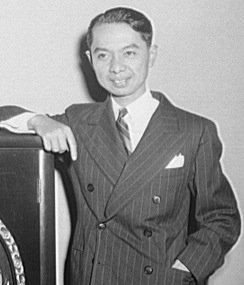
Seni Pramoj
6th Prime Minister of Thailand and Free Thai diplomatThe lawyer and wartime diplomat who refused to deliver Thailand’s declaration of war to Washington, organised Free Thai resistance abroad and later led three governments.Read biography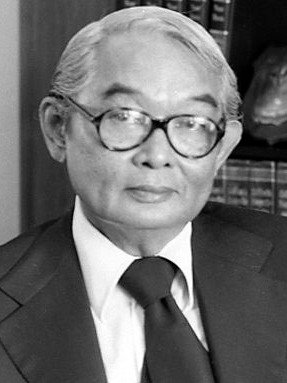 Thailand · Politics
1911—1995
Kukrit Pramoj
13th Prime Minister of Thailand and writerThe writer, newspaper founder and Social Action Party leader who assembled Thailand’s fragmented 1975 coalition and became its thirteenth prime minister.Read biography Thailand · Politics
1927—2025
Thanin Kraivichien
14th Prime Minister of Thailand and judgeThe judge and law professor appointed prime minister after the 1976 coup, whose hard-line anti-communist government was removed by another military takeover a year later.Read biography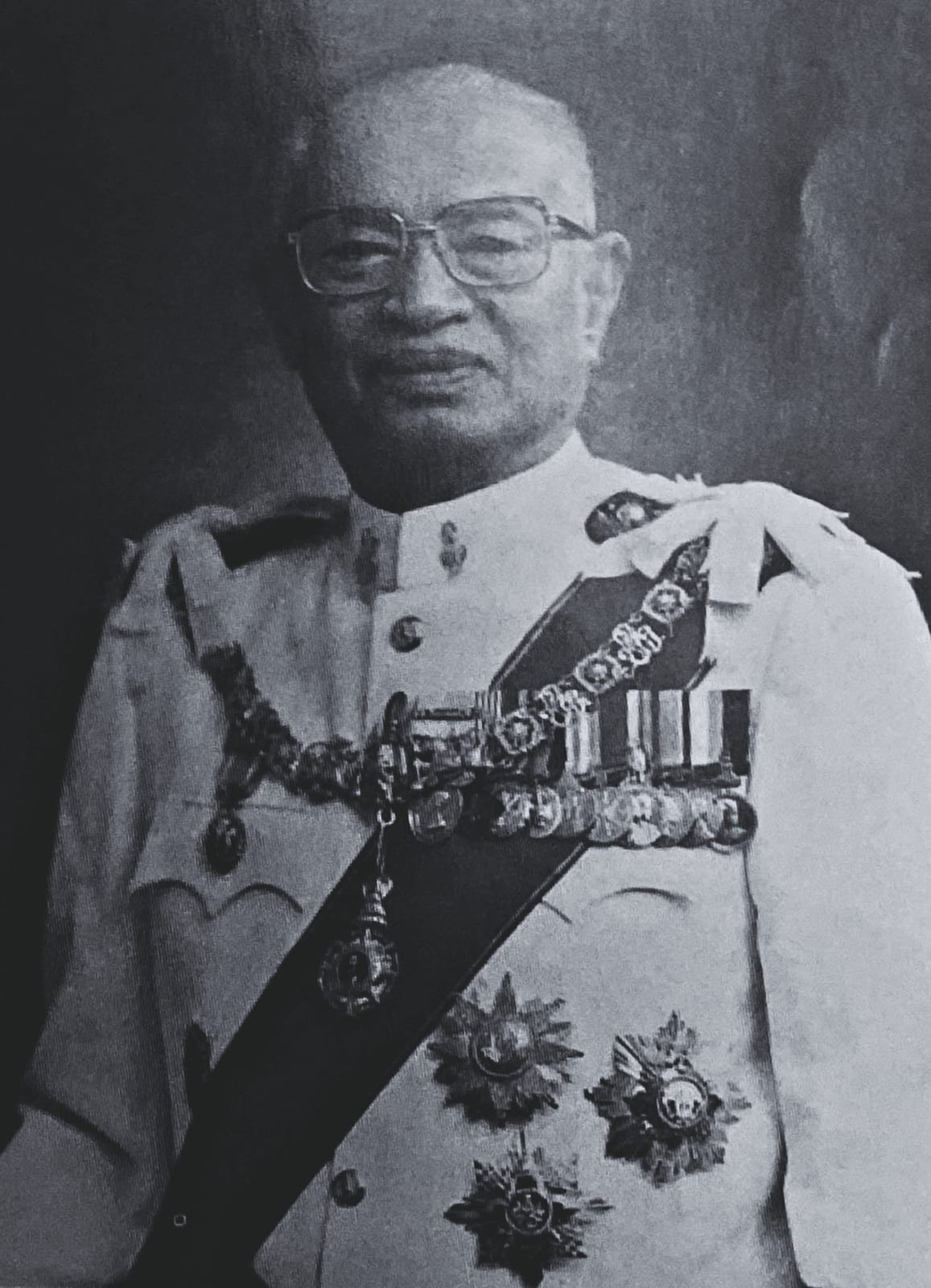 Thailand · Politics
1907—2002
Sanya Dharmasakti
Jurist, university rector and former prime ministerThe jurist and Thammasat rector appointed prime minister after military rule collapsed in October 1973, who oversaw a new constitution and return to elections.Read biography Thailand · Politics
1916—1999
Puey Ungphakorn
Economist, central banker and university rectorAn economist, wartime Free Thai volunteer and long-serving central-bank governor who linked economic management, education and public responsibility.Read biography Thailand · Politics
1927—2016
Bhumibol Adulyadej
King of Thailand, 1946–2016Thailand’s longest-reigning monarch, whose seven decades on the throne spanned rapid development, repeated political crises and profound social change.Read biography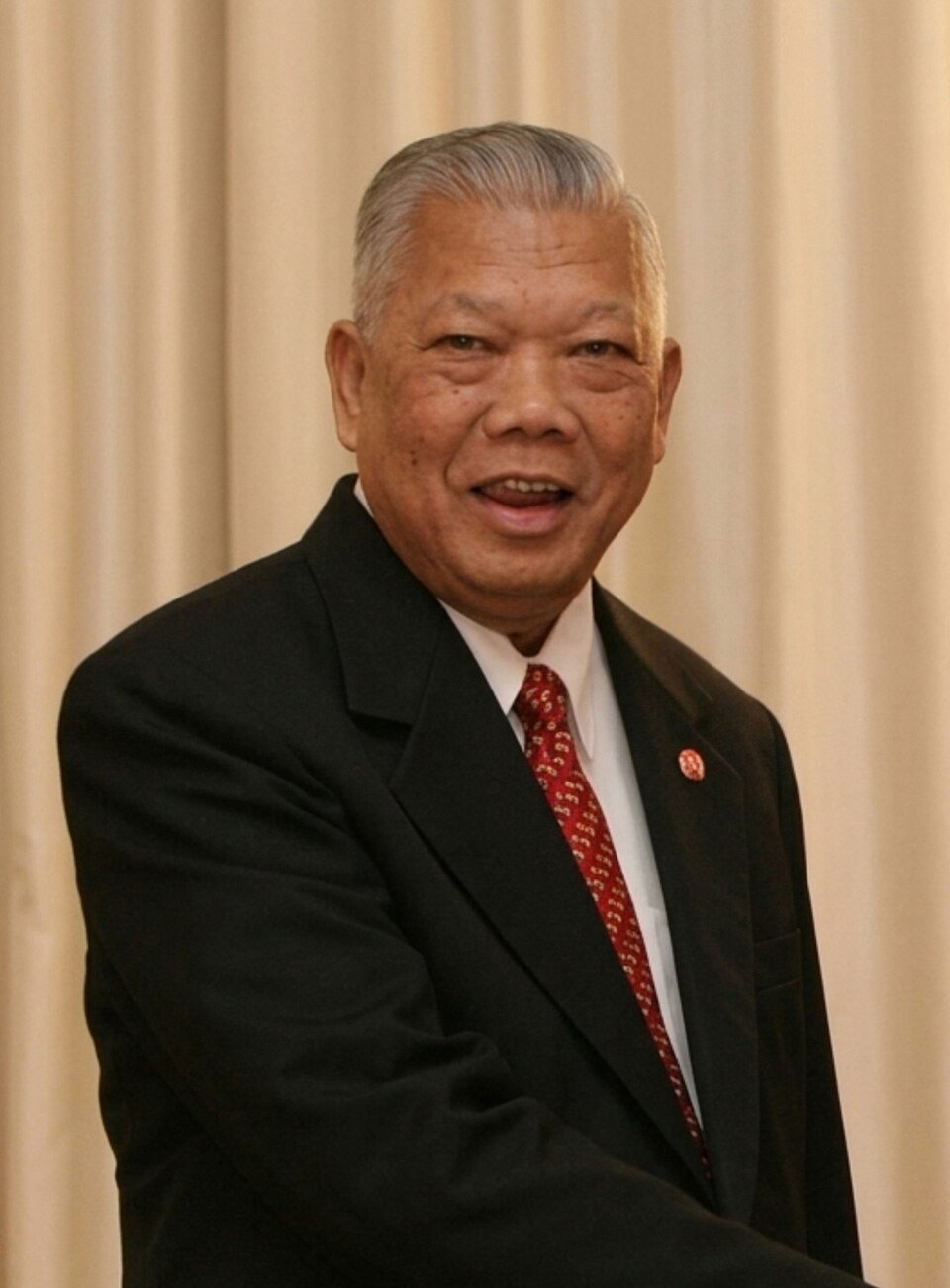 Thailand · Politics
1935—2009
Samak Sundaravej
25th Prime Minister of Thailand, January–September 2008The combative veteran politician, Bangkok governor and television cook who led the first elected government after the 2006 coup before a court ended his premiership.Read biographyQuick answers
Common questions
- Who won the 1975 Thai general election?
- The Democrat Party won the most seats, taking seventy-two of 269. It did not win a majority, and the fragmented House eventually supported a coalition led by Kukrit Pramoj of the eighteen-seat Social Action Party.
- When was Thailand’s 1975 election held?
- The general election was held on 26 January 1975 under the Constitution promulgated in October 1974.
- Why did Kukrit Pramoj become prime minister instead of Seni Pramoj?
- Seni initially formed a minority government after the Democrats placed first, but it lost House support. Kukrit then assembled a broader multiparty coalition and was selected as prime minister in March 1975.
- How many seats did Kukrit Pramoj’s party win?
- The Social Action Party won eighteen seats in the 269-member House. Kukrit reached office through coalition agreements with several other parties.
- Why did Thailand hold another election in 1976?
- Kukrit requested an early dissolution because his sixteen-party coalition had become unstable. The second election took place on 4 April 1976 and returned Seni Pramoj with a much larger coalition.
- What ended Thailand’s 1973–1976 democratic opening?
- The 6 October 1976 Thammasat massacre was followed by a military coup that abolished the 1974 Constitution, parliament and political parties. Thanin Kraivichien then led an appointed government.
Primary and institutional sources
How this history was checked
Dates, legal milestones and historical claims are checked against the official and institutional records below. This article was reviewed on 3 October 2026.
- Inter-Parliamentary UnionThailand House election, 26 January 1975
- Inter-Parliamentary UnionThailand House election, 4 April 1976
- Law Library of CongressConstitutional development in Thailand, including the 1974 and 1976 charters
- Ministry of Foreign Affairs of ThailandGolden Jubilee of Thailand–China Friendship
- Office of the Historian, U.S. Department of StateU.S. force withdrawal negotiations with the Kukrit government
- Office of the Historian, U.S. Department of StateAssessment of the October 1976 coup and democratic interlude
- Fukuoka PrizeKukrit Pramoj — writer, journalist and statesman
- Wikimedia CommonsKukrit Pramoj portrait and CC BY 2.0 record