
The short answer
Thailand’s 1978 Constitution restored an elected House without giving elected politicians exclusive control of government. A 225-member appointed Senate, an unelected-premier option and transitional military influence produced a durable hybrid order that supported four elections before the 1991 coup abolished it.
Chronology
A timeline of the turning points
The military removes Thanin’s government
A second post-Thammasat coup replaced the highly restrictive appointed government and shortened the promised route back to elections.
Kriangsak Chamanan becomes prime minister
The general led a military-backed government that promised a new constitution and elections during 1979.
A permanent charter is drafted
The drafting process designed a bicameral legislature while preserving extensive authority for appointed and military institutions.
The October 1976 defendants receive amnesty
Eighteen defendants were released, marking a partial retreat from Thanin-era repression while also closing the principal trial.
The constitution is promulgated
The charter established a popularly elected House and an appointed Senate inside a five-year transitional order.
Voters elect a 301-seat House
The first election under the charter returned parties and independents to national parliamentary politics.
Kriangsak forms a post-election cabinet
The unelected incumbent remained prime minister with support from elected representatives and a 225-member appointed Senate.
Prem succeeds through the Assembly
After Kriangsak resigned, Prem Tinsulanonda became prime minister without a new coup or a seat in the elected House.
Transitions and amendments alter the balance
Expiring provisions, fresh elections and later amendments gradually increased the position of the elected House.
A coup abolishes the constitution
The National Peace Keeping Council removed Chatichai Choonhavan’s elected government and ended the twelve-year charter.
Why was a new constitution written after the 1977 coup?
The October 1977 coup removed Thanin Kraivichien, whose appointed government had combined repression with a timetable that postponed competitive politics for many years. Kriangsak Chamanan’s military-backed successor promised a faster constitutional transition and an elected House by April 1979. A permanent charter was therefore central to the new regime’s claim that it differed from the order it displaced.
The drafters did not seek a full return to the 1974 democratic settlement. Their problem was how to reopen elections while preventing elected parties from displacing the military and bureaucracy too quickly. The result was a hybrid design: representative politics returned, but appointed institutions received enough authority to supervise its direction.
How were the House and Senate structured?
The Constitution created a bicameral National Assembly. The House of Representatives was elected for four years, with seats allocated by provincial population. The April 1979 election produced 301 representatives from 126 constituencies. Voters had as many votes as their multi-member constituency returned representatives.
The Senate could contain no more than three-quarters as many members as the House. In practice, 225 senators were appointed for six-year terms. The official formula described them as qualified people with useful knowledge and experience, but appointment gave the military-backed executive a large unelected bloc inside the legislature.
Could an unelected person become prime minister?
Yes. The prime minister and cabinet were not required to be elected representatives. This allowed Kriangsak to remain in office after the 1979 election and later allowed Prem Tinsulanonda to succeed him in March 1980. Government still needed sufficient support in the National Assembly, but eligibility did not begin with a personal electoral mandate.
The arrangement institutionalised a route from military command to parliamentary government. It reduced the need for a coup every time the armed forces wanted a different premier, yet it also denied the elected House exclusive control over executive formation. That tension became a defining feature of the period often called semi-democracy or “Premocracy.”
What power did the appointed Senate hold?
The Senate was more than a revising chamber. During the transitional order, senators participated in decisions that could shape the premiership and could constrain House initiatives involving national security, the economy, budgets and confidence in government. The Senate president also served as president of the National Assembly, placing an appointed officeholder at the centre of joint proceedings.
Many senators came from the military and senior bureaucracy. The stated objective was to channel establishment influence through constitutional institutions rather than repeated coups. It did create a place for bargaining, but it also converted unequal access to state power into formal legislative leverage.
Was the 1978 settlement democratic?
The elected House, competitive candidates and parliamentary debate were meaningful changes from direct or wholly appointed rule. Governments had to negotiate with representatives, and elections in 1979, 1983, 1986 and 1988 expanded the national role of parties and provincial political networks. The charter survived changes of prime minister without immediate constitutional replacement.
It was nevertheless not full civilian parliamentary government. The appointed Senate, unelected-premier option, transitional privileges and continuing military command structure limited electoral authority. Describing the system as controlled parliamentary reopening preserves both realities: participation widened, but elected institutions did not hold the whole constitutional field.
How did the constitution shape the Prem era?
Prem governed from 1980 to 1988 through changing coalitions of elected parties, appointed senators, technocrats and military allies. He never contested a House seat. The constitutional system allowed him to remain above party membership while relying on parliamentary votes and periodic elections for a workable governing base.
The five-year transition generated conflict when military officers sought to preserve rules allowing officials to combine state and political office. Prem dissolved the House and called the 1983 election as the issue intensified. Later changes, especially after his departure, strengthened the role of the House speaker and elected politicians in executive formation.
Why did the constitution last until 1991?
The document was flexible enough to accommodate Kriangsak, Prem and the elected politician Chatichai Choonhavan. It offered military and bureaucratic elites constitutional influence while allowing parties, business groups and provincial representatives to expand. Rapid economic growth in the late 1980s also reduced pressure for immediate institutional replacement.
Longevity did not make the settlement coup-proof. When Chatichai’s elected coalition challenged military interests and faced corruption allegations, the armed forces did not rely on constitutional opposition alone. The February 1991 coup abolished the charter, demonstrating that a system designed to integrate military power had not subordinated it to electoral rules.
Continue the chronology
Related history guides
The 1977 Thai Coup
Begin with the takeover that removed Thanin and installed the transition led by Kriangsak.
Read the timeline22 April 1979The 1979 Thai General Election
See how voters filled the charter’s first elected House while Kriangsak remained prime minister.
Read the timeline23 April 1980Order 66/2523 and the Prem Era
Follow the hybrid order into Prem’s political counter-insurgency and coalition government.
Read the timeline1–3 April 1981The 1981 Young Turks Coup Attempt
Examine the military challenge that tested the new constitutional coalition.
Read the timeline23 February 1991The 1991 Thai Coup
Continue to the takeover that abolished the constitution after twelve years.
Read the timelineConnected biographies
Seven biographies connecting the post-coup transition, hybrid premiership, elected parties, monarchy and constitutional breakdown
 Thailand · Politics
1917—2003
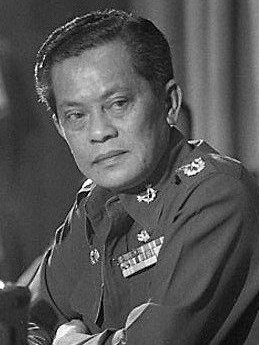
Kriangsak Chamanan
15th Prime Minister of Thailand and military officerThe general who emerged from the October 1977 coup, relaxed parts of Thanin-era repression, restored an elected House and governed during the Indochina refugee crisis.Read biography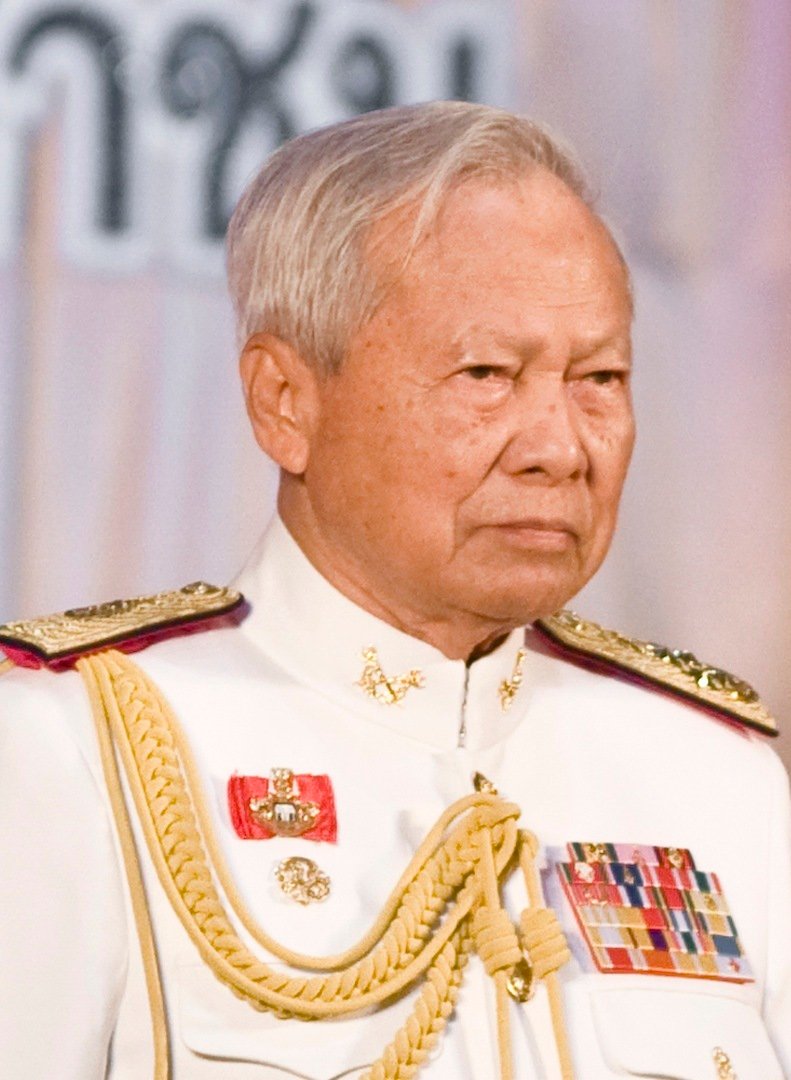 Thailand · Politics
1920—2019
Prem Tinsulanonda
16th Prime Minister of Thailand, 1980–1988The army commander who led Thailand through eight years of parliamentary coalition government before becoming a long-serving royal adviser and regent.Read biography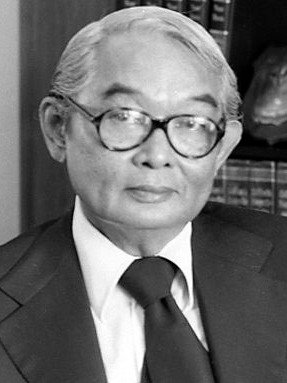 Thailand · Politics
1911—1995
Kukrit Pramoj
13th Prime Minister of Thailand and writerThe writer, newspaper founder and Social Action Party leader who assembled Thailand’s fragmented 1975 coalition and became its thirteenth prime minister.Read biography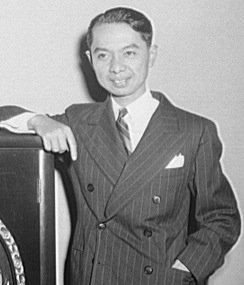 Thailand · Politics
1905—1997
Seni Pramoj
6th Prime Minister of Thailand and Free Thai diplomatThe lawyer and wartime diplomat who refused to deliver Thailand’s declaration of war to Washington, organised Free Thai resistance abroad and later led three governments.Read biography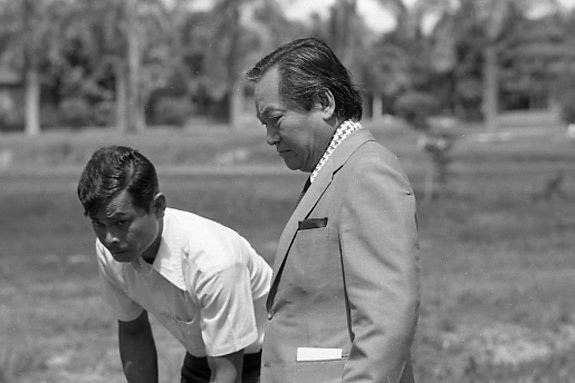 Thailand · Politics
1920—1998
Chatichai Choonhavan
Diplomat, party leader and former prime ministerThe elected prime minister who accelerated economic diplomacy with Indochina and led a booming coalition government until the military removed it in February 1991.Read biography Thailand · Politics
1927—2016
Bhumibol Adulyadej
King of Thailand, 1946–2016Thailand’s longest-reigning monarch, whose seven decades on the throne spanned rapid development, repeated political crises and profound social change.Read biography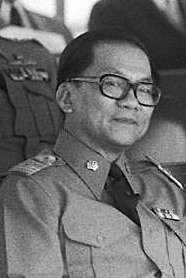 Thailand · Politics
1927—2025
Thanin Kraivichien
14th Prime Minister of Thailand and judgeThe judge and law professor appointed prime minister after the 1976 coup, whose hard-line anti-communist government was removed by another military takeover a year later.Read biographyQuick answers
Common questions
- When was Thailand’s 1978 Constitution promulgated?
- It was promulgated on 22 December 1978, four months before the House election of 22 April 1979.
- How many members were in the elected House?
- The first House elected under the charter had 301 members allocated among Thailand’s provinces by population.
- Was the Senate elected?
- No. The first Senate contained 225 appointed members serving six-year terms.
- Did the prime minister have to be an elected MP?
- No. Both Kriangsak Chamanan and Prem Tinsulanonda served as prime minister without holding an elected House seat.
- Why is the period called semi-democracy?
- Thailand had competitive House elections and party coalitions, but an appointed Senate, unelected premiers and military influence limited civilian electoral control.
- How did the 1978 Constitution end?
- The military coup of 23 February 1991 abolished it after removing Chatichai Choonhavan’s elected government.
Primary and institutional sources
How this history was checked
Dates, legal milestones and historical claims are checked against the official and institutional records below. This article was reviewed on 3 October 2026.
- Parliament Museum of ThailandConstitution of the Kingdom of Thailand, B.E. 2521 (1978)
- United Nations Digital LibraryThailand human-rights and constitutional record, 1977–1978
- Inter-Parliamentary UnionThailand general election, 22 April 1979
- Library of CongressThailand: A Country Study
- Law Library of CongressThe Constitutions of Thailand
- Oxford University PressConstitutional civil–military dynamics in Southeast Asia
- University of California, BerkeleyMilitary power and legislative institutions under the 1978 Constitution
- Wikimedia CommonsKriangsak Chamanan portrait and CC BY 2.0 licence record