The short answer
Thailand’s 1979 election restored a 301-seat House after two coups and two-and-a-half years without national voting. Social Action won the largest party bloc and independents filled 63 seats, yet the unelected Kriangsak Chamanan remained prime minister under a constitution designed to balance elections with military and appointed power.
Election results
The leading groups in the 1979 House
The result fragmented representation among parties and independents while leaving the premiership open to an unelected coalition broker.
| Political group | Seats | Share of House | Position after election |
|---|---|---|---|
| Social Action Party | 82 | 27.2% | Largest party |
| Independents | 63 | 20.9% | Dispersed support |
| Chart Thai Party | 38 | 12.6% | Coalition bargaining |
| Prachakorn Thai Party | 32 | 10.6% | Won 29 Bangkok seats |
| Democrat Party | 32 | 10.6% | Major losses from 1976 |
Chronology
A timeline of the turning points
A coup removes Thanin’s appointed government
The new military leadership promised a shorter transition and an election during 1979.
Kriangsak becomes prime minister
The general headed a more conciliatory but still unelected government after the takeover.
A new constitution is promulgated
The charter created an elected House, appointed Senate and a path for an unelected prime minister.
About 1,600 candidates enter the contest
Roughly 36 parties and a large independent field competed across 126 constituencies.
Voters elect all 301 representatives
Turnout reached 43.9 per cent, and no political group approached the 151 seats needed for a majority.
Social Action becomes the largest party
Kukrit Pramoj’s party won 82 seats, while independents collectively filled 63.
Prachakorn Thai dominates Bangkok
The party won 29 of the capital’s 32 seats and finished with 32 seats nationally.
Kriangsak names a 44-member cabinet
The unelected premier continued with support spanning military officers, officials and elected representatives.
Economic protest forces Kriangsak’s resignation
Energy-price increases, demonstrations and collapsing parliamentary support ended his premiership.
Prem succeeds without a coup
The National Assembly supported another unelected general, preserving the hybrid constitutional system.
Why did Thailand return to elections in 1979?
Thailand had not held a national election since April 1976. The massacre and coup that October abolished the elected House, and the military installed an appointed order under Thanin Kraivichien. A second coup in October 1977 removed Thanin and placed Kriangsak Chamanan at the head of a government promising a quicker political reopening.
The 1978 Constitution required a House election by the end of April 1979. The vote therefore restored representative competition, but it did not ask voters to select the prime minister directly. Kriangsak could remain in office without standing for a seat because the charter allowed an unelected premier and gave an appointed Senate a powerful role.
How did the electoral system work?
All 301 House seats were contested across 126 constituencies. Provincial population determined representation, generally at one member for every 150,000 inhabitants and another for a fraction above 75,000. Every province received at least one representative. In multi-member districts, electors could cast as many votes as there were seats.
Voting was not compulsory. The minimum voting age was twenty, and House candidates had to be at least twenty-five and deposit 5,000 baht. The field contained approximately 1,600 candidates, including many independents, so local reputation and personal networks mattered alongside party labels and national policy.
What were the principal results?
The Social Action Party won 82 seats, making Kukrit Pramoj’s organisation the largest party. Independents formed the second-largest category with 63. Chart Thai won 38, while Prachakorn Thai and the Democrat Party each won 32. Seritham followed with 21, and smaller parties shared the remaining seats.
No group came close to an outright majority of 151. The result rewarded Social Action after its eighteen-seat showing in 1975 and forty-five seats in 1976, while the Democrats suffered the sharpest decline from their 114-seat plurality three years earlier. Prachakorn Thai’s 29 of 32 Bangkok seats showed that the capital could move independently of the nationwide pattern.
How many people voted?
The Inter-Parliamentary Union recorded 21,283,790 registered electors and 9,344,045 voters, a turnout of 43.9 per cent. There were 8,936,527 valid votes and 407,518 blank or void ballots. Abstention was therefore one of the election’s most important results.
Low participation did not make the elected House meaningless, but it limited claims of a broad national mandate. Voters were returning after repression, constitutional discontinuity and years without an elected legislature. The large candidate field and highly localised competition also made the national contest difficult to read as a single choice between governments.
Why did the largest party not provide the prime minister?
The Constitution did not require the prime minister to be an elected representative or the leader of the largest party. Kriangsak could therefore seek support across the fragmented House and the appointed Senate. On 25 May he named a forty-four-member cabinet reportedly mixing military officers, civil servants and representatives.
This outcome separated winning the most seats from controlling executive office. Kukrit’s party gained the strongest electoral bloc, but the established premier retained the institutional advantages of military office, Senate appointment and coalition brokerage. The arrangement would later make it possible for Prem Tinsulanonda to succeed Kriangsak without contesting a House seat.
What did the election change?
It restored a public legislature where parties, independents and provincial networks could question policy, bargain over cabinets and build national organisations. Kriangsak now faced opposition through parliamentary debate as well as demonstrations. The House became one of the forces that made his February 1980 resignation preferable to confrontation.
The vote also normalised a hybrid bargain. Elections distributed House seats, while military and bureaucratic institutions retained decisive influence over the premiership and Senate. That structure did not eliminate instability, but it allowed government replacement in March 1980 without another successful coup.
Why did Kriangsak’s post-election government last less than a year?
Thailand faced the second oil shock, rising inflation, fiscal pressure and public frustration over living costs. In February 1980 the government announced steep increases in petroleum, gas and electricity prices. Students, workers and elected politicians mobilised against the decision, while Kriangsak’s support within the armed forces weakened.
He resigned on 29 February before a confidence confrontation. Prem, then army commander and defence minister, secured broad Assembly support and received appointment on 3 March. The transition confirmed both the value and the limit of the 1979 election: elected representatives mattered, but the successful replacement candidate still came from military command rather than the House electorate.
Continue the chronology
Related history guides
The 1977 Thai Coup
Begin with the takeover that produced Kriangsak’s government and promised the election.
Read the timeline22 December 1978The 1978 Constitution of Thailand
Read the hybrid rules that structured the elected House and appointed Senate.
Read the timeline3 March – 23 April 1980Order 66/2523 and the Prem Era
Continue through Kriangsak’s resignation into Prem’s coalition and counter-insurgency strategy.
Read the timeline1–3 April 1981The 1981 Young Turks Coup Attempt
See how military factionalism tested the constitutional government two years later.
Read the timeline1932–presentPrime Ministers of Thailand
Compare Kriangsak and Prem with every officially numbered Thai premier.
Read the timelineConnected biographies
Seven biographies connecting the election, party competition, unelected premiership and the next coalition transition
 Thailand · Politics
1917—2003
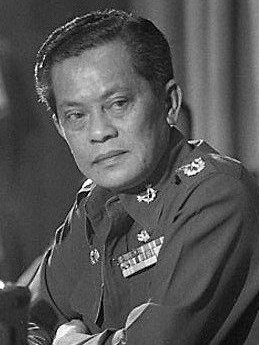
Kriangsak Chamanan
15th Prime Minister of Thailand and military officerThe general who emerged from the October 1977 coup, relaxed parts of Thanin-era repression, restored an elected House and governed during the Indochina refugee crisis.Read biography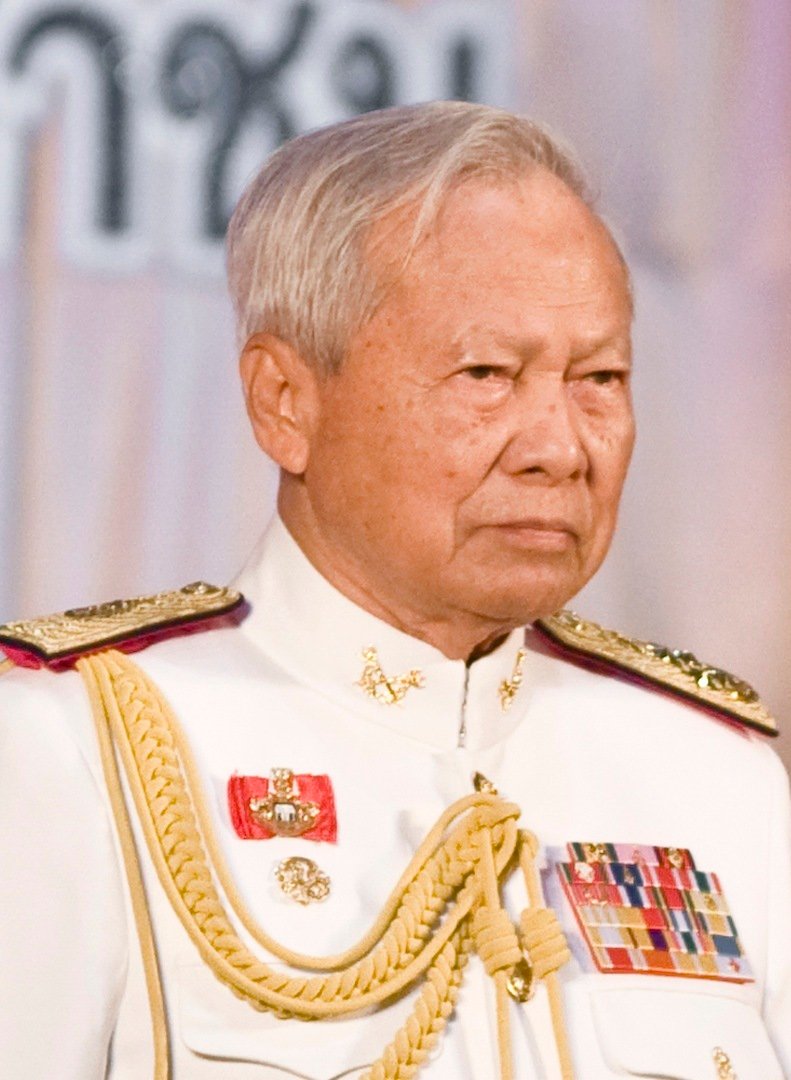 Thailand · Politics
1920—2019
Prem Tinsulanonda
16th Prime Minister of Thailand, 1980–1988The army commander who led Thailand through eight years of parliamentary coalition government before becoming a long-serving royal adviser and regent.Read biography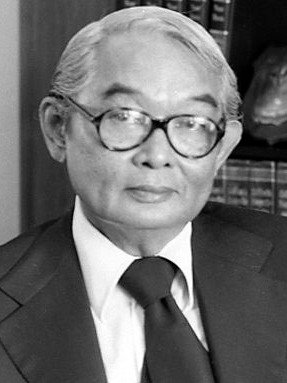 Thailand · Politics
1911—1995
Kukrit Pramoj
13th Prime Minister of Thailand and writerThe writer, newspaper founder and Social Action Party leader who assembled Thailand’s fragmented 1975 coalition and became its thirteenth prime minister.Read biography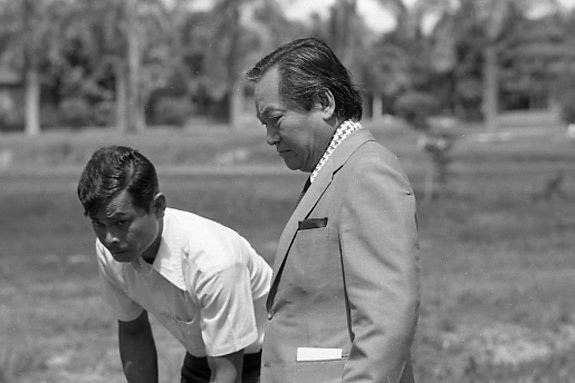 Thailand · Politics
1920—1998
Chatichai Choonhavan
Diplomat, party leader and former prime ministerThe elected prime minister who accelerated economic diplomacy with Indochina and led a booming coalition government until the military removed it in February 1991.Read biography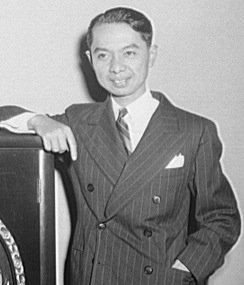 Thailand · Politics
1905—1997
Seni Pramoj
6th Prime Minister of Thailand and Free Thai diplomatThe lawyer and wartime diplomat who refused to deliver Thailand’s declaration of war to Washington, organised Free Thai resistance abroad and later led three governments.Read biography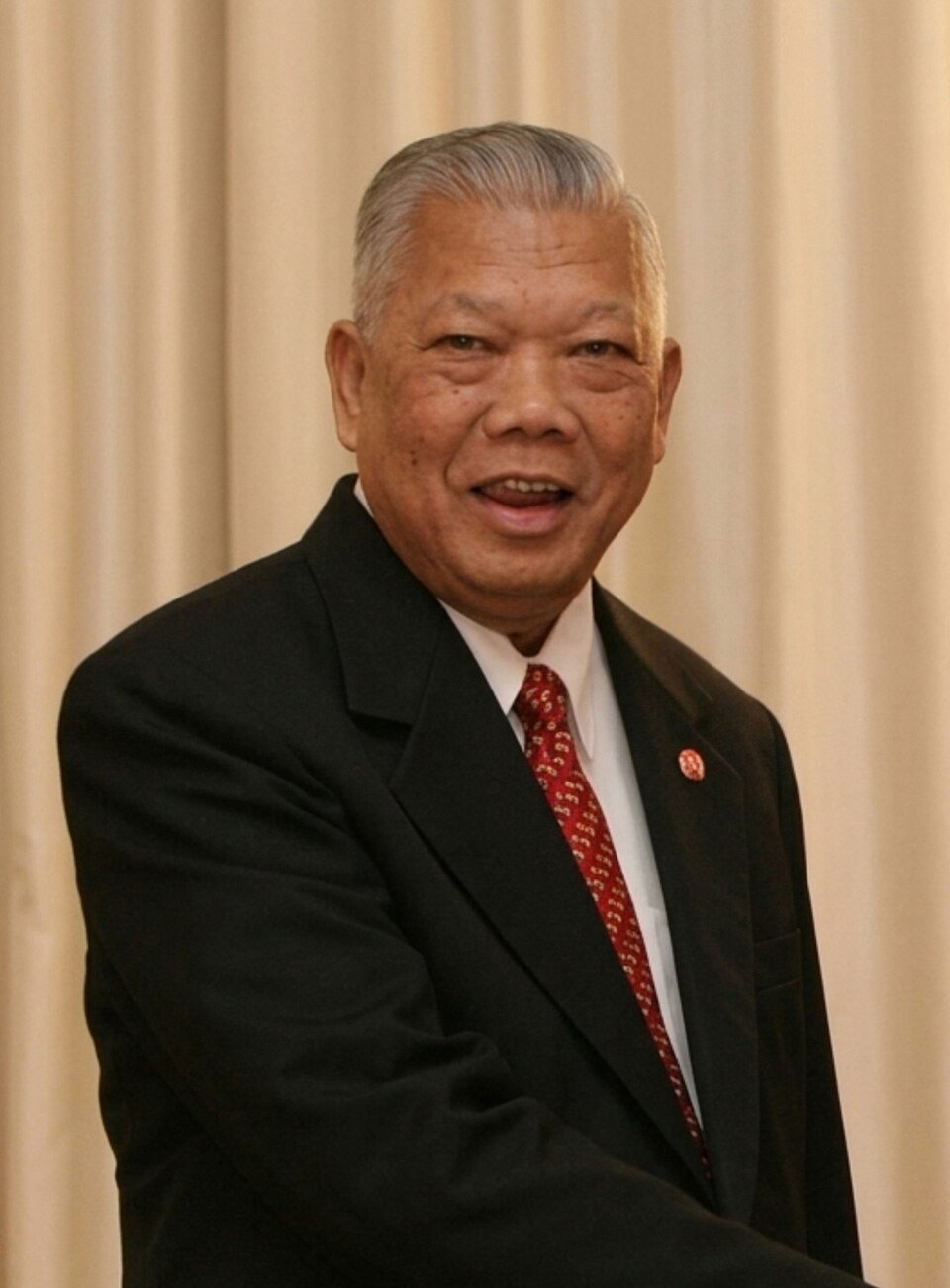 Thailand · Politics
1935—2009
Samak Sundaravej
25th Prime Minister of Thailand, January–September 2008The combative veteran politician, Bangkok governor and television cook who led the first elected government after the 2006 coup before a court ended his premiership.Read biography Thailand · Politics
1927—2016
Bhumibol Adulyadej
King of Thailand, 1946–2016Thailand’s longest-reigning monarch, whose seven decades on the throne spanned rapid development, repeated political crises and profound social change.Read biographyQuick answers
Common questions
- When was the 1979 Thai general election?
- It was held on 22 April 1979, the first national election after the 1976 massacre and two subsequent coups.
- How many House seats were contested?
- All 301 seats in the House of Representatives were contested across 126 constituencies.
- Which party won the most seats?
- Kukrit Pramoj’s Social Action Party won 82 seats, the largest party bloc but far short of a majority.
- How many independents were elected?
- Independent candidates won 63 seats, collectively forming the second-largest category in the House.
- What was voter turnout?
- The IPU recorded 9,344,045 voters from 21,283,790 registered electors, a turnout of 43.9 per cent.
- Who became prime minister after the election?
- Kriangsak Chamanan remained prime minister and formed a new cabinet even though he had not contested an elected House seat.
Primary and institutional sources
How this history was checked
Dates, legal milestones and historical claims are checked against the official and institutional records below. This article was reviewed on 3 October 2026.
- Inter-Parliamentary UnionThailand general election, 22 April 1979
- Parliament Museum of ThailandConstitution of the Kingdom of Thailand, B.E. 2521 (1978)
- United Nations Digital LibraryThailand constitutional and election chronology, 1977–1978
- Library of CongressThailand: A Country Study
- Institute of Public Policy StudiesThailand: State-Building, Democracy and Globalization
- Office of the Historian, U.S. Department of StateKriangsak’s resignation and the next Thai government
- Secretariat of the Prime Minister of ThailandOfficial directory of prime ministers of Thailand
- Wikimedia CommonsKukrit Pramoj portrait and CC BY 2.0 licence record