
The short answer
Thailand’s 1986 election followed a coalition defeat over economic policy and an intense struggle around the army command. The Democrats won a 100-seat plurality and turnout rose to about 61.4 per cent, but the leading parties again selected the non-party General Prem Tinsulanonda to head government.
Election results
The leading parties in the 1986 House
The Democrats nearly doubled their representation, while Social Action’s decline reshaped the coalition balance.
| Political party | Seats | Share of House | Change from 1983 |
|---|---|---|---|
| Democrat Party | 100 | 28.8% | +44 |
| Chart Thai Party | 63 | 18.2% | −10 |
| Social Action Party | 51 | 14.7% | −41 |
| United Democratic Party | 38 | 11.0% | New grouping |
| Prachakorn Thai Party | 24 | 6.9% | −12 |
Chronology
A timeline of the turning points
Prem returns through a four-party coalition
The non-party premier governed with Social Action, Democrat, Prachakorn Thai and National Democracy support.
A coup attempt fails in Bangkok
The violent rebellion exposed military factionalism and deepened distrust between Prem and army commander Arthit.
The government confirms Arthit’s retirement
Prem rejected efforts to extend the powerful commander’s term beyond the scheduled September date.
The coalition loses an economic-policy vote
Social Action dissidents joined the opposition to defeat a decree raising diesel-vehicle registration fees.
Prem dissolves the House
The government treated the defeat as equivalent to a loss of confidence and called a 27 July election.
Arthit loses the army command early
The change cleared the way for Chavalit Yongchaiyudh and altered the military balance before polling.
Voters elect all 347 representatives
Turnout reached approximately 61.4 per cent, its highest level in the post-1976 election sequence.
The Democrats win a 100-seat plurality
Chart Thai followed with 63 seats and Social Action fell sharply to 51.
Four leading parties endorse Prem
Democrat, Chart Thai, Social Action and Rassadorn assembled a 232-seat coalition around the unelected premier.
Prem begins his final post-election government
The coalition sustained him until an internal Democrat split led to another dissolution in April 1988.
Why was the House dissolved in May 1986?
Prem’s coalition divided over a government decree increasing registration charges for diesel-powered vehicles. On 1 May, Social Action legislators joined opposition parties to defeat the measure. Under the political conventions of the time, rejection of an important finance measure was treated as a loss of confidence.
Prem responded by dissolving the House rather than resigning or allowing an alternative coalition to form. The decision turned an intra-government dispute into a national election and prevented General Arthit Kamlang-ek or hostile party groups from using the parliamentary defeat to replace the premier directly.
How did military politics shape the campaign?
The September 1985 coup attempt had widened distrust between Prem and Arthit, who held both army and supreme-command positions. Prem announced in March 1986 that Arthit would retire on schedule, then removed him from army command before the July vote. Chavalit Yongchaiyudh emerged as his successor.
This was not simply an electoral contest isolated from the barracks. The election date fell close to Arthit’s expected retirement, and new parties openly opposed Prem. Yet the dispute was channelled through dissolution, campaigning and coalition negotiation rather than a successful coup.
What were the principal results?
The Democrat Party won 100 of 347 seats, a gain of forty-four from 1983 and the largest bloc in the House. Chart Thai won 63, Social Action 51, the United Democratic Party 38, Prachakorn Thai 24, United Thai 19 and Rassadorn 18. No party reached the 174 needed for a majority.
The result redistributed party strength without ending fragmentation. Social Action lost forty-one seats, while Kriangsak Chamanan’s opposition United Democratic Party became the fourth-largest group. The parties therefore needed both coalition partners and an agreed candidate for prime minister.
How many people voted?
The IPU election record gives approximately 24.6 million registered electors and about 15.1 million voters, a turnout of 61.4 per cent. Different later compilations use a larger registered-elector total, so this guide keeps the IPU figures and labels their approximate character.
Turnout rose by more than ten percentage points from 1983. Participation strengthened the elected House’s claim to represent the public, although voters still did not choose the premier directly and the appointed Senate remained part of the constitutional order.
Why did the largest party support Prem?
Prem did not stand as a candidate and remained outside every party. The Democrats nevertheless joined Chart Thai, Social Action and Rassadorn in endorsing him. Together those four parties controlled 232 seats, a clear House majority, and considered him acceptable to the military, palace and coalition factions.
Some students and party dissidents demanded an elected prime minister, revealing that the constitutional possibility of a non-MP premier had become politically controversial. The coalition proceeded with Prem, demonstrating again that the winning party’s leader did not automatically form the government.
What did the election change?
It produced the strongest party bloc of the Prem era and extended uninterrupted parliamentary politics after a second failed coup attempt. The army’s top command changed without a takeover, and Chavalit sought to balance promotion factions rather than construct an openly rival government centre.
Party politics also became more deeply connected to provincial business networks and campaign spending. That could increase resources and local representation while encouraging factional switching, personal finance and allegations of vote buying. Stronger elections did not necessarily produce programmatic or disciplined parties.
Why was this Prem’s final election?
The coalition survived until April 1988, when division inside the Democrats and a pending no-confidence debate again led Prem to recommend dissolution. By then he had governed for eight years without contesting a national election or building a personal party.
After the July 1988 election, major parties initially invited him to continue, but Prem declined. Chart Thai leader Chatichai Choonhavan then became prime minister as an elected representative. The 1986 vote was therefore the last national contest to reproduce the characteristic Prem-era bargain.
Continue the chronology
Related history guides
The 1985 Thai Coup Attempt
Begin with the failed rebellion that reshaped relations between Prem and the army command.
Read the timeline18 April 1983The 1983 Thai General Election
Trace the earlier coalition and constitutional transition that preceded the dissolution.
Read the timeline24 July 1988The 1988 Thai General Election
Continue to Prem’s decision to step aside and Chatichai’s elected premiership.
Read the timeline1980–1988Order 66/2523 and the Prem Era
Place the election inside Prem’s wider counter-insurgency and coalition strategy.
Read the timeline1932–presentPrime Ministers of Thailand
Compare Prem’s route to office with elected and coup-appointed successors.
Read the timelineConnected biographies
Seven biographies connecting the election, party blocs, army command and Prem’s final coalition
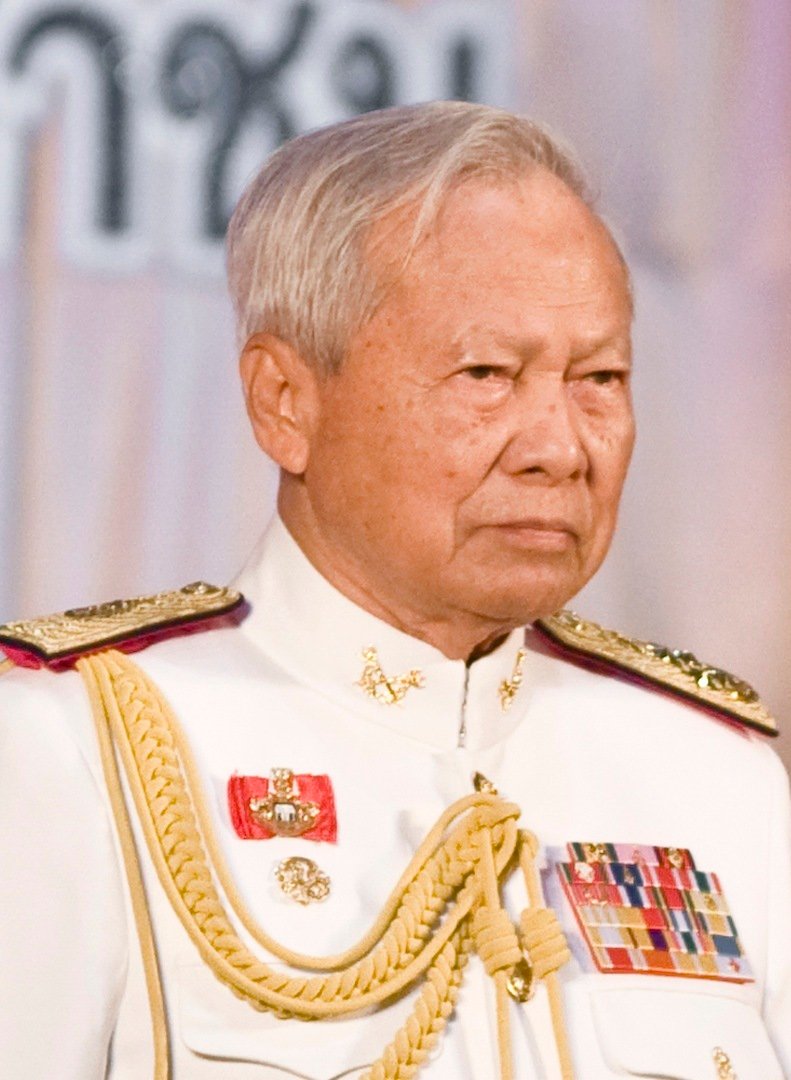 Thailand · Politics
1920—2019
Prem Tinsulanonda
16th Prime Minister of Thailand, 1980–1988The army commander who led Thailand through eight years of parliamentary coalition government before becoming a long-serving royal adviser and regent.Read biography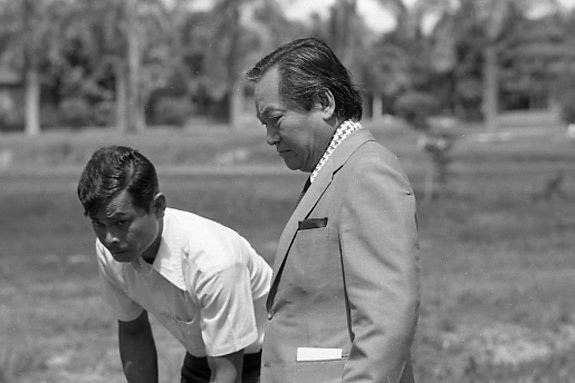 Thailand · Politics
1920—1998
Chatichai Choonhavan
Diplomat, party leader and former prime ministerThe elected prime minister who accelerated economic diplomacy with Indochina and led a booming coalition government until the military removed it in February 1991.Read biography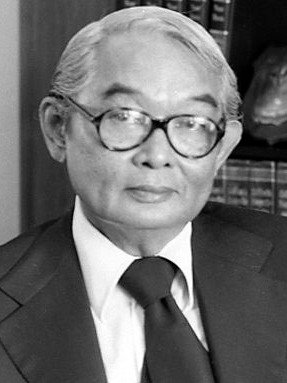 Thailand · Politics
1911—1995
Kukrit Pramoj
13th Prime Minister of Thailand and writerThe writer, newspaper founder and Social Action Party leader who assembled Thailand’s fragmented 1975 coalition and became its thirteenth prime minister.Read biography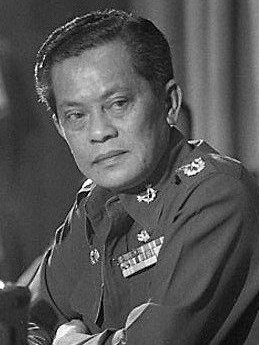 Thailand · Politics
1917—2003
Kriangsak Chamanan
15th Prime Minister of Thailand and military officerThe general who emerged from the October 1977 coup, relaxed parts of Thanin-era repression, restored an elected House and governed during the Indochina refugee crisis.Read biography Thailand · Politics
1932—
Chavalit Yongchaiyudh
Retired general and former prime ministerA former army commander who entered electoral politics, formed the New Aspiration Party and served as prime minister as the baht crisis became a regional financial shock.Read biography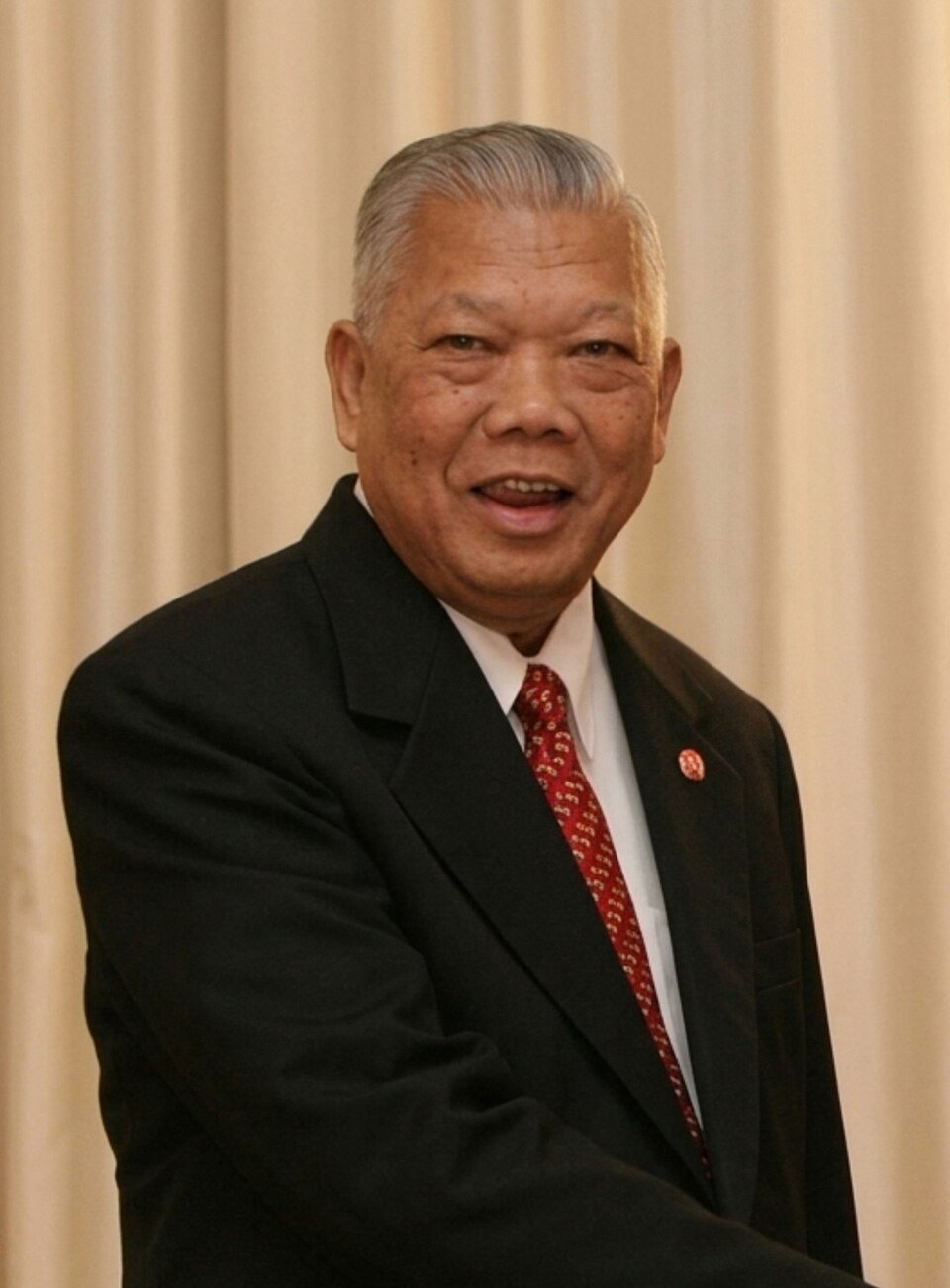 Thailand · Politics
1935—2009
Samak Sundaravej
25th Prime Minister of Thailand, January–September 2008The combative veteran politician, Bangkok governor and television cook who led the first elected government after the 2006 coup before a court ended his premiership.Read biography Thailand · Politics
1927—2016
Bhumibol Adulyadej
King of Thailand, 1946–2016Thailand’s longest-reigning monarch, whose seven decades on the throne spanned rapid development, repeated political crises and profound social change.Read biographyQuick answers
Common questions
- When was the 1986 Thai general election?
- It was held on 27 July 1986 after Prem Tinsulanonda dissolved the House on 1 May.
- Which party won the most seats?
- The Democrat Party won 100 of 347 seats, the largest bloc but still seventy-four short of a majority.
- What was voter turnout?
- The IPU recorded turnout of approximately 61.4 per cent, or about 15.1 million voters.
- Why was the House dissolved?
- The governing coalition lost a key vote on a decree raising registration fees for diesel-powered vehicles, which was treated as a confidence defeat.
- Who became prime minister?
- Prem Tinsulanonda returned with support from a coalition led by the Democrats, Chart Thai, Social Action and Rassadorn.
- Was Prem an elected member of parliament?
- No. He did not contest the election and remained a non-party premier permitted by the 1978 constitutional framework.
Primary and institutional sources
How this history was checked
Dates, legal milestones and historical claims are checked against the official and institutional records below. This article was reviewed on 3 October 2026.
- Inter-Parliamentary UnionThailand general election, 27 July 1986
- Institute of East Asian Studies, UC BerkeleyContemporary Thai Political Development
- Library of CongressThailand: A Country Study
- Institute of Public Policy StudiesThailand: State-Building, Democracy and Globalization
- Southeast Asian Studies, Kyoto UniversityCoups in Thailand, 1980–1991: Classmates and military factions
- The Washington PostVaried mandates in the 1986 Thai and Malaysian elections
- Secretariat of the Prime Minister of ThailandOfficial directory of prime ministers of Thailand
- Wikimedia CommonsPrem Tinsulanonda portrait and CC BY 2.0 licence record