
The short answer
Thailand’s second election under the 1974 Constitution concentrated 87 per cent of House seats in four parties. The Democrats won 114 seats and Seni Pramoj assembled a 206-seat coalition, but parliamentary strength could not contain military pressure, partisan division and organised violence beyond the chamber.
Election results
The four largest parties in the 1976 House
All four expanded or retained large parliamentary blocs, but none could govern alone.
| Party | Seats | Change from 1975 | Post-election position |
|---|---|---|---|
| Democrat Party | 114 | +42 | Led government |
| Thai Nation Party | 56 | +28 | Joined coalition |
| Social Action Party | 45 | +27 | Opposition |
| Social Justice Party | 28 | −17 | Joined coalition |
Chronology
A timeline of the turning points
A new constitution establishes elected government
The charter restored an elected House, appointed Senate and competitive party system after the 1973 uprising.
The first election produces a fragmented House
The Democrats won 72 of 269 seats, but more than twenty parties obtained representation.
Kukrit forms a broad coalition
After Seni’s minority cabinet fell, Kukrit Pramoj assembled a sixteen-party government from only eighteen Social Action seats.
The House is dissolved early
Kukrit sought a new election after coalition instability made governing increasingly difficult.
Voters choose a 279-seat House
More than 2,350 candidates from 39 parties competed across 119 constituencies.
The Democrats win 114 seats
Seni’s party gained 42 seats but remained 26 short of a majority.
Four parties agree to govern together
Thai Nation, Social Justice and Social Nationalist joined the Democrats in a 206-seat coalition.
Seni returns as prime minister
The new cabinet began with a much larger House majority than any government formed after the 1975 vote.
Thanom returns from exile
The former military ruler’s ordination and residence at Wat Bowonniwet divided the government and revived student protest.
Massacre and coup remove the elected government
The military dissolved the House and abolished the 1974 Constitution only six months after the election.
Why was another election held in April 1976?
The January 1975 election had produced a House fragmented among more than twenty parties. Seni Pramoj’s minority cabinet survived only weeks, after which Kukrit Pramoj assembled a coalition of sixteen parties. That government pursued consequential policies, including recognition of the People’s Republic of China and negotiations over United States forces, but constant bargaining made its parliamentary base unstable.
Kukrit requested an early dissolution, and the House was dissolved on 12 January 1976. The new election on 4 April was therefore not the end of a normal four-year term. It was an attempt to create a more workable mandate under the 1974 Constitution while social conflict and Cold War uncertainty were intensifying outside parliament.
How did the electoral system work?
Population determined representation across Thailand’s 71 provinces, producing 279 House seats—ten more than in 1975. Provinces were divided into 119 constituencies, generally returning between one and three representatives. Voters could cast as many votes as there were seats in their constituency, and candidates had to be members of registered political parties.
The IPU recorded more than 2,350 candidates from 39 parties. The Democrats fielded 260 candidates, the largest slate, followed by the Social Action, Thai Nation and Social Justice parties. This remained a highly plural contest, but the electorate concentrated much more representation in the leading organisations than it had the previous year.
What were the main results?
The Democrat Party won 114 seats, an increase of 42 from 1975. Thai Nation doubled its representation to 56, Kukrit’s Social Action Party rose from 18 to 45, and Social Justice fell from 45 to 28. Together these four parties held 243 of 279 seats, or about 87 per cent of the House.
No party reached the 140 seats required for an outright majority. The result nevertheless reduced the bargaining power of numerous small parties and made Seni the central coalition builder. Seven women were elected among 279 representatives, a reminder that wider party competition had not yet produced balanced political representation.
How many people voted?
The Inter-Parliamentary Union recorded 20,791,018 registered voters and 9,084,104 participants, a turnout of 45.7 per cent. Of the ballots cast, 8,628,048 were counted as valid and 456,056 were blank or void. Voting was not compulsory.
Turnout below half the registered electorate complicates any claim of an overwhelming mandate. The election did produce a clear leading party and stronger coalition arithmetic, but participation remained uneven. Constitutional government had returned only recently, and violence, economic pressure and distrust of parties shaped the environment in which citizens decided whether to vote.
How did Seni assemble a 206-seat coalition?
On 17 April, Thai Nation, Social Justice and Social Nationalist agreed to join the Democrats. Their combined strength gave the coalition at least 206 of 279 seats. Seni became prime minister on 21 April, while outgoing premier Kukrit and the Social Action Party moved out of the governing core despite their electoral gains.
The four-party arrangement was dramatically simpler than Kukrit’s sixteen-party coalition. Contemporary American reporting regarded it as the most promising cabinet of the three-year democratic opening. Formal numbers, however, could not eliminate disagreements inside the Democrat Party or guarantee civilian control over security institutions.
Why did a large majority not produce stability?
The election occurred after communist victories in Cambodia, South Vietnam and Laos, amid Thai insurgency, strikes, farmer activism and violent right-wing mobilisation. The withdrawal of most United States forces altered a long-standing security relationship. Political conflict extended far beyond motions that could be resolved by 206 parliamentary votes.
Seni’s own party contained conservative and progressive factions that disagreed over cabinet positions, protest and the military. Police and armed right-wing organisations were not reliably controlled by the elected leadership. A large coalition could pass legislation, but it could not by itself reconcile the state’s coercive institutions with the democratic opening.
How did the elected government end?
Thanom Kittikachorn’s return on 19 September transformed existing tension into a direct test of the government’s authority. Seni offered his resignation during the crisis but returned to lead a reconfigured cabinet. Student demonstrations continued, and the murder of two anti-Thanom workers in Nakhon Pathom became the subject of a campus reenactment later misrepresented as an insult to the crown prince.
Before dawn on 6 October, police and armed right-wing groups attacked Thammasat University. The National Administrative Reform Council removed Seni’s government that afternoon, abolished parliament and ended the 1974 Constitution. The House elected six months earlier never received a chance to consolidate its mandate or face voters again.
Continue the chronology
Related history guides
The 1974 Constitution of Thailand
Read the rights and parliamentary framework under which the election was held.
Read the timeline26 January 1975The 1975 Thai General Election
Compare the first, far more fragmented House of the democratic opening.
Read the timeline19 September 1976Thanom’s Return to Thailand
Follow the crisis that divided Seni’s coalition and accelerated the confrontation.
Read the timeline6 October 1976The Thammasat Massacre
Continue to the violence and coup that ended the elected government.
Read the timeline1932–presentPrime Ministers of Thailand
Compare the routes to office of Kukrit, Seni, Thanin and later premiers.
Read the timelineConnected biographies
Seven biographies connecting the election, coalition government, university institutions and authoritarian closure
 Thailand · Politics
1905—1997
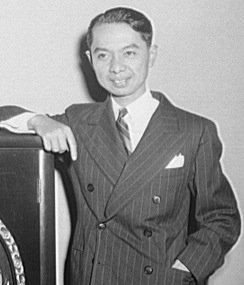
Seni Pramoj
6th Prime Minister of Thailand and Free Thai diplomatThe lawyer and wartime diplomat who refused to deliver Thailand’s declaration of war to Washington, organised Free Thai resistance abroad and later led three governments.Read biography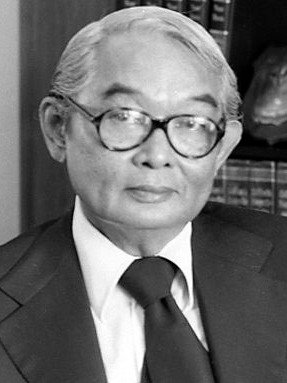 Thailand · Politics
1911—1995
Kukrit Pramoj
13th Prime Minister of Thailand and writerThe writer, newspaper founder and Social Action Party leader who assembled Thailand’s fragmented 1975 coalition and became its thirteenth prime minister.Read biography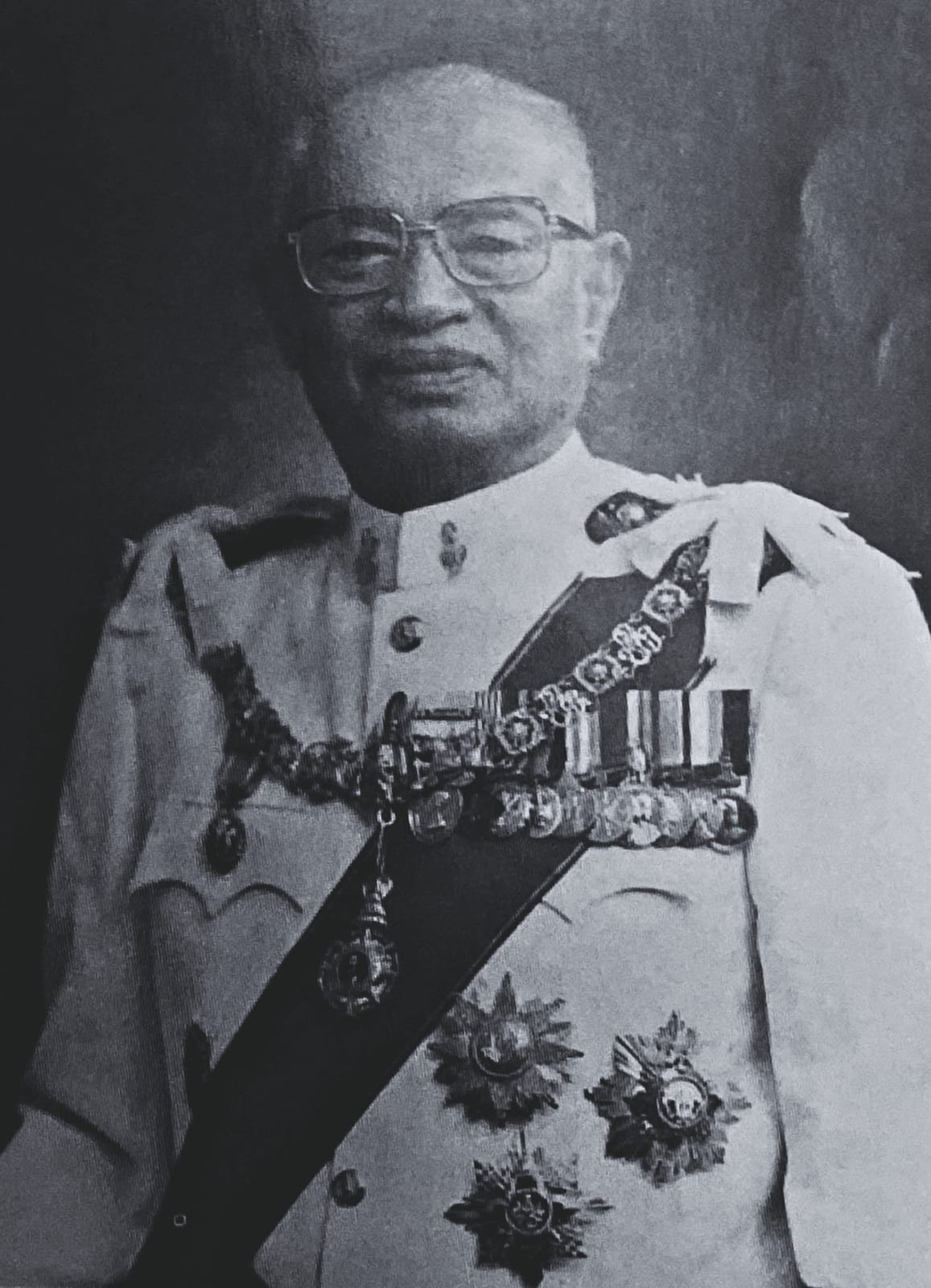 Thailand · Politics
1907—2002
Sanya Dharmasakti
Jurist, university rector and former prime ministerThe jurist and Thammasat rector appointed prime minister after military rule collapsed in October 1973, who oversaw a new constitution and return to elections.Read biography Thailand · Politics
1916—1999
Puey Ungphakorn
Economist, central banker and university rectorAn economist, wartime Free Thai volunteer and long-serving central-bank governor who linked economic management, education and public responsibility.Read biography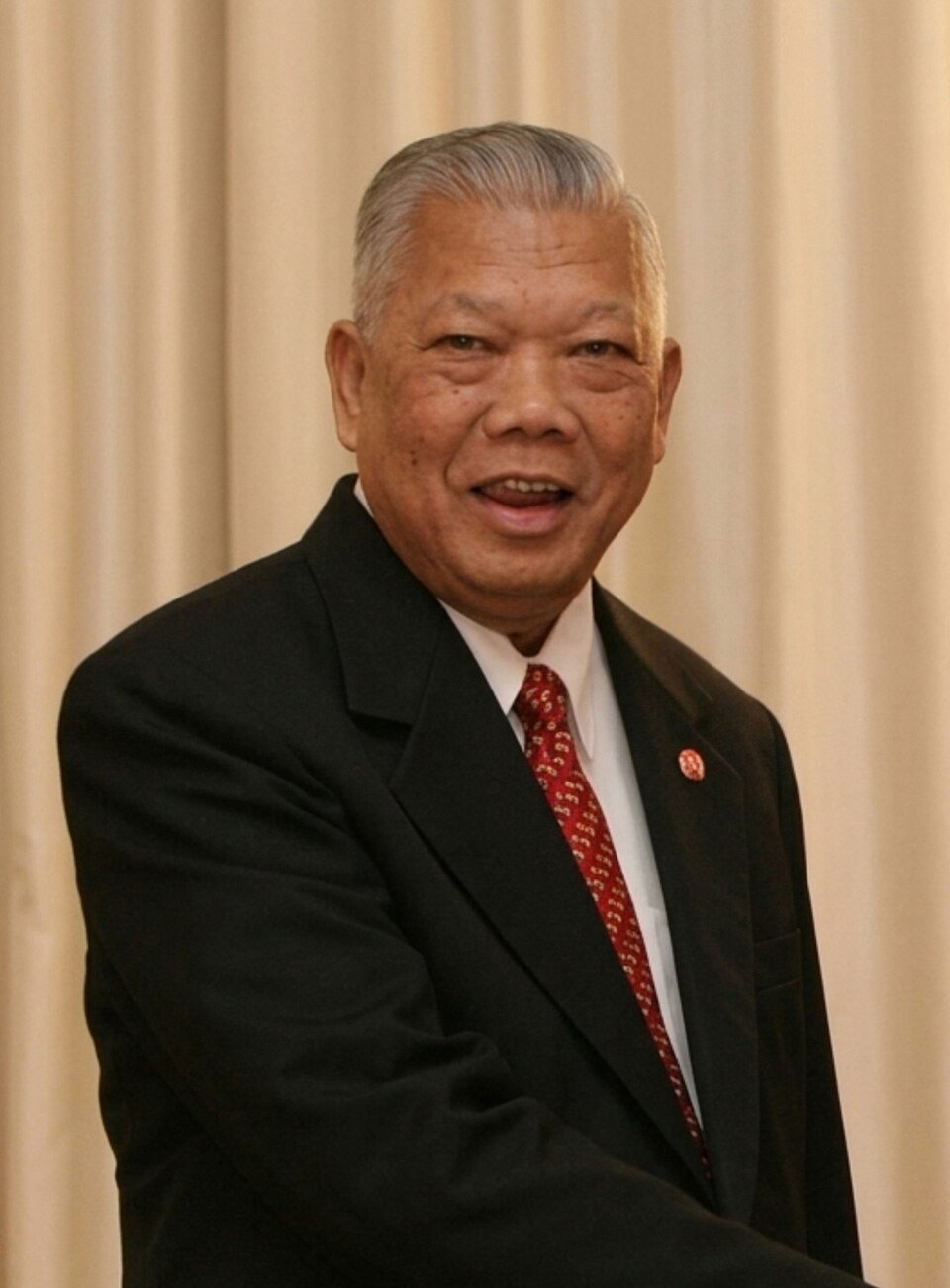 Thailand · Politics
1935—2009
Samak Sundaravej
25th Prime Minister of Thailand, January–September 2008The combative veteran politician, Bangkok governor and television cook who led the first elected government after the 2006 coup before a court ended his premiership.Read biography Thailand · Politics
1927—2016
Bhumibol Adulyadej
King of Thailand, 1946–2016Thailand’s longest-reigning monarch, whose seven decades on the throne spanned rapid development, repeated political crises and profound social change.Read biography Thailand · Politics
1927—2025
Thanin Kraivichien
14th Prime Minister of Thailand and judgeThe judge and law professor appointed prime minister after the 1976 coup, whose hard-line anti-communist government was removed by another military takeover a year later.Read biographyQuick answers
Common questions
- When was the 1976 Thai general election?
- It was held on 4 April 1976 after the House elected in January 1975 was dissolved early on 12 January.
- Which party won the 1976 election?
- The Democrat Party led by Seni Pramoj won 114 of 279 seats, the largest bloc but not an outright majority.
- How many seats did the other leading parties win?
- Thai Nation won 56 seats, Social Action 45 and Social Justice 28.
- What was voter turnout?
- The IPU recorded 9,084,104 voters from 20,791,018 registered electors, a turnout of 45.7 per cent.
- Who became prime minister after the election?
- Seni Pramoj returned as prime minister on 21 April 1976 with a four-party coalition controlling at least 206 House seats.
- How long did the elected government last?
- It lasted until 6 October 1976, when the Thammasat massacre was followed by a military coup that abolished parliament and the constitution.
Primary and institutional sources
How this history was checked
Dates, legal milestones and historical claims are checked against the official and institutional records below. This article was reviewed on 3 October 2026.
- Inter-Parliamentary UnionThailand parliamentary election, 4 April 1976
- Office of the Historian, U.S. Department of StateUnited States policy discussion before the April 1976 election
- Office of the Historian, U.S. Department of StateAssessment of Seni’s coalition and the end of the democratic experiment
- Office of the Historian, U.S. Department of StateUnited States assessment of Seni’s government in 1976
- Institute of Public Policy StudiesThailand: State-Building, Democracy and Globalization
- Secretariat of the Prime Minister of ThailandOfficial directory of prime ministers of Thailand
- Library of CongressThailand: A Country Study
- Library of CongressSeni Pramoj photograph and public-domain record