
The short answer
Thailand’s 1974 Constitution converted the demands of the October 1973 uprising into broad civil rights, an elected House and competitive party government. Its appointed Senate and unfinished safeguards reflected continuing compromise, while the 1976 coup revealed that constitutional rules had not placed the armed forces under effective civilian control.
Chronology
A timeline of the turning points
The military government falls
A student-led popular uprising ended Thanom Kittikachorn’s rule, and Sanya Dharmasakti became prime minister.
A broad National Convention is assembled
More than 2,300 appointed participants from different professions and provinces selected a new legislative body.
A 299-member legislature takes shape
The new National Legislative Assembly replaced the chamber inherited from the military government.
A civilian drafting process advances
Jurists, academics and public submissions helped shape a charter intended to answer the constitutional demands of 1973.
Sanya resigns and returns to office
Conflict over the pace and direction of reform produced a cabinet crisis, but the transition continued under Sanya.
The new constitution is promulgated
The charter recognised broad rights, restored an elected House and retained a 100-member appointed Senate.
Parties prepare for a national election
Candidates had to belong to political parties, linking representation more firmly to organised parliamentary blocs.
Voters elect a 269-seat House
The first election under the charter produced more than twenty represented parties and no majority.
A second election strengthens the Democrats
Seni Pramoj’s party won 114 of 279 seats and formed a four-party coalition controlling at least 206.
Massacre and coup end the constitution
After the assault at Thammasat University, the military abolished parliament and the constitutional order.
Why was a new constitution required after 1973?
The October 1973 uprising removed Thanom Kittikachorn’s government after two years of direct rule under the 1971 self-coup. The immediate transition rested on the appointment of jurist and Thammasat rector Sanya Dharmasakti rather than an election. A permanent constitution was therefore necessary to turn the street victory into institutions capable of obtaining public consent.
The new charter also had to answer a history of executive convenience. The 1968 Constitution had restored a limited parliament, but Thanom suspended it when legislators became difficult to manage. Students and citizens who demanded a constitution in 1973 were seeking enforceable rights and representative government, not simply another text that military leaders could discard.
How was the constitution drafted?
The process sought a broader base than the legislature inherited from the military order. A National Convention of more than 2,300 people from varied occupations and regions selected a 299-member National Legislative Assembly. Sanya’s government also relied on a civilian drafting commission that included jurists and academics, while members of the public submitted views on the proposed system.
This was not a directly elected constituent assembly. Royal appointment and several layers of selection remained central to the transition. Even so, the removal of Thanom-era legislators and the circulation of proposals created more public participation than earlier military-directed drafting. The final document was approved and promulgated on 7 October 1974.
What rights did the 1974 Constitution recognise?
The charter provided a broad statement of civil and political freedoms within a parliamentary constitutional monarchy. Speech, association, political organisation and legal protection gained a firmer constitutional basis than under direct military rule. It also envisaged institutions for reviewing state power, although some were never fully established during the constitution’s short life.
Rights on paper operated in a turbulent environment. Labour organising, farmer mobilisation and a freer press expanded, but political killings, anti-communist campaigns and clashes among rival movements also increased. The constitution opened lawful space for participation; it did not by itself disarm coercive organisations or guarantee that officials would protect every group equally.
How were the House and Senate organised?
The House of Representatives was elected, with its size fixed by population between 240 and 300 members. It contained 269 seats after the January 1975 election and 279 after the April 1976 election. Candidates had to belong to political parties, an effort to strengthen organised parliamentary government rather than rely on fluid independent blocs.
The Senate contained 100 appointed members serving six-year terms. Appointment preserved an unelected check inside the National Assembly, although active officials and military personnel faced restrictions on simultaneous political office. An amendment changed the countersignature procedure for senatorial appointments, illustrating continuing argument about where responsibility for unelected power should rest.
Why did the constitution restrict officials and soldiers?
Military officers and permanent officials had long moved directly between command, bureaucracy, cabinet and legislature. The 1974 settlement attempted to separate those roles by preventing serving armed-force members and ordinary officials from simultaneously sitting in the National Assembly. It also required elected representatives to belong to parties rather than build purely personal factions.
The principle was democratic civilian control, but transitional arrangements and institutional practice limited its reach. The armed forces retained command structures, security responsibilities and political networks outside parliament. Constitutional exclusion from a seat did not remove their capacity to pressure governments or carry out a coup, as the events of October 1976 would demonstrate.
How did the constitution perform in elections?
The first election on 26 January 1975 produced a House divided among more than twenty parties. Seni Pramoj’s Democrats placed first but could not sustain a minority cabinet; Kukrit Pramoj then assembled a sixteen-party coalition despite his Social Action Party holding only eighteen seats. The result was representative but exceptionally difficult to coordinate.
After the House was dissolved, the election of 4 April 1976 concentrated more seats in four large parties. The Democrats won 114 of 279 and Seni formed a coalition with at least 206 seats. That was a stronger parliamentary foundation, yet factional conflict and violence outside the chamber continued. Institutional consolidation required time that the elected order did not receive.
Why did the 1974 Constitution fail to survive?
The charter operated amid inflation, strikes, rural conflict, communist insurgency and the revolutionary victories in neighbouring Indochina. Right-wing organisations mobilised against students and the left, while elected coalitions struggled to command authority over police and military institutions. These pressures weakened confidence without proving that representative government itself caused the crisis.
Thanom’s return from exile on 19 September 1976 intensified protest and divided Seni’s governing party. On 6 October, police and armed right-wing groups attacked people at Thammasat University; the military seized power later that day and abolished the constitution. Its short life exposed a central problem of Thai constitutionalism: a democratic charter could regulate parliament while leaving the forces capable of ending parliament beyond effective civilian control.
Continue the chronology
Related history guides
The 1973 Thai Popular Uprising
Begin with the mass movement whose constitutional demands created the democratic opening.
Read the timeline26 January 1975The 1975 Thai General Election
See how the first vote under the charter produced a fragmented House and two Pramoj governments.
Read the timeline4 April 1976The 1976 Thai General Election
Follow the second election into Seni’s stronger four-party coalition.
Read the timeline19 September 1976Thanom’s Return to Thailand
Trace the crisis that divided the elected government and accelerated mobilisation.
Read the timeline6 October 1976The Thammasat Massacre
Continue to the violence and coup that destroyed the constitutional order.
Read the timelineConnected biographies
Six biographies connecting legal transition, party government, university institutions, monarchy and the military order it replaced
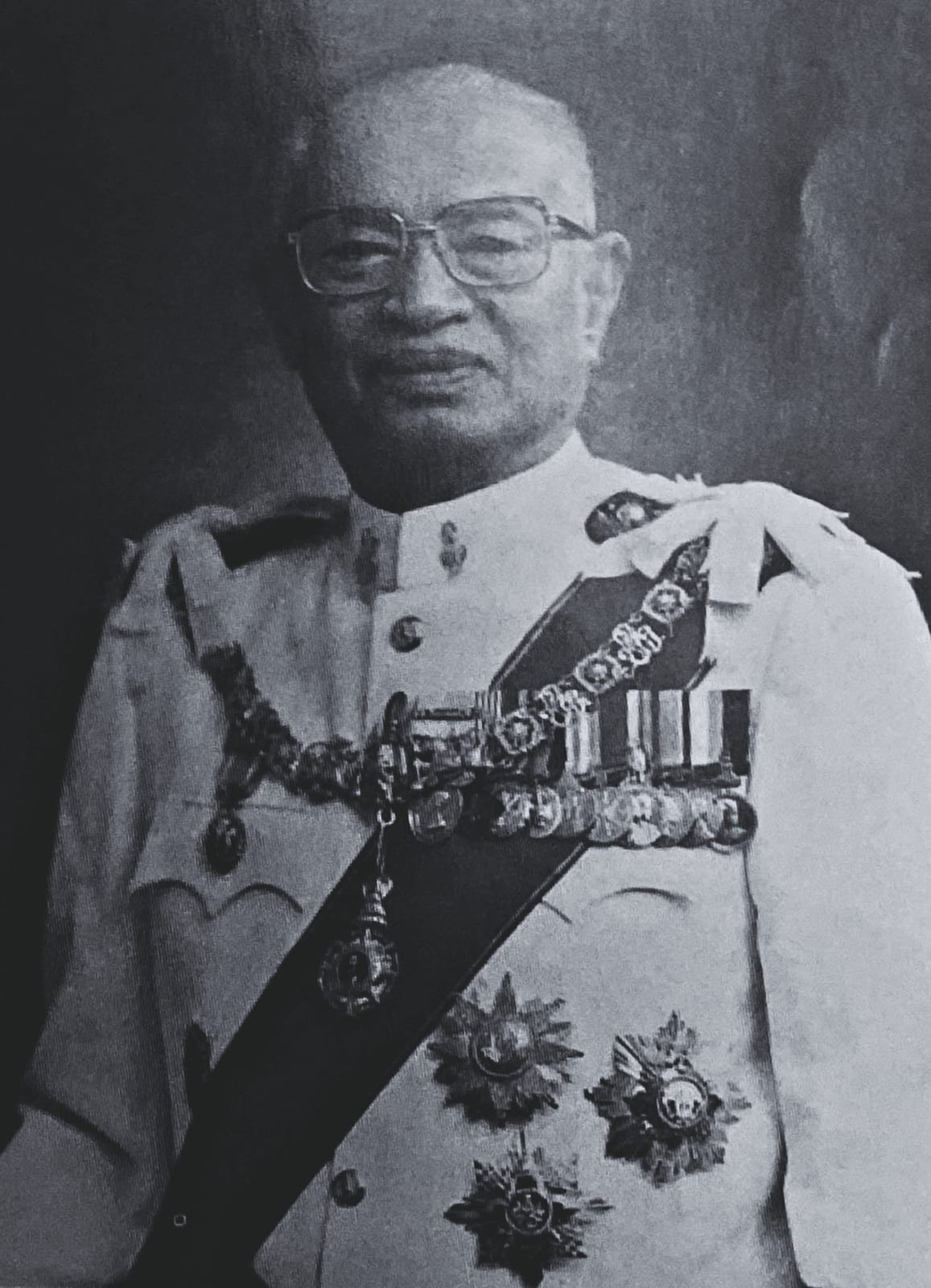 Thailand · Politics
1907—2002
Sanya Dharmasakti
Jurist, university rector and former prime ministerThe jurist and Thammasat rector appointed prime minister after military rule collapsed in October 1973, who oversaw a new constitution and return to elections.Read biography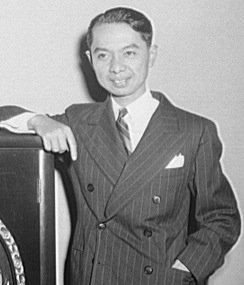 Thailand · Politics
1905—1997
Seni Pramoj
6th Prime Minister of Thailand and Free Thai diplomatThe lawyer and wartime diplomat who refused to deliver Thailand’s declaration of war to Washington, organised Free Thai resistance abroad and later led three governments.Read biography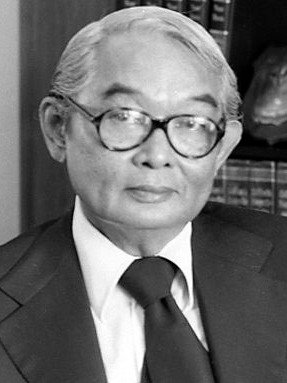 Thailand · Politics
1911—1995
Kukrit Pramoj
13th Prime Minister of Thailand and writerThe writer, newspaper founder and Social Action Party leader who assembled Thailand’s fragmented 1975 coalition and became its thirteenth prime minister.Read biography Thailand · Politics
1916—1999
Puey Ungphakorn
Economist, central banker and university rectorAn economist, wartime Free Thai volunteer and long-serving central-bank governor who linked economic management, education and public responsibility.Read biography Thailand · Politics
1927—2016
Bhumibol Adulyadej
King of Thailand, 1946–2016Thailand’s longest-reigning monarch, whose seven decades on the throne spanned rapid development, repeated political crises and profound social change.Read biography Thailand · Politics
1911—2004
Thanom Kittikachorn
Military officer and prime minister of ThailandA field marshal whose governments deepened Thailand’s Cold War alliance and whose self-coup and continued military rule provoked the mass movement of October 1973.Read biographyQuick answers
Common questions
- When was Thailand’s 1974 Constitution promulgated?
- It was promulgated on 7 October 1974, almost one year after the popular uprising that ended Thanom Kittikachorn’s government.
- Who was prime minister during the drafting process?
- Sanya Dharmasakti led the appointed civilian transition and oversaw the process that produced the new charter.
- Was the House of Representatives elected?
- Yes. The constitution provided for an elected House of between 240 and 300 members, with the exact number determined by population.
- Was the Senate elected under the 1974 Constitution?
- No. The Senate had 100 appointed members serving six-year terms.
- What elections were held under the constitution?
- General elections were held on 26 January 1975 and 4 April 1976. Both required coalition governments because no party won a House majority.
- How did the 1974 Constitution end?
- The military coup of 6 October 1976 abolished it after the Thammasat massacre and removal of Seni Pramoj’s elected government.
Primary and institutional sources
How this history was checked
Dates, legal milestones and historical claims are checked against the official and institutional records below. This article was reviewed on 3 October 2026.
- Government of Thailand / Royal GazetteConstitution of the Kingdom of Thailand, B.E. 2517 (1974)
- Chulalongkorn University Faculty of LawConstitution and political institutions: a study of the 1974 Constitution
- United Nations Digital LibraryThailand’s democratic transition and 1974 constitutional process
- Office of the Historian, U.S. Department of StateThai officials discuss the proposed constitution, October 1974
- Oxford University PressConstitutional civil–military dynamics in Southeast Asia
- Inter-Parliamentary UnionThailand parliamentary election, 26 January 1975
- Inter-Parliamentary UnionThailand parliamentary election, 4 April 1976
- Wikimedia CommonsSanya Dharmasakti portrait and public-domain record