
The short answer
Thanom Kittikachorn returned from exile as a monk on 19 September 1976, saying he came to see his ill father and make merit. To opponents, the former dictator’s protected return showed that the military order removed in 1973 could still override elected government. Seventeen days later, the democratic opening ended in massacre and coup.
Chronology
A timeline of the turning points
Thanom’s government falls
Popular mobilisation and lethal street conflict forced Thanom, Praphas and Narong from power and into exile.
Democratic politics expands and polarises
Elections, labour and farmer organising, student activism and right-wing mobilisation transformed the public sphere.
Communist victories intensify regional fear
Revolutionary governments took power in Cambodia, South Vietnam and Laos while Thailand debated its own security order.
Praphas attempts to return
Student protest and public opposition forced another former military ruler to leave, testing the elected government’s authority.
Students organise against Thanom’s proposed return
Activist groups argued that allowing the former dictator back would endanger the constitutional opening.
Thanom returns from Singapore
He arrived as a Buddhist novice and was ordained at Wat Bowonniwet, saying he came to visit his ill father and make merit.
Seni offers his resignation
The return split the governing Democrats and exposed the cabinet’s inability to produce a unified response.
Two anti-Thanom workers are found hanged
Chumporn Thummai and Vichai Ketsripongsa were murdered in Nakhon Pathom after putting up protest posters.
A campus reenactment is recast as royal insult
Right-wing media transformed a performance about the murdered workers into an accusation of lèse-majesté.
Massacre and coup close the democratic opening
Police and armed right-wing groups attacked Thammasat before the military removed Seni’s government.
What happened when Thanom returned?
Thanom Kittikachorn arrived in Thailand from Singapore on 19 September 1976, almost three years after the October 1973 uprising had forced him from power. He entered as a Buddhist novice and proceeded to Wat Bowonniwet in Bangkok, where he was ordained as a monk. He said the journey was personal and religious: his elderly father was ill, and he wanted to make merit.
The return was immediately political regardless of the stated motive. Thanom had suspended the constitution in 1971 and led the government whose violence contributed to the 1973 crisis. Senior officials received him, military-linked radio broadcast his explanation and supporters gathered around the monastery. Students and other opponents saw those networks as evidence that the old order still possessed power beyond the elected government.
Why did becoming a monk matter?
Ordination placed the former ruler inside one of Thailand’s most respected social institutions. Wat Bowonniwet was closely associated with the monarchy and senior monastic authority. Confronting Thanom there risked being portrayed not as opposition to a politician but as disrespect toward Buddhism, the monastery and the wider national order.
Right-wing broadcasters explicitly warned protesters not to disturb a monk and framed resistance as a threat to religion. Critics interpreted the robes as political protection, while supporters emphasised filial duty and merit-making. A responsible account does not claim access to Thanom’s private religious intent; it explains how the public setting changed the costs and meaning of protest.
How did Seni Pramoj’s government respond?
Seni’s four-party coalition controlled at least 206 of 279 House seats after the April election, yet Thanom’s return exposed deep division within the Democrat Party and cabinet. Some ministers demanded stronger action, while conservative figures opposed measures that could be represented as interference with the monkhood or palace-linked institutions.
Seni offered his resignation on 23 September but remained at the centre of government after the parliamentary crisis. The episode weakened the authority of a cabinet that looked numerically strong. It also showed that command over immigration, police, military and religious symbolism could matter more in an emergency than a formal House majority.
How did protest move from Thanom to the murdered workers?
Students resumed demonstrations at Thammasat University and Sanam Luang, arguing that the return tested whether those responsible for the former dictatorship could recover influence. On 24 September, the bodies of electrical workers Chumporn Thummai and Vichai Ketsripongsa were found hanged in Nakhon Pathom after they had posted anti-Thanom material.
Their deaths shifted the campaign from a debate about exile to a demand for justice in a contemporary political murder. Students staged a reenactment of the hangings at Thammasat on 4 October. The performance was intended to show how the two men had been killed, not to represent a royal execution.
How was the reenactment turned into a royal accusation?
A photograph of the campus performance was published and represented by right-wing media as depicting the hanging of the crown prince. Radio broadcasts repeated accusations of lèse-majesté and communist disloyalty. The charge detached the image from the workers’ murders and recast students as enemies of nation, religion and monarchy.
Armed groups and police gathered around Thammasat on 5 October. The allegation supplied an emotionally powerful justification for people already mobilised against the student left. Before dawn the next day, police and right-wing forces opened fire and breached the campus, leading to killings, abuse, injuries and thousands of arrests.
Was Thanom’s return a planned coup provocation?
Some participants and later accounts interpreted the return as part of a deliberate strategy to provoke unrest and create an excuse for military intervention. The coordination visible around his entry, ordination and media support gives that interpretation enduring force. The coup also followed only seventeen days later, after military plotting had already been reported during the democratic period.
The surviving record does not establish every element of a single master plan. A contemporary United States embassy assessment said it found no evidence for the more elaborate plot theory and judged that military leaders made the final coup decision in response to the 6 October crisis. The safest conclusion separates what is documented—the return released decisive tensions—from what remains disputed about prior coordination.
How should the return fit into the history of 6 October?
Thanom’s return was the immediate trigger for the final confrontation, but it was not the sole cause of the massacre. Political killings, anti-communist mobilisation, labour and farmer conflict, factional government and regional revolutionary change had already made the democratic opening dangerous. Right-wing organisations and state agencies had capacities that did not appear suddenly in September.
The return matters because it concentrated those pressures around a single question: could an elected government prevent a displaced authoritarian leader from re-entering national life? The government failed that test, two workers were murdered, a protest image was weaponised and the campus was attacked. Studied this way, the seventeen days connect personal biography to institutional collapse without reducing a complex atrocity to one man’s arrival.
Continue the chronology
Related history guides
The 1976 Thai General Election
Begin with the election that gave Seni’s coalition a large but insufficiently protective House majority.
Read the timeline7 October 1974The 1974 Constitution of Thailand
Understand the rights and elected institutions placed under pressure by the return.
Read the timeline6 October 1976The Thammasat Massacre
Continue from the return and murdered workers to the campus assault and coup.
Read the timeline6–14 October 1973The 1973 Thai Popular Uprising
Return to the movement that had forced Thanom from power three years earlier.
Read the timelineForty-one biographiesThai Political Turning Points
Compare the rulers, elected leaders, jurists and civic institutions across the democratic opening.
Read the timelineConnected biographies
Nine biographies connecting the former military order, elected government, university opposition, conservative politics and authoritarian closure
 Thailand · Politics
1911—2004
Thanom Kittikachorn
Military officer and prime minister of ThailandA field marshal whose governments deepened Thailand’s Cold War alliance and whose self-coup and continued military rule provoked the mass movement of October 1973.Read biography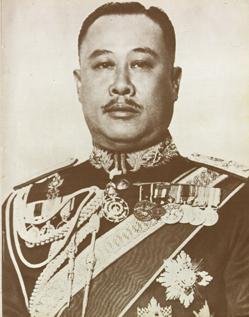 Thailand · Politics
1912—1997
Praphas Charusathien
Field marshal, interior minister and deputy prime ministerA field marshal and long-serving interior minister who helped consolidate Sarit and Thanom’s rule, joined the 1971 self-coup and fell during the October 1973 uprising.Read biography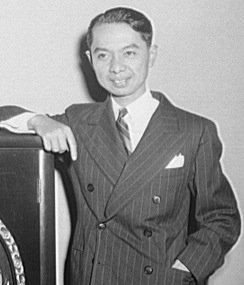 Thailand · Politics
1905—1997
Seni Pramoj
6th Prime Minister of Thailand and Free Thai diplomatThe lawyer and wartime diplomat who refused to deliver Thailand’s declaration of war to Washington, organised Free Thai resistance abroad and later led three governments.Read biography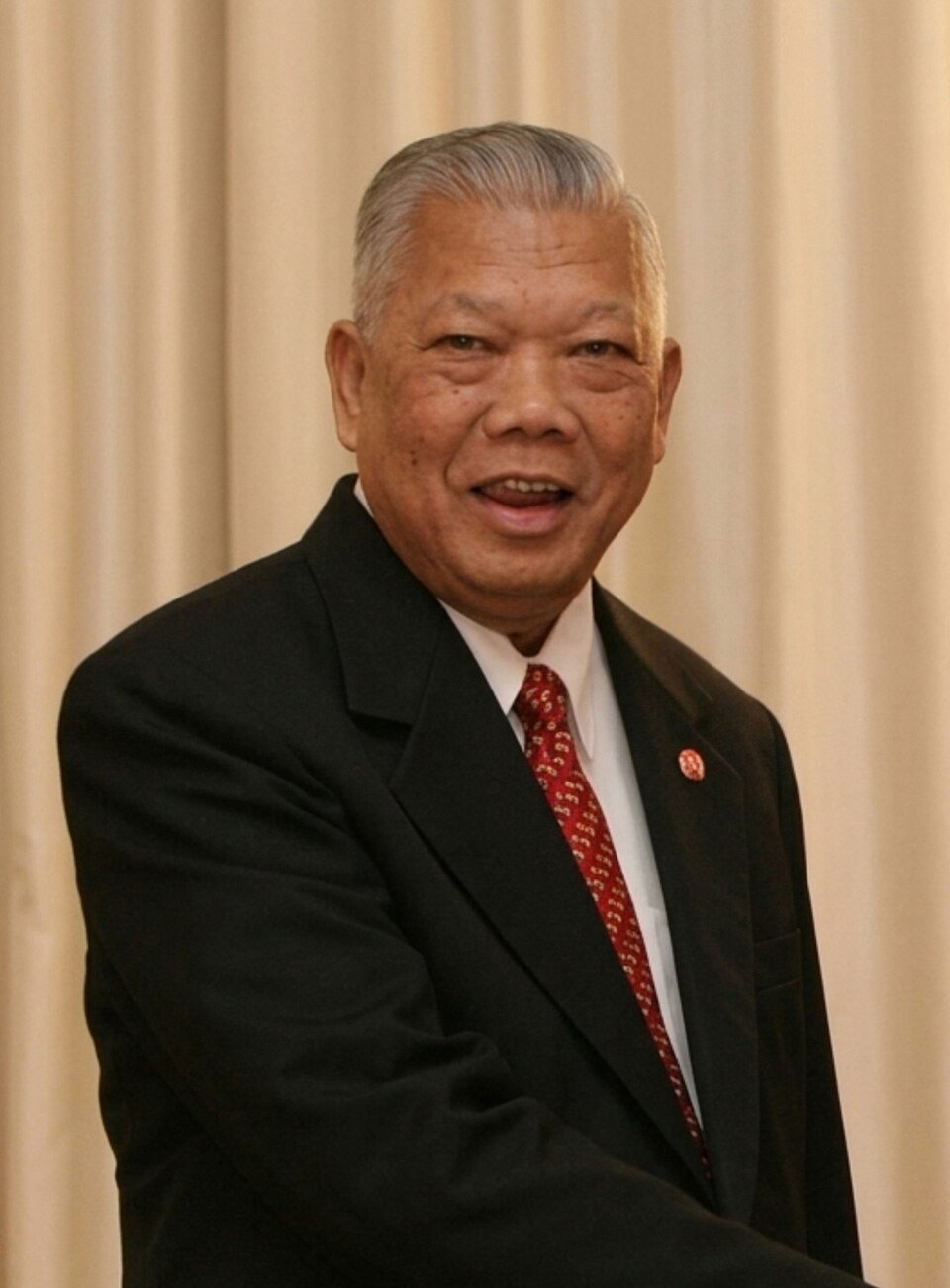 Thailand · Politics
1935—2009
Samak Sundaravej
25th Prime Minister of Thailand, January–September 2008The combative veteran politician, Bangkok governor and television cook who led the first elected government after the 2006 coup before a court ended his premiership.Read biography Thailand · Politics
1916—1999
Puey Ungphakorn
Economist, central banker and university rectorAn economist, wartime Free Thai volunteer and long-serving central-bank governor who linked economic management, education and public responsibility.Read biography Thailand · Politics
1927—2016
Bhumibol Adulyadej
King of Thailand, 1946–2016Thailand’s longest-reigning monarch, whose seven decades on the throne spanned rapid development, repeated political crises and profound social change.Read biography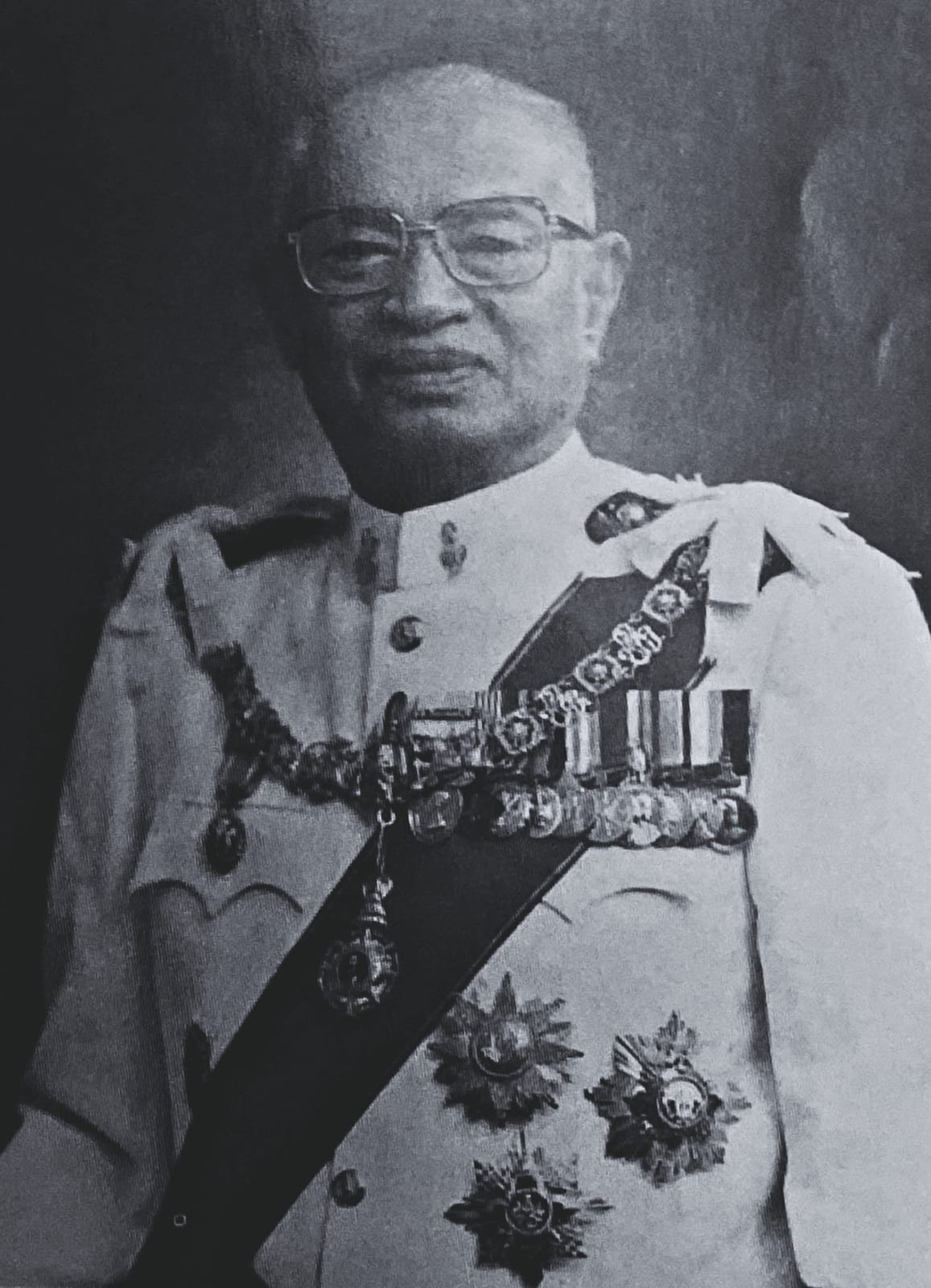 Thailand · Politics
1907—2002
Sanya Dharmasakti
Jurist, university rector and former prime ministerThe jurist and Thammasat rector appointed prime minister after military rule collapsed in October 1973, who oversaw a new constitution and return to elections.Read biography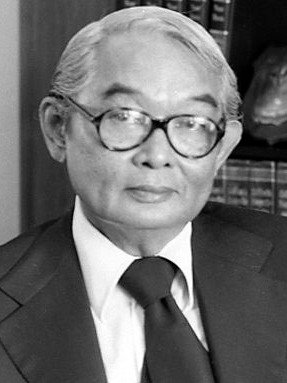 Thailand · Politics
1911—1995
Kukrit Pramoj
13th Prime Minister of Thailand and writerThe writer, newspaper founder and Social Action Party leader who assembled Thailand’s fragmented 1975 coalition and became its thirteenth prime minister.Read biography Thailand · Politics
1927—2025
Thanin Kraivichien
14th Prime Minister of Thailand and judgeThe judge and law professor appointed prime minister after the 1976 coup, whose hard-line anti-communist government was removed by another military takeover a year later.Read biographyQuick answers
Common questions
- When did Thanom Kittikachorn return to Thailand?
- He returned from exile on 19 September 1976, seventeen days before the Thammasat massacre and military coup.
- Why did Thanom say he returned?
- He said he came to visit his seriously ill father and to make merit by entering the Buddhist monkhood, not to resume political activity.
- Where was Thanom ordained?
- He was ordained at Wat Bowonniwet in Bangkok, a prominent royal monastery.
- Why did students oppose his return?
- They viewed the return of the former military ruler as a threat to the constitutional opening created after his fall in October 1973.
- Who were Chumporn Thummai and Vichai Ketsripongsa?
- They were workers murdered and hanged in Nakhon Pathom after putting up anti-Thanom posters. A reenactment of their deaths was later misrepresented as an attack on the monarchy.
- Did Thanom’s return directly cause the 6 October massacre?
- It triggered the final crisis, but the massacre also grew from longer anti-communist mobilisation, political violence, weak civilian control and conflict surrounding the 1973–1976 democratic opening.
Primary and institutional sources
How this history was checked
Dates, legal milestones and historical claims are checked against the official and institutional records below. This article was reviewed on 3 October 2026.
- Documentation of Oct 6Timeline of the 6 October 1976 crisis
- Documentation of Oct 6How the 6 October violence was produced
- Office of the Historian, U.S. Department of StateThe return of Thanom and the end of the democratic experiment
- Puey UngphakornViolence and the Coup d’Etat, 6 October 1976
- South East Asia ResearchPhotography in the history of 14 October 1973 and 6 October 1976
- United States CongressCongressional hearing record on Thailand’s 1976 political crisis
- University of Hawaiʻi PressMoments of Silence: The Unforgetting of the October 6, 1976, Massacre
- Wikimedia CommonsThanom Kittikachorn portrait and CC0 record