
The short answer
On 17 November 1971, Thanom Kittikachorn abolished the constitutional government he already led. The self-coup dissolved parliament, suspended the 1968 Constitution and restored rule by military decree—removing limited channels of representation and sharpening the constitutional demands that would drive the October 1973 uprising.
Chronology
A timeline of the turning points
A permanent constitution is promulgated
The charter created an elected House and appointed Senate while preserving a strong executive.
The first election in eleven years is held
The government party won a plurality, independents became pivotal and the Democrats swept the capital.
Executive–legislative conflict grows
Budget scrutiny, patronage disputes and criticism of ministers tested a leadership accustomed to appointed rule.
Security arguments intensify
The government cited communist insurgency, labour activity and student politics as threats requiring stronger control.
The leadership prepares a takeover
Thanom, Praphas and allied officials assembled while military units secured the capital without major fighting.
Thanom announces the self-coup
He declared that the action was under his control and that the constitutional government had ended.
Parliament and cabinet are dissolved
The 1968 Constitution was suspended, political parties lost their legal arena and martial law governed the country.
Leaders defend the action to diplomats
Thanom, Praphas and Dawee argued that parliament had obstructed government and insisted foreign policy would continue.
Rule by decree continues
Permanent secretaries administered ministries and exceptional executive orders replaced parliamentary legislation.
A constitutional movement ends the government
Arrests of activists helped trigger mass protest, lethal confrontation and the departure of Thanom and Praphas.
What was the 1971 Thai self-coup?
On 17 November 1971, Prime Minister Thanom Kittikachorn used military power to abolish the constitutional system he already headed. Parliament and the cabinet were dissolved, the 1968 Constitution was suspended and martial law was imposed. Because the incumbent leadership overthrew its own legal institutions, historians commonly describe the action as a self-coup or autogolpe.
The event differed from a takeover by an excluded rival. Thanom remained at the centre, Praphas Charusathien retained decisive military influence and several senior figures from the government joined the new ruling group. Administrative continuity made the rupture look orderly, but continuity of personnel did not reduce its significance: elected representation and constitutional limits disappeared overnight.
Why did Thanom abolish his own constitutional government?
Thanom and his allies said parliament obstructed urgent administration and that the country faced communist insurgency, labour unrest and student agitation. They objected to legislative bargaining, budget disputes and the political demands of representatives. In meetings with American officials, the leaders portrayed direct rule as a practical reorganisation rather than an attack on constitutional government.
Those explanations reflected real security concerns but also a conflict over accountability. The elected House questioned ministers and complicated patronage in ways the leadership had not experienced under the appointed order of 1959–1968. The self-coup resolved that conflict by removing the institution capable of scrutiny, not by reaching a constitutional compromise with it.
Who carried out the coup?
Contemporary diplomatic records place Thanom and Praphas at the centre of the operation, alongside senior figures including Pote Sarasin, Dawee Chullasap and Kriangsak Chamanan. Their roles and later trajectories were not identical, but the meeting showed that the takeover drew on the same military, administrative and elite networks already governing Thailand.
The armed forces secured the capital without a battle for national command. The monarchy continued, and the coup leaders informed and met King Bhumibol. The immediate absence of large-scale fighting explains why the takeover could be presented as seamless; it does not mean the suspension of representative government had popular authorisation.
What institutions were abolished?
The elected House and appointed Senate both disappeared with the dissolution of parliament. The cabinet ceased operating as the constitutional executive, and permanent secretaries were directed to carry out ministerial functions. Political parties lost the parliamentary arena restored before the 1969 election, while revolutionary announcements and orders became the main instruments of national rule.
The move also restored the logic of Article 17, the exceptional authority associated with the 1959 interim charter. Ordinary separation among legislation, administration and judicial review was subordinated to security decrees. An election held for a four-year House term in 1969 therefore ended without voters receiving the scheduled opportunity to judge the government at another national contest.
How did the United States respond?
Thailand was a major American ally during the Vietnam War, hosting forces and supporting regional operations. Embassy officials were told that foreign policy and military cooperation would continue. The immediate strategic relationship therefore survived the coup, and American reporting did not describe a break in alliance commitments.
Diplomats nevertheless warned Thanom and his colleagues that the move would be understood internationally as a return to dictatorship and could affect political support for assistance. When asked for a timetable back to constitutional government, the leaders offered no firm schedule. The exchange exposed a familiar Cold War tension between security partnership and the reputational cost of supporting authoritarian rule.
Did the self-coup solve the government’s problems?
It removed parliamentary resistance but did not eliminate corruption concerns, factional rivalry, economic grievances or demands for participation. Without an elected chamber, criticism moved into campuses, professional networks, the press and public protest. Centralising authority made decisions faster while making peaceful correction of those decisions more difficult.
A 1973 American reassessment concluded that the self-coup had ended a three-year representative experiment without solving the problems invoked to justify it. Direct rule also made Thanom, Praphas and their associates personally responsible for the political order. The government could no longer attribute unpopular outcomes to an obstructive parliament it had abolished.
How did the coup lead toward October 1973?
The self-coup was not the sole cause of the October 1973 uprising, but it defined the movement’s constitutional grievance. Students and other critics could point to a specific moment when officeholders destroyed a functioning charter and legislature. Demands for a permanent constitution were therefore demands for enforceable limits, not only for another document promised by the same rulers.
When police arrested thirteen constitution campaigners in October 1973, their detention connected abstract institutional concerns to identifiable people. Student protest expanded into a broad civic mobilisation, and lethal violence on 14 October destroyed the government’s remaining authority. Thanom resigned and left the country with Praphas, ending the direct order restored in November 1971.
Continue the chronology
Related history guides
The 1968 Constitution of Thailand
Understand the bicameral system and executive power that the self-coup destroyed.
Read the timeline10 February 1969The 1969 Thai General Election
Read how the dissolved House was elected and why its independent blocs mattered.
Read the timeline6–14 October 1973The 1973 Thai Popular Uprising
Follow the constitutional movement through mass mobilisation and the government’s fall.
Read the timeline6 October 1976The Thammasat Massacre
Continue to the violence surrounding Thanom’s return and the end of the democratic opening.
Read the timelineForty-one biographiesThai Political Turning Points
Compare the soldiers, officials, parliamentarians and civic figures across Thailand’s constitutional breaks.
Read the timelineConnected biographies
Seven biographies connecting the self-coup, military command, constitutional opposition and the road to 1973
 Thailand · Politics
1911—2004
Thanom Kittikachorn
Military officer and prime minister of ThailandA field marshal whose governments deepened Thailand’s Cold War alliance and whose self-coup and continued military rule provoked the mass movement of October 1973.Read biography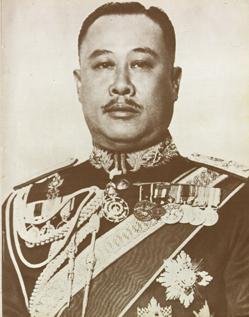 Thailand · Politics
1912—1997
Praphas Charusathien
Field marshal, interior minister and deputy prime ministerA field marshal and long-serving interior minister who helped consolidate Sarit and Thanom’s rule, joined the 1971 self-coup and fell during the October 1973 uprising.Read biography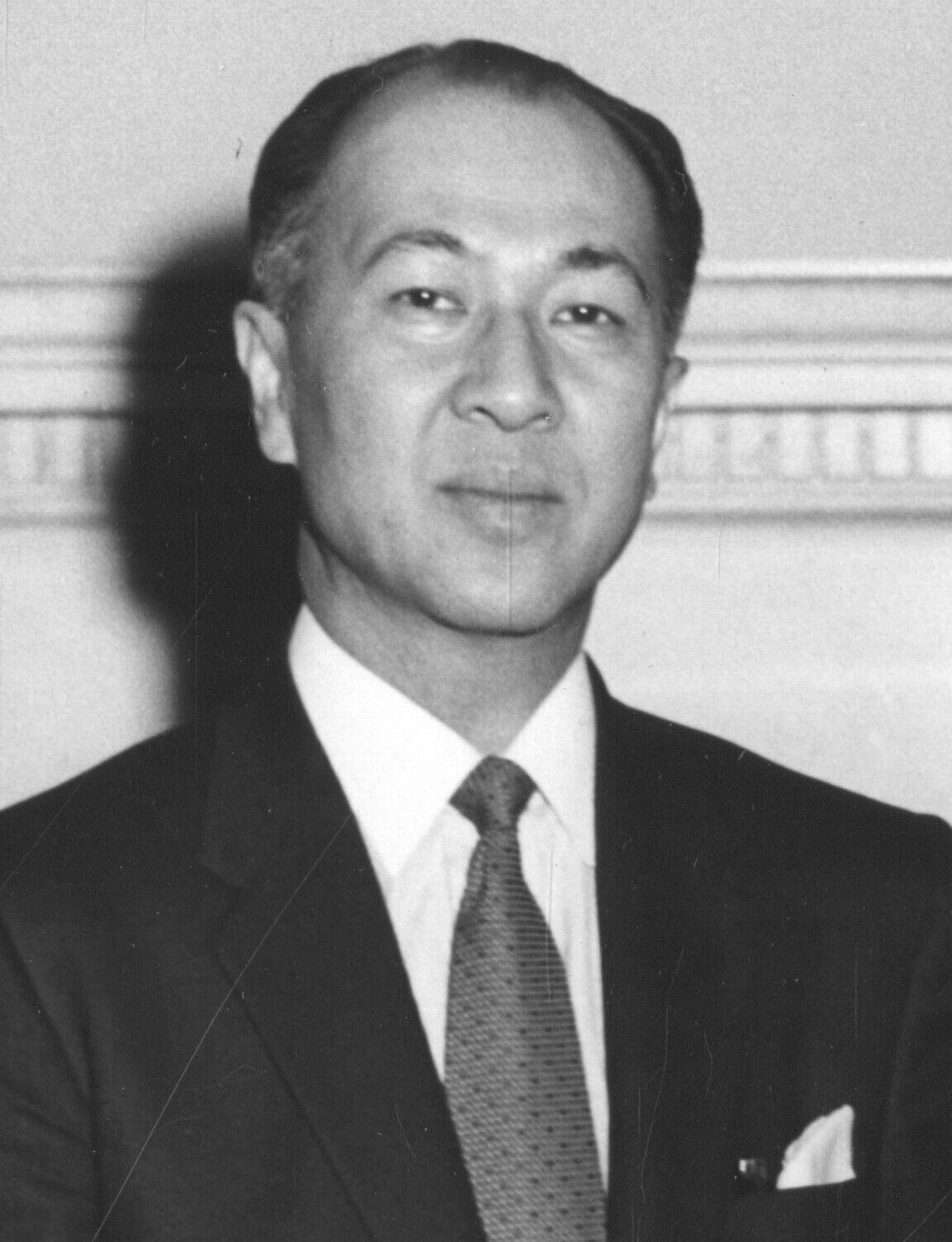 Thailand · Politics
1905—2000
Pote Sarasin
Diplomat, interim prime minister and SEATO secretary-generalA lawyer and diplomat who served briefly as prime minister after Sarit’s 1957 coup, supervised a return to elections and became SEATO’s first secretary-general.Read biography Thailand · Politics
1927—2016
Bhumibol Adulyadej
King of Thailand, 1946–2016Thailand’s longest-reigning monarch, whose seven decades on the throne spanned rapid development, repeated political crises and profound social change.Read biography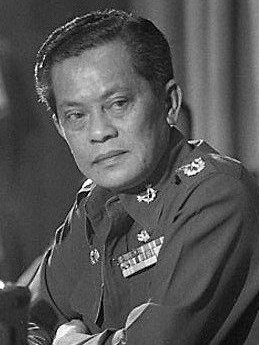 Thailand · Politics
1917—2003
Kriangsak Chamanan
15th Prime Minister of Thailand and military officerThe general who emerged from the October 1977 coup, relaxed parts of Thanin-era repression, restored an elected House and governed during the Indochina refugee crisis.Read biography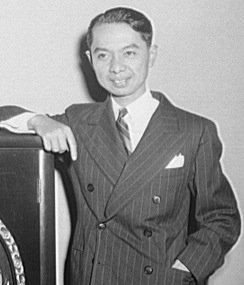 Thailand · Politics
1905—1997
Seni Pramoj
6th Prime Minister of Thailand and Free Thai diplomatThe lawyer and wartime diplomat who refused to deliver Thailand’s declaration of war to Washington, organised Free Thai resistance abroad and later led three governments.Read biography Thailand · Politics
1916—1999
Puey Ungphakorn
Economist, central banker and university rectorAn economist, wartime Free Thai volunteer and long-serving central-bank governor who linked economic management, education and public responsibility.Read biographyQuick answers
Common questions
- When did Thanom’s self-coup take place?
- It took place on 17 November 1971. Thanom announced that evening that parliament and the constitutional government had been dissolved.
- Why is it called a self-coup?
- The incumbent prime minister and military leadership used force to abolish the constitutional institutions of the government they already controlled.
- What happened to the 1968 Constitution?
- It was suspended, ending the bicameral system under which an elected House had been chosen in February 1969.
- Who joined Thanom in the 1971 takeover?
- Praphas Charusathien was the other central military leader; contemporary records also identify senior figures including Pote Sarasin, Dawee Chullasap and Kriangsak Chamanan in the leadership group.
- Was there fighting during the self-coup?
- There was no major battle for control in Bangkok. The leadership already commanded the government and armed forces, allowing the constitutional rupture to occur without a conventional clash between rival regimes.
- How was the self-coup connected to the 1973 uprising?
- It abolished the limited parliamentary opening and made restoration of a permanent constitution a central demand. The arrest of constitution campaigners later helped trigger the October 1973 mass movement.
Primary and institutional sources
How this history was checked
Dates, legal milestones and historical claims are checked against the official and institutional records below. This article was reviewed on 3 October 2026.
- Office of the Historian, U.S. Department of StateInitial embassy report on the 17 November 1971 self-coup
- Office of the Historian, U.S. Department of StateThe leadership group, suspended constitution and martial law
- Office of the Historian, U.S. Department of StateThanom and Praphas explain the self-coup, 18 November 1971
- Office of the Historian, U.S. Department of State1973 reassessment of the coup and fall of Thanom’s government
- Law Library of CongressConstitution of the Kingdom of Thailand, B.E. 2511 (1968)
- Library of CongressThailand: A Country Study
- Thai Foreign Affairs Archives / NRCTContemporary diplomatic record: Overthrow of Thanom government
- Wikimedia CommonsThanom Kittikachorn portrait and CC0 record