
The short answer
Thailand’s first general election in eleven years restored a competitive House but produced no majority. The government party won 75 seats, independents 72 and the Democrats 57—including every seat in Bangkok and Thonburi—while an appointed Senate and the military–bureaucratic establishment limited how far electoral change could reach.
Chronology
A timeline of the turning points
The previous general election ends in crisis
Fraud allegations and student protest weakened Phibun’s government before the September military takeover.
Parties and parliament are abolished
Sarit’s second coup replaced electoral politics with direct Revolutionary Council rule.
A permanent constitution is promulgated
The charter created an elected 219-seat House and an appointed 120-seat Senate.
Political parties return
The governing leadership organised the United Thai People’s Party while the Democrats and smaller parties resumed campaigning.
Thailand votes after eleven years
More than 1,500 candidates competed across the country in a campaign the IPU described as generally peaceful.
The government party wins a plurality
The United Thai People’s Party took 75 seats, ahead of 72 independents and 57 Democrats.
Democrats sweep Bangkok and Thonburi
The opposition won all 21 seats in the capital area, exposing an urban rejection of government candidates.
Thanom is appointed prime minister
He formed a government around the largest House bloc while the appointed Senate remained aligned with the establishment.
Party switching expands the government bloc
The IPU recorded 105 United Thai People’s Party members after independents and others joined it.
The elected parliament is dissolved
Thanom’s self-coup ended the legislature before its four-year term could be completed.
Why was the 1969 election important?
The vote on 10 February 1969 was Thailand’s first general election since the disputed contest of February 1957. Sarit Thanarat’s 1958 coup had abolished parties and parliament, and the appointed Constituent Assembly then remained in place for almost a decade. The 1968 Constitution finally created a new elected House and made a national campaign possible.
The election therefore tested whether institutions built by a military government could support meaningful representation. It did not decide the premiership directly, nor did it remove the appointed Senate or the armed forces’ administrative power. Even so, millions of voters could choose among government, opposition, minor-party and independent candidates for the first time in eleven years.
What were the official results?
The United Thai People’s Party won 75 of the 219 House seats. Independent candidates won 72 and the Democrat Party 57. The Democratic Front took seven seats, the Joint Economic Front four, the People’s Party two, and the Farmer and Free Moral parties one each. No party came close to the 110 seats needed for a majority.
The House included 213 men and six women. Of 14,820,180 registered voters, 7,285,832 cast ballots, producing a turnout of 49.2 per cent; 6,857,133 ballots were recorded as valid. Those figures establish a competitive national vote, but the large independent bloc meant that the balance after election day depended heavily on negotiation and party switching.
Who contested the election?
Thanom Kittikachorn and officials around the government organised the United Thai People’s Party. It offered continuity, administrative reach and the resources of an establishment that had already governed for years. Seni Pramoj’s Democrat Party represented the largest established opposition organisation, while smaller parties and hundreds of independents broadened the field.
The IPU counted 1,522 candidates across 71 provinces and described the campaign as generally peaceful. That breadth should not be confused with an even playing field. Praphas Charusathien’s Interior Ministry retained influence throughout the provincial administration, and contemporary American officials believed that more than half of the successful independents had received his support.
Why did the Democrats dominate Bangkok?
The Democrat Party won all 21 seats in Bangkok and Thonburi. The sweep showed that the government’s national administrative strength did not translate into equal support among capital voters. Urban professionals, students, journalists and business groups had greater exposure to arguments about constitutional delay, corruption and military control.
Bangkok’s result also gave the opposition a visibility greater than its national seat total alone suggests. The capital concentrated newspapers, universities and central institutions, so an opposition victory there strengthened parliamentary scrutiny. It foreshadowed the urban mobilisation that would become decisive during the constitutional crisis of 1973.
How did Thanom form a government without a majority?
A plurality was sufficient to make the United Thai People’s Party the central coalition-building force. Thanom was appointed prime minister on 7 March, and government allies secured the initial House speakership vote with 128 votes. The appointed Senate remained firmly within the governing system, further reducing the risk that the elected chamber alone could displace the leadership.
Independents then moved toward more stable alignments. By May, the IPU’s distribution showed the government party with 105 members, the Democrats still on 57, a Liberal Independent group with 24 and twenty members remaining unaffiliated. The shift illustrates why election-night totals and the effective parliamentary balance were not the same.
Was the election free and fair?
It was more open than the absence of elections that preceded it. Parties campaigned, opposition candidates won, the Democrats swept the capital and the government failed to manufacture a House majority at the ballot box. The IPU’s contemporary summary described the campaign as generally peaceful rather than reporting a repetition of the 1957 fraud crisis.
The broader system remained unequal. The Senate was appointed, military officers occupied most of its seats, and government leaders controlled ministries, security forces and provincial administration. A careful assessment should therefore distinguish a real competitive election from a fully democratic transfer of power. The ballot created accountability without placing every centre of authority under electoral control.
How did the election connect to the 1971 self-coup?
The new House became an arena for budget disputes, questioning of ministers and competition over patronage. These activities were ordinary features of parliamentary government, but leaders accustomed to rule through appointed institutions increasingly described them as obstruction. Friction did not make the self-coup inevitable, yet it exposed the executive’s limited tolerance for autonomous legislators.
On 17 November 1971, Thanom dissolved parliament, suspended the 1968 Constitution and restored direct rule. The act terminated the House less than three years after it was elected. For the later student movement, this was a crucial lesson: an election could open political space, but constitutional guarantees meant little if officeholders could abolish them with military power.
Continue the chronology
Related history guides
The 1968 Constitution of Thailand
Read the institutional design that created the elected House and appointed Senate.
Read the timeline26 February 1957The February 1957 Thai General Election
Compare the fraud crisis that preceded eleven years without a national election.
Read the timeline17 November 1971Thanom’s 1971 Self-Coup
Follow the elected House to its dissolution by the government it was meant to scrutinise.
Read the timeline6–14 October 1973The 1973 Thai Popular Uprising
See how demands for constitutional government returned as a mass movement.
Read the timeline1932–presentPrime Ministers of Thailand
Compare Thanom’s appointment with the routes to office of later elected and coup-era premiers.
Read the timelineConnected biographies
Six biographies connecting the government party, opposition, administration, diplomacy and monarchy
 Thailand · Politics
1911—2004
Thanom Kittikachorn
Military officer and prime minister of ThailandA field marshal whose governments deepened Thailand’s Cold War alliance and whose self-coup and continued military rule provoked the mass movement of October 1973.Read biography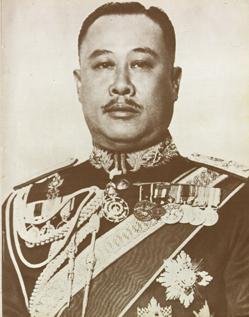 Thailand · Politics
1912—1997
Praphas Charusathien
Field marshal, interior minister and deputy prime ministerA field marshal and long-serving interior minister who helped consolidate Sarit and Thanom’s rule, joined the 1971 self-coup and fell during the October 1973 uprising.Read biography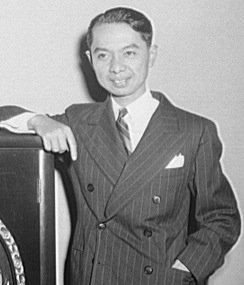 Thailand · Politics
1905—1997
Seni Pramoj
6th Prime Minister of Thailand and Free Thai diplomatThe lawyer and wartime diplomat who refused to deliver Thailand’s declaration of war to Washington, organised Free Thai resistance abroad and later led three governments.Read biography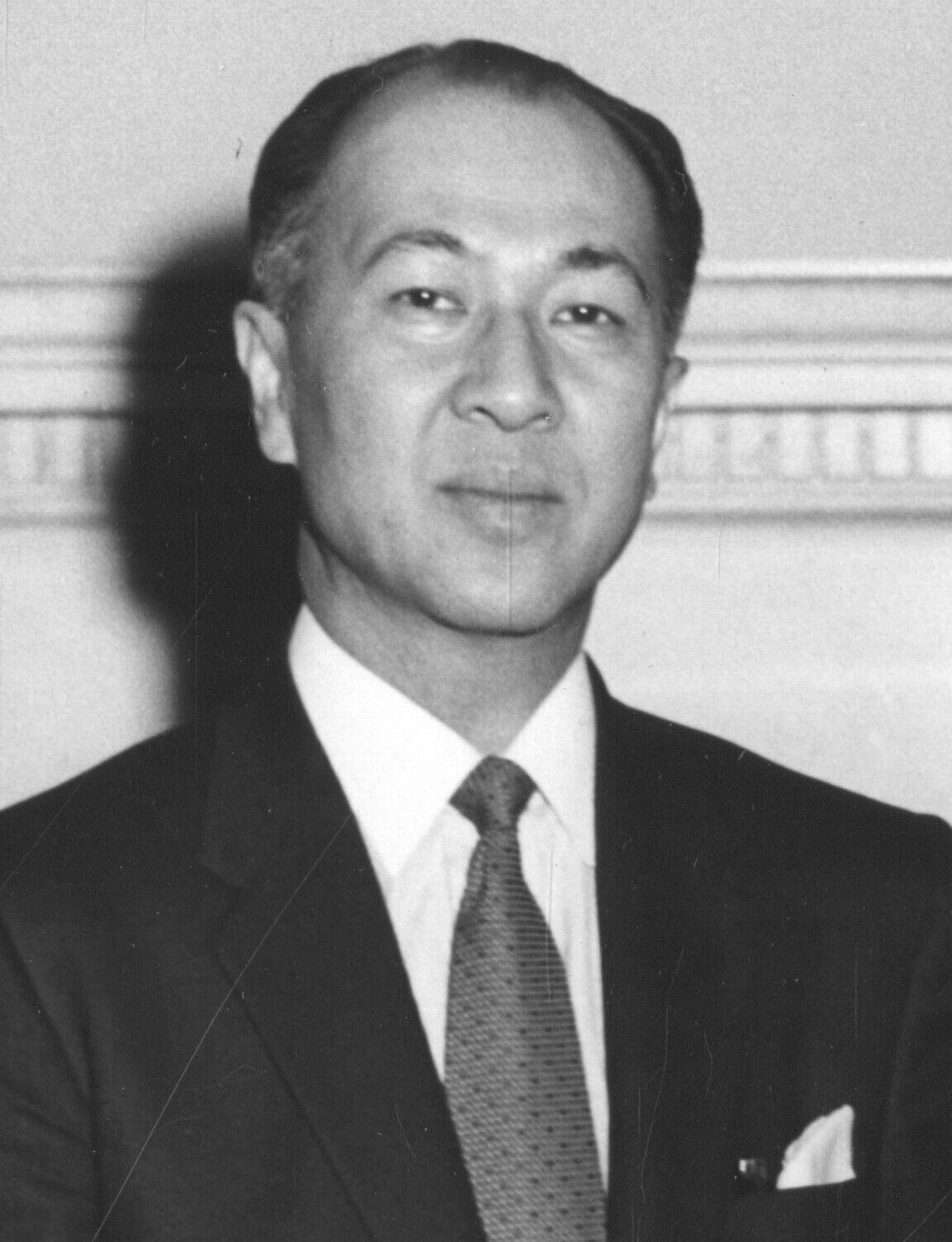 Thailand · Politics
1905—2000
Pote Sarasin
Diplomat, interim prime minister and SEATO secretary-generalA lawyer and diplomat who served briefly as prime minister after Sarit’s 1957 coup, supervised a return to elections and became SEATO’s first secretary-general.Read biography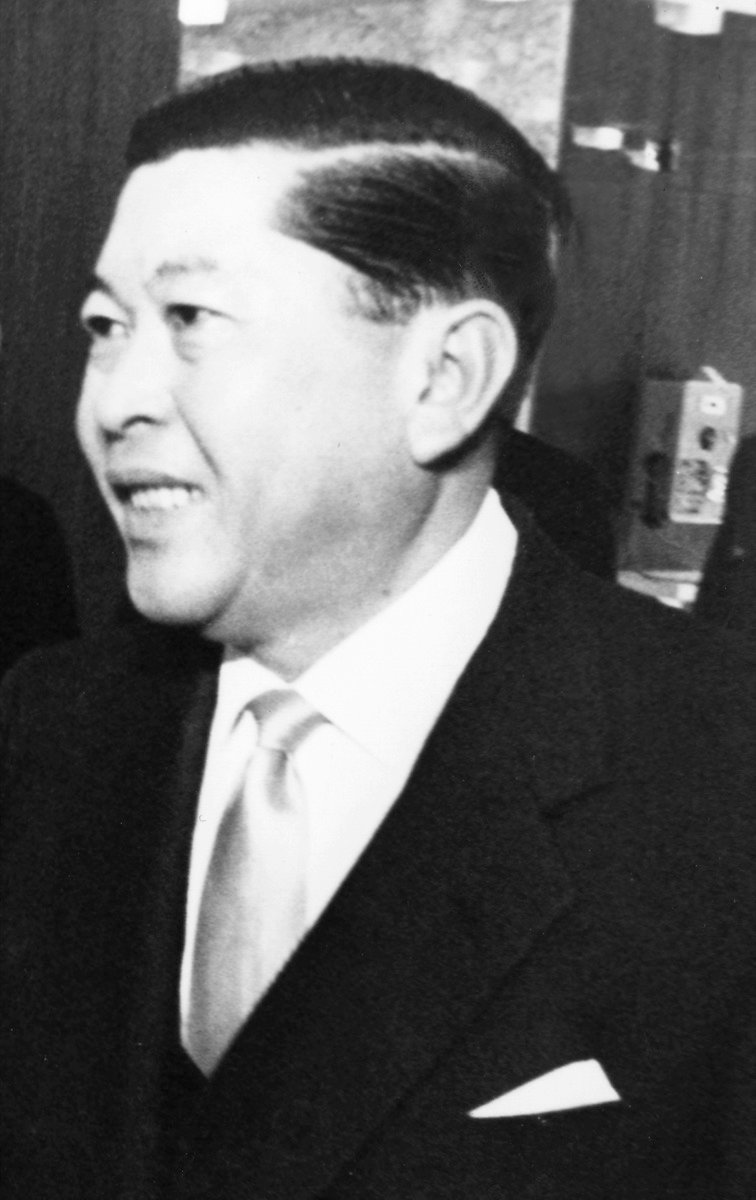 Thailand · Politics
1914—2016
Thanat Khoman
Diplomat, foreign minister and ASEAN co-founderA Thai diplomat whose regional initiatives, patient mediation and signature on the Bangkok Declaration helped turn post-colonial rivalry into ASEAN cooperation.Read biography Thailand · Politics
1927—2016
Bhumibol Adulyadej
King of Thailand, 1946–2016Thailand’s longest-reigning monarch, whose seven decades on the throne spanned rapid development, repeated political crises and profound social change.Read biographyQuick answers
Common questions
- When was the 1969 Thai general election?
- It was held on 10 February 1969, the first Thai general election since February 1957.
- Which party won the 1969 election in Thailand?
- The United Thai People’s Party won the largest party bloc with 75 seats, but it did not secure a majority in the 219-seat House.
- How many seats did independent candidates win?
- Independents won 72 seats, making them almost as numerous as the governing party’s initial bloc.
- How many seats did the Democrat Party win?
- The Democrat Party won 57 seats, including all 21 seats in Bangkok and Thonburi.
- What was voter turnout in 1969?
- The Inter-Parliamentary Union recorded 7,285,832 voters from 14,820,180 registered electors, a turnout of 49.2 per cent.
- Who became prime minister after the election?
- Thanom Kittikachorn was appointed prime minister again on 7 March 1969 and formed a government around the largest parliamentary bloc.
Primary and institutional sources
How this history was checked
Dates, legal milestones and historical claims are checked against the official and institutional records below. This article was reviewed on 3 October 2026.
- Inter-Parliamentary UnionThailand parliamentary election, 10 February 1969: results
- Inter-Parliamentary Union ParlineElection record for the Thai House of Representatives
- Office of the Historian, U.S. Department of StatePolitical developments after the February 1969 election
- Office of the Historian, U.S. Department of StateCountry briefing: constitutional rule and the 1969 election
- Office of the Historian, U.S. Department of StateThe governing establishment before the constitutional transition
- Bangkok PostHistorical timeline: national elections held in 1969
- Library of CongressThailand: A Country Study
- Wikimedia CommonsThanom Kittikachorn portrait and CC0 record