
The short answer
Pheu Thai won 265 of 500 seats in Thailand’s 2011 election, giving Yingluck Shinawatra an outright majority and making her the country’s first woman prime minister. The result restored a Thaksin-aligned party after the 2008 coalition realignment and 2010 violence, but the mandate remained vulnerable to the institutions and conflicts that culminated in the 2014 coup.
Election results
Every party represented in the 2011 House
Eleven parties won seats, but Pheu Thai alone crossed the 251-seat majority threshold.
| Political party | Total seats | Constituency | Party list |
|---|---|---|---|
| Pheu Thai Party | 265 | 204 | 61 |
| Democrat Party | 159 | 115 | 44 |
| Bhumjaithai Party | 34 | 29 | 5 |
| Chart Thai Pattana | 19 | 15 | 4 |
| Chart Pattana Pheu Pandin | 7 | 5 | 2 |
| Palung Chon Party | 7 | 6 | 1 |
| Rak Thailand Party | 4 | 0 | 4 |
| Matubhum Party | 2 | 1 | 1 |
| Rak Santi Party | 1 | 0 | 1 |
| Mahachon Party | 1 | 0 | 1 |
| New Democrat Party | 1 | 0 | 1 |
Chronology
A timeline of the turning points
The PPP is dissolved
A Constitutional Court ruling removed the largest governing party and helped produce a new parliamentary coalition.
Abhisit becomes prime minister
The Democrat leader took office after former coalition partners and defecting MPs changed sides.
Red Shirt protests end in deadly operations
Demonstrators demanded an early election; at least ninety people died in the wider confrontation.
The House is dissolved
King Bhumibol approved dissolution and a general election was set for 3 July.
Pheu Thai names Yingluck as its lead candidate
The business executive and younger sister of Thaksin entered electoral politics at the head of the party list.
Pheu Thai wins an outright majority
The party secured 265 of 500 seats while the Democrats won 159; official turnout reached 75.03 percent.
A five-party coalition is announced
Yingluck invited partners despite Pheu Thai’s ability to govern alone, expanding the alliance to 300 seats.
The House elects Yingluck
She became the first woman selected as Thailand’s prime minister.
The new cabinet takes office
Royal endorsement and the cabinet oath completed the transfer from Abhisit’s government.
The military removes the successor caretaker government
The electoral mandate ended after protest, a disrupted 2014 poll, judicial removal and another coup.
Why was the 2011 election a test of political legitimacy?
Abhisit Vejjajiva had become prime minister in December 2008 through a House coalition assembled after the Constitutional Court dissolved the People Power Party. His government was constitutionally selected, but Red Shirt opponents argued that court action, military pressure and coalition defections had displaced the mandate voters gave the PPP in 2007. The 2011 election offered the first nationwide test of that dispute.
The stakes were intensified by the March–May 2010 demonstrations and military operations in Bangkok. At least ninety people were killed and roughly 2,000 injured in the wider confrontation documented by Human Rights Watch. Pheu Thai presented an election as a route back to majoritarian legitimacy, while the Democrats campaigned on government performance and warned against returning power to Thaksin’s network.
How did the electoral system change before the vote?
Constitutional amendments increased the House from 480 to 500 seats. Voters elected 375 members from single-member constituencies and 125 from a nationwide party list, replacing the 2007 system’s multi-member districts and eight regional lists. Forty-two parties and 3,832 candidates contested the election.
Each voter received separate constituency and party-list ballots. That distinction made it possible to support a local candidate from one party and a national list from another. Election Commission data recorded 46,393,549 eligible electors and 35,220,377 participants, or 75.03 percent turnout.
Why did Pheu Thai choose Yingluck Shinawatra?
Yingluck was a business executive with no previous elected office. She was also Thaksin Shinawatra’s younger sister, giving the campaign an immediately recognisable link to the party family displaced by the 2006 coup and later dissolution cases. Pheu Thai placed her first on its party list and framed her as a conciliatory manager able to deliver the movement’s policies without repeating her brother’s political style.
Opponents called her a proxy for Thaksin, who lived abroad after a corruption conviction he described as politically motivated. The relationship was openly central to the contest, but treating Yingluck only as a family representative obscures the electoral choice: she led a national campaign, presented policy commitments and became the candidate through whom millions of voters registered preferences about both the future and the contested past.
What were the final 2011 election results?
Pheu Thai won 265 seats—204 constituencies and sixty-one party-list places—giving it an outright House majority. The Democrat Party won 159. Bhumjaithai finished third with thirty-four seats and Chart Thai Pattana fourth with nineteen. Seven smaller parties shared the remaining twenty-three seats.
The outcome was another clear victory for a Thaksin-aligned party despite the coup, party dissolutions and removal of previous governments. It was also a personal defeat for Abhisit, who conceded and resigned as Democrat leader. The election did not erase regional polarisation, but it produced a result strong enough to form government without relying on post-election defections.
Why form a coalition after winning a majority?
Yingluck invited Chart Thai Pattana, Chart Pattana Pheu Pandin, Palung Chon and Mahachon into a five-party coalition controlling 300 seats. Pheu Thai did not mathematically need partners, so the decision was political: a broader parliamentary base could distribute cabinet responsibility, reassure smaller parties and reduce the vulnerability of a government entering a deeply divided system.
A coalition could not remove every institutional risk. The 2007 Constitution still empowered courts, the Senate and independent agencies, while the armed forces retained political weight. The 300-seat alliance gave the cabinet legislative strength but did not settle conflicts over Thaksin, accountability for 2010 or the limits of elected authority.
Why was Yingluck’s premiership historic?
On 5 August, the House selected Yingluck as prime minister, making her the first woman to hold the office and, at forty-four, one of its youngest occupants. Her victory was significant in a political system where women remained underrepresented: only seventy-nine of the 500 elected MPs were women according to the Inter-Parliamentary Union.
Historic representation did not insulate her government from scrutiny. Major policies included a rice-pledging programme, a minimum-wage increase, tablet computers for schools and flood recovery. The rice programme later produced fiscal controversy and legal proceedings. A proposed amnesty bill then reignited mass opposition, leading to the disrupted 2014 election and another breakdown of constitutional government.
How did the 2011 mandate end?
Yingluck dissolved the House in December 2013 after protests against the amnesty proposal expanded into a campaign to remove her government. Opposition disruption prevented voting in parts of the country during the February 2014 election, and the Constitutional Court annulled the poll because it had not occurred nationwide on one day. A separate court ruling removed Yingluck in May over an official transfer.
The army seized power on 22 May, removing the remaining caretaker administration and repealing most of the 2007 Constitution. The sequence should not be read backwards as proof that the 2011 election lacked legitimacy. It was a competitive vote with high turnout and a clear majority; its later destruction instead demonstrates how electoral mandates remained vulnerable to protest, judicial intervention and military power.
Continue the chronology
Related history guides
The 2010 Thai Red Shirt Protests
Start with the confrontation that made an early election the central opposition demand.
Read the timelineJanuary–December 2008The 2008 Thai Political Crisis
Understand how Abhisit’s coalition formed after the PPP government fell.
Read the timeline23 December 2007The 2007 Thai General Election
Compare the PPP plurality with Pheu Thai’s later outright majority.
Read the timelineNovember 2013–May 2014The 2013–2014 Thai Political Crisis
Follow the amnesty dispute, PDRC campaign and breakdown of the electoral exit.
Read the timeline2 February–21 March 2014The Annulled 2014 Thai General Election
Compare the 2011 majority result with the incomplete poll that followed it.
Read the timeline7 May 2014Yingluck Shinawatra’s Removal
Read the transfer judgment that ended the first woman premiership.
Read the timeline22 May 2014The 2014 Thai Coup
Follow the breakdown that terminated the electoral mandate.
Read the timelineConnected biographies
Six biographies connecting the electoral result, first woman premiership and later coup
 Thailand · Politics
1967—
Yingluck Shinawatra
Business executive and former prime ministerA business executive who led a landslide election victory in 2011 and became Thailand’s first woman prime minister before a court removed her in 2014.Read biography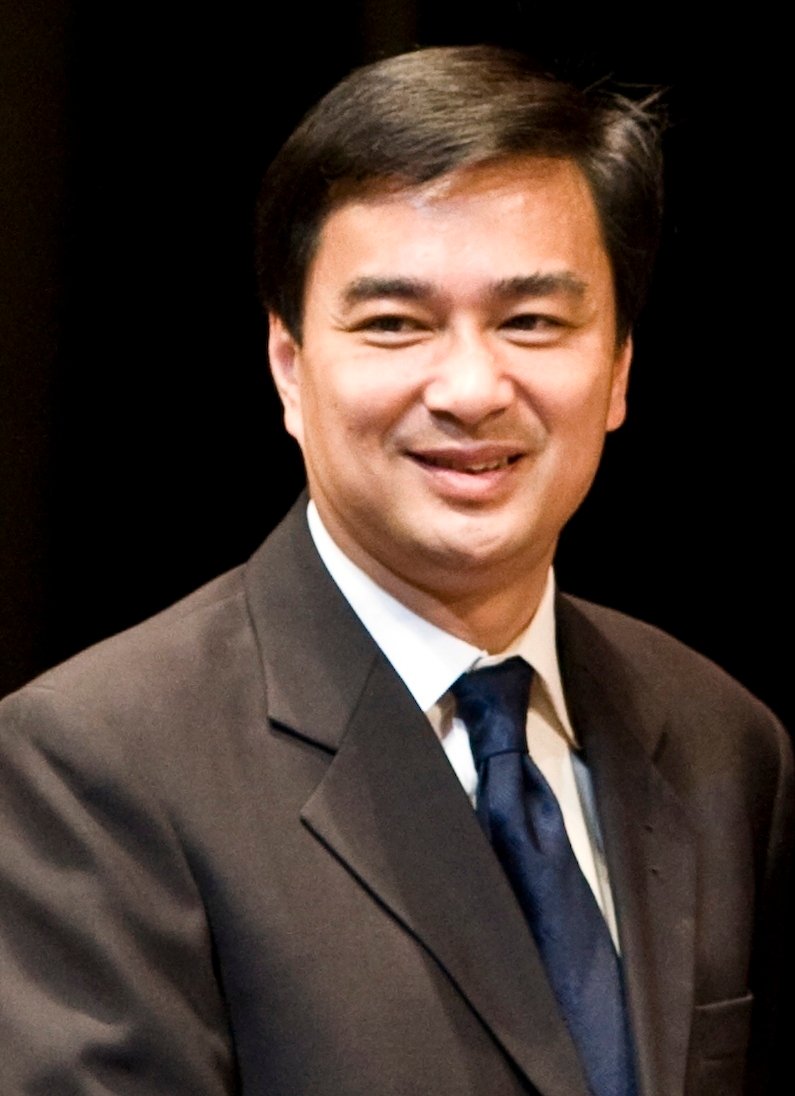 Thailand · Politics
1964—
Abhisit Vejjajiva
27th Prime Minister of Thailand, 2008–2011The Oxford-educated Democrat leader who became prime minister through a parliamentary coalition, launched crisis stimulus and governed during Thailand’s 2010 protest violence.Read biography Thailand · Politics
1949—
Thaksin Shinawatra
Businessman and former prime ministerA telecommunications entrepreneur who became prime minister in 2001, transformed Thai electoral politics and remained influential through two decades of conflict.Read biography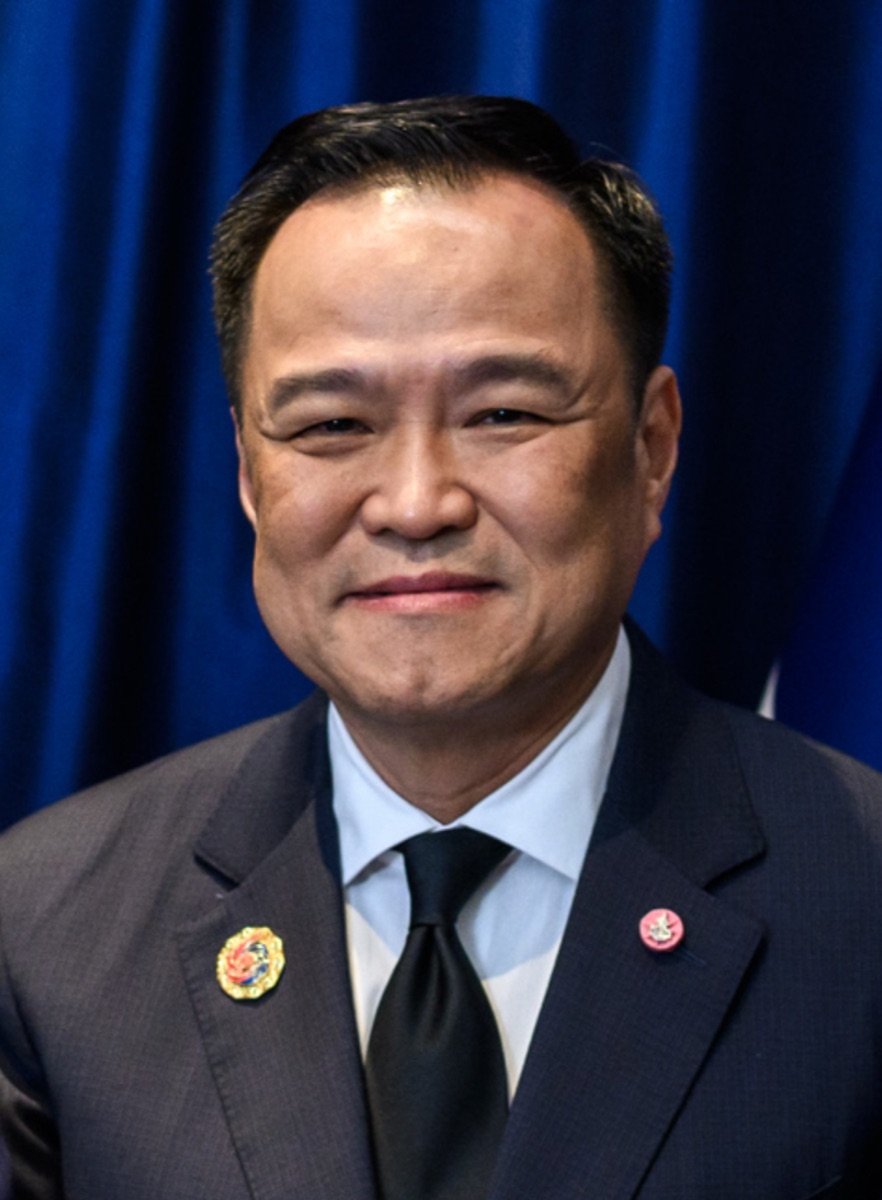 Thailand · Politics
1966—
Anutin Charnvirakul
32nd Prime Minister of ThailandA businessman-turned-politician who led Bhumjaithai through successive coalitions, became Thailand’s 32nd prime minister in 2025 and won a second appointment after the 2026 election.Read biography Thailand · Politics
1927—2016
Bhumibol Adulyadej
King of Thailand, 1946–2016Thailand’s longest-reigning monarch, whose seven decades on the throne spanned rapid development, repeated political crises and profound social change.Read biography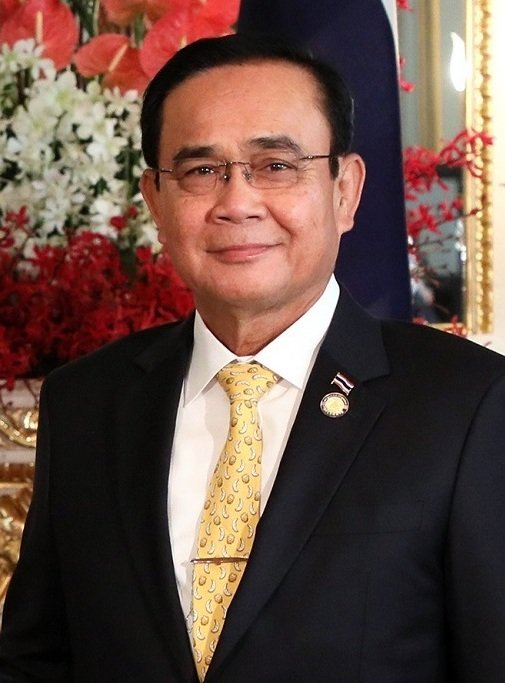 Thailand · Politics
1954—
Prayut Chan-o-cha
29th Prime Minister of Thailand, 2014–2023The army commander who seized power in 2014, led Thailand’s military government and remained prime minister after the 2019 election until 2023.Read biographyQuick answers
Common questions
- Who won Thailand’s 2011 general election?
- Pheu Thai won 265 of 500 seats, an outright majority. The Democrat Party finished second with 159.
- What was voter turnout in the 2011 Thai election?
- The Election Commission recorded 35,220,377 voters from 46,393,549 eligible electors, a turnout of 75.03 percent.
- How many seats did Yingluck’s party win?
- Pheu Thai won 204 constituency seats and sixty-one party-list seats, for a total of 265.
- Was Yingluck Thailand’s first woman prime minister?
- Yes. The House selected her on 5 August 2011, making her the first woman to hold the office.
- Why did Pheu Thai form a coalition despite its majority?
- A five-party, 300-seat coalition broadened parliamentary and provincial support even though Pheu Thai could technically govern alone.
Primary and institutional sources
How this history was checked
Dates, legal milestones and historical claims are checked against the official and institutional records below. This article was reviewed on 3 October 2026.
- Election Commission of ThailandStatistics for the 3 July 2011 general election
- Election Commission of Thailand2011 election turnout by constituency
- Inter-Parliamentary UnionThailand parliamentary election, 3 July 2011
- Human Rights WatchDescent into Chaos — Thailand’s 2010 protests and crackdown
- Secretariat of the Prime Minister of ThailandOfficial directory of prime ministers of Thailand
- Wikimedia CommonsYingluck Shinawatra portrait and licence record