The short answer
Thailand returned to elected government in January 2008, but the post-coup settlement lasted less than a year without another rupture. Two prime ministers lost office through Constitutional Court rulings, Yellow Shirt protesters occupied Government House and Bangkok’s airports, police and demonstrators fought around parliament, and a new House coalition took power without a general election.
Chronology
A timeline of the turning points
The People Power Party wins the largest House bloc
The Thaksin-aligned PPP won 233 of 480 seats and formed a coalition with five smaller parties.
Samak Sundaravej becomes prime minister
The PPP leader headed the first elected government since the September 2006 military coup.
PAD begins a sustained anti-government campaign
The Yellow Shirt movement accused the cabinet of acting for Thaksin and opposed constitutional amendment.
Protesters occupy Government House
PAD demonstrators seized the government compound and remained there for months despite injunctions and arrest warrants.
A street clash leads to emergency rule
Fighting between pro- and anti-government groups killed one person and injured more than forty; Samak declared a state of emergency in Bangkok.
The Constitutional Court removes Samak
The court ruled that compensated appearances on two television cooking programmes breached the constitutional employment ban.
Somchai Wongsawat becomes prime minister
The House selected the former judge, PPP executive and Thaksin’s brother-in-law to lead the coalition.
Police and PAD clash around parliament
Two protesters died and hundreds of people were injured as police cleared a blockade and protesters fought security forces.
PAD occupies Bangkok’s principal airports
PAD occupied Suvarnabhumi and then Don Mueang, stranding travellers and disrupting tourism, trade and international confidence.
The Constitutional Court dissolves three coalition parties
PPP, Chart Thai and Matchimathipataya were dissolved over election offences; their executives lost political rights for five years.
Abhisit forms a new coalition and becomes prime minister
Coalition defections gave the Democrats a House majority; Abhisit received royal appointment on 17 December.
Why did conflict return after the 2007 election?
The election restored an elected House but not agreement over the legitimacy of Thaksin Shinawatra’s political movement. The People Power Party won the largest number of seats and formed a six-party coalition. Supporters saw that result as a direct rejection of the coup; opponents treated the PPP as a vehicle for an exiled leader accused of corruption and abuse of power.
The 2007 Constitution also redistributed authority. It created a partly selected Senate and rules through which election offences by an executive could expose an entire party to dissolution. Thailand entered 2008 with electoral government operating inside an institutional order designed after its predecessor had been removed by force.
How did PAD challenge the Samak government?
The People’s Alliance for Democracy restarted mass demonstrations in May. The coalition, usually identified by yellow shirts, included royalist activists, civic networks and opponents of Thaksin. It accused Prime Minister Samak Sundaravej of serving Thaksin’s interests and opposed plans to amend the post-coup constitution.
The campaign moved from rallies to direct occupation. On 26 August, demonstrators entered Government House and other state facilities. Courts issued orders and police attempted limited dispersal, but the occupation continued. Pro-government groups also mobilised, and a street clash on 2 September killed one participant and led Samak to declare emergency rule.
Why did a cooking show end Samak’s premiership?
Samak had long presented food programmes and continued appearing on two shows after becoming prime minister. The constitutional issue was not cooking itself. Section 267 prohibited ministers from being employees of another person in order to prevent conflicts between public duty and private compensation.
On 9 September, the Constitutional Court interpreted “employee” according to the constitution’s purpose rather than the narrower categories of labour or tax law. It found that Samak’s agreement with the producer and compensation for hosting breached the prohibition. His individual office ended, the cabinet formally vacated office and remaining ministers continued only until a successor government could take over.
What happened under Somchai Wongsawat?
The PPP first considered renominating Samak, then backed Somchai Wongsawat, a former judge and senior civil servant married to Thaksin’s sister. Parliament selected him in September. PAD regarded the succession as proof that the same political network remained in control, while the government argued that a House majority was exercising its constitutional right to choose a premier.
On 7 October, protesters blocked parliament before Somchai’s required policy statement. Police used tear gas and rubber bullets, sometimes at close range; protesters used guns, slingshots, pipes, vehicles and sharpened flagpoles. Public Health Ministry figures recorded two PAD deaths and 443 injuries, plus about twenty injured police officers. The severity of blast injuries led to questions about the tear-gas munitions and proportionality of force.
Why were the airport occupations decisive?
PAD escalated again in late November by occupying Suvarnabhumi and Don Mueang. Closing Bangkok’s international gateway stranded hundreds of thousands of travellers and imposed major costs on airlines, exporters, tourism workers and Thailand’s regional reputation. The tactic transformed a political blockade into a national economic emergency.
The government issued emergency measures around the airports, but neither police nor the army launched a full clearance operation. Supporters of restraint feared another deadly confrontation; critics saw selective enforcement that allowed an anti-government movement to hold strategic infrastructure. PAD ended the occupations only after the governing parties were dissolved.
How did court rulings change the governing coalition?
On 2 December, the Constitutional Court dissolved the PPP because its deputy leader Yongyuth Tiyapairat had committed an election offence. Under the constitution’s mandatory rule, the party leader and executives serving at the time of that offence lost electoral rights for five years. The judgment did not find that Somchai personally bought votes, but his status as an executive ended his political eligibility and premiership.
Most PPP legislators moved into Pheu Thai. Yet smaller parties and a faction linked to Newin Chidchob changed sides, allowing Democrat leader Abhisit Vejjajiva to assemble a House majority without another general election. The transition was constitutionally conducted in parliament, but opponents argued that party dissolution, military preference and defections had reversed the 2007 mandate. That dispute fuelled the Red Shirt mobilisation that followed.
Continue the chronology
Related history guides
The 2007 Thai General Election
Start with the vote that produced the People Power government and six-party coalition.
Read the timeline19–24 August 2007The 2007 Constitution and Referendum
Read the institutional rules under which courts, parties and parliament operated.
Read the timeline19 September 2006The 2006 Thai Coup
Trace the military intervention, repeal of the 1997 Constitution and transition that produced the 2008 institutional framework.
Read the timeline3 July 2011The 2011 Thai General Election
Continue to the vote that returned a Thaksin-aligned party with an outright majority.
Read the timeline1851–todayThailand History Timeline
Place 2008 within a longer sequence of constitutional rupture, mass mobilisation and electoral conflict.
Read the timeline1932–presentPrime Ministers of Thailand
Compare Samak, Somchai and Abhisit with every other officially numbered Thai prime minister.
Read the timelineForty-two biographiesThai Political Turning Points
Follow the people who shaped constitutional, military, judicial and electoral change.
Read the timelineConnected biographies
Four careers connecting the 2007 mandate, two court removals and the coalition formed in December 2008
 Thailand · Politics
1935—2009
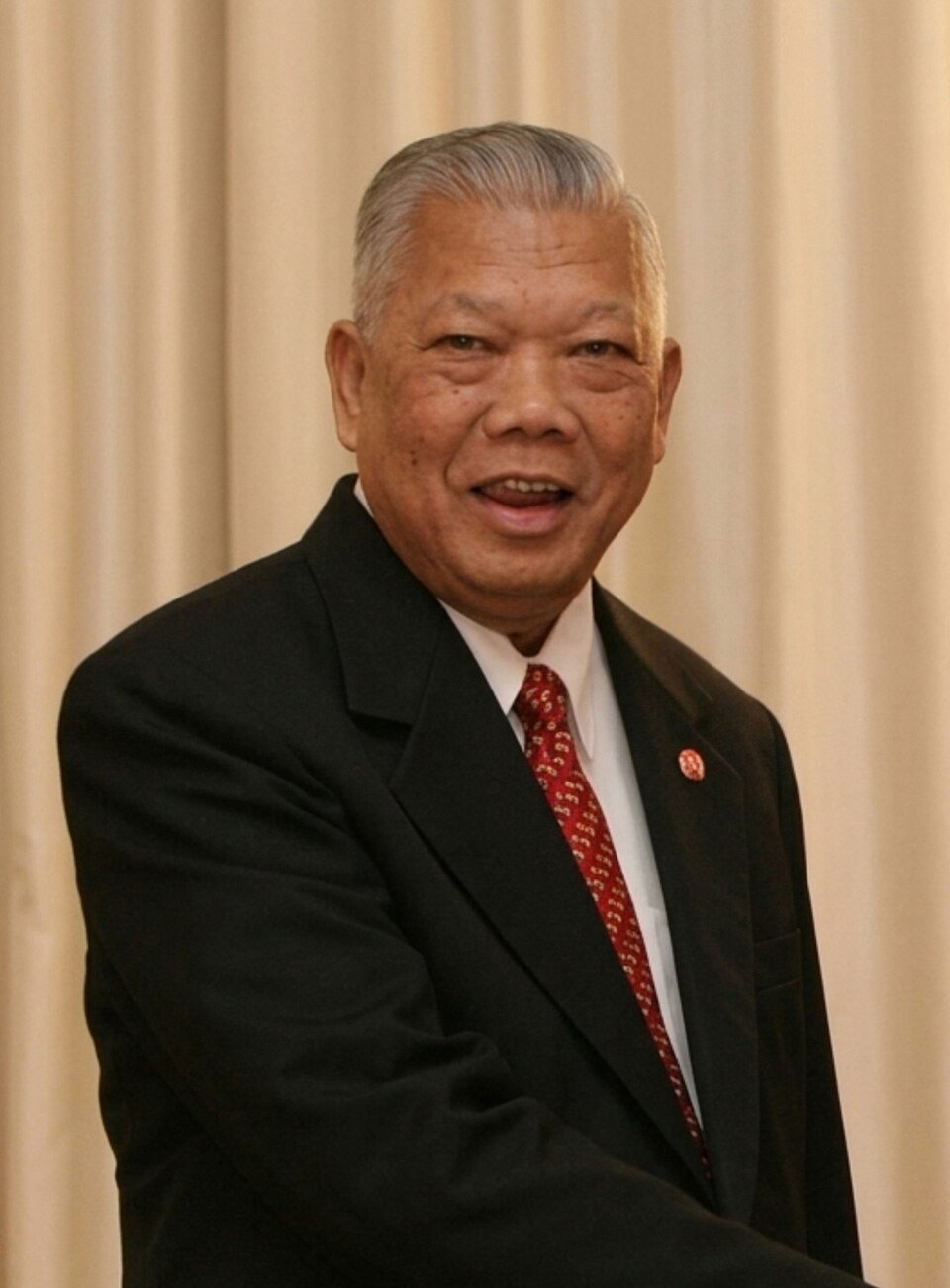
Samak Sundaravej
25th Prime Minister of Thailand, January–September 2008The combative veteran politician, Bangkok governor and television cook who led the first elected government after the 2006 coup before a court ended his premiership.Read biography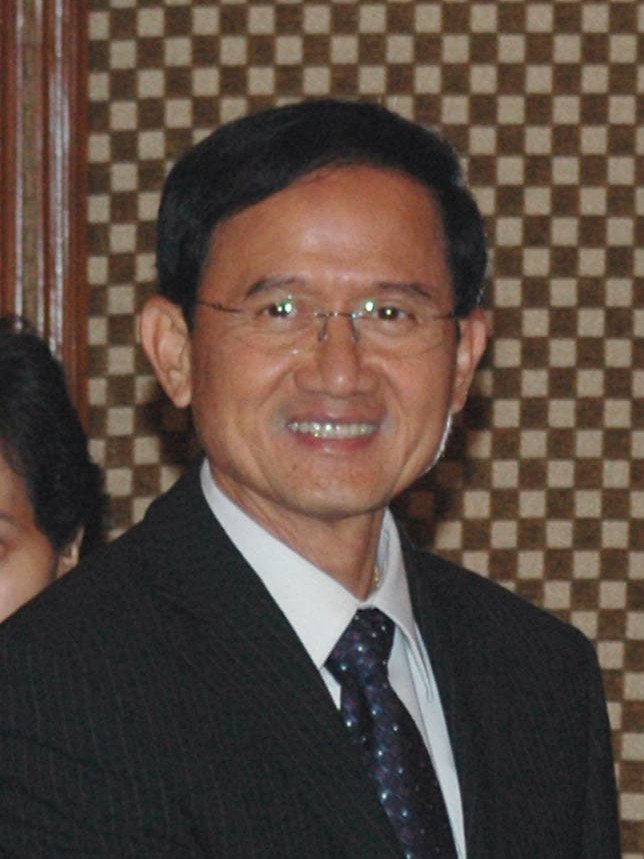 Thailand · Politics
1947—
Somchai Wongsawat
26th Prime Minister of Thailand, September–December 2008The former judge and senior civil servant whose three-month premiership ended when the Constitutional Court dissolved his party during the 2008 political crisis.Read biography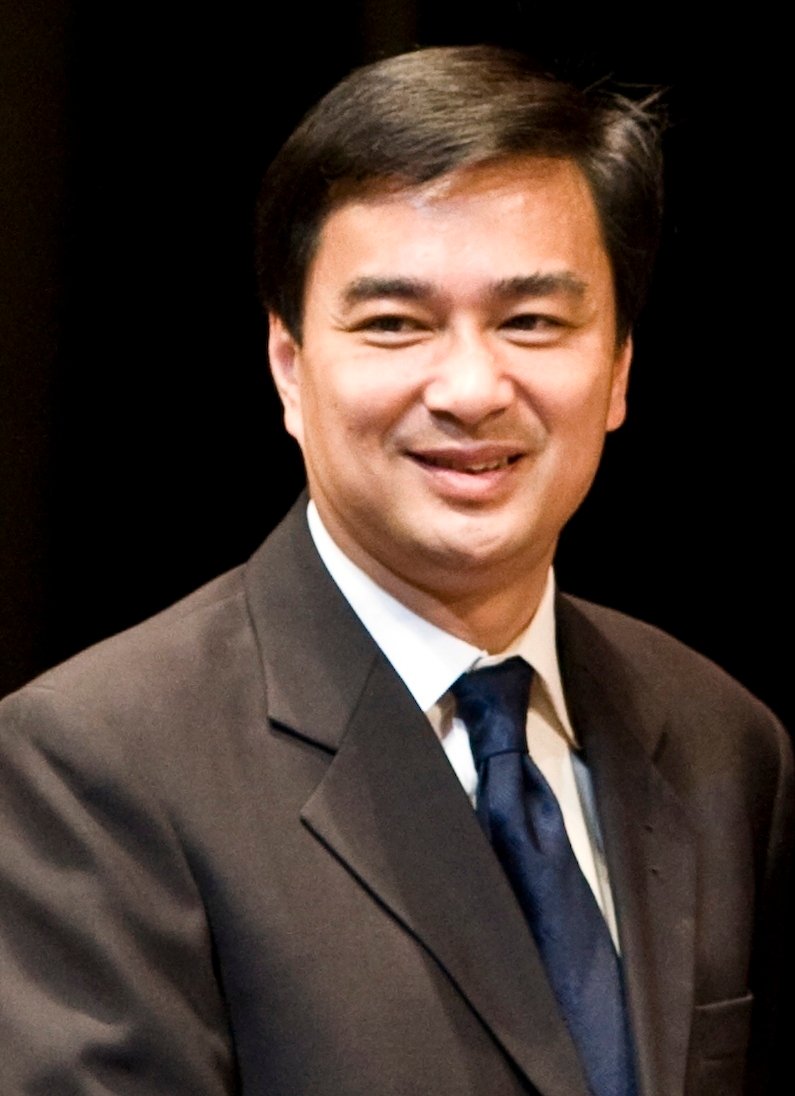 Thailand · Politics
1964—
Abhisit Vejjajiva
27th Prime Minister of Thailand, 2008–2011The Oxford-educated Democrat leader who became prime minister through a parliamentary coalition, launched crisis stimulus and governed during Thailand’s 2010 protest violence.Read biography Thailand · Politics
1949—
Thaksin Shinawatra
Businessman and former prime ministerA telecommunications entrepreneur who became prime minister in 2001, transformed Thai electoral politics and remained influential through two decades of conflict.Read biographyQuick answers
Common questions
- Who was prime minister during the 2008 Thai crisis?
- Samak Sundaravej served from January until a court ruling on 9 September. Somchai Wongsawat succeeded him and lost office when the People Power Party was dissolved on 2 December. Abhisit Vejjajiva became prime minister later that month.
- Why was Samak Sundaravej removed?
- The Constitutional Court found that his compensated work hosting two commercial television cooking programmes breached the constitutional prohibition on ministers being employees of another person.
- How many people were hurt on 7 October 2008?
- Public Health Ministry figures cited by Human Rights Watch recorded two PAD supporters killed and 443 people injured, including four amputations. About twenty police officers were also injured.
- Why did protesters occupy Bangkok’s airports?
- The People’s Alliance for Democracy used the occupations to force Somchai’s government to leave office, arguing that it served Thaksin Shinawatra. The tactic closed Thailand’s main international gateway and stranded travellers.
- Why was the People Power Party dissolved?
- The Constitutional Court held that deputy leader Yongyuth Tiyapairat committed an election offence. The 2007 Constitution made the party liable and required five-year bans for its relevant executives.
Primary and institutional sources
How this history was checked
Dates, legal milestones and historical claims are checked against the official and institutional records below. This article was reviewed on 3 October 2026.
- Inter-Parliamentary UnionThailand House election, December 2007
- Inter-Parliamentary UnionThailand House election background, 2011
- Constitutional Court of ThailandRuling No. 12–13/2551: Samak Sundaravej
- Constitutional Court of ThailandRuling No. 20/2551: dissolution of the People’s Power Party
- National Human Rights Commission of ThailandFinal Report of the Truth for Reconciliation Commission
- Human Rights WatchWorld Report 2009: Thailand
- Human Rights WatchGovernment and protesters should end political violence
- Wikimedia CommonsSomchai Wongsawat portrait and licence record