
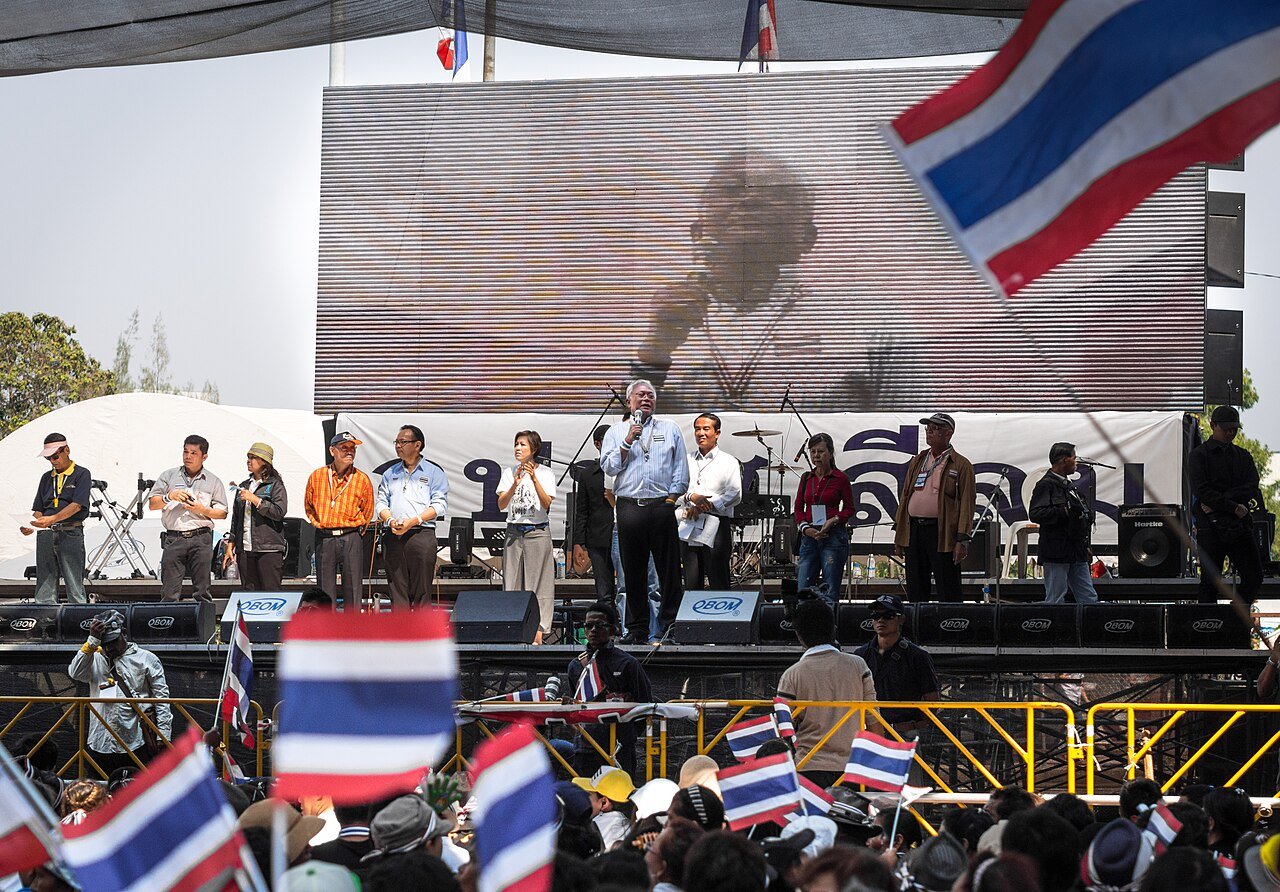
The short answer
Thailand’s February 2014 election was an attempted electoral exit from mass protest, but the principal opposition boycotted and demonstrators obstructed candidacy and voting. Millions participated, yet the poll could not form a House. The Constitutional Court annulled it because a nationwide general election had not occurred on one day.
Election status
Why the vote could not produce a parliament
The available figures describe participation and disruption, not a valid final result or seat allocation.
| Measure | Figure | How to interpret it |
|---|---|---|
| Registered electors in reported base | 43,024,042 | Excludes cancelled areas noted by IPU |
| Recorded voters | 20,129,976 | Participation in an incomplete poll |
| Reported turnout | 46.79% | Not a complete nationwide rate |
| Constituencies without candidates | 28 | Prevented a same-day 500-seat election |
| Constituencies where voting was cancelled | 89 | Thirty-three in Bangkok, fifty-six in the south |
| Final seats awarded | None | Election annulled before a House was formed |
Chronology
A timeline of the turning points
The House is dissolved
Yingluck Shinawatra called an early election after weeks of expanding anti-government protest.
The Democrat Party announces a boycott
The main opposition party declined to nominate candidates and aligned its strategy with demands for reform before an election.
Registration fails in twenty-eight constituencies
Blockades prevented candidates from registering in southern seats, making a complete 500-member election impossible on the scheduled day.
Emergency rule begins in greater Bangkok
The caretaker government invoked emergency powers as protest occupations and the Bangkok Shutdown continued.
Advance voting is widely disrupted
Protest blockades prevented many advance polling stations from opening and intensified fears about election-day access.
Voting proceeds but remains incomplete
Polling took place across much of Thailand, while voting was cancelled in eighty-nine constituencies and millions could not participate.
The Constitutional Court annuls the election
Ruling No. 5/2557 held that the poll was unconstitutional because a general election had not occurred throughout the kingdom on one day.
A new election date is discussed
The government and Election Commission moved toward a replacement poll, but no new elected House was formed before military intervention.
The coup cancels the electoral route
The NCPO removed the caretaker government and said future elections would follow a new constitutional process.
Why did Thailand hold an early election in February 2014?
Prime Minister Yingluck Shinawatra dissolved the House on 9 December 2013 after anti-amnesty protests became a sustained campaign to remove her government. The dissolution decree set a general election for 2 February, within the constitutional timetable. Pheu Thai expected voters to confirm the majority it had won in 2011.
PDRC protesters rejected an election-first settlement and demanded political reform under an appointed council. The Democrat Party boycotted the vote. This meant the election began without agreement between the principal government and opposition forces that completing it would provide a legitimate solution.
How did obstruction affect candidate registration?
Protesters blocked registration in twenty-eight constituencies, concentrated in the south. No candidates could therefore appear on the ballot in those seats. The gap mattered because the constitution described a 500-member House elected in a general election held on the same day throughout the kingdom.
The Election Commission and government disagreed over postponement and the legal route for completing missing seats. The Constitutional Court’s earlier Ruling No. 2/2557 said a different election date could be set by agreement in a situation of necessity, but the February date remained in the dissolution decree and the sides did not replace it before voting began.
What happened on election day?
Voting proceeded in much of northern, northeastern and central Thailand. In Bangkok and several southern provinces, blockades, missing materials and earlier registration failures prevented polling. The Inter-Parliamentary Union recorded cancelled voting in eighty-nine constituencies—thirty-three in Bangkok and fifty-six in southern provinces.
Around twelve million of roughly forty-nine million eligible voters were unable to vote, according to the IPU’s contemporary account. Because the process could not return at least 475 members—the ninety-five-percent threshold needed to convene the House—the election could not produce a functioning legislature even before the constitutional challenge was decided.
What do the turnout figures mean?
The IPU archive lists 43,024,042 registered electors within its reported base and 20,129,976 participants, or 46.79 percent turnout. It explicitly notes that the figures exclude electors registered in nine southern provinces where voting was cancelled. They are therefore a measure of participation in an incomplete process, not a normal nationwide turnout rate.
No final distribution of seats or authoritative party result was produced. Contemporary estimates suggested that Pheu Thai would remain the largest party, but incomplete constituencies, uncounted ballots and the later annulment meant the vote never created legal parliamentary mandates. Calling it a Pheu Thai victory without that qualification would overstate what the election accomplished.
Why did the Constitutional Court annul the election?
Ruling No. 5/2557 focused on section 108 paragraph two of the 2007 Constitution, which required the general election date to be the same throughout the kingdom. The court accepted that advance and overseas voting could occur earlier, but held that twenty-eight constituencies without candidates meant no nationwide general election had taken place on 2 February.
The court concluded that arranging later polls for the missing constituencies would create more than one general-election date and allow events or results from one day to influence another. It therefore held the election unconstitutional and invalidated the part of the dissolution decree that prescribed 2 February as election day.
Was the annulment politically contested?
Yes. Supporters of the judgment emphasised uniform election rules, free voter choice and the impossibility of constituting a complete House. Government supporters argued that deliberate obstruction had been rewarded and that voters who successfully cast ballots lost representation because opponents prevented voting elsewhere.
The legal judgment answered whether this election satisfied the 2007 Constitution; it did not resolve how a democracy should respond when organised actors block candidacy and polling. That unresolved question is why the case remains central to debates over judicial power, electoral rights and anti-majoritarian protest in Thailand.
What happened after the election was voided?
The caretaker government and Election Commission discussed a replacement election, while PDRC leaders continued demanding an appointed reform administration. On 7 May, a separate Constitutional Court ruling removed Yingluck over the transfer of a senior security official, leaving Niwatthamrong Boonsongpaisan to lead the remaining caretaker cabinet.
The army declared martial law on 20 May and seized power two days later. Fresh elections were abandoned, the 2007 constitutional order was largely suspended and the next House election did not occur until March 2019. The failed 2014 poll thus became the final election of the pre-coup system, not a bridge to a new parliament.
Continue the chronology
Related history guides
The 2013–2014 Political Crisis
Read the amnesty dispute, PDRC campaign and violence around the election.
Read the timeline3 July 2011The 2011 Thai General Election
Compare the incomplete 2014 poll with the high-turnout majority election it followed.
Read the timeline7 May 2014Why Yingluck Was Removed
Separate the later transfer judgment from the election annulment.
Read the timeline22 May 2014The 2014 Thai Coup
Follow the failed replacement-election path into martial law and military rule.
Read the timeline24 March 2019The 2019 Thai General Election
Continue to the first House election held after the coup and constitutional redesign.
Read the timelineConnected biographies
Five biographies connecting the boycott, protest campaign, incomplete vote, caretaker government and later coup
 Thailand · Politics
1967—
Yingluck Shinawatra
Business executive and former prime ministerA business executive who led a landslide election victory in 2011 and became Thailand’s first woman prime minister before a court removed her in 2014.Read biography Thailand · Politics
1964—
Abhisit Vejjajiva
27th Prime Minister of Thailand, 2008–2011The Oxford-educated Democrat leader who became prime minister through a parliamentary coalition, launched crisis stimulus and governed during Thailand’s 2010 protest violence.Read biography Thailand · Politics
1949—
Thaksin Shinawatra
Businessman and former prime ministerA telecommunications entrepreneur who became prime minister in 2001, transformed Thai electoral politics and remained influential through two decades of conflict.Read biography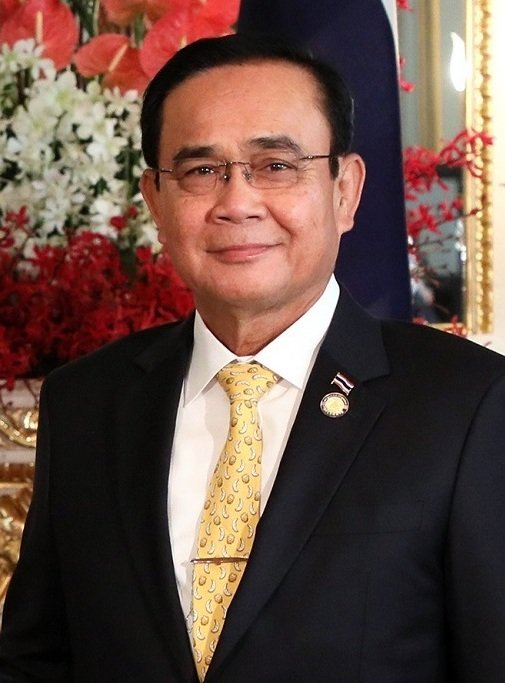 Thailand · Politics
1954—
Prayut Chan-o-cha
29th Prime Minister of Thailand, 2014–2023The army commander who seized power in 2014, led Thailand’s military government and remained prime minister after the 2019 election until 2023.Read biography Thailand · Politics
1949—
Suthep Thaugsuban
Former deputy prime minister and PDRC protest leaderA veteran southern politician who rose through the Democrat Party, directed security policy during the 2010 Red Shirt crisis and later led the PDRC protests that preceded Thailand’s 2014 coup.Read biographyQuick answers
Common questions
- Who won the 2014 Thai general election?
- No legally valid winner was declared. Voting and candidate registration were incomplete, no full House was formed and the Constitutional Court annulled the election on 21 March 2014.
- What was turnout in the February 2014 Thai election?
- The IPU archive reports 20,129,976 participants from a reported base of 43,024,042 registered electors, or 46.79 percent. The figures exclude nine southern provinces where voting was cancelled.
- Why did the Democrat Party boycott the election?
- The party argued that political reform should occur before another vote and chose not to nominate candidates. Pheu Thai and its supporters argued that reform should follow an elected mandate.
- How many constituencies had no candidates?
- Candidate registration was prevented in twenty-eight constituencies. The IPU also reported that election-day voting was cancelled in eighty-nine constituencies.
- Why was the 2014 Thai election annulled?
- The Constitutional Court held that the election did not take place throughout Thailand on the same day as required by section 108 of the 2007 Constitution.
- When was Thailand’s next general election?
- The coup ended plans for a replacement 2014 vote. Thailand next elected a House of Representatives on 24 March 2019.
Primary and institutional sources
How this history was checked
Dates, legal milestones and historical claims are checked against the official and institutional records below. This article was reviewed on 3 October 2026.
- Constitutional Court of ThailandRuling No. 5/2557 on the February 2014 general election
- Constitutional Court of ThailandRuling No. 2/2557 on setting a new election date
- Inter-Parliamentary UnionThailand House election, February 2014
- United Nations Secretary-GeneralNote to correspondents on Thailand’s February 2014 election
- Human Rights WatchWorld Report 2015: Thailand
- Wikimedia CommonsSilom protest site on election day, 2 February 2014