In this biography
Quick facts
- Born
- 3 August 1964
- Birthplace
- Newcastle upon Tyne, England, United Kingdom
- Country
- Thailand
- Nationality
- Thai
- Known for
- Leading a Democrat coalition through the global financial crisis and the deadly 2010 political confrontation
- Office
- 27th Prime Minister, 17 December 2008 – 5 August 2011
- Education
- PPE at St John’s College, Oxford
- Political party
- Democrat Party; leader again from 18 October 2025
- 2011 election
- Democrats won 159 seats; Pheu Thai won 265
Why this life matters
Abhisit’s premiership illustrates how court rulings, coalition realignment, economic shock and street mobilisation interacted in Thailand after the 2006 coup.
Timeline
Key moments
Born in Newcastle
Born on 3 August in England to Thai parents and raised partly in Britain.
Studied politics, philosophy and economics
Graduated with first-class honours from St John’s College, Oxford, before teaching economics in Thailand.
Won election to parliament
Entered the House as a Bangkok Democrat MP at the age of 27.
Became Democrat Party leader
Took control after the party’s election defeat and led opposition to Thaksin-aligned governments.
Became the 27th prime minister
Formed a House coalition after court decisions dissolved three governing parties.
Launched economic stimulus
Used transfers, subsidies, tax measures and planned infrastructure investment during the global downturn.
Red Shirt protests ended in violence
Emergency rule and military operations followed weeks of demonstrations; at least 90 people were killed.
Lost office, then returned to party leadership
Transferred power after Pheu Thai’s 2011 victory and was elected Democrat leader again in October 2025.
Education and an early parliamentary career
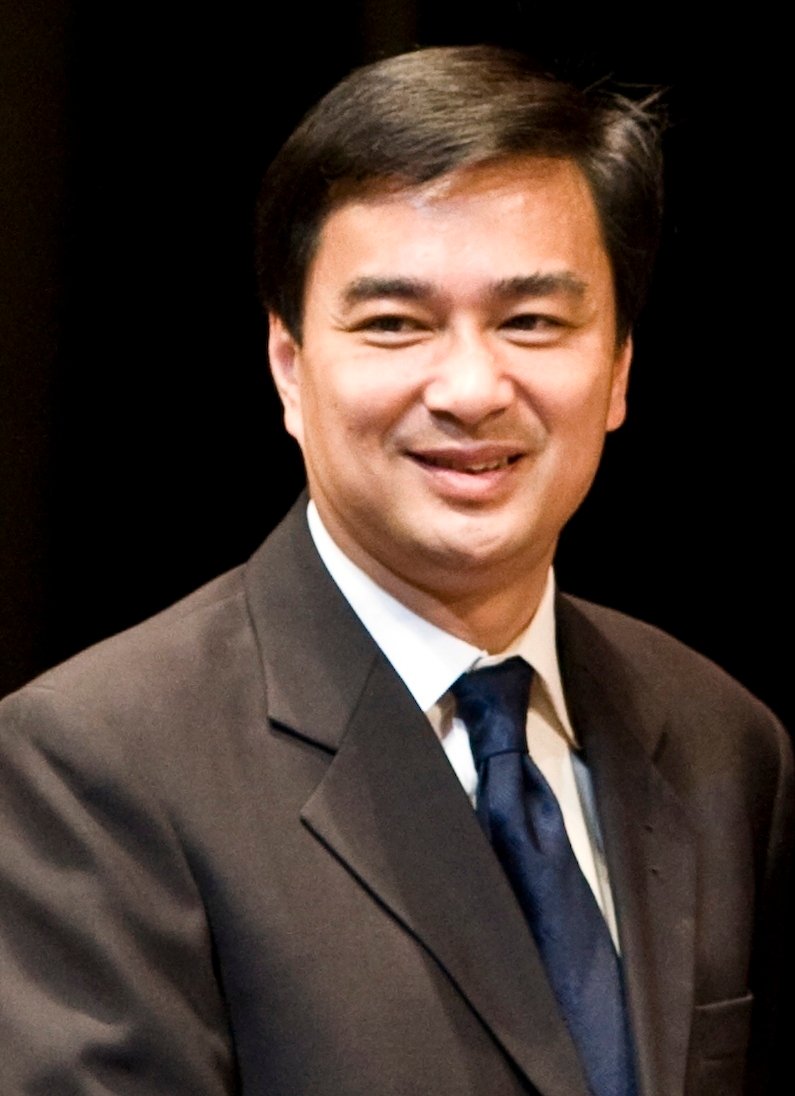
Abhisit Vejjajiva was born in Newcastle upon Tyne on 3 August 1964 to Thai parents studying and working in Britain. He attended Eton College and St John’s College, Oxford, where he read philosophy, politics and economics and graduated with first-class honours. He later taught at Chulachomklao Royal Military Academy and Thammasat University.
At 27, Abhisit won a Bangkok seat for the Democrat Party in the March 1992 election. He became government spokesman during Chuan Leekpai’s first administration and a minister attached to the Prime Minister’s Office during Chuan’s second. His fluent English, policy training and controlled debating style helped him rise quickly, though opponents portrayed him as distant from provincial voters.
Opposition after Thaksin and the 2006 coup
Abhisit became Democrat leader in 2005 after Thaksin Shinawatra’s Thai Rak Thai won a landslide. The Democrats boycotted the disputed April 2006 election, which was later annulled. A military coup removed Thaksin that September, and a junta-appointed government supervised a new constitution and the December 2007 election.
The People Power Party, aligned with Thaksin, won the most seats in 2007, leaving Abhisit in opposition. During 2008, anti-government Yellow Shirt protests escalated to the occupation of Bangkok’s airports. Courts removed two prime ministers and dissolved three governing parties for electoral offences, breaking the coalition that had emerged from the election.
A parliamentary route to the premiership
Former coalition partners and a faction associated with Newin Chidchob switched sides, allowing the Democrats to assemble a House majority. Parliament selected Abhisit in December 2008, and he received royal appointment on 17 December. His government was constitutionally formed, but Red Shirt opponents argued that court intervention, military influence and coalition defections had overridden the 2007 electoral mandate.
Abhisit entered office as the global financial crisis struck exports and tourism. His administration adopted a fiscal package estimated by the IMF at about 2.4 percent of GDP for 2008–09, combining income support, tax measures and investment. A longer-term infrastructure plan followed. The measures cushioned demand, though the World Bank found that the first package was not tightly targeted and had only a limited effect on total output.
The 2010 confrontation and accountability
The United Front for Democracy against Dictatorship occupied central Bangkok in March 2010 and demanded an early election. Abhisit declared a state of emergency and created the Centre for the Resolution of the Emergency Situation. Clashes on 10 April and the final military operation in May involved armed elements, soldiers, protesters, medics and journalists.
Human Rights Watch recorded at least 90 deaths and about 2,000 injuries during the wider confrontation. Protest leaders had threatened unrest and some militants attacked security forces, but the state’s use of live ammunition and restricted emergency powers created lasting questions about necessity, command responsibility and equal justice. Abhisit established a truth and reconciliation commission, yet agreement over accountability remained elusive.
Election defeat and return to the Democrats
Abhisit dissolved parliament and called an election for July 2011. Pheu Thai, led by Yingluck Shinawatra, won 265 seats while the Democrats won 159. He conceded, resigned as party leader and transferred office after the House selected Yingluck. Party members later returned him to the leadership, and he headed the parliamentary opposition until the 2013 political crisis.
After a poor 2019 election result, Abhisit resigned as Democrat leader and then gave up his House seat when the party joined Prayut Chan-o-cha’s coalition, a partnership he had opposed. He left the party in 2023 but rejoined and was elected leader without opposition on 18 October 2025. His return placed the unresolved record of 2008–11 alongside an effort to revive Thailand’s oldest party in a changed electoral landscape.
Quick answers
Frequently asked questions about Abhisit Vejjajiva
- Who is Abhisit Vejjajiva?
- Abhisit Vejjajiva is the 27th Prime Minister of Thailand, 2008–2011. Abhisit’s premiership illustrates how court rulings, coalition realignment, economic shock and street mobilisation interacted in Thailand after the 2006 coup.
- What is Abhisit Vejjajiva best known for?
- Abhisit Vejjajiva is best known for leading a Democrat coalition through the global financial crisis and the deadly 2010 political confrontation.
- When and where was Abhisit Vejjajiva born?
- Abhisit Vejjajiva was born on 3 August 1964 in Newcastle upon Tyne, England, United Kingdom.
Sources and further reading
How this biography was checked
Core dates and offices are checked against the sources below. This profile was last reviewed on 3 October 2026.
- Secretariat of the Prime Minister of ThailandDirectory of Prime Ministers of Thailand
- World Economic ForumAbhisit Vejjajiva profile
- Inter-Parliamentary UnionThailand House election, December 2007
- Inter-Parliamentary UnionThailand House election, July 2011
- International Monetary FundThailand: 2009 Article IV Consultation
- Human Rights WatchWorld Report 2011: Thailand
- Democrat Party of ThailandDemocrat Party executive committee
- Wikimedia CommonsPortrait and licence record