
The short answer
Thailand’s Constitutional Court removed Yingluck Shinawatra on 7 May 2014 over her role in transferring a senior security official. The judgment was distinct from the annulled election and rice-policy cases. It removed ten cabinet members, left a reduced caretaker administration and preceded the military coup by fifteen days.
Chronology
A timeline of the turning points
Thawil is moved from the National Security Council
The government transferred secretary-general Thawil Pliensri to an advisory position in the Prime Minister’s Office.
The permanent transfer takes effect
The official reshuffle opened the NSC post for police chief Wichien Photposri and then the national police post for Preawpan Damapong.
The Administrative Court rules for Thawil
The lower administrative court revoked the transfer, finding that the reasons given did not support the exercise of official discretion.
Yingluck becomes caretaker prime minister
She dissolved the House during mass anti-government protests and remained with the cabinet pending a successor.
The Supreme Administrative Court orders reinstatement
The final administrative judgment required Thawil’s return to the NSC post within forty-five days.
The February election is annulled
A separate Constitutional Court judgment left the caretaker cabinet without a newly elected House.
The Constitutional Court terminates Yingluck’s office
Ruling No. 9/2557 found prohibited intervention in a permanent official’s transfer and also removed nine ministers involved in the decision.
Niwatthamrong leads the remaining cabinet
Ministers not implicated in the transfer continued in caretaker office, avoiding an immediate absence of government.
The military removes the caretaker administration
The coup ended the remaining cabinet fifteen days after Yingluck’s judicial removal.
Why was Yingluck Shinawatra removed in May 2014?
The Constitutional Court removed Yingluck because of a personnel transfer made in 2011, not because of the February election or the rice-pledging programme. Her government moved Thawil Pliensri from secretary-general of the National Security Council to an advisory post in the Prime Minister’s Office.
The court held that the transfer was not a normal policy reassignment supported by official need. It found that Yingluck had used her status to intervene in the transfer of a permanent official for prohibited benefit, contrary to sections 266 and 268 of the 2007 Constitution. Under section 182, that violation terminated her individual ministerial office.
How did one transfer change several senior positions?
Removing Thawil created a vacancy at the National Security Council. Police commissioner-general Wichien Photposri moved into that post, which in turn opened the police leadership for Preawpan Damapong. Preawpan was a relative of Yingluck’s family through Thaksin Shinawatra’s former wife.
The official ruling treated this sequence as evidence that the reshuffle served personal or related interests rather than a demonstrated administrative purpose. Yingluck argued that transfers were part of executive responsibility and government policy. The court found the process rushed and outside regular official practice.
What did the administrative courts decide first?
Thawil challenged the order in the administrative courts. The Central Administrative Court ruled for him in May 2013. On 7 March 2014, the Supreme Administrative Court upheld the judgment and ordered his reinstatement within forty-five days, concluding that the government’s stated reasons did not justify the exercise of discretion.
That case concerned the legality of the administrative act and Thawil’s position. The later Constitutional Court case asked a different question: whether Yingluck’s involvement violated constitutional restrictions on political interference with permanent officials and therefore ended her ministerial office.
Why could the court remove a caretaker prime minister?
Yingluck had dissolved the House in December 2013 and argued that her ordinary premiership had already ended. Under section 181, however, the Council of Ministers remained in office to perform caretaker duties until a newly appointed cabinet took over. The Constitutional Court therefore held that her ministerial status still existed for purposes of review.
The February election had already been annulled, so no elected House was available to select a successor. Ruling No. 9/2557 terminated Yingluck’s individual office immediately and said she could not continue performing caretaker duties. The judgment also applied to nine serving ministers who had participated in the transfer decision.
Did the ruling remove the entire government?
No. The court removed Yingluck and nine ministers connected to the 2011 decision. Other ministers remained as a caretaker cabinet, and deputy prime minister and commerce minister Niwatthamrong Boonsongpaisan took the leading role. This avoided an immediate constitutional vacuum but left a weakened administration with no House.
PDRC leaders continued demanding that the whole cabinet resign so an appointed reform government could take office. Pro-government groups regarded the partial continuation as constitutionally necessary and warned that removing every minister outside an election would overturn the 2011 mandate completely.
Was Yingluck removed over the rice-pledging scheme?
No. The 7 May Constitutional Court ruling concerned Thawil’s transfer. The rice-pledging programme generated separate proceedings before the National Anti-Corruption Commission, the post-coup legislature and the Supreme Court. Those cases involved alleged failure to stop losses and corruption in the programme, not the personnel decision decided in Ruling No. 9/2557.
Keeping the cases separate matters for factual accuracy. Yingluck’s premiership ended through the transfer judgment; her later five-year political ban and criminal conviction arose from different institutions, legal provisions and evidence. Combining them into one “corruption removal” account misstates the chronology.
How did the removal connect to the 2014 coup?
The ruling occurred during an existing constitutional breakdown. The House had been dissolved, the replacement election had been annulled and anti-government protesters rejected another vote without prior reform. Yingluck’s removal deepened the question of who could legitimately exercise executive power while negotiations failed.
Fifteen days later, army commander Prayut Chan-o-cha overthrew the remaining caretaker cabinet. The court did not order or legally authorise the coup, and the two events should not be treated as one act. Their close sequence nevertheless made judicial removal a decisive stage in the collapse of the 2007 constitutional order.
Continue the chronology
Related history guides
Yingluck Shinawatra Biography
Read her business career, 2011 election, government, removal and later legal cases in full.
Read the timelineNovember 2013 – May 2014The 2013–2014 Political Crisis
Place the transfer judgment inside the wider protest and constitutional breakdown.
Read the timeline2 February – 21 March 2014The Annulled 2014 General Election
Understand the separate decision that prevented an elected House from being formed.
Read the timeline22 May 2014The 2014 Thai Coup
Continue to the takeover that removed the remaining caretaker cabinet.
Read the timeline1932–presentPrime Ministers of Thailand
Compare judicial removal with every other route by which Thai premierships began and ended.
Read the timelineConnected biographies
Five biographies connecting Yingluck’s mandate, the Thaksin political network, judicial review and the coming coup
 Thailand · Politics
1967—
Yingluck Shinawatra
Business executive and former prime ministerA business executive who led a landslide election victory in 2011 and became Thailand’s first woman prime minister before a court removed her in 2014.Read biography Thailand · Politics
1949—
Thaksin Shinawatra
Businessman and former prime ministerA telecommunications entrepreneur who became prime minister in 2001, transformed Thai electoral politics and remained influential through two decades of conflict.Read biography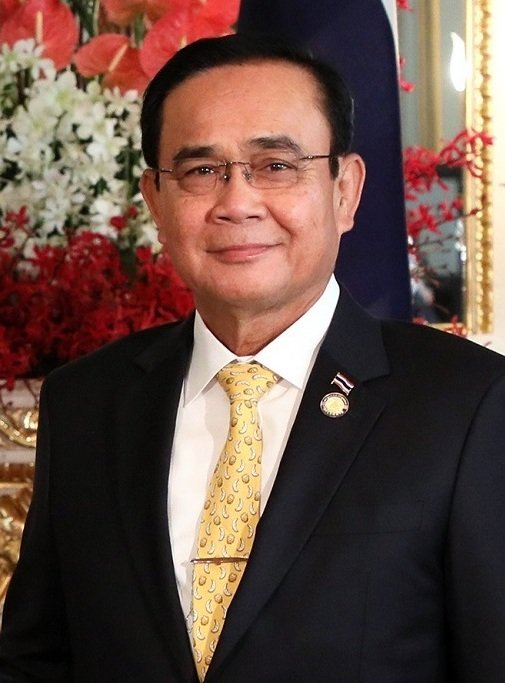 Thailand · Politics
1954—
Prayut Chan-o-cha
29th Prime Minister of Thailand, 2014–2023The army commander who seized power in 2014, led Thailand’s military government and remained prime minister after the 2019 election until 2023.Read biography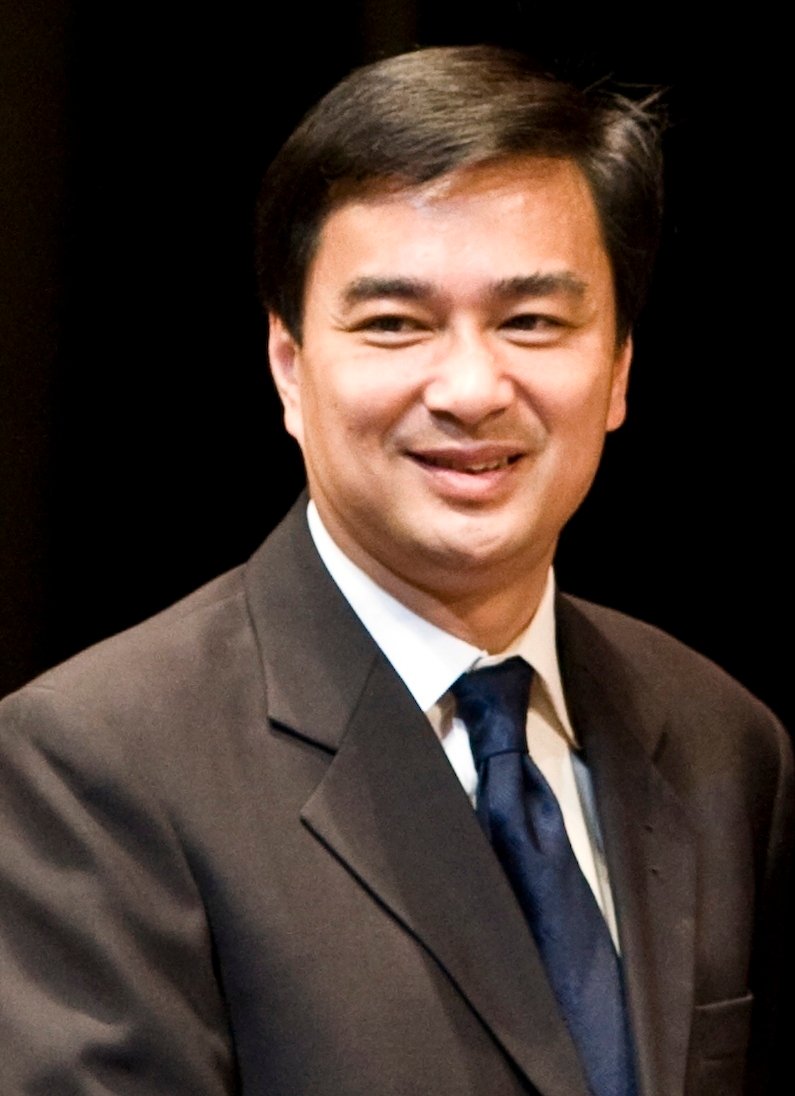 Thailand · Politics
1964—
Abhisit Vejjajiva
27th Prime Minister of Thailand, 2008–2011The Oxford-educated Democrat leader who became prime minister through a parliamentary coalition, launched crisis stimulus and governed during Thailand’s 2010 protest violence.Read biography Thailand · Politics
1961—
Sudarat Keyuraphan
Former public health minister and party leaderA former public health and agriculture minister who helped implement Thailand’s universal coverage scheme before later leading Pheu Thai’s 2019 campaign and Thai Sang Thai.Read biographyQuick answers
Common questions
- Why was Yingluck Shinawatra removed as prime minister?
- The Constitutional Court held that her involvement in transferring National Security Council chief Thawil Pliensri served prohibited personal or related interests and violated constitutional limits on political intervention in the civil service.
- Was Yingluck removed because of the rice scheme?
- No. The 7 May 2014 removal concerned Thawil Pliensri’s transfer. The rice-pledging proceedings were separate cases pursued later through anti-corruption, legislative and criminal processes.
- How many ministers were removed with Yingluck?
- Nine serving ministers who had participated in the 2011 transfer decision also lost office. Ministers not involved continued as a caretaker cabinet.
- Who replaced Yingluck in May 2014?
- Deputy prime minister and commerce minister Niwatthamrong Boonsongpaisan led the remaining caretaker cabinet until the military coup on 22 May.
- What was Constitutional Court Ruling No. 9/2557?
- It was the 7 May 2014 decision that terminated Yingluck’s ministerial office under the 2007 Constitution because of her role in Thawil Pliensri’s transfer.
- How long after Yingluck’s removal did the coup happen?
- The army seized power on 22 May 2014, fifteen days after the Constitutional Court ruling.
Primary and institutional sources
How this history was checked
Dates, legal milestones and historical claims are checked against the official and institutional records below. This article was reviewed on 3 October 2026.
- Constitutional Court of ThailandRuling No. 9/2557 on Yingluck Shinawatra’s ministerial office
- Administrative Court of ThailandEnglish-language institutional information and judgment archive
- Center for Strategic and International StudiesThai Constitutional Court Removes Prime Minister Yingluck from Office
- Inter-Parliamentary UnionThailand House election, February 2014
- Human Rights WatchWorld Report 2015: Thailand
- Constitutional Court of ThailandRuling No. 5/2557 on the February 2014 general election
- Wikimedia CommonsYingluck Shinawatra portrait and licence record