The short answer
Benigno “Ninoy” Aquino Jr. was shot after returning to Manila on 21 August 1983. Investigators and courts rejected the first official account, and sixteen military personnel were later convicted. No final judgment identified an ultimate mastermind, while the political shock transformed opposition to Ferdinand Marcos.
Chronology
A timeline of the turning points
Aquino is detained under martial law
Benigno “Ninoy” Aquino Jr., a leading opposition senator, was arrested after Ferdinand Marcos declared martial law. A military commission later sentenced him to death.
Aquino leaves for heart surgery
The government allowed Aquino to travel to the United States for medical treatment. He remained abroad for three years while speaking against authoritarian rule.
Aquino returns and is shot
Aquino was shot after leaving his aircraft under military escort at Manila International Airport. Rolando Galman was also killed on the tarmac.
A fact-finding commission is announced
Administrative Order No. 469 created a commission to investigate the assassination. The first proposed membership did not become the board that ultimately conducted the inquiry.
The Agrava Board is constituted
After two failed attempts to form an accepted commission, a board led by retired judge Corazon Agrava began an investigation that heard 194 witnesses over 125 hearing days.
The board submits divided reports
Its chair and four members submitted separate reports. Both rejected the claim that Galman killed Aquino and identified a military conspiracy, but they differed over who should be charged.
The first trial acquits all defendants
The Sandiganbayan acquitted the accused. The Supreme Court later found that the proceedings had been manipulated and that the prosecution and public were denied due process.
The Supreme Court orders a new trial
In Galman v. Sandiganbayan, the Court treated the first trial as a sham and held that a genuine retrial was not barred by double jeopardy.
Sixteen defendants are convicted
After retrial, the Sandiganbayan convicted sixteen military personnel as principals in the murders of Aquino and Galman. Later petitions did not produce a judicial finding that identified the ultimate mastermind.
August 21 becomes Ninoy Aquino Day
Republic Act No. 9256 established a national observance on the anniversary of Aquino’s death, reflecting the assassination’s continuing place in public memory.
What happened on 21 August 1983?
Aquino returned from exile despite warnings that he faced arrest or death. After China Airlines Flight 811 landed, soldiers escorted him from the aircraft through a service stairway. He was shot at close range before reaching the tarmac. Galman, initially presented by the government as the gunman, was killed almost immediately nearby.
The airport was under intense military security, and competing accounts appeared within hours. The crime was therefore not only a murder case; it became a test of whether institutions controlled by an authoritarian government could credibly investigate violence against its most prominent opponent.
The Agrava Board and competing findings
Public distrust disrupted the government’s first efforts to create an investigating body. The board eventually led by Corazon Agrava conducted extensive hearings in the Philippines, Japan and the United States. Its members examined the military escort, airport security, witness statements and the government’s claim that Galman was a communist assassin.
The chair’s minority report and the four-member majority report differed over the number and rank of people who should be indicted. Crucially, both rejected the central military account: they found that Galman was not Aquino’s killer and that the crime involved military personnel. The disagreement was about the reach of the conspiracy, not whether the original public explanation was credible.
Why the first trial was set aside
The Sandiganbayan acquitted all defendants in December 1985. After the fall of Marcos, evidence presented to the Supreme Court described political interference in the prosecution and trial. In Galman v. Sandiganbayan, the Court held that the proceedings had been a sham engineered to produce acquittals.
That finding was constitutionally important. An acquittal normally prevents a second prosecution under the rule against double jeopardy. The Court concluded that the accused had never been placed in genuine jeopardy because the state and the public were denied due process in a trial controlled to defeat the prosecution. A new trial could therefore proceed.
Who killed Ninoy Aquino?
The narrow judicial answer is that sixteen military personnel were convicted in 1990 as principals in the murders of Aquino and Galman. The courts rejected the story that Galman acted as the assassin, and later decisions preserved the convictions. That establishes criminal responsibility for participants in the airport killings.
It does not provide a complete answer about ultimate command or motive. No final judicial decision identified and convicted a mastermind who ordered Aquino’s death. Claims about who planned the assassination beyond the convicted group remain disputed and should not be presented as settled fact.
Political aftermath and historical significance
Aquino’s funeral drew an enormous public procession and helped unite business leaders, church networks, activists and previously cautious citizens in opposition to Marcos. The assassination deepened an economic and political crisis, increased international scrutiny and made the regime’s legitimacy harder to sustain.
The killing did not mechanically cause the People Power Revolution three years later. Organised resistance, economic decline, electoral conflict and a military breakaway also mattered. It was nevertheless a decisive catalyst: Aquino’s death changed the scale of public mobilisation and made his widow, Corazon Aquino, the figure around whom a broad electoral coalition eventually formed.
Continue the chronology
Related history guides
Philippines History Timeline
Connect the 1983 assassination to the country’s longer political history.
Read the timeline19 biographiesPeople Power and Philippine Democracy Figures
Compare the people who sustained opposition before and after the assassination.
Read the timeline1972—1986The Marcos Martial Law Era
Place Aquino’s imprisonment and opposition within the longer authoritarian period.
Read the timeline22—25 Feb 1986The People Power Revolution
Follow the coalition and political crisis that ended Marcos rule three years later.
Read the timelineConnected biographies
Eight lives connecting the assassination to democratic resistance
 Philippines · Politics
1932—1983
Benigno Aquino Jr.
Senator and opposition leaderThe senator known as Ninoy whose imprisonment, exile and assassination on returning to Manila transformed opposition to Ferdinand Marcos.Read biography Philippines · Politics
1917—1989
Ferdinand Marcos
President of the Philippines, 1965–1986A president who imposed martial law, dismantled democratic checks and ruled for two decades before the 1986 People Power Revolution forced him from office.Read biography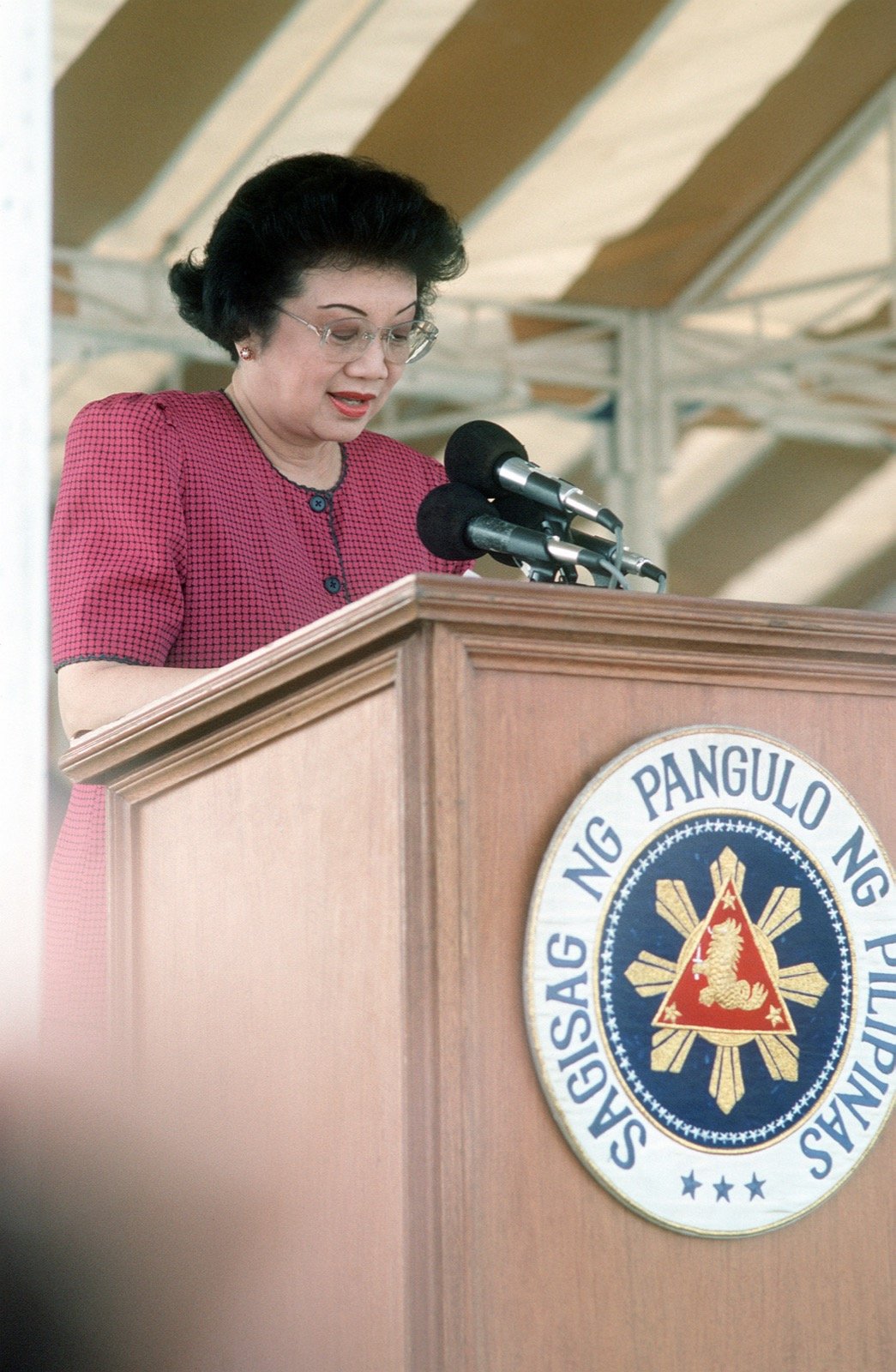 Philippines · Politics
1933—2009
Corazon Aquino
President of the Philippines, 1986–1992The opposition leader who became president after People Power and restored constitutional government following the Marcos dictatorship.Read biography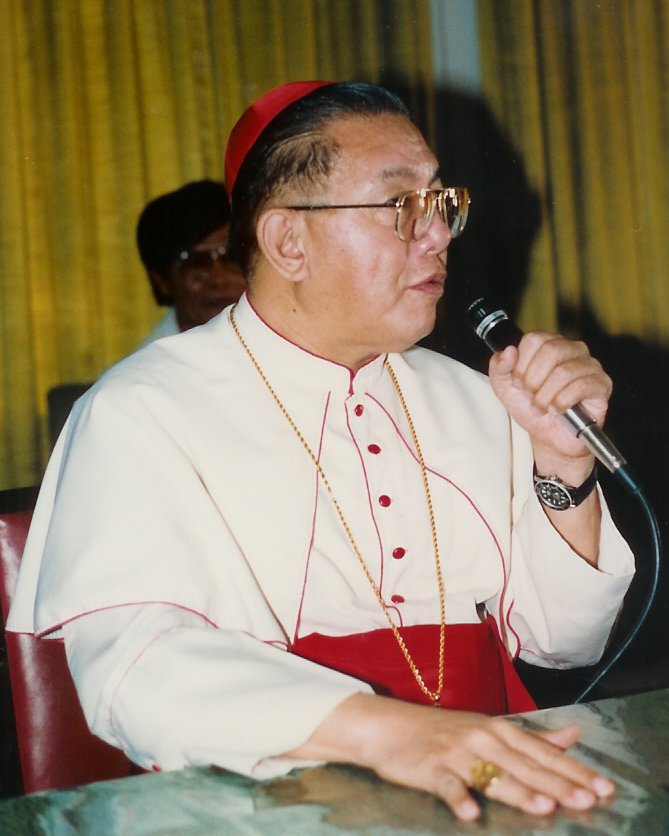 Philippines · Politics
1928—2005
Jaime Cardinal Sin
Cardinal and Archbishop of ManilaThe Archbishop of Manila whose religious authority, democratic advocacy and Radio Veritas appeal helped bring civilians onto EDSA in February 1986.Read biography Philippines · Politics
1922—1987
Jose W. Diokno
Senator, lawyer and human rights advocateA Filipino senator and civil-liberties lawyer known as Ka Pepe who was detained without charge under martial law and built a national network of human rights defenders.Read biography Philippines · Politics
1898—1992
Lorenzo Tañada
Senator, nationalist and anti-dictatorship leaderA four-term Filipino senator known as Ka Tanny who returned from retirement to defend political prisoners and lead public resistance under martial law.Read biography Philippines · Politics
1920—2016
Jovito Salonga
Opposition senator and post-EDSA Senate presidentA Filipino lawyer, opposition leader and statesman who survived wartime imprisonment and the Plaza Miranda bombing before helping rebuild the Senate after EDSA.Read biography Philippines · Politics
1913—1988
Chino Roces
Publisher, journalist and democracy campaignerA Filipino newspaper publisher whose media organisations were closed under martial law and who later became a visible organiser of democratic protest.Read biographyQuick answers
Common questions
- When and where was Ninoy Aquino assassinated?
- He was shot on 21 August 1983 after arriving at Manila International Airport and being escorted from his aircraft toward the tarmac.
- Was Rolando Galman the gunman?
- The Agrava Board rejected the government’s claim that Galman shot Aquino, and the later criminal case convicted military personnel for the murders of both Aquino and Galman.
- Who was convicted for the assassination?
- In 1990, the Sandiganbayan convicted sixteen military personnel as principals in the double murder. The final judicial record did not identify and convict an ultimate mastermind.
- What was the Agrava Board?
- It was the independent fact-finding board constituted in October 1983 to investigate the Aquino assassination. Its chair and four members issued separate reports but agreed that the killing involved a military conspiracy.
- How did the assassination affect Philippine history?
- It accelerated public opposition to Ferdinand Marcos, widened anti-authoritarian coalitions and helped create the political conditions that led to the 1986 election crisis and People Power Revolution.
Primary and institutional sources
How this history was checked
Dates, legal milestones and historical claims are checked against the official and institutional records below. This article was reviewed on 8 September 2026.
- The LawPhil ProjectAdministrative Order No. 469 — initial fact-finding commission
- Supreme Court of the Philippines via LawPhilGalman v. Sandiganbayan, G.R. No. L-72670
- Supreme Court of the Philippines via LawPhilPeople v. Sandiganbayan, G.R. Nos. 96027–28
- The LawPhil ProjectRepublic Act No. 9256 — Ninoy Aquino Day
- National Historical Commission of the PhilippinesBenigno S. Aquino Jr. historical marker
- National Historical Commission of the PhilippinesBenigno Aquino Jr. “Ninoy” marker at Times Street