In this biography
Quick facts
- Born
- 31 August 1928
- Died
- 21 June 2005
- Birthplace
- New Washington, Aklan, Philippines
- Country
- Philippines
- Nationality
- Filipino
- Known for
- Mobilising civilian support during the 1986 People Power Revolution
- Church office
- Archbishop of Manila, 1974–2003
- Created cardinal
- 24 May 1976
- 1986 role
- Appealed for civilians to protect the EDSA breakaway
- Retired
- 15 September 2003
Why this life matters
Sin showed how a church institution could protect civic space under dictatorship, while his later political interventions kept debate over religion and democratic authority alive.
Timeline
Key moments
Born in Aklan
Born in New Washington on 31 August.
Ordained a priest
Began ministry in the Diocese of Capiz.
Became Archbishop of Manila
The Holy See records his appointment as Archbishop of Manila on 21 January.
Created a cardinal
Pope Paul VI elevated him to the College of Cardinals.
Called civilians to EDSA
Used Radio Veritas to ask citizens to support the military breakaway nonviolently.
Retired as archbishop
Stepped down after nearly three decades in Manila.
From Aklan to the Archdiocese of Manila
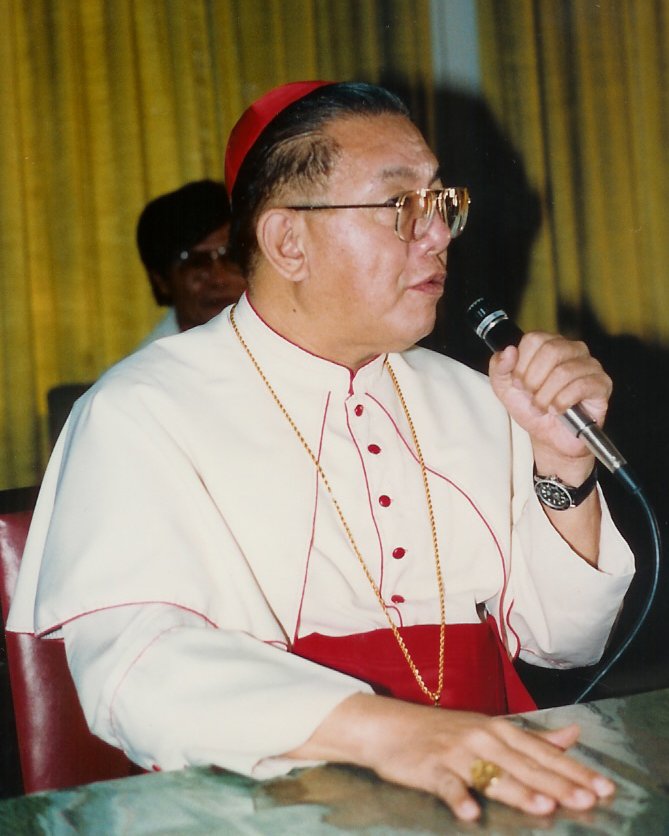
Sin studied at the San Vicente de Ferrer Seminary and was ordained on 3 April 1954. The Holy See’s biographical record traces his work as a diocesan missionary and seminary rector, his succession as Archbishop of Jaro in 1972 and his appointment as Archbishop of Manila on 21 January 1974. He became a cardinal on 24 May 1976 and chaired the Catholic Bishops’ Conference of the Philippines from 1977 to 1981.
The Manila archdiocese and Radio Veritas gave Sin an unusually visible public platform during martial law. His influence came from an institution with its own communications and social networks, but that institutional role should not eclipse the agency of opposition organisers and ordinary citizens.
The EDSA appeal and a political religious legacy
On 22 February 1986, Sin appealed through Radio Veritas for people to bring food and support to the forces around Juan Ponce Enrile and Fidel V. Ramos. The National Historical Commission’s EDSA marker records the civilian mobilisation that protected the breakaway troops over the following days. Sin helped summon support; he did not direct every participant or create the movement alone.
Sin remained a powerful public voice after 1986 and supported the 2001 mobilisation against President Joseph Estrada. His political interventions raised a lasting question: when does religious leadership protect civic freedom, and when does it wield too much influence over elected institutions?
How to place Sin within People Power
The EDSA uprising joined a disputed election, the military breakaway, opposition organisation and citizens who chose to occupy the roads around the camps. Sin’s appeal was one consequential intervention inside that larger sequence. Treating the church as the sole author of People Power would misstate the coalition recorded by the historical marker.
His career also continued after the transition. He retired as Archbishop of Manila in September 2003 and died in June 2005, leaving a legacy that is both ecclesiastical and political.
Quick answers
Frequently asked questions about Jaime Cardinal Sin
- What did Cardinal Sin do during People Power?
- He appealed through Radio Veritas for civilians to support and protect the military breakaway during the February 1986 EDSA uprising. He was an influential participant, not the sole organiser of the wider democratic movement.
- When did Jaime Sin become Archbishop of Manila?
- The Holy See records his appointment on 21 January 1974. He retired on 15 September 2003; appointment, installation and retirement are distinct events.
- When was Jaime Sin made a cardinal?
- Pope Paul VI created him a cardinal on 24 May 1976. This was a separate appointment from his earlier leadership of the Archdiocese of Manila.
- Was Cardinal Sin involved in EDSA II in 2001?
- Yes. The Philippine historical marker recognises his leadership in both the 1986 and 2001 People Power mobilisations. The two events belonged to different presidencies and political circumstances.
Keep exploring
Lives connected to this story
- Fidel V. Ramos
The security commander whose EDSA breakaway Sin asked civilians to protect.
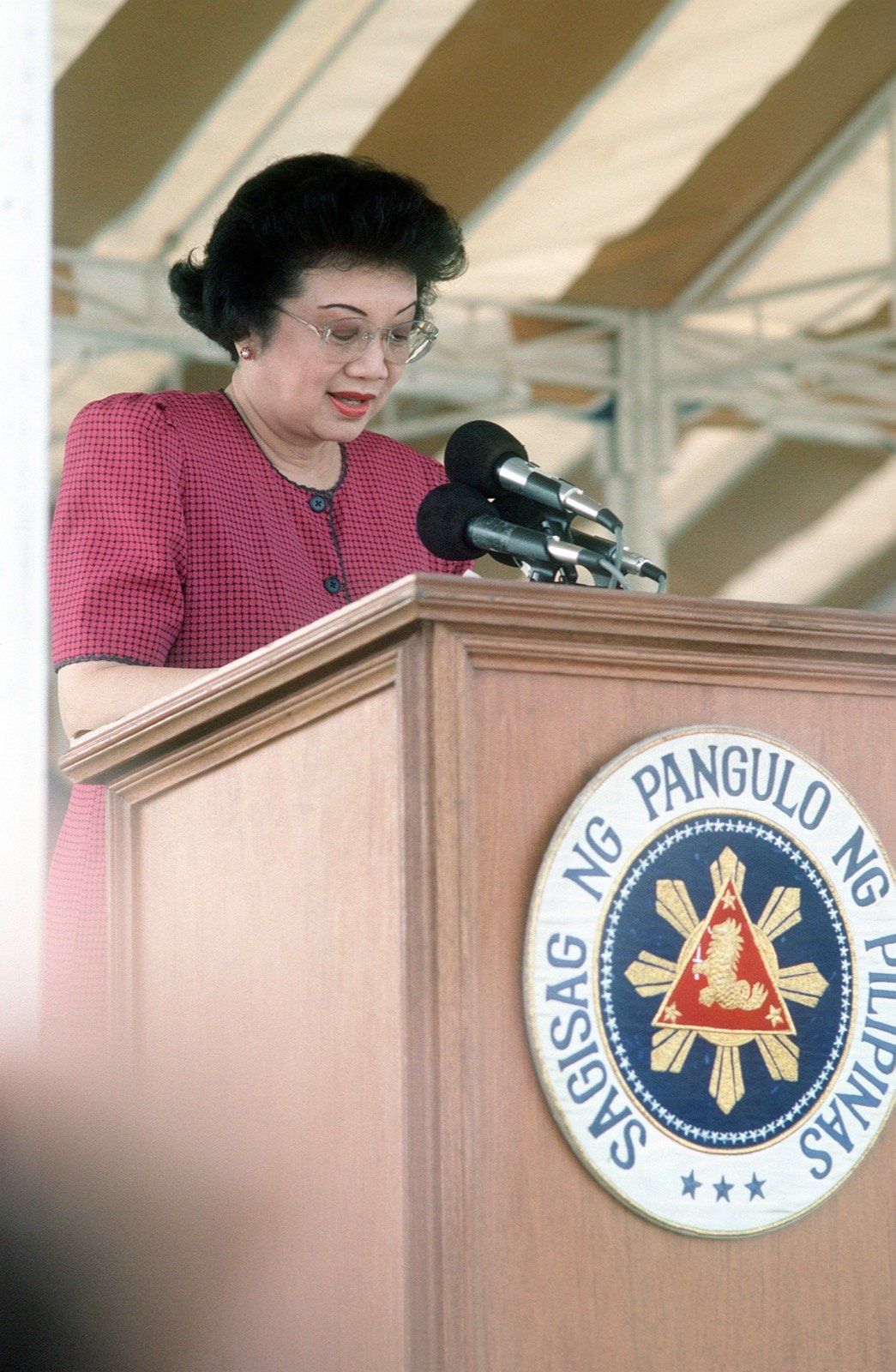
- Corazon Aquino
The opposition leader sworn in during the February 1986 uprising.
- Benigno Aquino Jr.
The assassinated senator whose death widened opposition to Marcos.
- Joseph Estrada
Distinguish the 2001 mobilisation against Estrada from the 1986 uprising against Marcos.
Sources and further reading
Explore the evidence
These references support the biography and offer further reading. Official records, first-person accounts and independent reporting provide different perspectives; image records document attribution and licensing.
- 1. National Historical Commission of the PhilippinesJaime Cardinal Sin, 1928–2005
- 2. Holy See Press OfficeCardinal Jaime L. Sin — biographical notes
The Holy See provides ecclesiastical appointments and dates; it is not an independent appraisal of Sin’s political influence.
- 3. National Historical Commission of the PhilippinesEDSA People Power historical marker
The historical marker places Sin’s appeal within the wider civilian and military sequence of People Power.
- 4. Wikimedia CommonsPortrait and licence record