
The short answer
An election after the formal lifting of martial law was not the same as a return to unrestricted democratic competition. This guide separates the candidates, boycott, official canvass and local-election referendum, and places the 1981 contest before the very different snap election of 1986.
Three records, different meanings
Do not combine the ballots and the canvass
These records concern the same electoral cycle but answer different questions.
| Record | Question or function | Relevant date |
|---|---|---|
| Presidential ballot | Choice of president | 16 June 1981 |
| National canvass and proclamation | Count certified presidential returns and proclaim the winner | Proclamation recorded for 21 June 1981 |
| Barangay referendum | Whether local elections should immediately follow | Voted 16 June; result announced 23 June 1981 |
Chronology
A timeline of the turning points
Martial law formally terminated
Proclamation No. 2045 ends formal martial law while retaining specified measures.
Election law approved
Batas Pambansa Blg. 125 sets the presidential election for 16 June.
Election and separate referendum
Presidential voting coincides with a question on the timing of barangay elections.
Marcos proclaimed elected
The Batasang Pambansa proclamation is subsequently recorded in Proclamation No. 2095.
Two distinct proclamations
Nos. 2094 and 2095 respectively announce the referendum result and declare the inauguration holiday.
The new presidential term begins
Marcos is inaugurated under the continuing constitutional framework.
When was the election, and who won?
The Philippine presidential election took place on 16 June 1981. Batas Pambansa Blg. 125, approved on 20 April, set that date and provided for a direct vote by registered voters. Incumbent Ferdinand Marcos was proclaimed the winner. The legal record distinguishes election day from the subsequent national canvass and the start of his new term.
Dates surrounding the vote can be misleading when read without their documents. Proclamation No. 2090 declared 15 June a special public holiday, but did not move voting to that day. The inauguration was on 30 June. These were preparation, voting and transfer-to-a-new-term stages within the same electoral cycle, not three competing election dates.
Martial law had formally ended, but exceptional powers remained
Marcos formally terminated martial law through Proclamation No. 2045 on 17 January 1981. The text did not simply restore the entire pre-1972 political order. It preserved specified security measures, including qualifications concerning the suspension of the privilege of the writ of habeas corpus, and maintained the validity of existing decrees unless subsequently changed.
The Library of Congress country study describes the resulting political system as only superficially liberalised. Its historical assessment and the proclamation answer different questions: one evaluates the regime, while the other records its formal legal action. Together they explain why an election after the lifting of martial law cannot automatically be described as an election free of authoritarian constraints.
Alejo Santos and the opposition boycott
Retired general Alejo Santos contested the presidency against Marcos. The National Historical Commission’s Santos marker confirms the candidacy within a longer career that included wartime resistance, provincial government and the defence portfolio. His appearance on the ballot should not be confused with an endorsement by every major opponent of Marcos.
The country study records that the main opposition groups boycotted the election. Consequently, participating candidates and the broader anti-Marcos opposition were not identical categories. Abstention was a political strategy directed against the contest’s conditions, whereas Santos chose to participate. The existence of a challenger therefore does not, by itself, settle questions about meaningful competition or demonstrate that the principal opposition had accepted the process.
How the official result was counted and recorded
Under Batas Pambansa Blg. 125, local election committees prepared returns and provincial or city boards canvassed them. Certified returns then went to the Speaker of the Batasang Pambansa for opening and counting in the assembly’s presence. COMELEC conducted and supervised the election, but the law assigned a distinct national counting and proclamation role to the parliamentary institution.
Proclamation No. 2095, issued on 23 June, states that the Batasang Pambansa proclaimed Marcos elected on 21 June with 18,309,360 votes. This is the government’s recorded vote for the winner, not a full candidate-by-candidate results table or an independent audit of electoral fairness. The proclamation also specifies 30 June as the commencement of the term.
The simultaneous referendum asked a different question
Voters also faced a referendum on whether barangay elections should be held immediately after the presidential election. That question concerned the timing of local elections. It was not a second presidential ballot and should not be presented as a direct yes-or-no vote on Marcos himself.
Proclamation No. 2094 announced the referendum result on 23 June, reporting 16,268,523 affirmative votes and 3,793,322 negative votes. It stated that the Batasang Pambansa would set the barangay-election date. Those figures belong to a separate question and cannot be added to Marcos’s presidential votes or used as the denominator for his share of the presidential vote.
Sources for this section: [5]
Why 1981 must be distinguished from the 1986 snap election
The 1981 contest returned Marcos to the presidency within the political framework he continued to dominate after formal martial law. It did not constitute the election that brought Corazon Aquino and Salvador Laurel together on the principal opposition ticket. Their 1986 campaign belongs to a later crisis, with a different field and different mobilisation.
Batas Pambansa Blg. 883 separately called a special presidential and vice-presidential election for 7 February 1986. The Supreme Court’s later Bermudez resolution recognised Aquino and Laurel as the incumbents under the new constitutional order. Readers should therefore follow the later guide through its own election and transition, rather than mistake the June 1981 proclamation for the final chapter of Marcos’s rule.
Continue the chronology
Related history guides
Martial Law in the Philippines
Understand the regime before its formal termination and the continuation of exceptional power.
Read the timelineFebruary 1986 · ElectionsThe 1986 Philippine Snap Election
Compare the later Aquino–Laurel challenge, disputed canvass and political transition.
Read the timelineConnected biographies
The incumbent and a participating challenger

1917—1989
Ferdinand Marcos
President of the Philippines, 1965–1986A president who imposed martial law, dismantled democratic checks and ruled for two decades before the 1986 People Power Revolution forced him from office.Read biography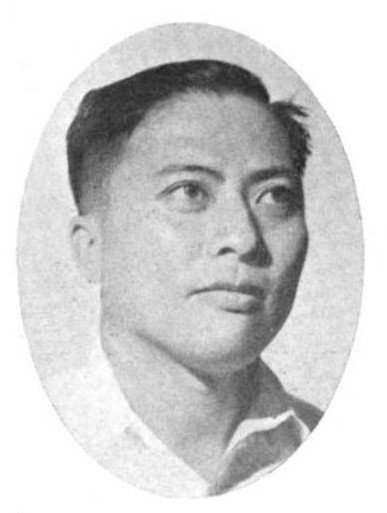
1911—1984
Alejo Santos
Guerrilla commander, governor and defence secretaryA teacher and Bataan veteran who survived the Death March, organised a large Bulacan guerrilla command and moved into postwar provincial and national government.Read biographyQuick answers
Common questions
- Who won the 1981 Philippine presidential election?
- Ferdinand Marcos was proclaimed elected. Proclamation No. 2095 records 18,309,360 votes for him and a Batasang Pambansa proclamation on 21 June 1981.
- Was the election on 15, 16 or 30 June?
- Voting was on 16 June 1981. The 15 June holiday and 30 June inauguration were separate events.
- Why did major opposition groups boycott it?
- They rejected participation in the political conditions of the Marcos system. The Library of Congress country study records the boycott and the persistence of authoritarian power after formal martial law ended.
- Was the simultaneous referendum a vote to re-elect Marcos?
- No. It asked whether barangay elections should follow the presidential election. Its yes/no votes are separate from the presidential result.
Primary and institutional sources
How this history was checked
The election law and proclamations supply legal dates, institutional procedures and government-recorded figures, not independent certification of fairness. The Library of Congress study supplies historical assessment and the opposition boycott; its indexed relevant passage was consulted, not a full PDF or visual-page review. The NHCP marker establishes Santos’s candidacy. The existing congressional portrait is not an election-day photograph. This article was reviewed on 16 October 2026.
- The LawPhil ProjectBatas Pambansa Blg. 125: election date and canvassing procedure
- The LawPhil ProjectProclamation No. 2045: formal termination of martial law and qualifications
- The LawPhil ProjectProclamation No. 2090: the separate 15 June public holiday
- The LawPhil ProjectProclamation No. 2095: parliamentary proclamation, vote and term commencement
- The LawPhil ProjectProclamation No. 2094: barangay-referendum question and official result
- Library of Congress, Federal Research DivisionPhilippines: A Country Study, edited by Ronald E. Dolan: martial-law termination and the 1981 boycott
- National Historical Commission of the PhilippinesAlejo Santos historical marker: career and 1981 candidacy
- The LawPhil ProjectBatas Pambansa Blg. 883: the separate 1986 special election
- Supreme Court of the Philippines / LawPhilIn re Bermudez, October 1986: recognition of the Aquino–Laurel incumbency
- Wikimedia CommonsCongressional portrait of Alejo Santos: existing public-domain record