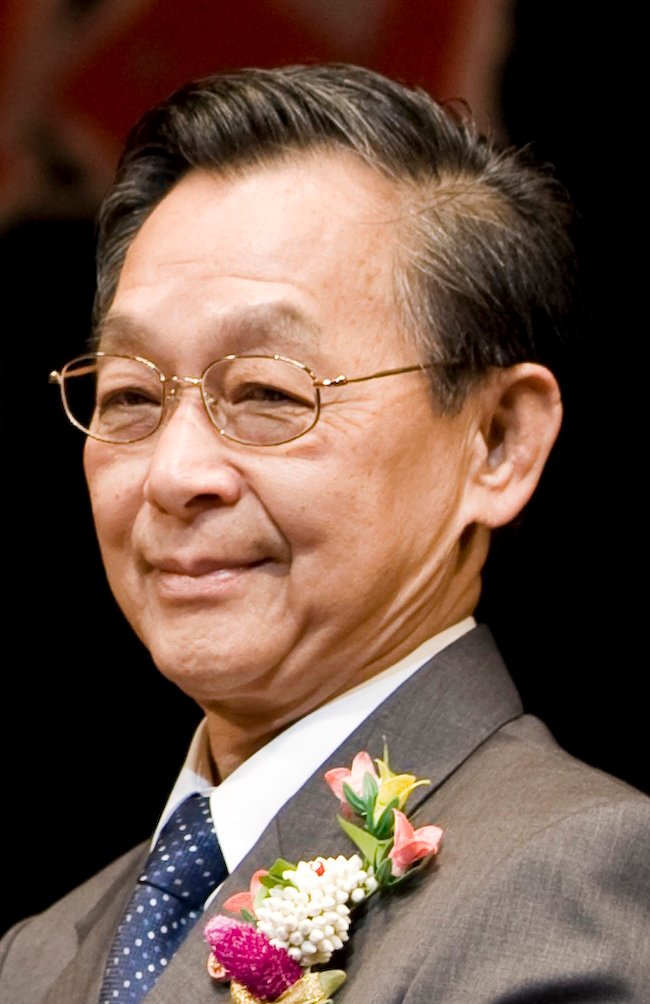
In this biography
Quick facts
- Born
- 28 July 1938
- Birthplace
- Trang, Thailand
- Country
- Thailand
- Nationality
- Thai
- Known for
- Leading two Democrat Party coalition governments and Thailand’s recovery from the 1997 financial crisis
- Office
- 20th Prime Minister, 1992–1995 and 1997–2001
- Profession
- Lawyer and parliamentarian
- Political party
- Democrat Party
- Later office
- Speaker of the House and National Assembly president, 2019–2023
Why this life matters
Chuan’s two premierships connect the post-Black May democratic opening, coalition instability, the 1997 Constitution and the difficult reconstruction of Thailand’s financial system.
Timeline
Key moments
Born in Trang
Born on 28 July in southern Thailand and raised in a family of modest means.
Completed a law degree
Graduated from Thammasat University and later qualified as a Thai barrister.
Entered the House of Representatives
Won election in Trang and began a parliamentary career spanning more than five decades.
Became prime minister after Black May
Formed a pro-democracy coalition after the Democrat Party led the September election.
Dissolved parliament after a coalition rupture
A land-reform controversy cost the government a partner and the Democrats lost the early election.
Returned during the Asian financial crisis
Built a new coalition after Chavalit Yongchaiyudh resigned amid recession and a collapsing currency.
Completed a full parliamentary term
Lost the election to Thaksin Shinawatra’s Thai Rak Thai and moved into opposition.
Presided over parliament
Returned as Speaker of the House and president of the National Assembly after the 2019 election.
A lawyer from southern Thailand
Chuan Leekpai was born in Trang on 28 July 1938. He moved to Bangkok to study law at Thammasat University, completed his degree in 1962 and qualified for the bar. The discipline of courtroom argument and a reputation for personal restraint became central to his political image.
He first entered the House of Representatives for Trang in 1969 as a Democrat. Chuan served in a wide range of cabinet posts, including justice, commerce, agriculture, education and public health, and became House speaker in the 1980s. In 1991 he took over leadership of the Democrat Party, Thailand’s oldest continuing political party.
The first government after Black May
Military-backed rule collapsed after troops killed demonstrators during the Black May crisis of 1992. Interim prime minister Anand Panyarachun oversaw constitutional changes and an election in September. The Democrat Party won the largest number of seats, and Chuan assembled a five-party coalition identified with the pro-democracy side of the contest.
His appointment marked a visible shift from generals to an elected civilian party leader. The coalition included technocrats and pursued administrative and political reform, but it had to manage divergent partners in a system still marked by patronage and factional bargaining. A dispute over land distributed under an agricultural reform programme eventually caused Palang Dharma to leave the government.
Coalition collapse and return in crisis
Chuan dissolved the House in May 1995 rather than face a no-confidence vote. The Democrats finished behind Chart Thai in the July election, ending his first premiership. He remained opposition leader while short-lived governments under Banharn Silpa-archa and Chavalit Yongchaiyudh struggled to maintain parliamentary support.
The baht was floated in July 1997, exposing financial-sector weakness and setting off a deep regional crisis. As recession, closures and unemployment intensified, Chavalit resigned. Chuan assembled a new coalition in November and also took the defence portfolio, returning to office under the reform framework of the new 1997 Constitution.
Financial restructuring and social costs
Chuan’s second government continued the IMF-supported programme, closed failed finance companies, intervened in insolvent banks and tightened regulation. It also negotiated revisions that allowed greater fiscal support as the downturn proved deeper than first expected. Reserves recovered, the baht stabilised and output returned to growth by late 1998.
Recovery did not erase the crisis’s social cost. Firms failed, household incomes fell and public criticism focused on austerity, foreign influence and the distribution of losses. Chuan’s government expanded social spending and safety-net measures while defending institutional reform as necessary to rebuild confidence. The programme left a stronger regulatory structure but also opened political space for a more direct, expansionary alternative.
Defeat by Thai Rak Thai and parliamentary elder
The January 2001 election was the first held under the 1997 Constitution. Thai Rak Thai promised village funds, debt relief and universal health coverage, while Chuan campaigned on recovery and fiscal discipline. Thaksin Shinawatra’s party won 248 seats against 128 for the Democrats, ending Chuan’s second government after a full parliamentary term.
Chuan later led the opposition and remained an influential Democrat elder. After the 2019 election, the House chose him as speaker and he served as president of the National Assembly until 2023. His career is unusually long even by Thai standards: it stretches from the military-dominated parliament of the late 1960s through the 1992 democratic transition, the financial crisis and the post-2014 constitutional order.
Quick answers
Frequently asked questions about Chuan Leekpai
- Who is Chuan Leekpai?
- Chuan Leekpai is the 20th Prime Minister of Thailand, 1992–1995 and 1997–2001. Chuan’s two premierships connect the post-Black May democratic opening, coalition instability, the 1997 Constitution and the difficult reconstruction of Thailand’s financial system.
- What is Chuan Leekpai best known for?
- Chuan Leekpai is best known for leading two Democrat Party coalition governments and Thailand’s recovery from the 1997 financial crisis.
- When and where was Chuan Leekpai born?
- Chuan Leekpai was born on 28 July 1938 in Trang, Thailand.
Sources and further reading
How this biography was checked
Core dates and offices are checked against the sources below. This profile was last reviewed on 3 October 2026.
- Secretariat of the Prime Minister of ThailandDirectory of Prime Ministers of Thailand
- National Assembly of ThailandBiographical data: Chuan Leekpai
- Inter-Parliamentary UnionThailand House election, September 1992
- Inter-Parliamentary UnionThailand House election, July 1995
- Inter-Parliamentary UnionThailand House election, January 2001
- International Monetary FundRecovery from the Asian Crisis and the Role of the IMF
- Inter-Parliamentary UnionThailand House of Representatives: speaker record
- Wikimedia CommonsPortrait and licence record