
The short answer
Thailand voted on 2 April 2006 after Thaksin Shinawatra called a snap election and the three main opposition parties boycotted it. Thai Rak Thai retained mass support, but uncontested-seat rules left the House incomplete. The Constitutional Court annulled the poll over election-management failures and ordered a rerun that the September military coup prevented.
Chronology
A timeline of the turning points
The Shinawatra family sells Shin Corp
The transaction intensified allegations of conflicts of interest and expanded anti-government demonstrations.
Thaksin dissolves the House
A snap election was set for 2 April, thirty-seven days after dissolution.
Three opposition parties announce a boycott
The Democrats, Chart Thai and Mahachon declined to field candidates and called for political reform before an election.
Voting produces an incomplete House
Thai Rak Thai dominated, but some unopposed candidates failed to reach the twenty-percent threshold required in their constituencies.
Thaksin says he will step aside
He remained caretaker prime minister while saying he would not lead the next government.
King Bhumibol addresses the courts
The king rejected calls for a royally appointed prime minister and urged judges to resolve the constitutional impasse.
The Constitutional Court annuls the election
Ruling 9/2549 found the election process unconstitutional, including an unfairly compressed timetable and violations of ballot secrecy.
Election commissioners are convicted
A criminal court jailed three commissioners for misconduct connected to the failed poll and by-elections.
A replacement election is scheduled
The vote never occurred because the armed forces seized power on 19 September.
Why did Thaksin call an early election?
Thai Rak Thai held 377 of 500 House seats after its 2005 landslide, but parliamentary strength did not prevent a rapidly growing legitimacy crisis. Protests led by the People’s Alliance for Democracy accused Prime Minister Thaksin Shinawatra of conflicts of interest, media pressure, corruption and disrespect for independent institutions. The January 2006 sale of the Shinawatra family’s Shin Corp holdings to Temasek became the immediate rallying issue.
Thaksin dissolved the House on 24 February and sought a renewed mandate. The strategy relied on a political fact: his party remained electorally strong, especially in the north and northeast. The compressed thirty-seven-day campaign was constitutionally possible only because dissolution triggered a short election deadline, but it left little time for negotiation over opposition demands or for parties to prepare candidates.
Why did the main opposition parties boycott the vote?
The Democrat, Chart Thai and Mahachon parties argued that participating would legitimise a contest called to protect the government rather than resolve allegations against it. They demanded constitutional and political reforms before another vote. The boycott denied voters a normal competition between government and opposition, but it was a strategic choice by those parties rather than a cancellation of the electorate’s right to vote.
Thailand’s 1997 Constitution created a practical problem for uncontested districts. A sole candidate needed votes from at least twenty percent of registered electors. In several southern constituencies, where the Democrats were strongest, Thai Rak Thai candidates failed to clear that threshold. Repeated by-elections could not complete the required 500-member House, preventing parliament from convening normally.
What did the 2 April result actually show?
Thai Rak Thai received about 16.4 million party-list votes, or 56.45 percent of valid votes recorded in the Human Rights Watch account. That was substantial electoral support, but the absence of the main opposition parties meant the figure could not be read as an ordinary competitive victory. Large numbers of voters also selected the no-vote option, particularly in Bangkok and the south.
The result therefore contained two truths at once. Thaksin retained millions of supporters and could not plausibly be described as electorally irrelevant. Yet the ballot did not produce a complete, functioning House or a broadly accepted route to government. Thaksin announced that he would step aside from the next premiership, then remained head of the caretaker administration while the legal crisis continued.
Why did the Constitutional Court annul the election?
In Ruling 9/2549 on 8 May, the Constitutional Court held that the Election Commission’s management of the poll was inconsistent with constitutional requirements for a fair election. The judgment treated the unusually short timetable as contributing to an unfair process and found that the placement of voting booths exposed marked ballots to election officials and observers, violating the requirement of secret voting.
The Court ordered a new election rather than transferring power to an unelected government. Its ruling is important because the poll was not annulled simply because opposition parties stayed away or because Thai Rak Thai won. The legal basis concerned the Election Commission’s procedures and the constitutional quality of the vote. A later criminal case removed three commissioners after convictions for misconduct.
Did the king appoint a replacement prime minister?
No. Some protesters invoked constitutional provisions concerning royal prerogative and requested an appointed premier. In speeches to senior judges on 26 April, King Bhumibol rejected the idea that he could simply appoint a prime minister under article 7 and described such a course as undemocratic. He instead asked the courts to perform their constitutional duties.
The distinction matters because later accounts sometimes compress royal speeches, judicial action and the military takeover into one process. The Court did annul the election, but the judgment envisaged another vote. A new polling date was eventually fixed for 15 October; it was the September coup, not the annulment itself, that prevented voters from returning to the polls under the 1997 Constitution.
How did the failed election lead into the coup?
The caretaker government, opposition movement, Election Commission and courts remained locked in conflict through the middle of 2006. Thaksin resumed active duties after briefly stepping aside, while the replacement election was repeatedly delayed. The absence of a newly elected House created vulnerability, but constitutional deadlock did not give the armed forces a lawful mandate to abolish the political order.
On 19 September, tanks entered Bangkok while Thaksin was attending the United Nations General Assembly. The coup cancelled the October election, repealed the 1997 Constitution and installed an appointed transition. The annulled election therefore belongs between the 2005 landslide and the military takeover: it explains the institutional opening the coup exploited without treating military intervention as an inevitable or legal solution.
Continue the chronology
Related history guides
The 2005 Thai General Election
Begin with Thai Rak Thai’s 377-seat majority and Thaksin’s second mandate.
Read the timeline19 September 2006The 2006 Thai Coup
Continue to the military takeover that cancelled the replacement election.
Read the timeline19–24 August 2007The 2007 Constitution and Referendum
See how the post-coup charter redesigned the House, Senate and oversight institutions.
Read the timeline23 December 2007The 2007 Thai General Election
Follow the first completed House election after the coup.
Read the timelineConnected biographies
Six biographies connecting the boycott, judicial intervention and military takeover
 Thailand · Politics
1949—
Thaksin Shinawatra
Businessman and former prime ministerA telecommunications entrepreneur who became prime minister in 2001, transformed Thai electoral politics and remained influential through two decades of conflict.Read biography Thailand · Politics
1964—
Abhisit Vejjajiva
27th Prime Minister of Thailand, 2008–2011The Oxford-educated Democrat leader who became prime minister through a parliamentary coalition, launched crisis stimulus and governed during Thailand’s 2010 protest violence.Read biography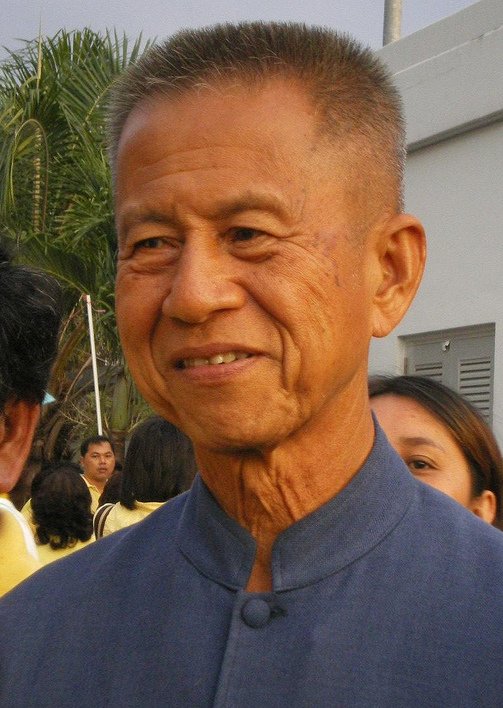 Thailand · Politics
1935—
Chamlong Srimuang
Former Bangkok governor, party leader and democracy activistThe former general and Bangkok governor whose austere public-service image, Palang Dharma movement and Black May leadership made him a major democratic campaigner.Read biography Thailand · Politics
1927—2016
Bhumibol Adulyadej
King of Thailand, 1946–2016Thailand’s longest-reigning monarch, whose seven decades on the throne spanned rapid development, repeated political crises and profound social change.Read biography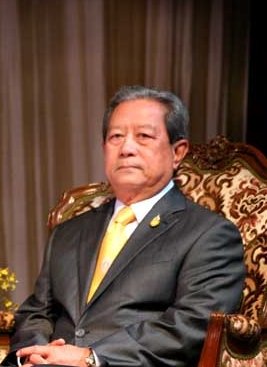 Thailand · Politics
1943—
Surayud Chulanont
24th Prime Minister of Thailand, 2006–2008The former army commander and privy councillor appointed prime minister after the 2006 coup, who oversaw a new constitution and Thailand’s return to elected government.Read biography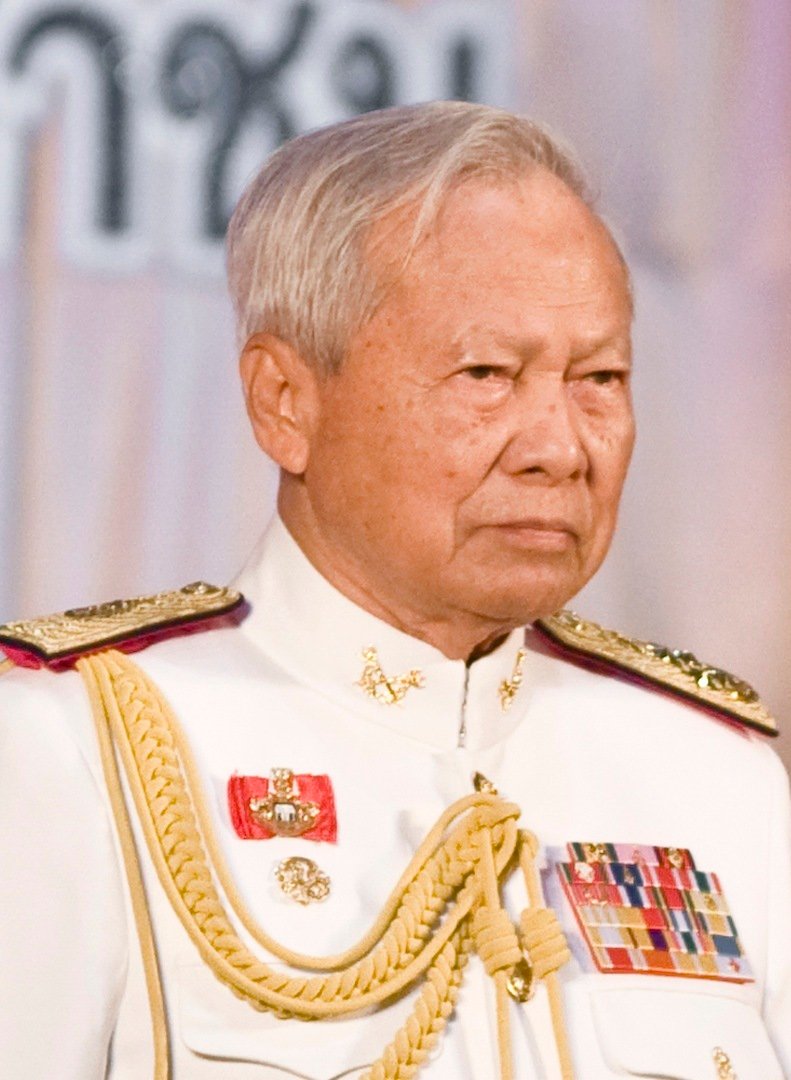 Thailand · Politics
1920—2019
Prem Tinsulanonda
16th Prime Minister of Thailand, 1980–1988The army commander who led Thailand through eight years of parliamentary coalition government before becoming a long-serving royal adviser and regent.Read biographyQuick answers
Common questions
- When was Thailand’s annulled 2006 election?
- Voting took place on 2 April 2006 after Prime Minister Thaksin Shinawatra dissolved the House on 24 February.
- Why did opposition parties boycott the 2006 election?
- The Democrats, Chart Thai and Mahachon argued that political and constitutional reforms should precede another election and refused to field candidates.
- Why could the new House not convene?
- Some unopposed candidates failed to win votes from twenty percent of registered electors, so repeated polling did not fill all 500 seats required under the 1997 Constitution.
- Why was the election annulled?
- The Constitutional Court found the Election Commission’s process unconstitutional, citing the compressed timetable and polling-booth arrangements that violated ballot secrecy.
- Was another election scheduled?
- Yes. A replacement vote was scheduled for 15 October 2006, but the military coup on 19 September prevented it from taking place.
Primary and institutional sources
How this history was checked
Dates, legal milestones and historical claims are checked against the official and institutional records below. This article was reviewed on 3 October 2026.
- Constitutional Court of ThailandSummary of Constitutional Court Ruling No. 9/2549
- Inter-Parliamentary UnionThailand House election, December 2007 — background to the 2006 poll
- U.S. Department of StateThailand country report on human rights practices, 2006
- Human Rights WatchDescent into Chaos — political background to the 2010 crisis
- ConstitutionNet · International IDEAConstitutional history of Thailand
- Wikimedia CommonsThaksin Shinawatra portrait and public-domain record