The short answer
The Philippines officially counts seventeen presidents, beginning with Emilio Aguinaldo’s First Republic and continuing through Ferdinand R. Marcos Jr. The sequence is not a simple uninterrupted line: no national presidency existed under U.S. colonial rule from 1901 to 1935, and José P. Laurel’s occupation-era government overlapped the Commonwealth led in exile by Manuel Quezon and Sergio Osmeña. The table below preserves those distinctions while recording every term and route to office.
Complete presidential sequence
Every Philippine president in order
Term dates follow the recognised constitutional sequence. Laurel’s wartime presidency overlaps Quezon and Osmeña because two rival governments operated during the Japanese occupation.
| President | Term | Route to office | Era or transition |
|---|---|---|---|
| 1 · Emilio Aguinaldo | 23 Jan 1899–23 Mar 1901 | Elected by the Malolos Congress | First Philippine Republic; captured during the Philippine–American War |
| 2 · Manuel L. Quezon | 15 Nov 1935–1 Aug 1944 | Won the 1935 Commonwealth election | First Commonwealth president; led the government in exile and died in office |
| 3 · José P. Laurel | 14 Oct 1943–17 Aug 1945 | Elected by the wartime National Assembly | Japanese-sponsored Second Republic; overlapped the Commonwealth government in exile |
| 4 · Sergio Osmeña | 1 Aug 1944–28 May 1946 | Succeeded Quezon as vice president | Led the Commonwealth through liberation and lost the 1946 election |
| 5 · Manuel Roxas | 28 May 1946–15 Apr 1948 | Won the 1946 election | Last Commonwealth president and first president of the independent Third Republic; died in office |
| 6 · Elpidio Quirino | 17 Apr 1948–30 Dec 1953 | Succeeded Roxas, then won in 1949 | Completed the interrupted term and then served an elected term |
| 7 · Ramon Magsaysay | 30 Dec 1953–17 Mar 1957 | Won the 1953 election | Third Republic president; died in a plane crash |
| 8 · Carlos P. Garcia | 18 Mar 1957–30 Dec 1961 | Succeeded Magsaysay, then won in 1957 | Completed the interrupted term and won his own mandate |
| 9 · Diosdado Macapagal | 30 Dec 1961–30 Dec 1965 | Won the 1961 election | Former opposition vice president who defeated the incumbent Garcia |
| 10 · Ferdinand E. Marcos | 30 Dec 1965–25 Feb 1986 | Won in 1965 and 1969; retained power under martial law | The longest presidency; authoritarian constitutional rule ended during People Power |
| 11 · Corazon C. Aquino | 25 Feb 1986–30 Jun 1992 | Assumed office after the disputed snap election and People Power | First woman president; transitional government followed by the 1987 Constitution |
| 12 · Fidel V. Ramos | 30 Jun 1992–30 Jun 1998 | Won the 1992 election | First president elected under the 1987 Constitution |
| 13 · Joseph E. Estrada | 30 Jun 1998–20 Jan 2001 | Won the 1998 election | Left office during EDSA II; the Supreme Court upheld Arroyo’s succession |
| 14 · Gloria Macapagal Arroyo | 20 Jan 2001–30 Jun 2010 | Succeeded Estrada, then won in 2004 | Second woman president and fourth vice president to succeed mid-term |
| 15 · Benigno S. Aquino III | 30 Jun 2010–30 Jun 2016 | Won the 2010 election | Completed one six-year constitutional term |
| 16 · Rodrigo R. Duterte | 30 Jun 2016–30 Jun 2022 | Won the 2016 election | First president from Mindanao; completed one six-year term |
| 17 · Ferdinand R. Marcos Jr. | 30 Jun 2022–present | Won the 2022 election | Current president; sworn in as the seventeenth president |
Chronology
A timeline of the turning points
Aguinaldo becomes the first president
The Malolos Constitution took effect and the First Philippine Republic inaugurated Emilio Aguinaldo as president.
No national Philippine presidency
Aguinaldo’s capture ended his presidency. U.S. colonial institutions governed the islands until the Commonwealth began.
Quezon inaugurates the Commonwealth presidency
A nationwide election installed Manuel L. Quezon and Vice President Sergio Osmeña under the 1935 Constitution.
Two presidential governments overlap in wartime
José P. Laurel headed the Japanese-sponsored Second Republic while Quezon and then Osmeña led the de jure Commonwealth government.
Osmeña succeeds after Quezon’s death
The vice president took the presidential oath in Washington and later returned with the Commonwealth government during liberation.
Roxas crosses from Commonwealth to independence
Already president after winning the 1946 election, Roxas became the first president of the independent Third Republic.
Quirino assumes office after Roxas’s death
Vice President Elpidio Quirino succeeded and later won a full term in the 1949 election.
Garcia succeeds Magsaysay
Magsaysay died in a plane crash and Vice President Carlos P. Garcia took office before winning the election later that year.
Ferdinand Marcos begins a two-decade presidency
Marcos defeated Macapagal, won reelection in 1969 and later replaced the earlier constitutional order under martial law.
Martial law transforms presidential rule
Marcos signed Proclamation No. 1081 on 21 September and announced martial law two days later, closing the democratic system built under the 1935 charter.
People Power ends Marcos rule
Corazon Aquino took office after the disputed snap election, mass mobilisation and the departure of Ferdinand Marcos.
The current Constitution takes effect
The ratified charter restored a presidential republic and limited future presidents to one six-year term without reelection.
Ramos begins the first regular post-1987 term
Fidel V. Ramos became the first president elected under the current Constitution and completed a peaceful transfer from Aquino.
Arroyo succeeds Estrada during EDSA II
Vice President Gloria Macapagal Arroyo took the oath; the Supreme Court later ruled that Estrada had effectively resigned.
Marcos Jr. becomes the seventeenth president
Ferdinand R. Marcos Jr. was sworn in after winning the 2022 election and remains the incumbent as of this guide’s review.
Why does the official list contain seventeen presidents?
Philippine presidential institutions recognise Emilio Aguinaldo as the first president and Ferdinand R. Marcos Jr. as the seventeenth. The sequence links several different constitutional governments rather than treating the modern office as one uninterrupted institution beginning in 1935.
The count includes José P. Laurel, whose Japanese-sponsored Second Republic operated during occupation. It does not insert U.S. governors-general between Aguinaldo and Quezon because they administered a colonial government rather than holding the national office of Philippine president.
Why is there a gap between Aguinaldo and Quezon?
Aguinaldo’s First Republic lasted from 1899 until his capture in March 1901 during the Philippine–American War. For the next thirty-four years, the archipelago was governed through U.S. colonial institutions created by American organic laws.
The presidency returned when the 1935 Constitution established the Commonwealth of the Philippines. Manuel L. Quezon won the first nationwide Commonwealth presidential election and entered office on 15 November 1935.
Why do Quezon, Osmeña and Laurel have overlapping terms?
Japanese occupation produced two rival governments. Laurel became president of the Japanese-sponsored Second Republic in Manila, while Quezon continued to lead the internationally recognised Commonwealth government in exile. Osmeña succeeded Quezon when Quezon died in August 1944.
The Supreme Court later described this as a period with two presidents because there were two governments: Laurel’s de facto occupation government and the de jure Commonwealth. A simple non-overlapping timeline would erase that constitutional and wartime reality.
How did the Commonwealth become an independent republic?
The 1935 Constitution was designed to continue after sovereignty transferred. Roxas defeated Osmeña in the April 1946 election, became the final Commonwealth president on 28 May and remained in office when the independent Republic of the Philippines was inaugurated on 4 July.
That continuity explains why Roxas is not counted twice. One person and one presidential term crossed the legal boundary from Commonwealth government to the Third Republic.
Which vice presidents succeeded to the presidency?
Four vice presidents moved directly into the presidency after a vacancy: Sergio Osmeña after Quezon died, Elpidio Quirino after Roxas died, Carlos P. Garcia after Magsaysay died and Gloria Macapagal Arroyo after Joseph Estrada left office.
Diosdado Macapagal and Joseph Estrada also served as vice president before becoming president, but both reached the higher office by winning later national elections. In total, six Philippine presidents had previously held the vice presidency.
How did martial law change the presidency?
Ferdinand Marcos won the 1965 and 1969 elections under the 1935 Constitution. Martial law, announced in September 1972, suppressed Congress and opposition while the contested ratification of the 1973 Constitution remade the formal structure of government.
Marcos remained in power until February 1986, far beyond the earlier two-term ceiling. His presidency is therefore both the longest in Philippine history and the central break between the pre-martial-law republic and the post-People Power constitutional order.
How does the presidency work under the 1987 Constitution?
Article VII provides for direct election to a six-year term beginning at noon on 30 June. A person elected president cannot be reelected, while someone who succeeds to the office and serves more than four years cannot later be elected president.
Aquino governed during the democratic transition and remained through June 1992 under the charter’s transitory provisions. Ramos then began the first regularly elected six-year term under the present system. Ferdinand R. Marcos Jr., inaugurated on 30 June 2022, is the current president as of 3 October 2026.
Continue the chronology
Related history guides
The First Philippine Republic
Read how Malolos created the constitutional state behind Aguinaldo’s presidency.
Read the timeline4 July 1946Philippine Independence
Follow the transfer from Commonwealth government to the independent Third Republic.
Read the timeline22–25 February 1986The People Power Revolution
Trace the mobilisation that ended Marcos rule and brought Corazon Aquino to office.
Read the timeline1935–presentVice Presidents of the Philippines
Compare presidential succession, split-ticket elections and periods when the second office was vacant.
Read the timelineBiography context
Explore Philippines through connected lives
Philippine Presidents: Life by Life
Open the complete archive of seventeen sourced presidential biographies.
Explore the biographiesCountry archiveExplore the Philippines
Move from the presidency to political, business, sporting and cultural biographies.
Explore the biographiesElection collectionPhilippine Presidential Elections, 1965–2022
Connect the later presidents to the campaigns and national votes that brought them to office.
Explore the biographiesConnected biographies
Seven presidents at constitutional turning points
 Philippines · Politics
1869—1964
Emilio Aguinaldo
Revolutionary leader and first president of the PhilippinesA revolutionary commander who declared independence from Spain and became president of the First Philippine Republic.Read biography Philippines · Politics
1878—1944
Manuel L. Quezon
President of the Commonwealth of the PhilippinesThe statesman who secured Commonwealth status, became its first president and led the Philippine government in exile during the Second World War.Read biography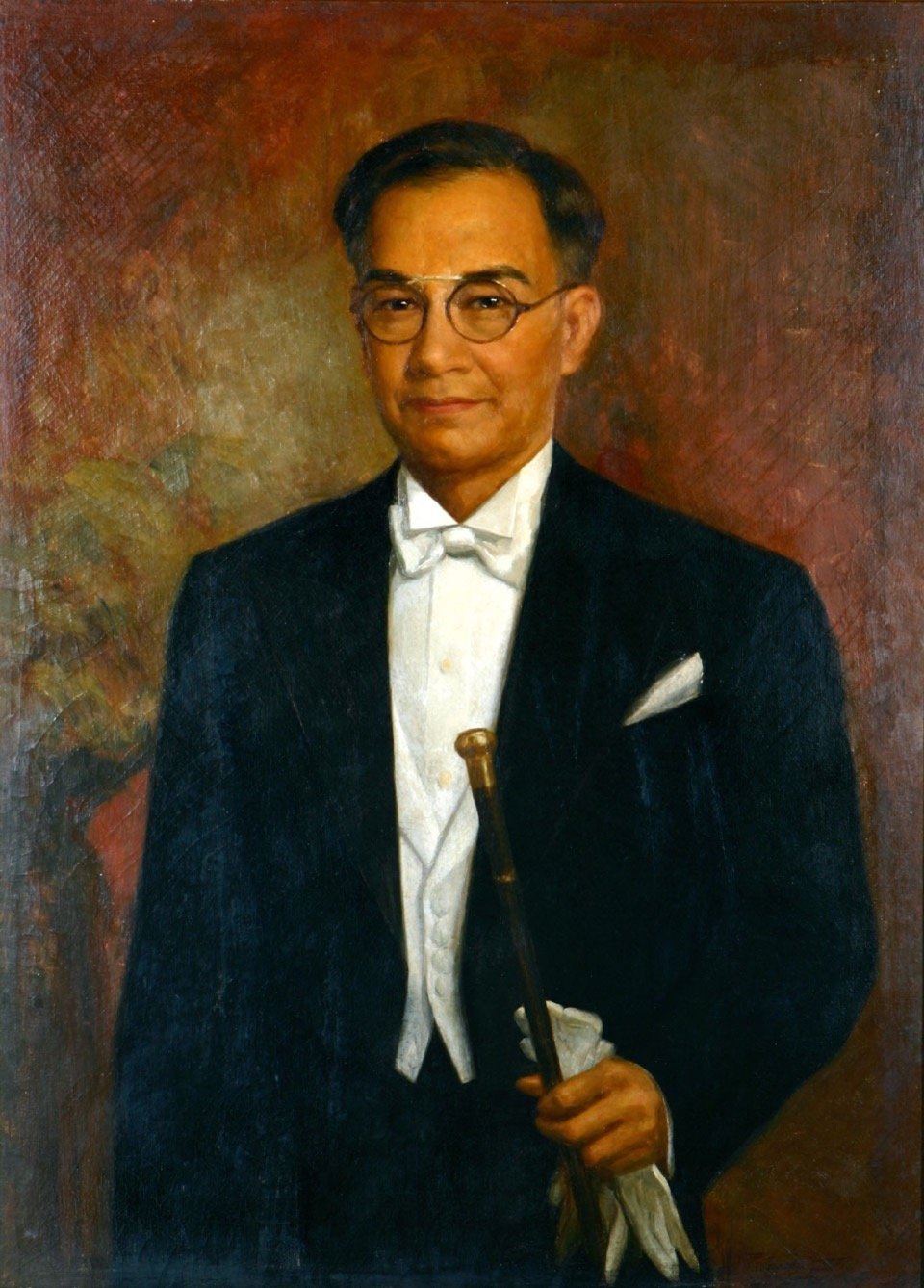 Philippines · Politics
1891—1959
José P. Laurel
President of the Japanese-sponsored Second Philippine RepublicA jurist and politician who led the Japanese-sponsored Second Philippine Republic during occupation and later returned to elected office.Read biography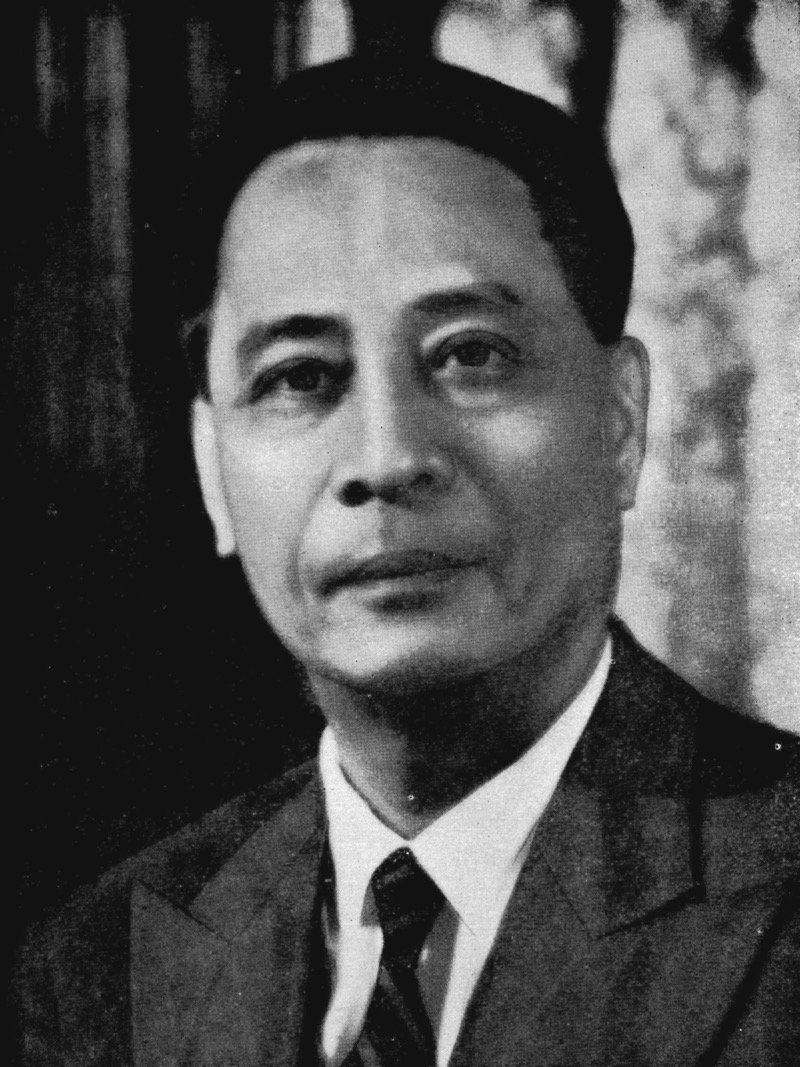 Philippines · Politics
1892—1948
Manuel Roxas
Last Commonwealth president and first president of the independent Third RepublicThe final Commonwealth president who became the first leader of the independent Third Republic and confronted postwar reconstruction.Read biography Philippines · Politics
1917—1989
Ferdinand Marcos
President of the Philippines, 1965–1986A president who imposed martial law, dismantled democratic checks and ruled for two decades before the 1986 People Power Revolution forced him from office.Read biography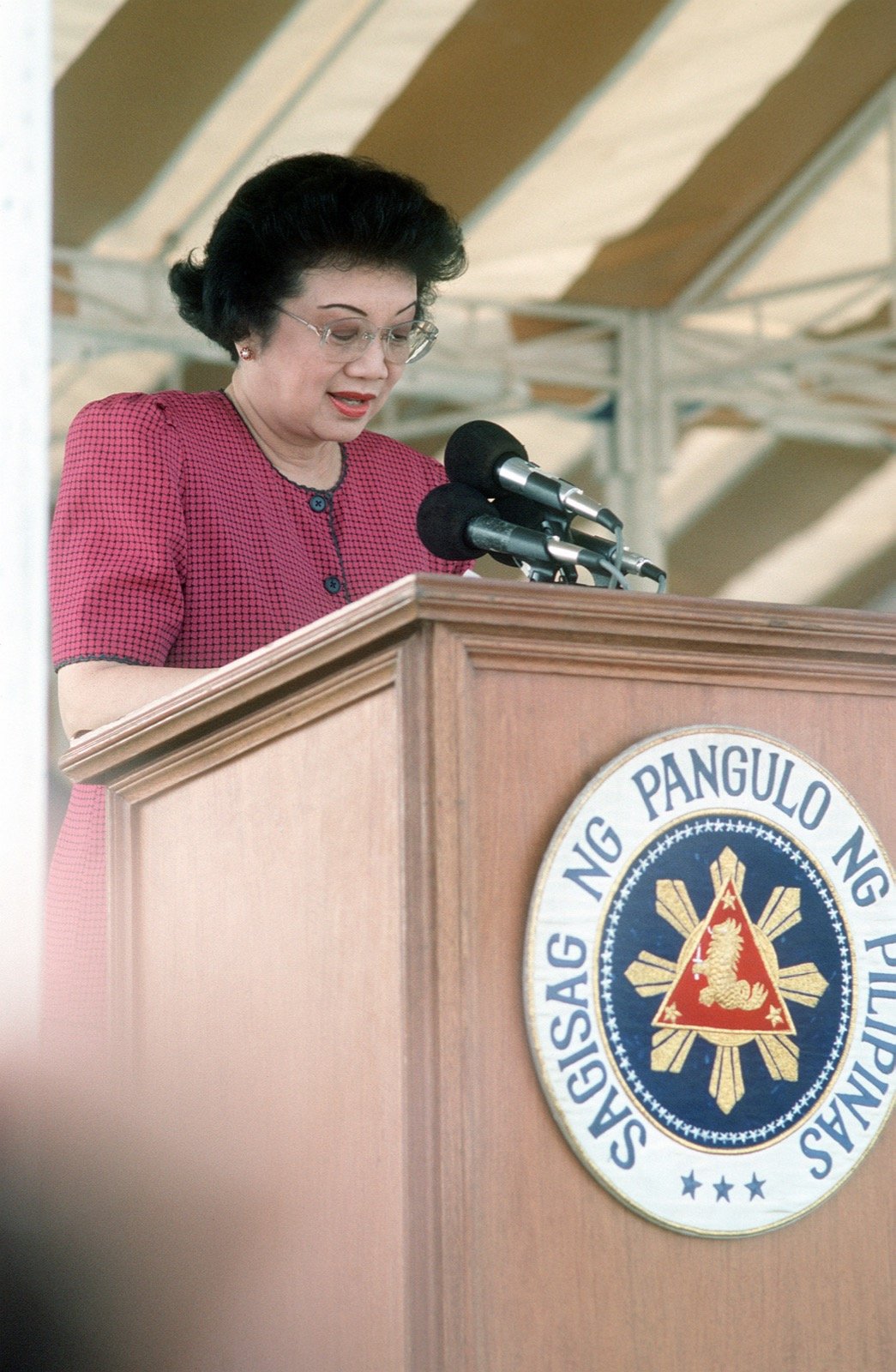 Philippines · Politics
1933—2009
Corazon Aquino
President of the Philippines, 1986–1992The opposition leader who became president after People Power and restored constitutional government following the Marcos dictatorship.Read biography Philippines · Politics
1957—
Ferdinand Marcos Jr.
President of the Philippines since 2022The son and namesake of Ferdinand Marcos who won the 2022 election and became the seventeenth president of the Philippines.Read biographyQuick answers
Common questions
- Who is the current president of the Philippines?
- Ferdinand R. Marcos Jr. is the current president. He was sworn in as the seventeenth president on 30 June 2022. This answer was reviewed on 3 October 2026.
- Who was the first president of the Philippines?
- Emilio Aguinaldo is officially recognised as the first president. The First Philippine Republic inaugurated him under the Malolos Constitution on 23 January 1899.
- How many presidents has the Philippines had?
- The official sequence contains seventeen presidents, from Emilio Aguinaldo to Ferdinand R. Marcos Jr.
- Who was the first woman president of the Philippines?
- Corazon C. Aquino became the first woman president on 25 February 1986. Gloria Macapagal Arroyo became the second in 2001.
- Who was the longest-serving Philippine president?
- Ferdinand E. Marcos served from 30 December 1965 until 25 February 1986, making his presidency the longest in Philippine history.
- Why is José P. Laurel included in the official list?
- Laurel led the Japanese-sponsored Second Republic during occupation and is included in the official presidential sequence. His term overlapped the de jure Commonwealth government in exile.
- Why are there overlapping presidential terms during World War II?
- Two governments operated at the same time: Laurel’s de facto occupation government in the Philippines and the de jure Commonwealth government led by Quezon and then Osmeña.
- Which Philippine presidents previously served as vice president?
- Six presidents had been vice president: Sergio Osmeña, Elpidio Quirino, Carlos P. Garcia, Diosdado Macapagal, Joseph Estrada and Gloria Macapagal Arroyo.
- How long is a Philippine presidential term today?
- The 1987 Constitution sets one six-year term for an elected president, beginning and ending at noon on 30 June. An elected president cannot run for reelection.
- Which presidents belong to parent–child presidential families?
- Three parent–child pairs have held the presidency: Diosdado Macapagal and Gloria Macapagal Arroyo; Corazon Aquino and Benigno Aquino III; and Ferdinand Marcos and Ferdinand Marcos Jr.
Primary and institutional sources
How this history was checked
The official presidential museum establishes the recognised sequence; constitutional texts, historical records, a Senate resolution, the 2022 canvass and Supreme Court decisions verify changes of regime, succession and the wartime overlap. This article was reviewed on 3 October 2026.
- Malacañang Heritage Mansions Management CenterTeus Mansion — Past Philippine Presidents
- Official Gazette of the Republic of the PhilippinesConstitution Day — evolution of the Philippine Constitution
- National Historical Commission of the PhilippinesEmilio Aguinaldo y Famy — historical marker record
- The LawPhil Project1935 Constitution of the Philippines
- The LawPhil Project1943 Constitution of the Philippines
- The LawPhil Project1987 Constitution — executive department and transitory provisions
- Senate of the PhilippinesResolution honouring Elpidio Quirino — succession and 1949 election
- Supreme Court of the Philippines via LawPhilEstrada v. Desierto — wartime overlap and the 2001 succession
- Congress of the Philippines via Senate archiveOfficial 2022 presidential and vice-presidential canvass
- Presidential Communications OfficeInauguration of Ferdinand R. Marcos Jr. as seventeenth president
- Presidential Communications OfficeFifth State of the Nation Address and current presidential term