The short answer
The First Philippine Republic was inaugurated at Malolos on 23 January 1899 under a constitution declaring sovereignty to reside in the people. It built a national government while facing an international dispute over sovereignty and a war it could not survive as a central state.
Chronology
A timeline of the turning points
Independence is proclaimed at Kawit
Emilio Aguinaldo proclaimed Philippine independence from Spain. The declaration established a national claim but did not secure international recognition or settle how the new state would be governed.
The Malolos Congress opens
Representatives assembled at Barasoain Church in Malolos. Congress reviewed the declaration of independence, passed laws and debated a constitutional framework for representative government.
Spain cedes the Philippines to the United States
The Treaty of Paris ended the Spanish-American War and transferred Spain’s claim over the islands to the United States. Filipino representatives were not parties to the treaty.
The Malolos Constitution is promulgated
Aguinaldo sanctioned the constitution drafted and approved by the congress. It described a free and independent republic with legislative, executive and judicial powers.
The republic is inaugurated
The constitutional government was inaugurated at Malolos, with Aguinaldo as president. It is widely remembered as the First Philippine Republic or Malolos Republic.
War begins around Manila
Fighting between Filipino and American forces expanded into the Philippine-American War, placing the new republic under immediate and sustained military pressure.
The government shifts to guerrilla war
With conventional defence collapsing, Aguinaldo dissolved the regular army structure and continued resistance through regional guerrilla commands while the government moved north.
Aguinaldo is captured at Palanan
American forces captured Aguinaldo in Isabela. His capture disrupted the republic’s central leadership, although armed resistance continued in several regions.
Aguinaldo swears allegiance to the United States
The oath is commonly treated as the effective end of the First Republic. The wider war continued until 1902, and resistance persisted beyond the official end of hostilities.
What was the First Philippine Republic?
The First Philippine Republic was the constitutional government inaugurated at Malolos on 23 January 1899 during the struggle for independence. It grew from the revolutionary government formed after the 1896 uprising and the declaration of independence in June 1898. The name “Malolos Republic” reflects the town where its congress met, constitution was completed and national government first operated.
It is usually dated from 1899 to 1901, although its political foundations began in 1898 and Filipino resistance continued after Aguinaldo’s capture. Calling it a republic matters: its leaders were not simply commanding an army. They attempted to create laws, departments, diplomacy, public finance and representative institutions while sovereignty remained contested by war.
Malolos Congress and the 1899 Constitution
The Malolos Congress brought together representatives from many provinces, some elected and others appointed because wartime conditions made elections difficult. It ratified the independence declaration and debated the relationship between the executive and legislature. Apolinario Mabini, Aguinaldo’s principal adviser, favoured a structure capable of surviving war, while congressional leaders pressed for stronger legislative authority.
The constitution declared sovereignty to reside in the people and separated legislative, executive and judicial powers. It recognised civil liberties, religious equality and a representative government. Its promises were constrained by war and by uneven control of territory, but the text remains evidence that Filipino revolutionaries were developing a constitutional state rather than waiting for colonial government to define one for them.
A republic born into an international conflict
The republic confronted a fundamental diplomatic problem. Spain ceded the Philippines to the United States in the Treaty of Paris, while the Filipino government asserted that independence had already been declared and exercised. Major powers did not formally recognise the new republic. The dispute over sovereignty moved quickly from diplomacy to armed conflict in February 1899.
The Philippine-American War forced the government to leave Malolos and move repeatedly through Central and Northern Luzon. Officials tried to preserve civilian administration alongside military resistance, but territorial losses and broken communications narrowed what a central government could do. The republic’s history therefore cannot be separated from the war that limited its institutions almost as soon as they began.
Aguinaldo, Mabini and the problem of leadership
Aguinaldo connected military command, diplomacy and the presidency. Mabini shaped early decrees and argued that institutions needed legitimacy as well as independence. Their partnership was important but not permanent: political disputes, military defeats and pressure from other factions changed the cabinet, while Mabini’s refusal to accept American sovereignty later led to exile.
The republic also inherited unresolved divisions from the revolution, including the deadly conflict between the factions associated with Aguinaldo and Andrés Bonifacio. A full account therefore includes both constitutional achievement and the exclusions, regional tensions and wartime decisions that complicated claims of national unity.
Why the First Republic still matters
The republic did not achieve durable independence, but it established a powerful constitutional and diplomatic claim: Filipinos had already formed a national government with institutions of their own. Later struggles for autonomy and independence repeatedly returned to the revolution, Malolos and the idea that sovereignty came from the Filipino people.
Its legacy is best understood without turning defeat into disappearance. American colonial rule replaced the republic’s central government, yet its leaders, texts and political vocabulary remained part of Philippine public life. The Malolos Constitution and Barasoain Church continue to anchor debates about the origins of the republic and the meaning of national self-government.
Continue the chronology
Related history guides
Philippines History Timeline
Place the Malolos Republic inside the longer national chronology.
Read the timelineNine sourced livesPhilippine Revolution Leaders
Compare reformers, Katipunan organisers, community supporters and republican leaders.
Read the timeline1892—1899The Philippine Revolution
Trace the Katipunan, disputed Cry and revolutionary conflict that preceded the Malolos government.
Read the timeline1899—1902The Philippine–American War
Follow the republic from conventional defence into regional guerrilla resistance and a contested ending.
Read the timeline4 July 1946Philippine Independence in 1946
Continue to the end of formal U.S. sovereignty and the postwar Third Republic.
Read the timelineConnected biographies
Five lives behind the revolution and republican project
 Philippines · Politics
1869—1964
Emilio Aguinaldo
Revolutionary leader and first president of the PhilippinesA revolutionary commander who declared independence from Spain and became president of the First Philippine Republic.Read biography Philippines · Politics
1864—1903
Apolinario Mabini
Political thinker and first prime minister of the PhilippinesThe lawyer and political thinker who became Emilio Aguinaldo’s chief adviser and the first prime minister and foreign secretary of the Philippine Republic.Read biography Philippines · Politics
1866—1899
Antonio Luna
Scientist, journalist and commanding generalA Filipino pharmacist, scientist, reform writer and general who tried to build a disciplined republican army before his assassination in 1899.Read biography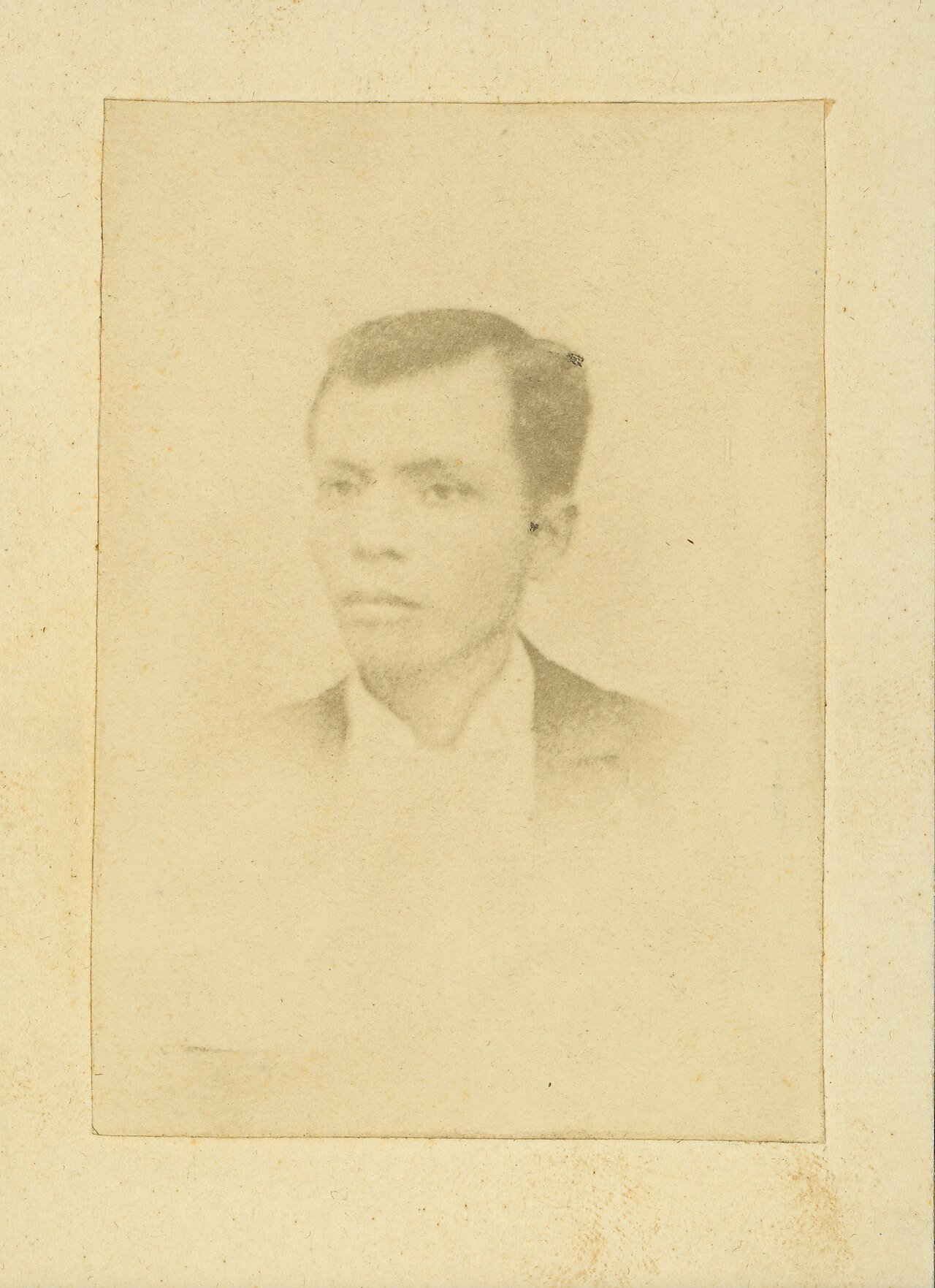 Philippines · Politics
1863—1897
Andrés Bonifacio
Founder and Supremo of the KatipunanThe organiser who founded the Katipunan, built a mass independence movement and led the Philippine Revolution into open revolt in 1896.Read biography Philippines · Politics
1861—1896
José Rizal
Writer, physician and reform advocateA physician, novelist and reformer whose writings challenged Spanish colonial rule and helped give Philippine nationalism a common language.Read biographyQuick answers
Common questions
- When was the First Philippine Republic founded?
- It was inaugurated at Malolos on 23 January 1899, two days after Emilio Aguinaldo promulgated the Malolos Constitution.
- Who was the first president of the Philippines?
- Emilio Aguinaldo was president of the First Philippine Republic and is officially recognised in the Philippines as the first president of the republic.
- Why is it called the Malolos Republic?
- Its congress met at Barasoain Church in Malolos, Bulacan, and the constitution and inaugural ceremonies of the republican government were completed there.
- What did the Malolos Constitution establish?
- It described the Philippines as a free and independent republic, located sovereignty in the people and provided distinct legislative, executive and judicial powers together with individual rights.
- When did the First Philippine Republic end?
- Aguinaldo’s capture on 23 March 1901 and oath of allegiance on 1 April are commonly treated as its effective end. The Philippine-American War and regional resistance continued after those dates.
Primary and institutional sources
How this history was checked
Dates, legal milestones and historical claims are checked against the official and institutional records below. This article was reviewed on 8 September 2026.
- The LawPhil ProjectThe 1899 Malolos Constitution
- National Historical Commission of the PhilippinesPhilippine Republic, 1898–1901 historical marker
- National Historical Commission of the PhilippinesChurch of Barasoain historical marker
- National Historical Commission of the PhilippinesEmilio Aguinaldo historical marker
- National Historical Commission of the PhilippinesSite of the Proclamation of Philippine Independence
- U.S. Department of State, Office of the HistorianThe Philippine-American War, 1899–1902