In this biography
Quick facts
- Born
- 14 September 1920
- Died
- 6 June 1976
- Birthplace
- Kudat, North Borneo
- Country
- Malaysia
- Nationality
- Malaysian
- Known for
- Leading Sabah into Malaysia and serving as its first chief minister
- Birth name
- Donald Aloysius Marmaduke Stephens
- Office
- 16 September 1963–31 December 1964; 14 April–6 June 1976
- Head of state
- Yang di-Pertua Negeri · 16 September 1973–28 July 1975
- Political parties
- UNKO / UPKO and BERJAYA
Why this life matters
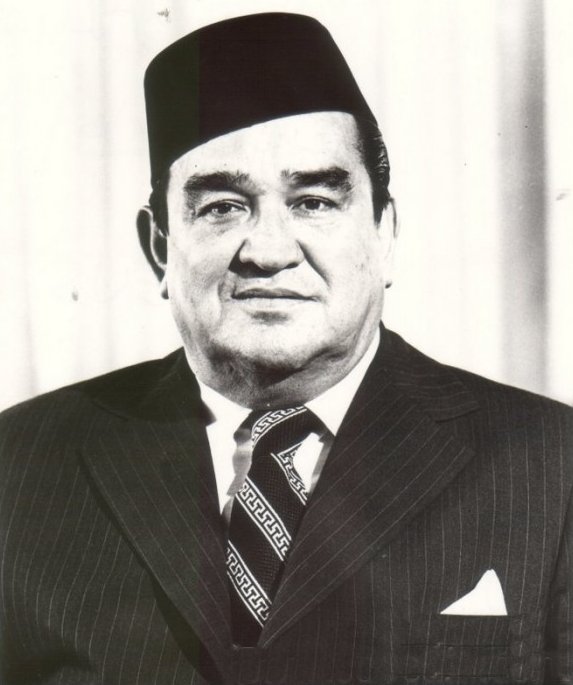
Fuad Stephens’ life connects North Borneo’s move to self-government, the negotiations that created Malaysia, the rise of Kadazan political organisation and Sabah’s early state institutions.
Timeline
Key moments
Born in Kudat
Born Donald Aloysius Marmaduke Stephens in North Borneo on 14 September.
Founded the Sabah Times
Started the newspaper in Jesselton before entering elected state leadership.
Organised UNKO
Helped form the United National Kadazan Organisation as constitutional change accelerated.
Joined regional consultations
Took part in the Malaysia Solidarity Consultative Committee and moved from initial caution to support for federation with safeguards.
Signed the Malaysia Agreement
Signed as D. A. Stephens among the North Borneo representatives in London.
Became Sabah’s first chief minister
Led the self-government transition; the state’s official chief-minister roster dates his first federal-state term from 16 September.
Served as high commissioner
Represented Malaysia in Australia, New Zealand and Fiji from Canberra.
Became Sabah’s head of state
Served as Yang di-Pertua Negeri before returning to party politics.
Returned as chief minister
Was sworn in again on 14 April after BERJAYA’s state election victory.
Died in the Double Six crash
Died with ten others when their aircraft crashed near Kota Kinabalu on 6 June.
Crash-report release announced
The Transport Ministry’s 12 April statement announced public access to the investigation report completed in January 1977.
A public voice in North Borneo
Fuad Stephens was born in Kudat on 14 September 1920 and first became publicly known as Donald Stephens. Before leading Sabah, he worked in journalism. He founded the Sabah Times in Jesselton in 1953, building a platform for local debate in a territory still governed as British North Borneo.
His newspaper work overlapped with Kadazan cultural organisation. Through the Society of Kadazans and then the United National Kadazan Organisation, formed in 1961, he helped bring community concerns into emerging party politics. His later Muslim name did not represent a different political figure: Donald Stephens and Fuad Stephens were the same person.
Sources for this section: [1]
From caution to federation
Stephens initially approached the Malaysia proposal cautiously before supporting federation with safeguards for North Borneo. Regional consultations and negotiations concerned the territory’s future institutions, not simply a change of flag. On 9 July 1963 he signed the Malaysia Agreement in London as D. A. Stephens, alongside other North Borneo representatives.
The treaty contained state constitutions and immigration arrangements, while Article VIII required action on undertakings in the Inter-Governmental Committee report. The original 31 August implementation date was amended to 16 September. The self-government transition associated with 31 August should therefore be distinguished from the date Malaysia legally came into operation.
Chief minister, diplomat and head of state
Sabah’s official roster dates Stephens’ first chief-minister term from 16 September 1963 to 31 December 1964. Peter Lo Sui Yin succeeded him. The short term was followed by federal service and a diplomatic posting in Canberra as Malaysia’s high commissioner to Australia, New Zealand and Fiji from 1968 to 1973.
He returned to a different constitutional office: Yang di-Pertua Negeri from 16 September 1973 to 28 July 1975. This was Sabah’s head-of-state position, not another chief-minister term. Keeping the offices separate explains how he could hold a ceremonial state role between two periods of executive leadership.
BERJAYA and the second chief-minister term
Stephens left the head-of-state office in 1975 and led BERJAYA, the party formed that year with Harris Salleh among its leading figures. Its April 1976 election victory brought a change of state government. The Cabinet and Policy Division records his second chief-minister term as 14 April to 6 June 1976.
The return was therefore a separate electoral and political episode, twelve years after his first administration ended. It placed him back in executive office for less than two months. His career encompassed state-building and party competition, rather than an uninterrupted founding premiership.
The Double Six tragedy and later disclosure
On 6 June 1976, a Sabah Air Nomad crashed near Kota Kinabalu, killing Stephens and ten others. The victims included his son Johari, senior ministers and officials, a bodyguard and the pilot. The Double Six tragedy ended his second administration and removed several members of Sabah’s leadership at once.
The Transport Ministry announced public release of the investigation report on 12 April 2023. Its statement says the report was completed on 25 January 1977 and presented to the Cabinet that March. These are the investigation and disclosure dates, not new accident dates. The release announcement alone cannot establish claims of assassination or prove a particular crash mechanism.
Sources for this section: [6]
Quick answers
Frequently asked questions about Fuad Stephens
- Were Donald Stephens and Fuad Stephens the same person?
- Yes. Donald Stephens was his earlier name; after converting to Islam he became known as Mohammed Fuad Stephens, usually shortened to Fuad Stephens.
- When was Fuad Stephens chief minister of Sabah?
- The Sabah government’s roster records 16 September 1963–31 December 1964 and 14 April–6 June 1976. His earlier self-government leadership is part of the 1963 transition.
- Did Fuad Stephens sign the Malaysia Agreement 1963?
- Yes. The treaty’s signature page lists D. A. Stephens among the North Borneo representatives who signed in London on 9 July 1963.
- What was the Double Six tragedy?
- It was the 6 June 1976 Sabah Air crash that killed Fuad Stephens and ten others near Kota Kinabalu. The Transport Ministry announced release of the investigation report in April 2023.
Keep exploring
Lives connected to this story
- Datu Mustapha Datu Harun
Another North Borneo signatory who held Sabah’s head-of-state and chief-minister offices at different times.
- Harris Salleh
Follow BERJAYA’s leadership and the government that continued after the Double Six tragedy.
- Tunku Abdul Rahman
Place the North Borneo negotiations alongside the federal leadership behind Malaysia’s formation.
Sources and further reading
Explore the evidence
These references support the biography and offer further reading. Official records, first-person accounts and independent reporting provide different perspectives; image records document attribution and licensing.
- 1. Yayasan Tun FuadTun Fuad Stephens Biography
Foundation account supplies journalism and community history. Its prose and table conflict on some conversion and election dates; no exact conversion date or election-day claim is adopted here.
- 2. Sabah Cabinet and Policy DivisionFormer heads of state of Sabah
- 3. Sabah State Legislative AssemblyFirst sitting of the Sabah Legislative Assembly
- 4. Sabah Cabinet and Policy DivisionChief ministers of Sabah — official terms
State roster supplies both formal chief-minister terms. The first begins on Malaysia Day; it does not erase the earlier self-government transition described by the foundation.
- 5. United Nations Treaty SeriesMalaysia Agreement 1963 and amendment
UN Treaty Series signature page identifies D. A. Stephens; the original agreement and later date amendment are distinguished. The treaty is not a personal authorship record for every safeguard.
- 6. Ministry of Transport MalaysiaDouble Six investigation report — release statement, 12 April 2023
This is the 12 April 2023 release statement, not the full technical investigation. It supports the victim list and disclosure chronology; technical causes and conspiracy claims are not inferred from it.
- 7. Wikimedia CommonsTun Fuad Stephens portrait and public-domain record