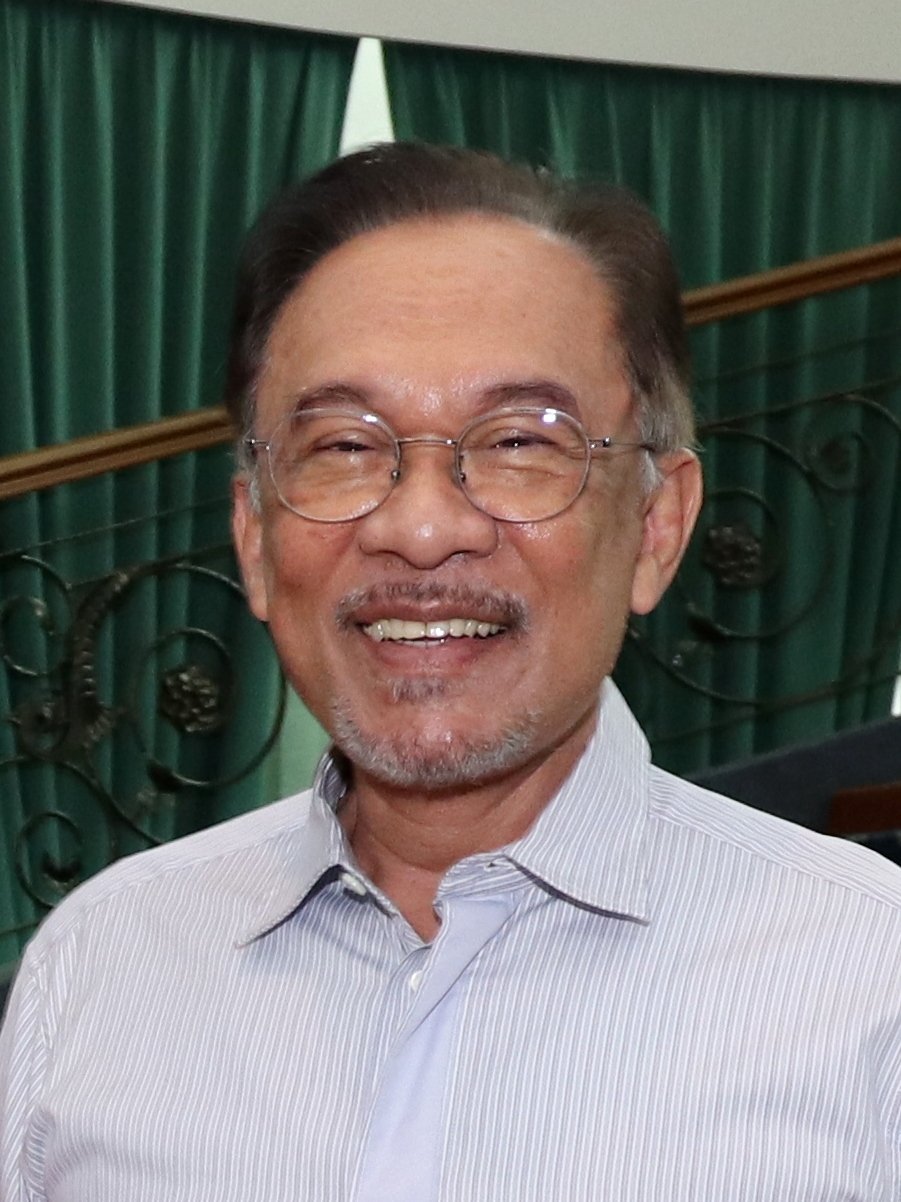
In this biography
Quick facts
- Born
- 10 August 1947
- Birthplace
- Cherok Tok Kun, Penang
- Country
- Malaysia
- Nationality
- Malaysian
- Known for
- Reformasi and a five-decade political career
- Current office
- Prime Minister since 24 November 2022
- Constituency
- Tambun
- Political party
- People’s Justice Party (PKR)
- Earlier office
- Deputy Prime Minister, 1993–1998
Why this life matters
Anwar’s career spans political Islam, the governing establishment, imprisonment, Reformasi, opposition coalition-building and a post-election unity government.
Timeline
Key moments
Born in Penang
Born in Cherok Tok Kun on 10 August.
Built youth movements
Helped establish Yayasan Anda and ABIM, then led the Islamic youth movement.
Entered government
Joined UMNO, won election to Parliament and began a rapid ministerial rise.
Became deputy prime minister
Served as Mahathir Mohamad’s deputy while continuing as finance minister.
Dismissal and Reformasi
Was removed from government; protests and organising formed a new reform movement.
Returned to Parliament
Won the Permatang Pauh by-election and led a strengthened parliamentary opposition.
Received a full royal pardon
Was released after Pakatan Harapan won the general election.
Sworn in as prime minister
Became Malaysia’s tenth prime minister on 24 November.
Student politics and Islamic youth leadership
Anwar was born in Penang in 1947 and studied at the Malay College Kuala Kangsar and the University of Malaya. As a student leader he became active in education and social causes, helping establish Yayasan Anda and the Malaysian Islamic Youth Movement, better known as ABIM.
ABIM made him a nationally recognised voice on Islam, poverty and social justice. His activism included detention under the Internal Security Act in the 1970s. By the early 1980s, he faced a choice between opposition politics and entering the governing system.
A rapid rise inside government
Anwar joined UMNO in 1982 and moved quickly through culture, agriculture and education portfolios. He became finance minister in 1991 and deputy prime minister in 1993, appearing to be Mahathir Mohamad’s likely successor.
As finance minister, he was prominent during a period of rapid growth and internationally engaged economic policy. The Asian financial crisis then exposed major differences within the government over recovery strategy, political authority and the direction of reform.
Dismissal, imprisonment and Reformasi
Mahathir dismissed Anwar from government in September 1998. His arrest, mistreatment in custody and subsequent trials triggered mass protests and the Reformasi movement. The episode turned a succession dispute into a broader struggle over judicial independence, corruption and democratic competition.
Anwar was imprisoned, released after a conviction was overturned in 2004, and returned to Parliament in 2008 as opposition leader. A second sodomy conviction returned him to prison in 2015. The proceedings remained deeply contested, and he received a full royal pardon after the 2018 election.
Opposition leader to unity prime minister
Anwar spent years building multi-party opposition coalitions across major ideological differences. The 2018 Pakatan Harapan victory brought his former adversary Mahathir back as prime minister under a planned transition. That transition did not occur before the coalition collapsed in 2020.
The 2022 election produced no parliamentary majority. After consultations among parties and the Malay Rulers, the Yang di-Pertuan Agong appointed Anwar prime minister on 24 November. He formed a unity government including Pakatan Harapan, Barisan Nasional and regional coalitions.
The premiership and the reform test
Anwar’s Malaysia MADANI framework links governance, social inclusion and economic renewal. His government has emphasised fiscal targeting, investment, anti-corruption and institutional reform while managing a coalition that includes parties once on opposing sides.
The central question of his premiership is how much of the Reformasi agenda can be translated into durable institutional change. Economic pressures, identity politics and coalition compromise make the answer both consequential and contested.
Quick answers
Frequently asked questions about Anwar Ibrahim
- Who is Anwar Ibrahim?
- Anwar Ibrahim is a tenth Prime Minister of Malaysia. Anwar’s career spans political Islam, the governing establishment, imprisonment, Reformasi, opposition coalition-building and a post-election unity government.
- What is Anwar Ibrahim best known for?
- Anwar Ibrahim is best known for reformasi and a five-decade political career.
- When and where was Anwar Ibrahim born?
- Anwar Ibrahim was born on 10 August 1947 in Cherok Tok Kun, Penang.
Sources and further reading
How this biography was checked
Core dates and offices are checked against the sources below. This profile was last reviewed on 31 August 2026.