
The short answer
The violence of 13 May 1969 was followed by emergency rule, a twenty-one-month suspension of Parliament and a new national-unity settlement. The official record establishes the sequence and a death toll of 196, while responsibility and the event’s full scale remain debated. The Rukun Negara was the civic response—not merely five lines, but a pledge joining unity to democracy, justice, constitutional government and mutual respect.
Chronology
A timeline of the turning points
Parliament and most state assemblies are dissolved
Malaysia prepared for its third general election since independence, with polling scheduled over different dates in Peninsular Malaysia, Sabah and Sarawak.
Polling changes the political balance
The Alliance retained federal power but lost its two-thirds parliamentary majority in the completed contests, while opposition parties made major gains in several peninsular states.
Post-election processions heighten tension
Celebrations and political demonstrations moved through Kuala Lumpur. Accounts differ over particular routes, slogans and responsibility, but the public atmosphere became increasingly charged.
Communal violence erupts in Kuala Lumpur
Deadly attacks, arson and disorder spread through parts of the capital and nearby areas. Security forces imposed curfews as residents sought safety and emergency relief.
A nationwide state of emergency is declared
The Yang di-Pertuan Agong proclaimed an emergency. The remaining election timetable was interrupted and ordinary constitutional government was substantially altered.
Parliament is suspended and MAGERAN takes control
The National Operations Council, known by its Malay acronym MAGERAN, administered the country under Director of Operations Abdul Razak Hussein.
The Department of National Unity is established
A new government department coordinated programmes intended to rebuild relations across communities and develop a more permanent national-unity framework.
MAGERAN issues its official report
The May 13 Tragedy presented the government’s chronology, official casualty figures and interpretation of the causes. Later scholarship has debated important parts of that account.
The National Consultative Council is formed
Representatives from government, political parties, states, religious groups, professions and civil society considered national unity and principles for a shared civic framework.
The Rukun Negara is proclaimed
The Yang di-Pertuan Agong proclaimed five national principles on the thirteenth anniversary of independence, together with five social aspirations in the preamble.
Abdul Razak becomes prime minister
Tunku Abdul Rahman retired and the Director of Operations succeeded him as Malaysia’s second prime minister, carrying emergency-era policy into restored parliamentary government.
Parliament reconvenes
The Third Parliament opened after approximately twenty-one months without parliamentary sittings, formally ending rule through the National Operations Council.
Constitutional and economic changes follow
Parliament approved restrictions concerning specified constitutional questions, while the Second Malaysia Plan introduced the New Economic Policy’s poverty and restructuring goals.
What happened after the 1969 general election?
Malaysia voted on 10 May 1969 after a campaign in which economic inequality, language, citizenship, education and communal representation were intensely contested. The Alliance remained the largest force, but its losses ended the commanding parliamentary margin it had previously enjoyed. Opposition parties also gained power or influence in several states. Voting in Sabah and Sarawak had not been completed when the crisis interrupted the schedule.
Processions by opposition supporters took place in Kuala Lumpur after the result, followed by plans for a counter-procession. Political celebration, humiliation, rumour and fear interacted in neighbourhoods where party and ethnic identities overlapped. On 13 May, violence began in and around the capital. People were killed or injured, homes and businesses were burned, and thousands were displaced or confined by curfew.
The immediate sequence is well documented, but accounts of organisation and responsibility remain disputed. The official 1969 report, memoirs by political leaders, diplomatic records and later historical studies do not give identical explanations. A responsible summary can establish dates and institutional consequences without converting one contested interpretation into settled fact.
How many people were killed?
The official government count recorded 196 deaths. That is the figure preserved in the National Operations Council’s report and repeated by the National Archives and Royal Malaysia Police. Official records also documented injuries, arrests, missing people and extensive damage, although totals reported in later official summaries are not always identical.
Contemporary observers and later writers have argued that the true death toll may have been higher. Those estimates are difficult to verify because movement was restricted, information was controlled and some claims rest on testimony rather than complete named records. This guide therefore labels 196 as the official count, not as proof that every death was captured.
The victims should not be reduced to a statistic or a political warning. The event involved killings across communal lines, loss of homes and livelihoods, and long-term trauma among families and neighbourhoods. Treating casualty claims carefully is part of treating those experiences with dignity.
Why do explanations of May 13 differ?
The official report placed strong emphasis on racialised campaigning, provocative processions, communist and secret-society influence, and the social and economic conditions that made communal mobilisation dangerous. Government and police histories continue to reflect much of that framework.
Other historians have focused on divisions inside the governing coalition, challenges to UMNO leadership, unequal development, urban competition, state responses and the political uses of the crisis. Some writers have alleged deliberate organisation by particular elites; those claims remain contested and should be presented as interpretations, not established findings.
The safest conclusion is multi-causal. Electoral competition supplied the immediate setting, but it operated within older inequalities, institutional tensions, inflammatory political communication and local security failures. No ethnic community acted as a single political unit, and collective blame is neither historically accurate nor ethically defensible.
What was MAGERAN and how did emergency rule work?
A nationwide emergency was proclaimed on 15 May. Parliament did not sit, and executive authority was exercised through emergency arrangements. Abdul Razak, then deputy prime minister, became Director of Operations and led the National Operations Council—Majlis Gerakan Negara, or MAGERAN.
MAGERAN’s stated priorities were to restore peace, maintain administration and rebuild relations among communities. Security forces enforced curfews, controlled movement and information, and worked with relief and goodwill organisations. The council also became the centre from which the government reconsidered national unity, political rules and economic policy.
Tunku Abdul Rahman remained prime minister during most of the emergency period, but effective authority shifted towards Abdul Razak and the council. This distinction explains why 1969 was both a public-order crisis and a leadership transition. Tunku retired in September 1970, and Razak became the second prime minister.
How was the Rukun Negara created?
The Department of National Unity was formed in July 1969. In January 1970, the National Consultative Council brought together representatives from public institutions, political parties and wider society to examine how a multi-ethnic federation could rebuild civic trust. The Rukun Negara emerged from this emergency-era consultation.
It was proclaimed by the Yang di-Pertuan Agong on 31 August 1970. The document has two connected parts. Its preamble describes the society Malaysia seeks to build; the better-known pledge names the principles intended to guide that effort. Reading only the five final lines leaves out the document’s commitments to democracy, shared prosperity, cultural openness and scientific progress.
The Rukun Negara is not a replacement constitution and does not itself operate like an ordinary statute. It is a national civic declaration: a framework used in schools, public ceremonies and government programmes to connect unity with constitutional government and ethical conduct.
What are the five principles of the Rukun Negara?
The official English formulation lists Belief in God; Loyalty to King and Country; Supremacy of the Constitution; Rule of Law; and Courtesy and Morality. The Malay text—Kepercayaan kepada Tuhan, Kesetiaan kepada Raja dan Negara, Keluhuran Perlembagaan, Kedaulatan Undang-undang, and Kesopanan dan Kesusilaan—is the form most Malaysians recite.
The preamble sets out five aspirations: closer unity among all people; maintenance of a democratic way of life; a just society in which prosperity is shared fairly; a liberal approach to rich and diverse cultural traditions; and a progressive society oriented towards modern science and technology.
Those two parts create productive tension. Loyalty is joined to constitutional supremacy; order is joined to law; unity is joined to democracy and equitable prosperity. The declaration is therefore broader than a call for social quiet. Its own language makes institutions, material fairness and mutual respect part of national cohesion.
How did parliamentary government return?
The Third Parliament opened on 23 February 1971. The royal address described the emergency, MAGERAN and the work of national goodwill bodies, then announced that conditions allowed parliamentary rule to resume. Members returned to seats won nearly twenty-two months earlier.
Restoration did not mean a return to the exact pre-1969 settlement. Constitutional amendments and related legal changes restricted public and parliamentary questioning of specified sensitive constitutional provisions. Supporters presented the measures as safeguards against renewed communal incitement; opponents argued that they narrowed democratic debate and parliamentary privilege.
That dual legacy matters. Malaysia restored elections and Parliament rather than making emergency administration permanent, but it also emerged with a more regulated political sphere. Later appeals to “May 13” have therefore carried both a genuine memory of violence and a contested role in setting the boundaries of public discussion.
How did the crisis connect to the New Economic Policy?
The government concluded that national unity could not rest on security measures alone. The Second Malaysia Plan introduced the New Economic Policy with two stated goals: eradicating poverty irrespective of race and restructuring society so that ethnicity would no longer be identified with economic function.
The NEP addressed real disparities in income, ownership, occupation and geography, especially rural poverty. Its instruments also expanded Bumiputera participation in education, employment, business and corporate equity. Over time, the balance between broad poverty reduction, group-based preference, political patronage and measurable outcomes became one of Malaysia’s central policy debates.
May 13 did not mechanically produce every later programme, and unequal development had concerned policymakers before 1969. The violence nevertheless gave unity and restructuring new urgency. Understanding the Rukun Negara and the NEP together shows the post-crisis settlement’s two tracks: civic principles for a shared nation and state-led intervention in its political economy.
Why does May 13 still shape Malaysian public life?
The event remains sensitive because historical knowledge is uneven and public discussion has often been constrained. Families remember loss, political actors invoke the danger of recurrence, and researchers continue to debate documents that became available long after 1969. Silence can prevent provocation, but it can also leave rumours and inherited stereotypes unchallenged.
The most useful public history does not turn trauma into a weapon. It distinguishes evidence from allegation, refuses collective guilt and explains how institutions changed. It also remembers that Malaysians across communities participated in rescue, medical care, relief and later reconciliation.
The Rukun Negara remains the clearest official statement of the intended lesson: unity must operate through constitutional government, law, shared prosperity, cultural accommodation and civic conduct. Its continuing value depends less on ceremonial recitation than on whether those commitments are visible in public institutions and everyday life.
Continue the chronology
Related history guides
Malaysia’s New Economic Policy
Continue into the poverty and social-restructuring programme that became the post-crisis economic settlement.
Read the timeline1955–presentMalaysia History Timeline
Place 1969 between independence, federation, the NEP, industrialisation, Reformasi and coalition change.
Read the timeline1957–presentPrime Ministers of Malaysia
Follow the transition from Tunku Abdul Rahman to Abdul Razak and the leadership system that followed.
Read the timeline1955–1957Malayan Independence
Start with the constitutional and multi-ethnic coalition settlement created at independence.
Read the timeline1998–presentMalaysia’s Reformasi Movement
Continue to the later movement that reopened arguments about institutions, rights and democratic competition.
Read the timelineBiography context
Explore Malaysia through connected lives
Explore Malaysia
Browse the people, institutions and turning points behind modern Malaysia.
Explore the biographiesLeadership collectionMalaysian Prime Ministers
Compare the leaders whose terms connect the 1969 emergency with later national development.
Explore the biographiesNation-building collectionBuilders of Modern Malaysia
Meet the political and institutional figures behind Malaysia’s post-independence state.
Explore the biographiesConnected biographies
Four leaders connecting the election, emergency administration, national principles and restoration of Parliament
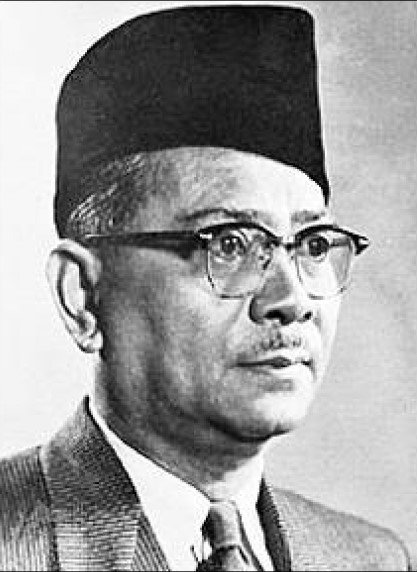 Malaysia · Politics
1903—1990
Tunku Abdul Rahman
First Prime Minister of MalaysiaThe independence leader who became Malaya’s first prime minister and helped define the federation that would become modern Malaysia.Read biography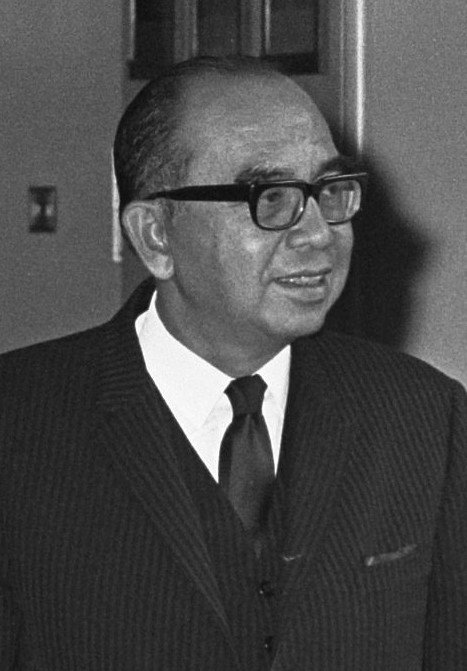 Malaysia · Politics
1922—1976
Abdul Razak Hussein
Second Prime Minister of MalaysiaMalaysia’s second prime minister, remembered for rural development, post-1969 reconstruction and a far-reaching programme of social and economic restructuring.Read biography Malaysia · Politics
1915—1973
Ismail Abdul Rahman
Second Deputy Prime Minister of MalaysiaA physician, diplomat and senior minister whose authority during the post-1969 emergency made him one of Malaysia’s most consequential early nation-builders.Read biography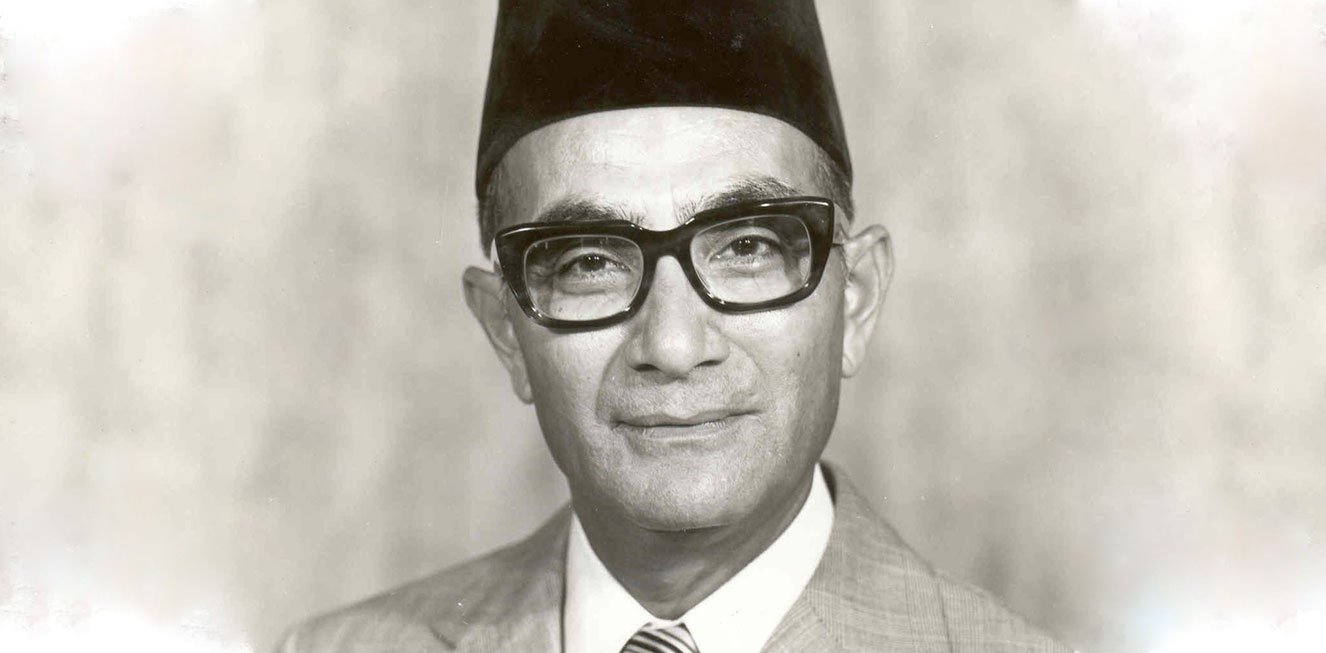 Malaysia · Politics
1922—1990
Hussein Onn
Third Prime Minister of MalaysiaA soldier, civil servant and lawyer who became Malaysia’s third prime minister and made national unity the defining language of his administration.Read biographyQuick answers
Common questions
- What happened in Malaysia on 13 May 1969?
- Communal violence erupted in Kuala Lumpur after the 10 May general election. Killings, injuries, arson and displacement were followed by a nationwide emergency, suspension of Parliament and administration through the National Operations Council.
- What was the official death toll for May 13?
- The official government count was 196 deaths. Later observers proposed higher estimates, but those figures cannot be verified from a complete public record, so 196 should be identified specifically as the official count.
- What was MAGERAN?
- MAGERAN was the Malay acronym for the National Operations Council. Led by Deputy Prime Minister Abdul Razak Hussein, it administered Malaysia during the post-May 13 emergency while Parliament was suspended.
- When was the Rukun Negara proclaimed?
- The Yang di-Pertuan Agong proclaimed the Rukun Negara on 31 August 1970, the thirteenth anniversary of Malayan independence.
- What are the five Rukun Negara principles?
- They are Belief in God, Loyalty to King and Country, Supremacy of the Constitution, Rule of Law, and Courtesy and Morality.
- Is the Rukun Negara part of Malaysia’s Constitution?
- No. It is a national civic declaration rather than a constitutional article or ordinary statute. Its principles are used to express shared aspirations and guide national-unity programmes.
- When did Malaysia’s Parliament resume after May 13?
- The Third Parliament opened on 23 February 1971, approximately twenty-one months after parliamentary government was suspended.
- How was May 13 connected to the New Economic Policy?
- The crisis intensified the government’s view that economic inequality threatened national unity. The 1971 New Economic Policy pursued poverty reduction regardless of race and restructuring to reduce the identification of ethnicity with economic function.
Primary and institutional sources
How this history was checked
This guide separates the official chronology and casualty count from interpretations that remain contested. Government archives, police records and Hansard establish dates and institutions; academic research helps explain why no single causal narrative should be treated as conclusive. This article was reviewed on 3 October 2026.
- National Archives of MalaysiaRukun Negara — Historical Background and Proclamation
- Government of MalaysiaRukun Negara — Objectives and Five Principles
- Ministry of National Unity MalaysiaNational Unity Action Plan 2021–2030 — Historical Timeline
- National Archives of MalaysiaMalaysia’s Third General Election, 1969
- Royal Malaysia PoliceThe 13 May Incident — Official Historical Summary
- National Archives of MalaysiaThe May 13 Tragedy: A Report — Archival Catalogue Record
- Parliament of MalaysiaOpening of the Third Parliament — Hansard, 23 February 1971
- Parliament of MalaysiaConstitutional Amendment Debate — Hansard, 1 March 1971
- Cambridge University PressEthnic Conflict, Prevention and Management: The Malaysian Case