
The short answer
The New Economic Policy remade Malaysia’s development strategy after 1969. Across twenty years, it pursued national unity through poverty reduction and a restructuring of employment, education, enterprise and ownership. This guide separates the original two-pronged framework from later shorthand, explains the 30 per cent target and weighs achievement against continuing debate.
The policy architecture
Four five-year plans inside one twenty-year framework
The NEP was carried through successive plans rather than enacted once. Each phase retained the twin objectives while responding to different leaders and economic conditions.
| Plan | Period | Prime minister at launch | Primary emphasis |
|---|---|---|---|
| Second Malaysia Plan | 1971–1975 | Abdul Razak Hussein | Launch the new strategy and its twin objectives |
| Third Malaysia Plan | 1976–1980 | Hussein Onn | Detail the Outline Perspective Plan and long-term targets |
| Fourth Malaysia Plan | 1981–1985 | Hussein Onn | Continue restructuring amid industrial expansion |
| Fifth Malaysia Plan | 1986–1990 | Mahathir Mohamad | Complete the horizon under recession and private-sector adjustment |
Chronology
A timeline of the turning points
Violence exposes a crisis of unity and inequality
Post-election communal violence in Kuala Lumpur was followed by emergency rule. Economic imbalance became inseparable from the government’s programme for rebuilding national unity.
The Rukun Negara defines a national framework
The civic declaration joined unity and constitutional order to the aspiration for a just society in which national prosperity could be shared equitably.
The Second Malaysia Plan launches the NEP
The first five-year plan of the new twenty-year framework set out two connected objectives: eradicate poverty irrespective of race and restructure society.
The first Outline Perspective Plan is published
The Mid-Term Review supplied a longer 1971–1990 horizon and more explicit targets for poverty, employment and the distribution of corporate ownership.
The Industrial Coordination Act expands state leverage
Licensing rules became one instrument for restructuring ownership and participation, although thresholds, conditions and implementation later changed.
The Third Malaysia Plan elaborates the policy
Its opening chapter restated the twin objectives, while the Outline Perspective Plan detailed a generational programme of growth, redistribution and employment change.
Permodalan Nasional Berhad is established
PNB became a major vehicle for broadening Bumiputera participation in corporate ownership through professionally managed unit-trust investment.
Mahathir begins his first premiership
The NEP continued alongside heavy industry, privatisation, Look East and export-oriented manufacturing, changing the balance between state and private-sector instruments.
Recession forces adjustment
A severe downturn constrained public expenditure and encouraged regulatory relaxation, private investment and a stronger export-manufacturing strategy.
The Fifth Malaysia Plan reviews the final phase
The last five-year plan within the original horizon assessed progress while adapting the restructuring programme to slower growth and fiscal pressure.
The original NEP period concludes
Measured poverty had fallen sharply and Bumiputera participation had widened, but the 30 per cent corporate-equity target had not been reached under official estimates.
The National Development Policy succeeds the NEP
The Second Outline Perspective Plan retained poverty reduction and restructuring while placing greater emphasis on balanced development, growth and a Bumiputera commercial community.
What was Malaysia’s New Economic Policy?
The New Economic Policy, commonly called the NEP or Dasar Ekonomi Baru, was Malaysia’s long-term development framework for 1971–1990. It was not one statute, one quota or one government agency. It supplied the objectives under which four five-year plans, public institutions and changing policy instruments were organised.
Its stated overriding purpose was national unity. The government argued that widespread poverty and the identification of ethnic groups with particular occupations and locations created social and political tension. The NEP therefore joined distribution to growth: development was expected to create enough new income, jobs and assets for restructuring without simply transferring a fixed stock from one community to another.
The Second Malaysia Plan introduced the direction in 1971. The 1973 Mid-Term Review and the Third Malaysia Plan’s Outline Perspective Plan made the twenty-year framework more explicit. Treating every later Bumiputera preference as if it appeared fully formed in the first document misses how the policy expanded and changed during implementation.
Why was the NEP introduced after 1969?
Malaysia entered the 1970s with rapid growth but severe inequality. Poverty was concentrated in rural areas, while colonial patterns had left many Malays in low-income agriculture, many Chinese Malaysians in mining, commerce and towns, and many Indian Malaysians on plantations. Those descriptions were never complete—each community contained different classes and occupations—but the broad imbalance shaped public policy.
The violence of 13 May 1969 made national cohesion an emergency. The Rukun Negara, proclaimed in 1970, called for closer unity, democracy and a just society. The NEP became the economic track of the same post-crisis settlement: security and civic language were not considered sufficient without changes in poverty, opportunity and participation.
Economic planning had not begun in 1969. Rural development, land schemes, education and infrastructure were already central to Abdul Razak Hussein’s work as deputy prime minister. The break was one of scale and organising principle. Existing programmes were integrated into a more interventionist, explicitly redistributive twenty-year strategy.
What were the NEP’s two objectives?
The first objective was to eradicate poverty among all Malaysians irrespective of race. It covered income and employment but also productive capacity, education, health, housing, infrastructure and access to modern services. Rural modernisation, land development and the creation of jobs outside agriculture were expected to raise household earnings.
The second objective was to restructure society so that race would no longer be identified with economic function and geographical location. That meant changing patterns of employment, professional participation, business ownership and residence. A central goal was the creation of a Bumiputera commercial and industrial community, together with greater representation in modern and higher-skilled sectors.
These objectives were designed to work together. Rapid growth would provide jobs and assets; poverty programmes would broaden the gains; restructuring would change who participated in the modern economy. In practice, the balance was contested. Public debate often narrowed a wide social programme to the most visible ethnic preferences or the corporate-equity target.
What did the 30 per cent Bumiputera equity target mean?
The long-term plans sought to raise the Bumiputera share of corporate equity from a very low 1970 base to at least 30 per cent by 1990. The framework also anticipated about 40 per cent Malaysian non-Bumiputera ownership and a lower foreign share. This was a target for aggregate corporate ownership, not a rule that every company in every circumstance must always have exactly the same structure.
The target became influential through licensing, public listings, state enterprises, trust agencies and negotiated conditions for particular investments. Permodalan Nasional Berhad and its unit trusts broadened participation beyond a small group of direct shareholders. Other institutions supplied finance, training, contracts or ownership on behalf of Bumiputera interests.
Measurement remains disputed. Official estimates, market-value approaches, nominee holdings, government-linked institutions and definitions of control can yield different answers. The safest historical statement is that participation rose substantially but the official 30 per cent target was not recorded as achieved by 1990. A percentage alone also says little about concentration, business capability or whether households could retain assets over time.
How was the NEP implemented?
There was no single delivery channel. FELDA and related land schemes expanded agricultural settlement; schools, universities, scholarships and training widened human-capital access; rural roads, clinics, utilities and irrigation connected communities to services and markets. Public agencies entered finance, industry, property and entrepreneurship.
Employment restructuring operated through an expanding public sector, professional education and the growth of manufacturing and services. Ownership policy used state corporations, unit trusts, credit, procurement, licensing and conditions attached to selected investments. The Industrial Coordination Act became a prominent instrument, but its rules were amended as economic conditions changed.
Implementation also varied across regions and decades. Sabah and Sarawak had different demographic, land and infrastructure conditions from Peninsular Malaysia. The commodity boom of the late 1970s enlarged public resources; the 1985–1986 recession pushed the government towards privatisation, regulatory relaxation and export-led industrialisation. The NEP was therefore a direction of travel, not a frozen rulebook.
What changed between 1971 and 1990?
Malaysia experienced major structural transformation. Manufacturing and services expanded, urbanisation accelerated and employment moved away from the older concentration in agriculture. Education and professional participation widened, while the public and corporate sectors developed a much larger Bumiputera presence.
Poverty also fell sharply under the measures used at the time. Government planning documents set a 1970 baseline near half of Peninsular Malaysian households and a 1990 target below one fifth. Later World Bank reviews describe the decline as one of Malaysia’s major development achievements, while cautioning that poverty lines and measurement standards change as a country becomes richer.
Causation should not be reduced to the NEP alone. Export demand, commodity revenues, demographic change, foreign investment, industrial policy, infrastructure and wider East Asian growth all mattered. The policy shaped how the state directed and distributed development, but it operated inside a changing regional and global economy.
Why is the NEP still debated?
Supporters credit the framework with reducing destabilising disparities, building a Bumiputera middle class and expanding access to education, professions and ownership without destroying growth. They argue that a more representative economy strengthened national stability and that group-conscious action was necessary because inherited disadvantage was group-patterned.
Critics question whether benefits were distributed fairly within communities, whether politically connected firms captured opportunities and whether indefinite preference weakened competition, institutional trust or assistance based on need. Non-Bumiputera Malaysians have also experienced some measures as exclusion, while poorer Bumiputera households do not necessarily benefit equally from ownership-focused programmes.
Both achievement and limitation can be true. The NEP was broader than patronage, yet implementation created opportunities for patronage; poverty fell, yet inequality and regional disadvantage persisted; representation improved, yet the meaning of equitable participation remained contested. Good history separates the stated framework, the instruments actually used and the outcomes measured.
Did the NEP end in 1990?
The original twenty-year NEP horizon ended in 1990. In 1991, the National Development Policy and Second Outline Perspective Plan became the formal long-term framework. They retained poverty reduction and restructuring but emphasised balanced development, productivity, private-sector growth and the quality and durability of Bumiputera participation.
Many institutions and preferences associated with the NEP continued, were revised or were given new policy labels. That continuity explains why people sometimes speak of the NEP in the present tense. It is more precise to distinguish the historical NEP period from the longer lineage of Bumiputera development and affirmative-action policies after 1990.
The distinction matters for accountability. A result in the 1970s should be assessed against the original plans and data; a current programme should be assessed against its current rules, goals and evidence. Using one three-letter label for five decades of changing policy hides more than it explains.
What is the NEP’s place in Malaysian history?
The NEP linked the trauma of 1969 to the developmental state that followed. It shaped education, ownership, employment, rural development and the language of national distribution across the administrations of Abdul Razak, Hussein Onn and Mahathir Mohamad. Few Malaysian policy frameworks have had a wider institutional reach.
It also established a lasting political vocabulary. Debates about merit, need, ethnicity, regional balance, class and national unity still return to its promises and trade-offs. The persistence of those debates does not mean the country is unchanged; it shows that the policy altered both opportunity and the expectations by which public action is judged.
A useful assessment asks three separate questions: Did poverty and exclusion decline? Who gained access to skills, jobs, businesses and assets? Were the institutions transparent, efficient and fair? The NEP’s legacy is not captured by a single equity number or partisan verdict, but by evidence across all three.
Continue the chronology
Related history guides
May 13 and the Rukun Negara
Understand the crisis and civic settlement that immediately preceded the NEP.
Read the timeline1955–presentMalaysia History Timeline
Place the policy between independence, industrialisation, Reformasi and coalition change.
Read the timeline1957–presentPrime Ministers of Malaysia
Compare the administrations that designed, implemented and succeeded the NEP.
Read the timeline1997–1999The Asian Financial Crisis in Malaysia
Continue into the later test of Malaysia’s state-led development and distribution model.
Read the timelineBiography context
Explore Malaysia through connected lives
Explore Malaysia
Browse the leaders, economists, builders and institutions behind national development.
Explore the biographiesDevelopment collectionBuilders of Modern Malaysia
Meet the people who shaped infrastructure, industry, finance and social policy.
Explore the biographiesLeadership collectionMalaysian Prime Ministers
Follow the leadership transition from Razak and Hussein to Mahathir and beyond.
Explore the biographiesConnected biographies
Four lives connecting the NEP’s design, continuity, industrial turn and trade strategy
 Malaysia · Politics
1922—1976
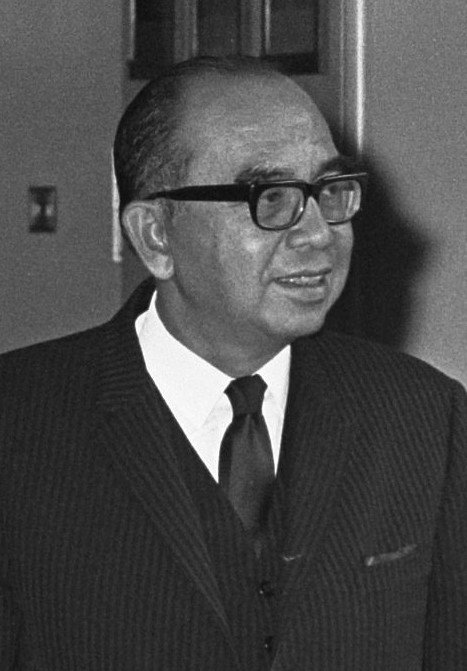
Abdul Razak Hussein
Second Prime Minister of MalaysiaMalaysia’s second prime minister, remembered for rural development, post-1969 reconstruction and a far-reaching programme of social and economic restructuring.Read biography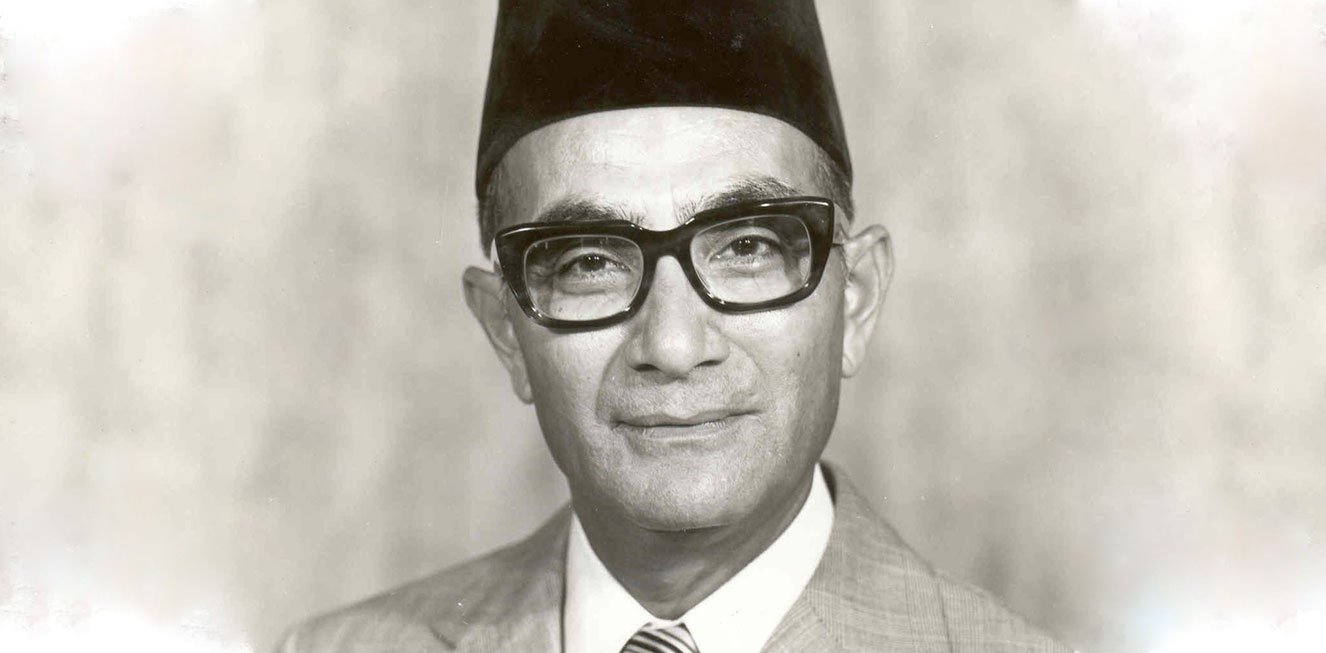 Malaysia · Politics
1922—1990
Hussein Onn
Third Prime Minister of MalaysiaA soldier, civil servant and lawyer who became Malaysia’s third prime minister and made national unity the defining language of his administration.Read biography Malaysia · Politics
1925—
Mahathir Mohamad
Fourth and seventh Prime Minister of MalaysiaA physician-politician whose two premierships—separated by fifteen years—made him the longest-serving and one of the most consequential leaders in Malaysian history.Read biography Malaysia · Politics
1943—
Rafidah Aziz
Economist and former Minister of International Trade and IndustryThe economist, parliamentarian and trade minister who spent more than two decades representing Malaysia in investment missions and regional trade negotiations.Read biographyQuick answers
Common questions
- What was Malaysia’s New Economic Policy?
- The NEP was Malaysia’s 1971–1990 development framework for pursuing national unity through poverty eradication irrespective of race and restructuring society to reduce the identification of race with economic function.
- Who introduced the New Economic Policy in Malaysia?
- The government of Prime Minister Abdul Razak Hussein introduced the NEP through the Second Malaysia Plan in 1971. Later plans under Hussein Onn and Mahathir Mohamad continued and adapted it.
- Was the NEP a law?
- No. It was an umbrella policy framework implemented through national plans, legislation, regulations, agencies, budgets and programmes rather than one self-contained Act of Parliament.
- What were the two goals of the NEP?
- They were to eradicate poverty among all Malaysians irrespective of race and to restructure society so that race would no longer be identified with economic function and geographical location.
- What was the NEP 30 per cent target?
- The long-term framework aimed for Bumiputera ownership of at least 30 per cent of corporate equity by 1990. It was an aggregate target whose measurement and policy use remain debated.
- Did poverty fall during the NEP period?
- Yes. Official and World Bank reviews show a large decline under the poverty measures then in use, alongside rapid growth and structural change. Comparisons must still account for later revisions to poverty lines.
- Did the New Economic Policy end in 1990?
- The formal twenty-year NEP period ended in 1990 and was succeeded by the National Development Policy in 1991. Many related institutions and affirmative-action measures continued in revised forms.
- Why is the NEP controversial?
- Debate concerns its contribution to poverty reduction and broader representation, the fairness and efficiency of ethnic preferences, unequal benefits within communities, patronage, measurement and how long such policies should continue.
Primary and institutional sources
How this history was checked
Malaysia’s official plans establish the policy’s wording, targets and phases. World Bank records provide contemporary and later development evidence, while ISEAS research helps distinguish the original framework from later interpretations of the equity target. This article was reviewed on 3 October 2026.
- Ministry of Economy MalaysiaMid-Term Review of the Second Malaysia Plan — Outline Perspective Plan, 1971–1990
- Ministry of Economy MalaysiaThird Malaysia Plan, 1976–1980 — Official Document Collection
- Ministry of Economy MalaysiaThe New Economic Policy: Goals and Strategy
- Ministry of Economy MalaysiaFifth Malaysia Plan, 1986–1990 — NEP Progress and Prospects
- Ministry of Economy MalaysiaSecond Outline Perspective Plan — National Development Policy
- Prime Minister’s Office of MalaysiaThe Way Forward — 1991 Review of the New Economic Policy
- World BankThe Malaysian Experience with National Development Planning
- World BankPoverty and Landlessness in Rural Asia — Targets of the New Economic Policy
- ISEAS – Yusof Ishak InstituteMalaysia’s New Economic Policy and the 30% Bumiputera Equity Target