The short answer
The United States and Vietnam normalized relations in stages: Washington lifted its trade embargo in February 1994, President Bill Clinton announced normalization on 11 July 1995, and the two governments formally restored diplomatic relations on 5 August.
Chronology
A timeline of the turning points
The U.S. Embassy in Saigon closes
The embassy was evacuated during Operation Frequent Wind immediately before the Republic of Vietnam surrendered. The United States and the reunified Vietnamese state had no diplomatic relations for the next two decades.
A sustained humanitarian channel develops
President Ronald Reagan appointed retired general John Vessey as a special emissary on POW/MIA affairs. Joint searches, archival work and discussions about remains became a central channel between the two governments.
Washington outlines a normalization roadmap
The United States linked step-by-step improvement in relations to the Cambodia peace process and cooperation in accounting for Americans missing from the war.
President Clinton keeps the embargo while demanding more progress
The administration said further movement depended on tangible results involving remains, discrepancy cases, archives and cooperation with investigations in Laos.
The United States lifts its trade embargo
President Bill Clinton ended the commercial embargo, citing improved Vietnamese cooperation on POW/MIA questions. The decision allowed trade but did not itself establish diplomatic relations.
A U.S. Liaison Office opens in Hanoi
The liaison office created a permanent official presence and a practical bridge toward full diplomatic representation.
Clinton announces normalization
In a White House address, Clinton announced that the United States would normalize diplomatic relations with Vietnam while continuing POW/MIA work and raising human-rights concerns.
Vietnam joins ASEAN
Regional membership reinforced Vietnam’s wider post-Cold War strategy of diplomatic and economic integration. The normalization process and ASEAN accession belonged to the same season of external opening.
The two governments formally resume relations
Secretary of State Warren Christopher and Foreign Minister Nguyễn Mạnh Cầm signed documents in Hanoi establishing relations and agreeing to open embassies in both capitals.
The U.S. Embassy in Hanoi opens
The liaison office became an embassy, giving the restored relationship a permanent diplomatic institution.
The first postwar U.S. ambassador takes office
Former prisoner of war and congressman Douglas “Pete” Peterson became the first U.S. ambassador to Vietnam after normalization.
A bilateral trade agreement is signed
The agreement deepened the economic relationship and prepared the way for a large expansion in bilateral trade after it entered into force in 2001.
What happened in 1995?
U.S.–Vietnam normalization was the restoration of diplomatic relations between the United States and the Socialist Republic of Vietnam after two decades without embassies. President Bill Clinton announced the decision on 11 July 1995; the two governments formally resumed relations in Hanoi on 5 August, and the U.S. Embassy opened the next day.
Those dates describe different steps, not competing versions of the same event. July 11 was the presidential announcement and political commitment. August 5 was the formal bilateral act that established relations and provided for embassies in Hanoi and Washington.
Why relations remained frozen after the war
The United States evacuated its embassy as Saigon fell in April 1975 and did not recognize the new relationship Vietnam sought after reunification. Disputes over the war’s aftermath, Vietnam’s intervention in Cambodia, Cold War alignments and Washington’s economic embargo kept the countries apart.
For the United States, the unresolved fate of prisoners of war and personnel missing in action became both a humanitarian obligation and a political condition for closer relations. For Vietnam, normalization promised access to trade, finance and diplomatic relationships that could support the economic reforms begun under Đổi Mới.
POW/MIA cooperation and the end of the embargo
Joint field investigations, archival exchanges and the recovery and identification of remains created a working relationship before embassies existed. American veterans, families, diplomats and legislators did not agree on every judgment, but the level of cooperation became the principal measure used by successive U.S. administrations.
Clinton lifted the trade embargo on 3 February 1994. He described it as a response to Vietnamese cooperation and as a way to improve the search for answers. Ending the embargo permitted commercial engagement, but normalization still required another political decision and several months of negotiation.
Vietnam’s reform and integration strategy
Vietnamese leaders approached normalization as part of a wider effort to reduce isolation after the Soviet collapse. Prime Minister Võ Văn Kiệt’s government pursued foreign investment, regional integration and more pragmatic relations while the Communist Party retained political control.
The sequence in 1995 was therefore wider than a single bilateral relationship. Vietnam applied for WTO membership in January, normalized relations with Washington in July and August, and became a full ASEAN member on 28 July. Together these steps tied domestic reform more closely to regional and global institutions.
The role of veterans and political opposition
Normalization remained controversial in the United States because the war’s losses and unresolved cases were deeply personal. Senators John McCain and John Kerry, both Vietnam veterans, supported engagement while insisting that POW/MIA work continue. Their support helped give the policy a bipartisan constituency.
Opponents argued that Vietnam had not provided a sufficient accounting or improved basic freedoms. Clinton’s announcement acknowledged those concerns and presented diplomatic contact as a means to keep pressing on missing-person cases, religious freedom, labour rights and broader human rights rather than as an endorsement of Vietnam’s political system.
What normalization did—and did not—settle
Restored relations made embassies, official dialogue, educational exchange and commercial negotiation possible. The appointment of ambassadors and the 2000 bilateral trade agreement turned the 1995 decision into a durable institutional relationship.
Normalization did not erase the war’s competing memories or settle every dispute. POW/MIA investigations continued, as did disagreements over human rights, political freedoms, war legacies and security. Its historical importance lies in replacing diplomatic absence with a framework in which those disagreements and new areas of cooperation could be managed.
Continue the chronology
Related history guides
The Đổi Mới Reforms
Understand the domestic economic opening that made wider diplomatic integration a national priority.
Read the timeline1999—2000Vietnam’s 1999 Enterprise Law
Continue from diplomatic opening into the rules that lowered barriers for domestic private companies.
Read the timeline1995—2007Vietnam’s WTO Accession
Follow the longer negotiation that embedded Vietnam more deeply in global trade rules.
Read the timelineConnected biographies
Four Vietnamese biographies connected to reform, diplomacy and the 1995 opening
 Vietnam · Politics
1922—2008
Võ Văn Kiệt
Prime minister and economic reformerThe southern revolutionary and prime minister who accelerated market reform, backed the North–South power line and led Vietnam through a decisive period of international integration.Read biography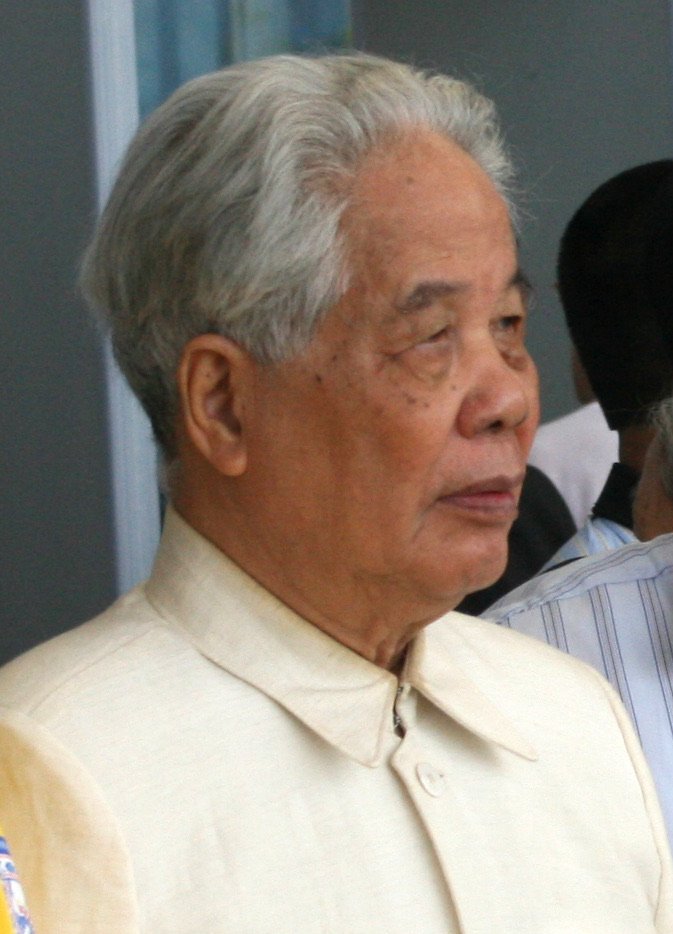 Vietnam · Politics
1917—2018
Đỗ Mười
Prime minister and Communist Party general secretaryThe former construction administrator who served as prime minister and then party general secretary as Vietnam stabilised reforms and re-entered regional and global diplomacy.Read biography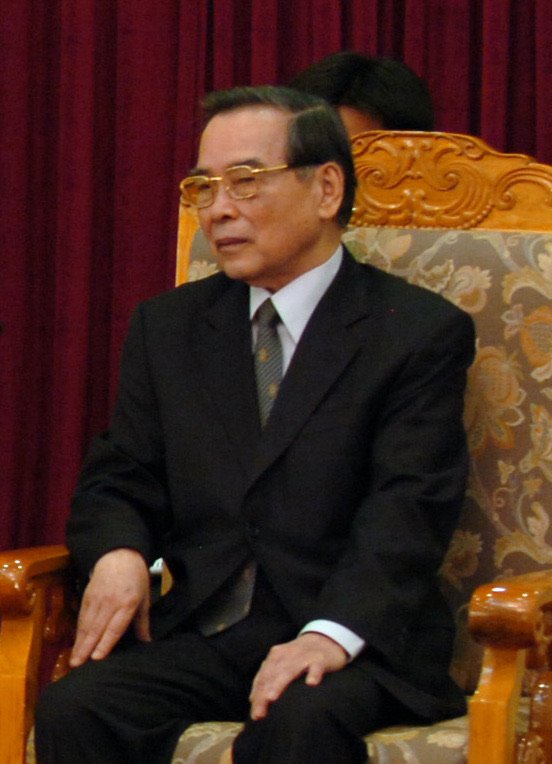 Vietnam · Politics
1933—2018
Phan Văn Khải
Prime minister and economic reformerThe technocratic prime minister who advanced business reform, negotiated deeper global integration and made a landmark visit to the United States in 2005.Read biography Vietnam · Politics
1915—1998
Nguyễn Văn Linh
Communist Party general secretary and Đổi Mới reform leaderThe southern party organiser who became general secretary in 1986 and gave political force to Đổi Mới while preserving Communist Party rule.Read biographyQuick answers
Common questions
- When did the United States normalize relations with Vietnam?
- President Bill Clinton announced normalization on 11 July 1995. The two governments formally reestablished diplomatic relations on 5 August 1995, and the U.S. Embassy in Hanoi opened on 6 August.
- When was the U.S. trade embargo on Vietnam lifted?
- The United States lifted the trade embargo on 3 February 1994, more than a year before diplomatic relations were restored. Trade permission and diplomatic normalization were separate steps.
- Why did normalization take twenty years?
- The delay reflected unresolved war legacies, POW/MIA questions, Cold War alignments, Vietnam’s intervention in Cambodia, the U.S. embargo and political opposition in both countries to moving too quickly.
- Who helped advance U.S.–Vietnam normalization?
- The process involved the Clinton administration, Vietnamese leaders including Prime Minister Võ Văn Kiệt, diplomats and POW/MIA investigators. U.S. senators and Vietnam veterans John McCain and John Kerry were prominent bipartisan supporters.
- Did normalization end POW/MIA investigations?
- No. Clinton explicitly stated that normalization would not end the effort. Joint field investigations, archival research, recovery work and identification continued after embassies opened.
- What happened after normalization?
- The countries exchanged ambassadors, expanded official and educational contact, signed a bilateral trade agreement in 2000 and developed the relationship further through trade, security dialogue and cooperation on war legacies.
Primary and institutional sources
How this history was checked
Dates, legal milestones and historical claims are checked against the official and institutional records below. This article was reviewed on 8 September 2026.
- U.S. Department of State, Office of the HistorianVietnam: A Guide to the United States’ History of Recognition, Diplomatic, and Consular Relations
- The American Presidency ProjectRemarks Announcing the Normalization of Diplomatic Relations With Vietnam, 11 July 1995
- The American Presidency ProjectRemarks on Lifting the Trade Embargo on Vietnam, 3 February 1994
- U.S. Department of State, Office of the HistorianTravels of the Secretary of State: Vietnam
- Association of Southeast Asian NationsVietnam in ASEAN: Toward Cooperation for Mutual Benefits
- William J. Clinton White House ArchiveRemarks on the U.S.–Vietnam Bilateral Trade Agreement, 13 July 2000
- Wikimedia Commons and Government of JapanVõ Văn Kiệt portrait and CC BY 4.0 record