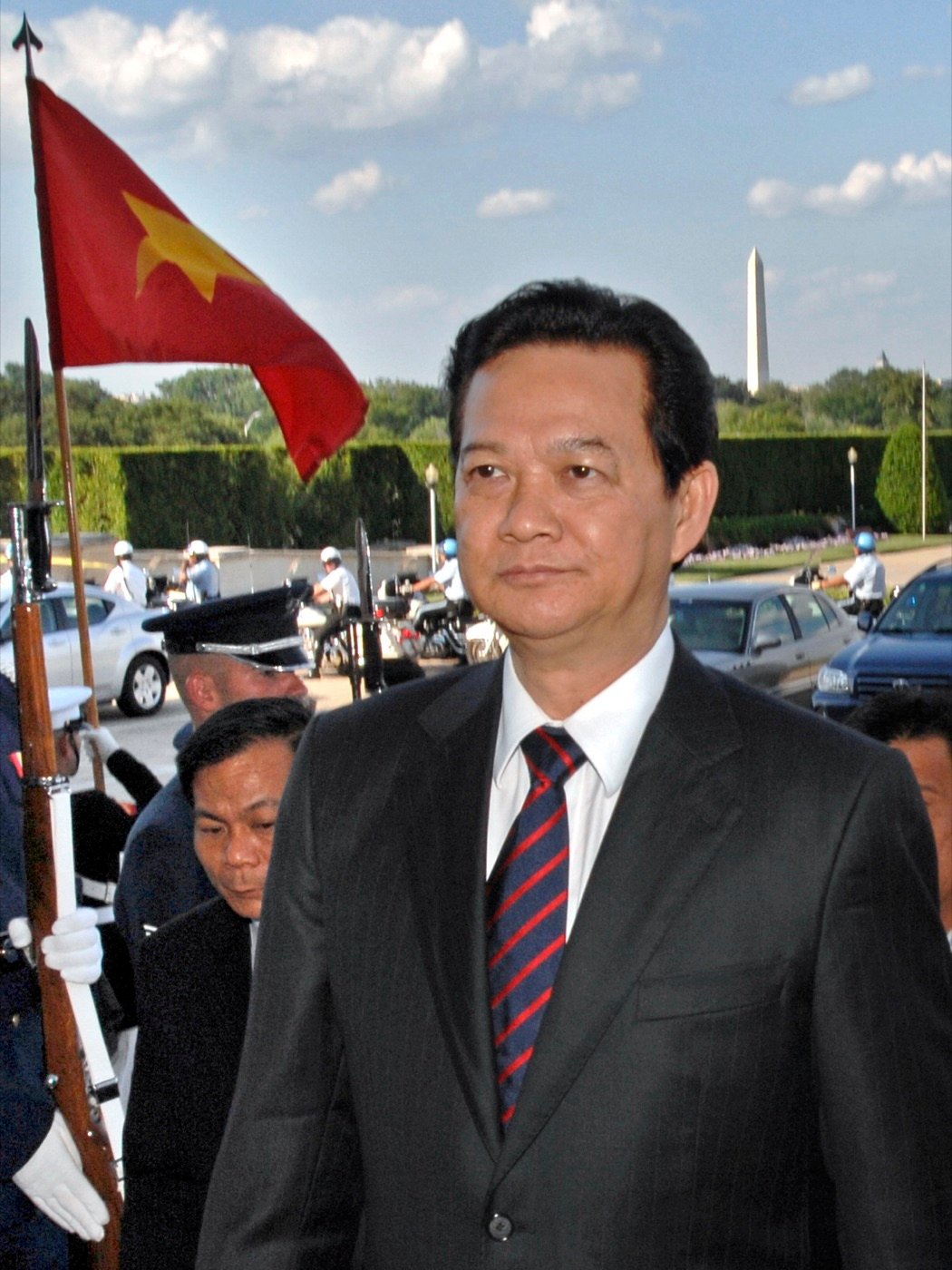
In this biography
Quick facts
- Born
- 14 April 1944
- Died
- 19 July 2024
- Birthplace
- Đông Hội, Hanoi, Vietnam
- Country
- Vietnam
- Nationality
- Vietnamese
- Known for
- Party discipline, anti-corruption campaigns and three terms as general secretary
- Party office
- General secretary, 2011–2024
- State office
- President, 2018–2021
- Earlier office
- National Assembly chairman, 2006–2011
- Education
- Vietnamese literature and a doctorate in party-building
Why this life matters
Trọng recentralised Communist Party authority and removed powerful officials through the “blazing furnace” campaign, while tighter political control accompanied Vietnam’s economic and diplomatic rise.
Timeline
Key moments
Born near Hanoi
Born in Đông Hội commune, Đông Anh district.
Joined the Communist Party
Began a long career in party scholarship and administration.
Became National Assembly chairman
Moved from leadership of the Hanoi party organisation to the national legislature.
Became general secretary
Won election to the party’s highest office.
Chaired the anti-corruption committee
Took charge of the Politburo-administered Central Steering Committee on Anti-Corruption.
Visited the White House
Met President Barack Obama during the twentieth anniversary of U.S.–Vietnam normalisation.
Also became president
Held the state presidency after Trần Đại Quang’s death.
Secured a third term
Continued as general secretary beyond the customary two terms.
Elevated ties with the United States
Joined President Joe Biden in establishing a Comprehensive Strategic Partnership.
Died in office
Died in Hanoi on 19 July.
From party journal editor to national leadership
Nguyễn Phú Trọng was born in Đông Hội, outside central Hanoi, in 1944. He studied Vietnamese literature at Hanoi General University and joined the Communist Party in 1967. His first long-term workplace was Tạp chí Cộng Sản, the party’s theoretical journal, where he advanced from editorial work to become editor-in-chief.
Postgraduate political study in Vietnam and the Soviet Union reinforced his identity as a party theorist. Unlike leaders whose authority grew through provincial economic management or the security services, Trọng built expertise in ideology, organisation and the rules governing the Communist Party itself.
He joined the Central Committee in 1994, entered the Politburo in 1997 and led the Hanoi party organisation from 2000 to 2006. He then chaired the National Assembly until 2011. These roles gave him experience across the party apparatus, the capital and the state legislature before he became general secretary.
General secretary and the return of party primacy
The Central Committee elected Trọng general secretary in January 2011. His early years included a visible institutional contest with Prime Minister Nguyễn Tấn Dũng, but Trọng emerged from the 2016 party congress with strengthened authority. His political programme stressed collective rules, Marxist-Leninist doctrine and the party’s control over the state, military and public security system.
When President Trần Đại Quang died in 2018, the National Assembly elected Trọng to the presidency. Holding the party and state titles together was unusual in postwar Vietnam, although he relinquished the presidency in April 2021. That year he secured a third term as general secretary, an exception to customary age and term expectations that confirmed his dominance of the leadership system.
How the “blazing furnace” campaign changed elite politics
In 2013 the Politburo placed a reconstituted Central Steering Committee on Anti-Corruption under Trọng’s chairmanship. Investigations expanded from state companies and provincial administrations to ministers, senior party officials and, later, major private businesses. The slogan of a “blazing furnace” conveyed his claim that rank or connections should not protect a wrongdoer.
The campaign answered widespread public anger about graft and demonstrated that members of the political elite could lose office, face discipline or be prosecuted. It also concentrated agenda-setting power in party bodies chaired by Trọng. Because courts, prosecutors and media were not institutionally independent of the party, outsiders could not fully test whether cases were chosen consistently or also served internal political consolidation.
The result was therefore double-edged: corruption became riskier for senior officials, while fear of investigation could slow administrative decisions and succession politics became less predictable. Trọng treated corruption as a threat to the party’s survival, not as an argument for multiparty competition or an autonomous judiciary.
Bamboo diplomacy and relations with competing powers
Trọng described Vietnamese diplomacy through the image of bamboo: firm roots and trunk combined with flexible branches. In practice, Vietnam sought strategic autonomy by maintaining close party ties with China, longstanding links with Russia and expanding partnerships with the United States, Japan, India, South Korea and other states. The approach was diversification, not a formal alliance or a simple pivot from one power to another.
His 2015 meeting with Barack Obama was the first White House visit by a Vietnamese Communist Party general secretary. In September 2023, Trọng and Joe Biden elevated U.S.–Vietnam relations to a Comprehensive Strategic Partnership. Months later he hosted China’s Xi Jinping, illustrating how high-level relationships with both Washington and Beijing could coexist despite South China Sea disputes.
Economic integration and diplomatic reach expanded during his tenure. Yet foreign partners also raised human-rights concerns. Independent political parties and media remained prohibited, and rights organisations documented arrests of journalists, environmental advocates and other peaceful critics. Political recentralisation and international openness were simultaneous features of the period, not opposites.
Death in office and historical assessment
Trọng died at Hanoi’s Central Military Hospital 108 on 19 July 2024 after a period of illness. He was eighty and still held the general secretaryship. A state funeral and international messages reflected the diplomatic standing Vietnam had gained during his thirteen years at the top of the party.
His legacy combines ideological conservatism with pragmatic economic and foreign policy. He made party discipline and anti-corruption central to political legitimacy, reduced the autonomy of rival power centres and helped Vietnam navigate intensifying great-power competition. The same era brought tighter limits on organised dissent and a leadership system increasingly dependent on internal disciplinary mechanisms rather than public accountability.
Quick answers
Frequently asked questions about Nguyễn Phú Trọng
- When did Nguyễn Phú Trọng lead Vietnam’s Communist Party?
- He served as general secretary from January 2011 until his death on 19 July 2024.
- Was he also Vietnam’s president?
- Yes. He held the state presidency from 2018 to 2021 alongside the general secretaryship. The presidency and party leadership were separate offices.
- What was the “blazing furnace” campaign?
- It was the anti-corruption drive associated with his leadership. Party discipline, removal from office, investigation and criminal conviction are different outcomes, not interchangeable descriptions.
- What did “bamboo diplomacy” mean?
- He used bamboo to describe firm principles combined with flexibility. Vietnam pursued diversified relationships and strategic autonomy rather than an exclusive alliance with one major power.
Keep exploring
Lives connected to this story
- Trần Đại Quang
Read about Trần Đại Quang’s separate security and presidential career, including his chairing of the 2017 APEC leaders’ meeting.
- Tô Lâm
Follow the succeeding party leader’s security career and separate presidential terms without merging the offices.
- Nguyễn Tấn Dũng
Compare a prime minister whose authority and economic-management role differed from party leadership.
- Nguyễn Xuân Phúc
Read about his 2021 presidential successor without equating later resignation with criminal conviction.
- Nông Đức Mạnh
Follow the general secretary who preceded Trọng in January 2011.
Sources and further reading
Explore the evidence
These references support the biography and offer further reading. Official records, first-person accounts and independent reporting provide different perspectives; image records document attribution and licensing.
- 1. Government NewsParty General Secretary Nguyen Phu Trong passes away
The obituary’s copied career list retains an outdated presidency snapshot. The separate 5 April 2021 succession report establishes that the presidency ended before his death in 2024.
- 2. Government NewsBiography of Party General Secretary Nguyen Phu Trong
- 3. Government NewsParty establishes Central Steering Committee on Anti-corruption
- 4. Government NewsSpeech at the National Foreign Relations Conference
- 5. Obama White House ArchivesRemarks by Barack Obama and Nguyen Phu Trong
- 6. U.S. Government Publishing OfficeU.S.–Vietnam Comprehensive Strategic Partnership statement
The September 2023 joint statement supports the Comprehensive Strategic Partnership, not a military alliance or an exclusive alignment.
- 7. Human Rights WatchWorld Report 2024: Vietnam
Human Rights Watch’s country report documents its rights assessment. It is identified as an advocacy organisation’s findings, not an official Vietnamese admission.
- 8. Wikimedia CommonsPortrait and public-domain record
- 9. Government NewsNguyễn Xuân Phúc elected state president, 5 April 2021
Phúc’s election ends Trọng’s state presidency, not his Communist Party general secretaryship. The two tenures remain separate.
- 10. ISEAS – Yusof Ishak InstituteGovernance and Power Consolidation under Nguyen Phu Trong, 2024/55
This author’s institutional research supports analysis of political centralisation. It is not a court judgment or proof of every official’s motive.
- 11. ISEAS – Yusof Ishak InstituteAnti-Corruption Politics and Shifts in Central-Local Relations in Vietnam, 2024/44
Relevant indexed research text supports shifts in central-local power and decision-making pressures. Analysis of the campaign must not convert investigation or party discipline into criminal conviction.