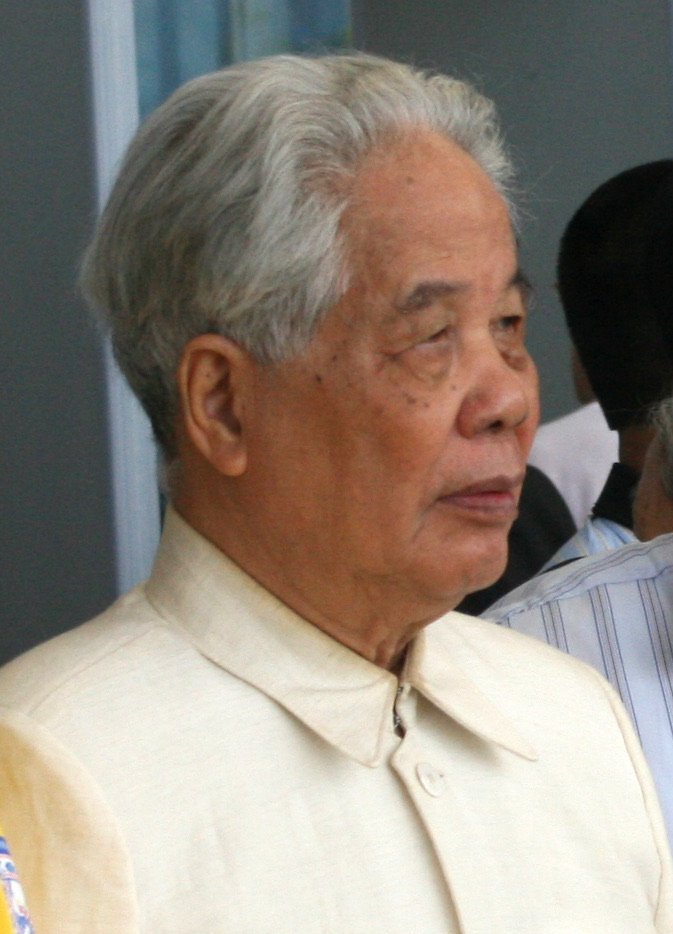
In this biography
Quick facts
- Born
- 1 July 1915
- Died
- 27 April 1998
- Birthplace
- Hưng Yên Province, French Indochina
- Country
- Vietnam
- Nationality
- Vietnamese
- Known for
- Leading the Communist Party when the Sixth Congress launched Đổi Mới in 1986
- Birth name
- Nguyễn Văn Cúc
- Common alias
- Mười Cúc
- Party office
- General secretary, 1986–1991
- Newspaper series
- Things That Must Be Done Immediately
Why this life matters
Nguyễn Văn Linh helped move Vietnam away from rigid central planning, promoted candour about bureaucratic failures and opened space for markets, yet framed renovation as a means to strengthen rather than replace the one-party system.
Timeline
Key moments
Born
Born on 1 July; also known as Nguyễn Văn Cúc and Mười Cúc.
Colonial imprisonment and organisation
Imprisoned on Côn Đảo from 1930 to 1936; arrested again in 1941 before returning to southern party work in 1945.
Central and southern leadership
Joined the Central Committee and held responsibilities in the Central Office for South Vietnam.
City and national party responsibilities
Led Ho Chi Minh City during postwar economic debates; the official working history records his return to the Politburo in June 1985.
General secretary
Elected at the Sixth Congress in December, when Đổi Mới became the national policy direction.
N.V.L. newspaper series
Nhân Dân dates thirty-one articles from 25 May 1987 to 28 September 1990.
Agricultural reform
The Politburo issued Resolution 10 on 5 April, expanding household-based agricultural management.
Advisory role
Left the top party office in June 1991; continued as adviser until December 1997.
Death
Died on 27 April, aged 82.
Colonial imprisonment and the southern organisation
Nguyễn Văn Linh was born on 1 July 1915 and was also known as Nguyễn Văn Cúc and Mười Cúc. His political life began in anticolonial organising before he became a national leader. The official working history records arrest in 1930, imprisonment on Côn Đảo and release in 1936, followed by another arrest in 1941.
After 1945 he worked in the western region and Saigon–Cholon, later taking senior responsibilities in the southern party organisation. In 1960 he joined the Central Committee and the leadership of the Central Office for South Vietnam. Those regional assignments are important to his later prominence, but they should not be confused with already holding the national general secretaryship.
Sources for this section: [1]
Ho Chi Minh City and the route towards renovation
After reunification, Linh became party secretary in Ho Chi Minh City. The city’s commercial life and the difficulties of postwar economic management put local experience close to the debates over national policy. His later association with renovation developed through those arguments and experiments, rather than beginning with a complete reform plan invented on the day he took the top office.
The official career record lists a return to the Politburo in June 1985 and election as general secretary at the Sixth Party Congress in December 1986. Đổi Mới, usually translated as renovation or renewal, became the congress’s policy direction. Linh was central to that turn, but it was a party and government process involving other leaders, local initiatives and successive decisions.
Agricultural reform and the scope of economic change
One concrete measure during his tenure was the Politburo’s Resolution 10 of 5 April 1988 on agricultural management. Official accounts connect it with expanding the household’s role in production and more stable arrangements for using farmland. It addressed incentives and management within agriculture, not merely a change in the rhetoric of national planning.
That measure belonged to a wider shift towards a multi-sector economy and greater room for market activity. The institutional distinction matters: a party resolution, later state implementation and the experience of farming households are different stages. Improved national production cannot be attributed to one man’s decision alone, and agricultural use rights should not automatically be described as unrestricted private ownership of all land.
Thirty-one N.V.L. articles and the limits of political opening
Writing under the initials N.V.L., Linh used Nhân Dân to criticise bureaucracy, waste, corruption and officials’ indifference. The newspaper dates thirty-one articles in the series Những việc cần làm ngay from 25 May 1987 to 28 September 1990. English renderings include Things to Be Done Now and Things That Must Be Done Immediately.
The newspaper’s later commemoration presents the series as an encouragement to public criticism. That assessment should be read alongside its role as the party newspaper. The criticism was advanced from within Communist Party leadership, not through the legalisation of competing parties. Economic experimentation and attacks on official misconduct did not amount to replacing the one-party political system.
The 1991 succession and a longer advisory period
Linh’s general secretaryship ended in June 1991, when Đỗ Mười succeeded him. He continued as an adviser to the Central Committee, with the official chronology recording another advisory designation in 1996 and departure from that position in December 1997. Leaving the top office was therefore not identical to immediate withdrawal from all formal party responsibilities.
He died on 27 April 1998, aged eighty-two. Later official accounts celebrate his contribution to Đổi Mới, but a completed biography must separate that commemorative judgment from the chronology. His career connects southern revolutionary organisation, urban economic debate, national reform leadership and continued ideological limits. Vietnam’s later transformation continued under successors and should not be compressed into the achievements of his five-year term alone.
Quick answers
Frequently asked questions about Nguyễn Văn Linh
- When was Nguyễn Văn Linh general secretary?
- From December 1986 to June 1991. He continued as a Central Committee adviser afterwards, until December 1997.
- Did he introduce Đổi Mới by himself?
- No. He was a central leader of the 1986 turn, but renovation drew on collective decisions, local experiments and later implementation by government and other leaders.
- What were the N.V.L. articles?
- Thirty-one Nhân Dân pieces published from 25 May 1987 to 28 September 1990, criticising corruption, bureaucracy and other abuses. The title has several English translations.
- Did economic renovation end one-party rule?
- No. The programme expanded economic experimentation while preserving Communist Party leadership; it was not the introduction of a competitive multiparty system.
Keep exploring
Lives connected to this story
- Trường Chinh
Read about the preceding party leader and the debates before the Sixth Congress.
- Đỗ Mười
Follow the successor who took the top party office in 1991.
- Võ Văn Kiệt
Compare a government leader’s role in carrying economic renovation forward.
Sources and further reading
Explore the evidence
These references support the biography and offer further reading. Official records, first-person accounts and independent reporting provide different perspectives; image records document attribution and licensing.
- 1. National Party Congress of VietnamNguyễn Văn Linh: Party General Secretary from 1986 to 1991
The official working history is used for dates and assignments. Its abbreviated position summary is not substituted for the more specific chronology; political praise is not independently adopted.
- 2. The Washington PostVietnamese market reformer Nguyễn Văn Linh dies at 82
- 3. Nhân DânNguyễn Văn Linh and Things That Must Be Done Immediately
This party-newspaper commemoration supports the city, reform and political-continuity context. It is an institutional perspective, not a neutral survey of all consequences of reform.
- 4. Wikimedia CommonsPortrait and CC BY 4.0 record
- 5. Nhân Dân2023 archive launch: the thirty-one N.V.L. articles and their dates
The newspaper supplies a count and publication endpoints. This review does not claim to have read all thirty-one original articles.
- 6. Vietnam Ministry of National DefenceNguyễn Văn Linh and Đổi Mới: Resolution 10 and agricultural management
- 7. Vietnam News Agency / VietnamPlus2025 retrospective: collective reform and the April 1988 agricultural milestone
The dated institutional retrospective supplies the agricultural milestone. Promotional assessments and questionable output figures in other retrospective captions are not repeated as audited results.