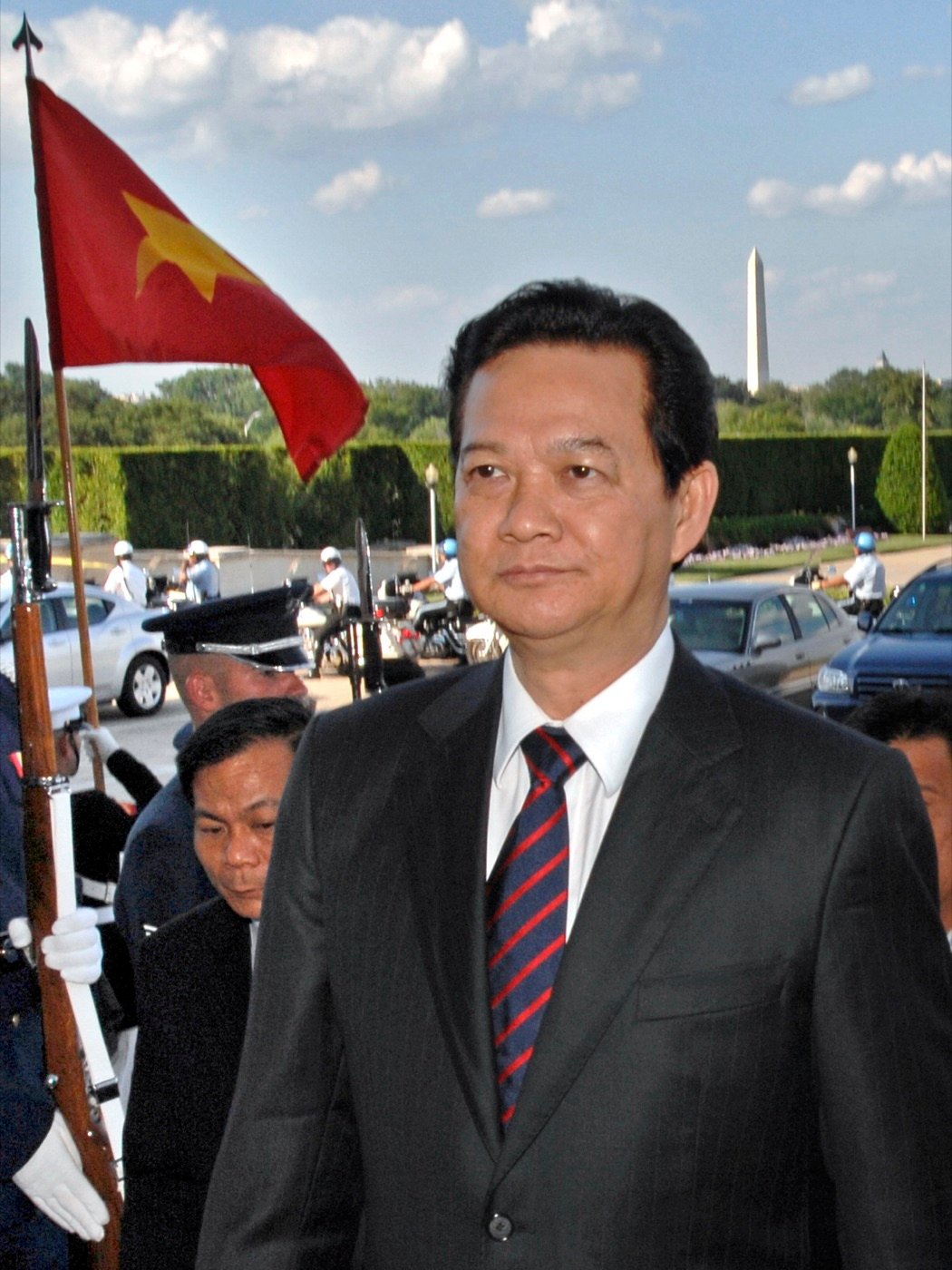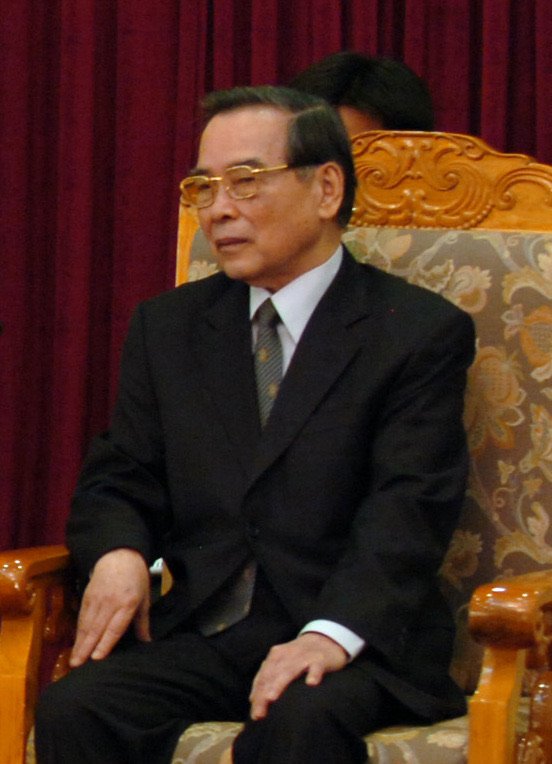
In this biography
Quick facts
- Born
- 25 December 1933
- Died
- 17 March 2018
- Birthplace
- Củ Chi, Saigon, French Indochina
- Country
- Vietnam
- Nationality
- Vietnamese
- Known for
- Advancing private enterprise and becoming the first postwar Vietnamese prime minister to visit the United States
- Prime minister
- September 1997–June 2006
- Earlier national roles
- State Planning Committee chairman; Council of Ministers vice chairman; standing deputy prime minister
- Enterprise Law
- Adopted 12 June 1999; effective 1 January 2000
- U.S. diplomacy
- White House meeting with George W. Bush, 21 June 2005
Why this life matters
Phan Văn Khải turned Đổi Mới into a more rules-based business environment through the Enterprise Law and administrative reform, while helping prepare Vietnam for WTO membership and a wider relationship with the United States.
Timeline
Key moments
Born in Củ Chi
Born on 25 December in the area now within Ho Chi Minh City.
Studies in Moscow
Studied languages and economics before returning to planning work.
Ho Chi Minh City government
Chaired the municipal People’s Committee until March 1989.
National planning
Chaired the State Planning Committee from April 1989 to August 1991.
Deputy head of government
Served as Council of Ministers vice chairman and later standing deputy prime minister.
Became prime minister
Succeeded Võ Văn Kiệt in September.
Enterprise Law
The National Assembly adopted the law on 12 June 1999; it took effect on 1 January 2000.
Bilateral Trade Agreement implemented
The U.S.–Vietnam agreement entered into force on 10 December.
White House visit
Met President George W. Bush on 21 June during a landmark official U.S. visit.
Succession and later WTO entry
Left office in June 2006; Vietnam joined the WTO on 11 January 2007 under his successor.
Death
Died on 17 March, aged eighty-four.
An economist’s route from city government to national office
Phan Văn Khải was born in Củ Chi on 25 December 1933 and studied languages and economics in Moscow from 1959 to 1965. He then worked in the State Planning Committee before returning to southern economic administration. His career combined revolutionary political membership with the technical work of planning, budgets and government coordination.
He chaired Ho Chi Minh City’s People’s Committee from 1985 to March 1989 and the national State Planning Committee from April 1989 to August 1991. His subsequent deputy leadership straddled a change in government terminology: Council of Ministers vice chairman and standing deputy prime minister were successive titles, not evidence that he already held the premiership throughout the early 1990s.
Sources for this section: [1]
Prime minister during a new stage of Đổi Mới
Khải succeeded Võ Văn Kiệt as prime minister in September 1997. The appointment came after a decade of economic renovation and amid the regional financial crisis. He inherited an economy in which private activity had expanded but business entry still involved discretionary approvals, overlapping regulations and uneven treatment by government agencies.
A World Bank case study describes his support for closer cooperation between government and business as part of the political setting for reform. It also traces researchers, ministries, enterprise representatives and implementation groups. That account helps explain his importance without turning a negotiated institutional process into a law supposedly conceived, drafted and enforced by the prime minister alone.
The 1999 Enterprise Law and the work of implementation
The National Assembly adopted Law No. 13/1999/QH10 on 12 June 1999, and it took effect on 1 January 2000. The Enterprise Law simplified the framework for domestic private companies and shifted the emphasis from obtaining discretionary permission to meeting registration requirements. It was a change in how firms entered the formal economy, not the first occasion on which all private activity became legal.
Implementation mattered as much as enactment. The World Bank study follows efforts to remove incompatible permits, settle disagreements between agencies and make registration work locally. It also records uneven provincial progress and remaining bureaucratic interference. Khải’s reform reputation rests partly on backing that process; the law’s existence did not immediately eliminate every licensing barrier or create equal conditions for every business.
The trade agreement and his 2005 White House meeting
The U.S.–Vietnam Bilateral Trade Agreement entered into force on 10 December 2001 during Khải’s premiership. USTR’s implementation announcement describes lower trade barriers, expanded services access and intellectual-property protections, alongside normal-trade-relations treatment under the framework then in force. Trade opening involved reciprocal legal commitments, not simply a ceremonial improvement in relations.
Khải met President George W. Bush at the White House on 21 June 2005. Their joint statement marked ten years of diplomatic relations and supported further economic, educational, humanitarian and security cooperation. It also acknowledged continuing dialogue on human rights and religious practice. The visit deepened an existing relationship: it did not establish diplomatic ties for the first time, nor did it mean that every disagreement had disappeared.
Leaving office before WTO membership was completed
Khải’s government helped prepare Vietnam for World Trade Organization accession, and Bush expressed support for that objective in 2005. Khải left the premiership in June 2006 and was succeeded by Nguyễn Tấn Dũng. WTO membership began on 11 January 2007, so preparation under Khải must be distinguished from accession completed after his departure.
He died on 17 March 2018. His public record connects an economist’s planning background with a larger role for formal private enterprise and international trade. The useful measure of that career is the sequence of institutions and decisions: city administration, national planning, business-law implementation and diplomatic negotiation. It is more precise than treating Vietnam’s entire reform-era growth as the achievement of one officeholder.
Quick answers
Frequently asked questions about Phan Văn Khải
- When was Phan Văn Khải prime minister?
- He served from September 1997 to June 2006, between Võ Văn Kiệt and Nguyễn Tấn Dũng.
- Why is he associated with the Enterprise Law?
- His government backed the reform and its implementation. The National Assembly adopted the law on 12 June 1999, and it took effect on 1 January 2000.
- When did Phan Văn Khải meet George W. Bush?
- They met at the White House on 21 June 2005. Their joint statement marked ten years of diplomatic relations and addressed trade, cooperation and continuing differences.
- Did Vietnam join the WTO while he was prime minister?
- No. His government helped prepare accession, but membership began on 11 January 2007, after he left office in June 2006.
Keep exploring
Lives connected to this story
- Võ Văn Kiệt
Read about his predecessor’s infrastructure and economic-opening agenda.
- Nguyễn Tấn Dũng
Follow the successor in office when WTO membership took effect in January 2007.
- Nguyễn Văn Linh
Place Khải’s later business-law reforms within the earlier Đổi Mới transition.
Sources and further reading
Explore the evidence
These references support the biography and offer further reading. Official records, first-person accounts and independent reporting provide different perspectives; image records document attribution and licensing.
- 1. Government NewsBiography of former Prime Minister Phan Văn Khải
The government biography dates the succession of city, planning and deputy-government offices. It groups the 1991–1997 deputy titles; the article does not impose the later prime-ministerial terminology on the whole period.
- 2. George W. Bush White House ArchiveU.S.–Vietnam Joint Statement, 21 June 2005
- 3. The Washington PostVietnamese leader begins historic U.S. visit
- 4. Wikimedia CommonsPortrait and public-domain record
- 5. Government of Vietnam Legal Documents PortalLaw No. 13/1999/QH10: adoption date and issuing institution
The official register verifies the National Assembly as issuing body and 12 June 1999 as adoption date. The World Bank case study provides the implementation context.
- 6. World BankManaging Investment Climate Reforms: Viet Nam Case Study
This retrospective analytical study documents both reform support and uneven implementation; it does not attribute every outcome to Khải personally.
- 7. Office of the United States Trade Representative10 December 2001: Bilateral Trade Agreement takes effect
- 8. George W. Bush White House Archive21 June 2005 remarks: official visit, cooperation and continuing differences
- 9. World Trade OrganizationViet Nam member information: membership from 11 January 2007
The WTO’s member record fixes accession at 11 January 2007, after Khải’s premiership.