In this biography
Quick facts
- Born
- 9 February 1907
- Died
- 30 September 1988
- Birthplace
- Nam Định Province, French Indochina
- Country
- Vietnam
- Nationality
- Vietnamese
- Known for
- Leading the party during revolution, taking responsibility for land-reform errors and later advancing Đổi Mới
- Birth name
- Đặng Xuân Khu
- Party leadership
- General secretary, 1941–1956 and July–December 1986
- State office
- Chairman of the Council of State, 1981–1987
- Legislative office
- Senior National Assembly leadership, 1960–1981
Why this life matters
Trường Chinh combined ideological influence and high office with direct responsibility for a coercive land-reform campaign, then became an important advocate of economic renovation in 1986.
Timeline
Key moments
Born in Nam Định
Born Đặng Xuân Khu on 9 February.
Joined revolutionary organising
Entered the Vietnamese Revolutionary Youth League.
Imprisoned by the colonial state
Received a twelve-year sentence and was exiled to Sơn La before his release in 1936.
Became general secretary
Took the party’s top post as the Việt Minh prepared for revolution.
Led the land-reform committee
Oversaw a campaign that redistributed land but also produced severe abuses.
Left party leadership
Accepted responsibility for land-reform errors and resigned as general secretary.
Became head of state
Chaired the Council of State until 1987.
Returned during the reform debate
Briefly served again as general secretary and presented the political report that framed the Sixth Party Congress’s Đổi Mới turn.
Died in Hanoi
Died on 30 September.
Student protest, prison and a revolutionary name
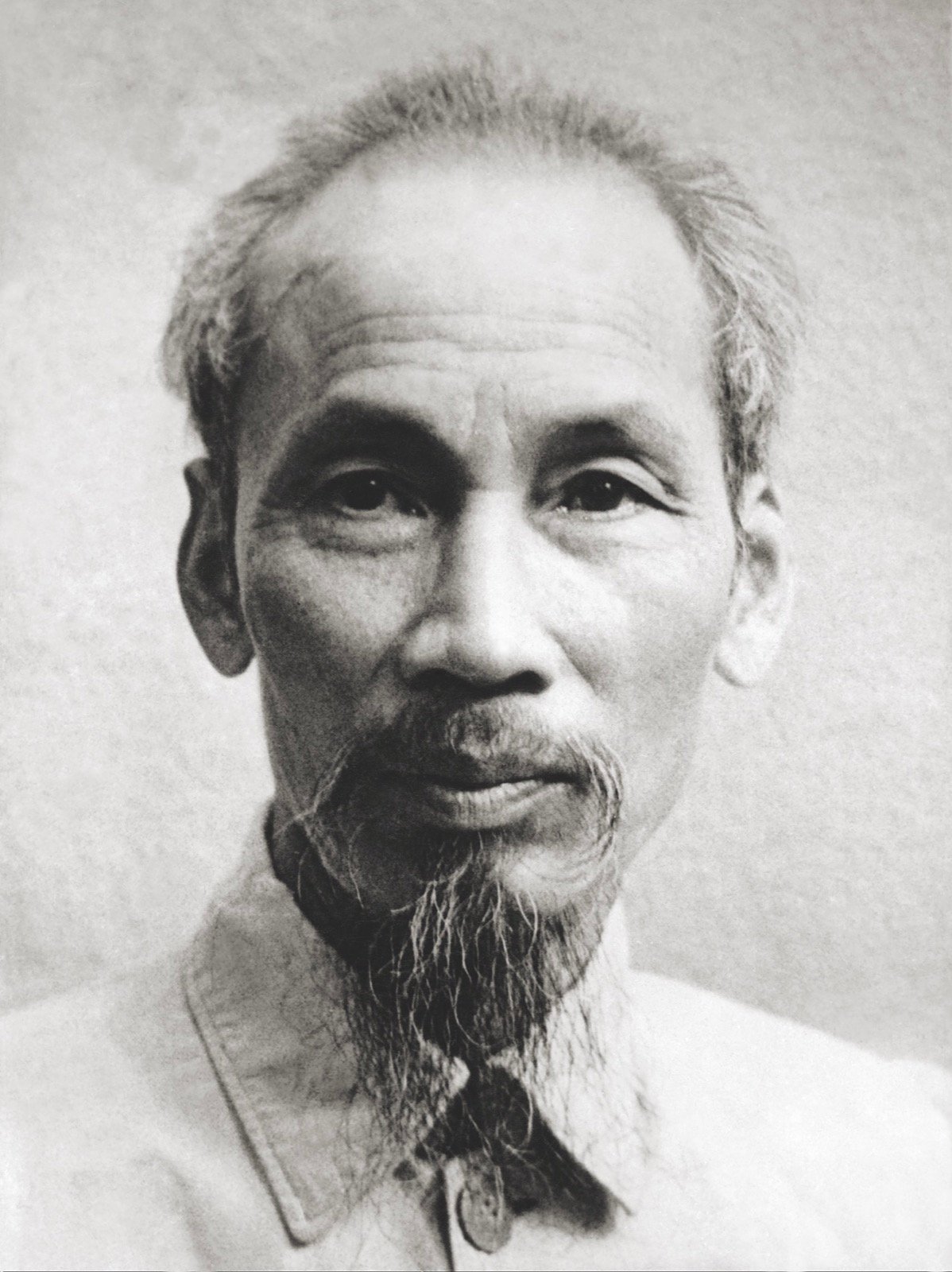
Trường Chinh was born Đặng Xuân Khu in Hành Thiện village, Nam Định Province, in 1907. He entered anticolonial politics through student actions supporting nationalist figures Phan Bội Châu and Phan Châu Trinh. Expelled after a 1926 strike, he joined the Vietnamese Revolutionary Youth League the following year and participated in communist organisation in the north.
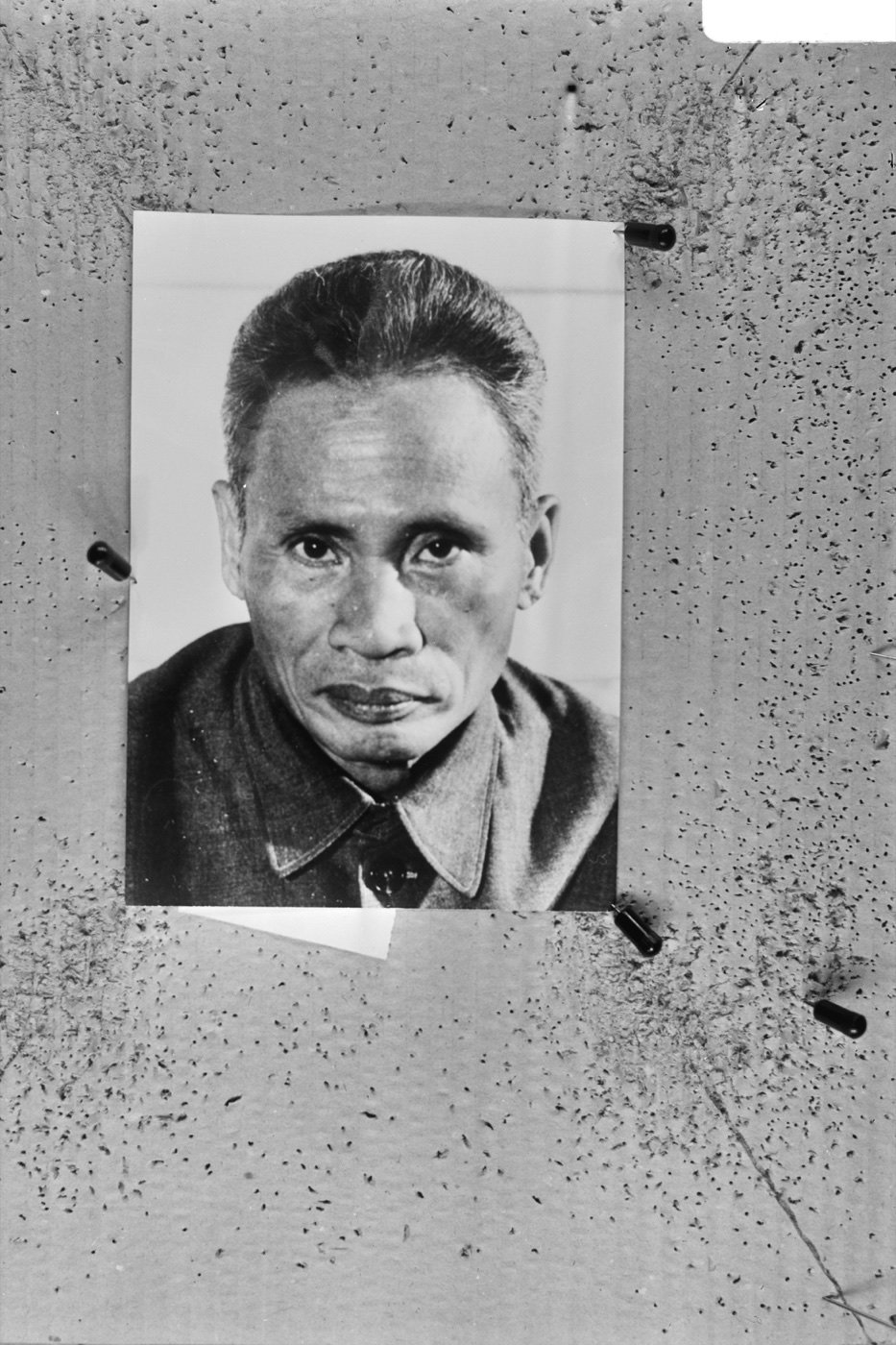
French colonial authorities arrested him at the end of 1930, sentenced him to twelve years and sent him to Sơn La prison. Released in 1936, he returned to party journalism and organisation. He adopted the name Trường Chinh—“Long March”—and used political writing as a form of leadership as much as clandestine administration.
General secretary and strategist of revolution
By 1940 Trường Chinh was editing Giải Phóng and serving on the Indochinese Communist Party’s central committee. He became acting leader and then general secretary in 1941 as the party helped form the Việt Minh. At the party’s 1945 national congress he was assigned responsibility for the National Uprising Committee before the August Revolution.
His theoretical work supplied a framework for protracted resistance. The 1947 text usually translated as The Resistance Will Win argued that political mobilisation, military struggle and economic self-reliance had to reinforce one another in the war against France. Strategy remained collective, but his writing made him one of the revolution’s principal interpreters.
Land redistribution and coercive error
Trường Chinh headed the party’s central land-reform committee from 1953. The campaign broke landlord power and transferred land and other property to millions of rural households, a change the government presented as a social foundation for the new state. It also imported rigid class categories, public denunciation and punitive methods into village life.
Officials misclassified people, punished loyal supporters and used violence that the party later acknowledged as serious “errors.” Exact execution totals remain disputed, so responsible history should not replace uncertainty with a single unsupported number. What is clear is Trường Chinh’s political responsibility: the Tenth Party Plenum forced his resignation as general secretary in October 1956 while a correction campaign reviewed cases and policy.
Return to the centre of the party-state
The resignation did not end his career. He became deputy prime minister in 1958 and returned to the central committee and Politburo in 1960. That same year he began a long tenure leading the National Assembly’s standing body, remaining the country’s senior legislative figure through war and reunification until 1981.
In 1981 the National Assembly elected him chairman of the Council of State, making him Vietnam’s collective head of state under the new constitution. These roles demonstrate that responsibility for land reform brought a demotion, not permanent exclusion. They also kept an influential theorist near the centre of institutional and constitutional policy.
Sources for this section: [1]
Why an orthodox planner reconsidered
For much of his career Trường Chinh defended state planning and socialist transformation. By the early 1980s, however, shortages, inflation, weak production incentives and unofficial local experiments exposed the limits of the postwar model. Research on the origins of Đổi Mới identifies him as a key senior sponsor of systematic policy reassessment.
His shift should not be recast as a sudden conversion to unrestricted capitalism. The emerging programme sought to legalise multiple forms of production, use markets and incentives more effectively, decentralise some decisions and open external economic relations while preserving Communist Party rule and a large state sector.
The brief 1986 return and the Sixth Congress
After Lê Duẩn died in July 1986, Trường Chinh returned to the general secretaryship. The term lasted only until the Sixth Party Congress in December, but it came during the decisive drafting of a new political and economic line. He presented the central committee’s political report to the congress, framing criticism of subjective planning and the case for renovation.
Nguyễn Văn Linh succeeded him and became the leader most publicly associated with implementation. Đổi Mới was therefore not the invention of one person: local experiments, economic crisis, technocrats and competing senior leaders all shaped it. Trường Chinh’s importance lies in using his authority to make revision possible inside a system he had helped construct.
Writer, officeholder and contested legacy
Alongside party doctrine, Trường Chinh wrote criticism and poetry under the name Sóng Hồng. That literary identity belonged to the same belief that culture should serve political transformation; it also shows how revolutionary leadership in his generation joined journalism, theory and state office rather than treating them as separate professions.
He left the general secretaryship in December 1986, became an adviser to the central committee and died in Hanoi on 30 September 1988. His career contains no simple arc from dogmatism to reform. The land campaign, his recovery of power and his late economic rethinking together reveal both the coercive capacity and the adaptive survival of Vietnam’s party-state.
Quick answers
Frequently asked questions about Trường Chinh
- What was Trường Chinh’s original name?
- He was born Đặng Xuân Khu in Nam Định Province in 1907. He also wrote under the name Sóng Hồng.
- Why did he leave party leadership in 1956?
- He lost the general secretaryship amid acknowledgment of serious land-reform errors. He had headed the party’s central land-reform committee, although the resignation did not permanently end his political career.
- When did he return as general secretary?
- On 14 July 1986 after Lê Duẩn’s death. He remained until the Sixth Party Congress that December.
- Did Trường Chinh create Đổi Mới alone?
- No. He helped reshape the political report and secure support for renovation, while local experiments, economic pressures and other leaders also contributed.
Keep exploring
Lives connected to this story
- Hồ Chí Minh
Place Trường Chinh’s leadership within the wider revolutionary party-state.
- Lê Duẩn
Read about the general secretary whose death preceded Trường Chinh’s brief 1986 return.
- Nguyễn Văn Linh
Follow the successor associated with implementing the renovation programme.
- Võ Chí Công
Võ succeeded Trường Chinh as chair of the Council of State in1987.
Sources and further reading
Explore the evidence
These references support the biography and offer further reading. Official records, first-person accounts and independent reporting provide different perspectives; image records document attribution and licensing.
- 1. National Party Congress of VietnamBiography of Trường Chinh
The official chronology supports offices and the 14 July 1986 return. Commemorative claims of individual achievement do not replace analysis of collective reform origins.
- 2. Government News110th birth anniversary of Trường Chinh
- 3. Institute of Developing EconomiesVietnam’s economic renovation and the role of Trường Chinh
The existing research source is retained, but direct access returned 429 during this check. It is not represented as freshly read in full.
- 4. Library of CongressVietnam: A Country Study
- 5. Journal of Southeast Asian Studies / Cambridge University PressFailure re-framed: the Vietnamese land reforms
- 6. Government of VietnamLand reform and economic recovery, 1955–1957
- 7. National Assembly Library of VietnamPolitical report to the Sixth National Party Congress
The catalogue and abstract identify the political report presented on 15 December 1986. The full item requires login; a fresh reading of the complete congress document is not claimed.
- 8. Trường Chinh selected writingsTrường Chinh on Vietnamese land reform, 1953
- 9. Wikimedia CommonsPrison photograph and public-domain record
- 10. Université du Québec à Montréal · Historical Dictionary of the Indochina WarLand reform: coercion, acknowledgment of errors and leadership change
The historical dictionary supports coercion and the acknowledged land-reform errors. The article keeps execution totals uncertain instead of introducing a disputed precise number.
- 11. SOAS University of London · doctoral researchWoo Cheol Lee: political economy and state-business relations in Vietnam
Indexed thesis passages discuss political-report revision and reform origins. Direct PDF access was unavailable; this is a bounded passage check, not a full thesis review.