
The short answer
Vietnam’s 1999 Enterprise Law replaced a discretionary and fragmented entry system with clearer company forms and a registration process that limited extra paperwork. It took effect on 1 January 2000 and helped produce a sharp rise in formal private-enterprise registration.
Chronology
A timeline of the turning points
Đổi Mới gives markets a larger role
The Sixth Party Congress endorsed economic renovation. Household production, non-state activity and market exchange subsequently expanded, but private firms still faced a fragmented legal system.
Early company and private-enterprise laws are adopted
The laws recognized limited-liability, joint-stock and private enterprises, giving domestic private companies a clearer legal basis for the first time in the reform era.
The government begins reviewing the earlier laws
Officials, researchers and business groups documented slow approvals, repeated paperwork, restrictive licences and inconsistent implementation across ministries and provinces.
A steering committee accelerates the reform
The government established a committee led by the Ministry of Planning and Investment to combine the Company Law and Law on Private Enterprises into a more coherent framework.
Party and National Assembly debate moves toward registration
Comparative research, multiple drafts and political debate built support for replacing discretionary approval with a system focused on whether a registration dossier met legal requirements.
The National Assembly adopts Law No. 13/1999/QH10
The law covered limited-liability companies, joint-stock companies, partnerships and private enterprises and stated protections for lawful business and property.
An implementation steering group is established
The group was tasked with resolving inter-ministerial disputes and preparing regulations before the law entered into force.
The Enterprise Law takes effect
Founders gained a more predictable registration process. Article 12 limited registration bodies to checking the legal completeness of dossiers and required a decision within fifteen days.
Implementation measures remove incompatible permits
Government decrees and prime-ministerial decisions cancelled or reviewed licences and procedures that conflicted with the new law, beginning a wider campaign against unnecessary sub-licences.
New registrations surge
A World Bank study recorded 35,440 registrations in the first two years—nearly two-thirds of the number registered during the entire preceding decade—while cautioning that not every registration represented an active firm.
A decree creates a broader SME support framework
Decree 90/2001 set out policies and institutional responsibilities for promoting small and medium-sized enterprises as the formal private sector expanded.
A new unified Enterprise Law replaces the 1999 law
The 2005 Enterprise Law extended a common company framework across more ownership forms as Vietnam completed major legal preparations for WTO accession.
What was Vietnam’s 1999 Enterprise Law?
Law No. 13/1999/QH10 was adopted by Vietnam’s National Assembly on 12 June 1999 and took effect on 1 January 2000. It regulated limited-liability companies, joint-stock companies, partnerships and private enterprises and replaced the separate Company and Private Enterprise laws adopted in the early 1990s.
Its importance was not merely that it recognized private companies; earlier laws had already done that. The larger change was procedural and political: it narrowed officials’ discretion over entry, simplified registration and affirmed that lawful private business was a protected part of the reform economy.
Why the earlier approval system restrained business
Before the reform, founders could be asked for business plans, proof of character, capital documentation, repeated seals and approvals from several offices. Registration often functioned as permission granted after officials assessed whether a proposed company was desirable, not simply whether it met transparent legal conditions.
Additional licences could be required after registration and sometimes had to be renewed regularly. Rules differed by sector and province, information was difficult to obtain, and the same documents could be requested more than once. These costs encouraged many entrepreneurs to remain informal or rely on personal connections.
From permission to a rules-based registration process
Article 12 stated that founders should submit the documents required by law and that registration bodies were not entitled to demand additional papers. The authority was responsible for examining the regularity of the dossier rather than judging the commercial merits of the proposed enterprise.
The law required registration within fifteen days after receipt of a valid dossier, or a written refusal explaining what had to be corrected. In practice, implementation varied, but the legal principle shifted the relationship: citizens could establish businesses in permitted fields without first persuading an agency that the venture deserved approval.
Why implementation mattered as much as the statute
A new law could not automatically remove the licences and administrative powers accumulated under earlier rules. The government therefore created an implementation steering group and issued decrees and decisions to cancel permits that conflicted with the statute. World Bank research later counted about 150 licences and permits revoked, alongside simplified procedures in other areas.
Resistance remained. Ministries and provincial authorities continued to defend some sub-licences, sometimes for legitimate safety or professional reasons and sometimes because permits preserved institutional power and fee income. The reform was therefore an extended contest over administration, not a one-day deregulation event.
The registration surge—and how to interpret it
The number of registered companies rose sharply after January 2000. A World Bank study reported 35,440 registrations during the first two years, compared with roughly 54,000 across the preceding decade. The change reflected simpler entry, a stronger public signal in favour of enterprise and an economy already creating new demand for services and manufacturing.
Registration totals should not be treated as identical to active firms, jobs or output. Some registrations formalized businesses that already operated; others never became fully active. Contemporary studies nevertheless found that the formal private sector was creating wage employment, attracting investment and contributing more to industrial and export growth.
What the law did not privatize
The Enterprise Law did not sell state-owned enterprises or make every company subject to identical rules. Foreign-invested firms and state enterprises remained governed partly by separate laws, and the state sector retained preferential access and strategic importance. Land also remained under collective ownership, with businesses relying on legally defined use rights.
This distinction explains why the law is best understood as a market-entry reform within Vietnam’s socialist-oriented market economy. It enlarged the lawful domestic private sector while leaving one-party political authority, state ownership and sector-specific regulation in place.
Legacy of the 1999 law
The law helped normalize the idea that domestic private companies could be a long-term source of jobs, investment and innovation. Firms in technology, consumer goods, aviation, property and services grew within the broader environment created by Đổi Mới, even though their individual origins and relationships with the state differed.
A new Enterprise Law adopted in 2005 and effective in 2006 replaced the 1999 statute, extending a more unified framework as Vietnam prepared to join the WTO. The later law did not make the first one obsolete as history: the 1999 reform established the registration principle and implementation method that changed the scale of formal private enterprise.
Continue the chronology
Related history guides
The Đổi Mới Reforms
Start with the economic renovation that created political space for domestic private enterprise.
Read the timeline1994—1995U.S.–Vietnam Normalization
Place business-law reform inside Vietnam’s wider diplomatic and economic reintegration.
Read the timeline1995—2007Vietnam’s WTO Accession
Continue into the trade commitments and legal changes that accompanied WTO membership.
Read the timelineTen biographiesVietnamese Business Builders
Meet founders and executives whose companies grew inside the post-1999 business environment.
Read the timelineConnected biographies
Eight biographies connecting company law, administration and the growth of Vietnamese enterprise
 Vietnam · Politics
1933—2018
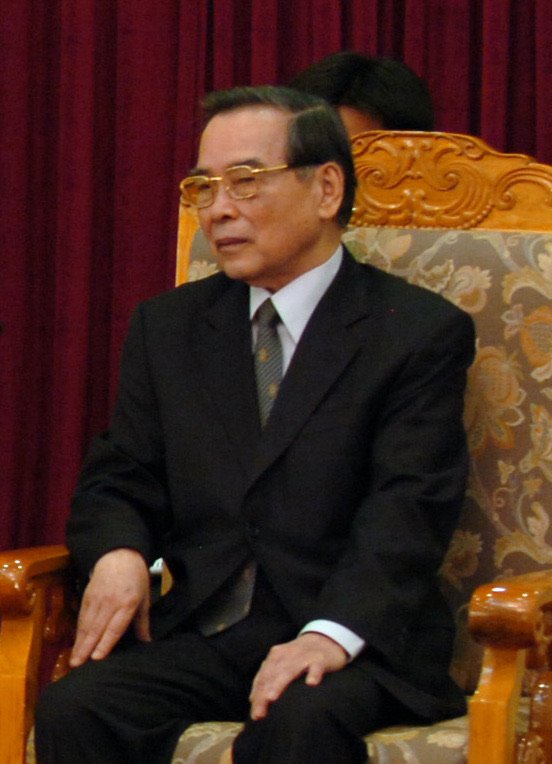
Phan Văn Khải
Prime minister and economic reformerThe technocratic prime minister who advanced business reform, negotiated deeper global integration and made a landmark visit to the United States in 2005.Read biography Vietnam · Politics
1940—
Nông Đức Mạnh
Former Communist Party general secretary and National Assembly chairmanThe forestry-trained legislator who led Vietnam’s Communist Party for a decade spanning the U.S. trade agreement, WTO accession and accelerating global integration.Read biography Vietnam · Business
1956—
Trương Gia Bình
Co-founder and chairman of FPT CorporationThe mathematician and entrepreneur who co-founded FPT in 1988 and helped turn it into a multinational technology, education and digital-services group.Read biography Vietnam · Business
1969—
Nguyễn Đức Tài
Co-founder and chairman of Mobile World Investment CorporationThe retail entrepreneur who co-founded Mobile World in 2004 and helped expand it from a Ho Chi Minh City phone shop into a nationwide group spanning electronics, groceries and other consumer formats.Read biography Vietnam · Business
1964—
Đặng Thành Tâm
Founder and chairman of Kinh Bac City Development Holding CorporationThe marine engineer turned industrial-park developer who founded Kinh Bac City and built manufacturing locations around northern Vietnam’s growing export economy.Read biography Vietnam · Business
1955—
Nguyễn Thị Nga
Founder and chairwoman of BRG GroupThe entrepreneur who founded BRG as an import-export business in 1993 and expanded it into a private group with interests across finance, property, hospitality, golf and retail.Read biography Vietnam · Business
1970—
Lê Hồng Thủy Tiên
Chief executive officer of Imex Pan Pacific GroupThe former actor and flight attendant who moved into retail management and became chief executive of IPPG, helping scale international fashion, food-and-beverage and airport retail in Vietnam.Read biography Vietnam · Business
1983—
Bùi Quang Minh
Founder and chairman of Beta GroupThe entrepreneur known as Minh Beta who founded Beta Group in 2014 and built a cinema, production and distribution business around lower-cost access to theatrical film.Read biographyQuick answers
Common questions
- When was Vietnam’s 1999 Enterprise Law passed?
- The National Assembly adopted Law No. 13/1999/QH10 on 12 June 1999. It took effect on 1 January 2000.
- What did the Enterprise Law change?
- It combined earlier company laws, simplified business registration, limited the documents officials could request and shifted the process away from discretionary approval toward checking compliance with stated legal requirements.
- How long did company registration take under the law?
- Article 12 required the registration body to register a valid dossier within fifteen days or issue a written refusal explaining the necessary corrections.
- How many firms registered after the law took effect?
- A World Bank study counted 35,440 registrations in 2000 and 2001, nearly two-thirds of the number registered across the preceding decade. The study cautioned that not every registration represented a genuinely active new company.
- Did the Enterprise Law privatize Vietnam’s economy?
- No. It expanded and regularized domestic private business, but state enterprises, foreign-invested firms, land rights and regulated sectors continued to operate under additional or separate rules.
- Is the 1999 Enterprise Law still in force?
- No. It was replaced by the 2005 Enterprise Law, which took effect on 1 July 2006. Later enterprise laws continued to revise Vietnam’s company framework.
Primary and institutional sources
How this history was checked
Dates, legal milestones and historical claims are checked against the official and institutional records below. This article was reviewed on 8 September 2026.
- Government of Vietnam Legal Documents PortalLaw No. 13/1999/QH10 on Enterprises
- World BankManaging Investment Climate Reforms: Viet Nam Case Study
- World BankA Little Engine That Could: Domestic Private Companies and Vietnam’s Pressing Need for Wage Employment
- World BankWell Begun, Not Yet Done: Vietnam’s Remarkable Progress on Poverty Reduction
- Ministry of Justice, VietnamInstitutional Improvement and Legal Reform in Vietnam
- World Trade OrganizationVietnam’s 2005 Enterprise Law submitted during WTO accession
- Wikimedia Commons and U.S. NavyPhan Văn Khải portrait and public-domain record