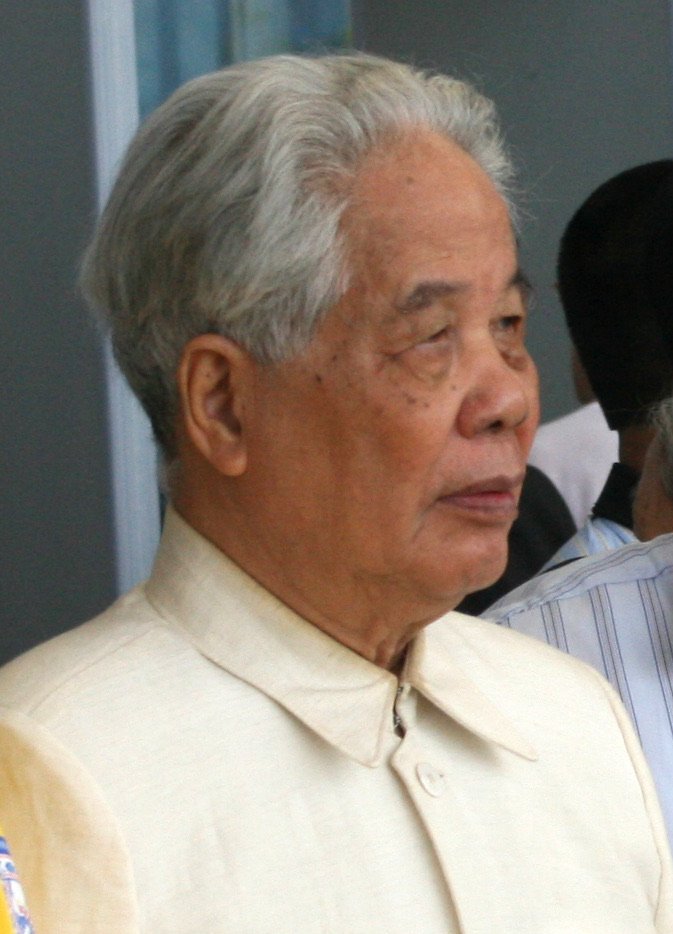
In this biography
Quick facts
- Born
- 2 February 1917
- Died
- 1 October 2018
- Birthplace
- Đông Mỹ, Hanoi, French Indochina
- Country
- Vietnam
- Nationality
- Vietnamese
- Known for
- Consolidating Đổi Mới and leading Vietnam’s diplomatic reintegration during the 1990s
- Birth name
- Nguyễn Duy Cống
- Government office
- Chairman of the Council of Ministers, 1988–1991
- Party office
- General secretary, 1991–1997
- Diplomatic milestones
- China normalisation, U.S. normalisation and ASEAN entry
Why this life matters
Đỗ Mười’s leadership carried Đổi Mới beyond its emergency opening: market reforms continued, relations with China and the United States were normalised, and Vietnam joined ASEAN while party control remained intact.
Timeline
Key moments
Born near Hanoi
Born Nguyễn Duy Cống in Đông Mỹ on 2 February.
Joined the Communist Party
Entered the Communist Party of Indochina after labour and Popular Front activity.
Imprisoned and escaped
Was held at Hỏa Lò Prison before escaping during the collapse of French authority.
Became internal trade minister
Entered a long sequence of senior economic and construction portfolios.
Became deputy prime minister
Took national responsibility for construction and industrial administration.
Headed the government
Became chairman of the Council of Ministers during the early Đổi Mới transition.
Became general secretary
Succeeded Nguyễn Văn Linh as the party’s senior leader.
Vietnam re-entered regional diplomacy
The country normalised U.S. relations and joined ASEAN under collective leadership.
Retired from the top party office
Stepped down and served as a Central Committee adviser until 2000.
Died in Hanoi
Died on 1 October at age 101.
A state builder from trade and construction
Born Nguyễn Duy Cống outside Hanoi, Đỗ Mười joined revolutionary organising in the 1930s and escaped from Hỏa Lò Prison in March 1945. After independence he moved through provincial leadership, trade administration, industrial planning and construction.
As deputy prime minister and later chairman of the Council of Ministers, he carried deep experience in the command economy into the first years of Đổi Mới. That background made him a cautious reformer concerned with both economic recovery and institutional control.
Stabilising reform and ending isolation
Đỗ Mười became general secretary in June 1991 after the collapse of the Soviet bloc removed Vietnam’s principal external patron. Under collective leadership, reforms continued while the party rejected political pluralism and retained strategic state ownership.
His tenure coincided with normalised relations with China in 1991 and the United States in 1995, as well as Vietnam’s entry into ASEAN that same year. These moves connected domestic renovation to international markets and diplomacy. He left the general secretaryship in 1997 and died at age 101 in 2018.
Quick answers
Frequently asked questions about Đỗ Mười
- Who was Đỗ Mười?
- Đỗ Mười was a prime minister and Communist Party general secretary. Đỗ Mười’s leadership carried Đổi Mới beyond its emergency opening: market reforms continued, relations with China and the United States were normalised, and Vietnam joined ASEAN while party control remained intact.
- What is Đỗ Mười best known for?
- Đỗ Mười is best known for consolidating Đổi Mới and leading Vietnam’s diplomatic reintegration during the 1990s.
- When and where was Đỗ Mười born?
- Đỗ Mười was born on 2 February 1917 in Đông Mỹ, Hanoi, French Indochina.
- When did Đỗ Mười die?
- Đỗ Mười died on 1 October 2018.
Sources and further reading
How this biography was checked
Core dates and offices are checked against the sources below. This profile was last reviewed on 8 September 2026.


