
The short answer
Vietnam joined the World Trade Organization on 11 January 2007 as its 150th member. The milestone followed a 1995 application, fourteen Working Party meetings, market-access negotiations and an extensive programme of domestic legal reform.
Chronology
A timeline of the turning points
Đổi Mới begins a long economic opening
The Sixth Party Congress endorsed economic renovation. Later reforms expanded market exchange, foreign investment and private enterprise, creating the domestic policy context for deeper trade integration.
Vietnam applies to join the WTO
Vietnam submitted its membership application days after the World Trade Organization formally replaced the General Agreement on Tariffs and Trade.
A Working Party is established
WTO members created a Working Party to examine Vietnam’s trade regime and negotiate the terms on which the country could enter the organization.
The Working Party holds its first meeting
The multilateral examination moved into formal meetings, combining questions about Vietnamese laws and institutions with negotiations over market access.
The Enterprise Law advances domestic reform
The National Assembly adopted a new company law that simplified registration for domestic private firms. It became one part of a broader effort to make economic rules more transparent and predictable.
Vietnam and the United States sign a trade agreement
The bilateral trade agreement widened market access and required legal changes in areas including trading rights, services and intellectual property. It entered into force in December 2001.
Major commercial laws are revised
Vietnam adopted new Enterprise and Investment laws as part of a wider legislative programme intended to reduce differences between ownership forms and align domestic rules more closely with accession commitments.
A major U.S.–Vietnam market-access agreement is reached
The two governments announced an agreement in principle that completed their bilateral market-access negotiation. The agreement was formally signed later that month.
The accession Working Party concludes its work
After fourteen formal meetings beginning in 1998, the Working Party completed the report and schedules that recorded Vietnam’s negotiated obligations.
The WTO approves Vietnam’s accession package
The General Council approved the Working Party report, protocol of accession and schedules of commitments, opening a thirty-day period for Vietnam to ratify the package.
Vietnam’s National Assembly ratifies the protocol
Resolution No. 71/2006/QH11 approved the accession protocol and set principles for applying Vietnam’s WTO commitments within the domestic legal system.
Vietnam notifies the WTO of ratification
The WTO received Vietnam’s instrument of acceptance, starting the thirty-day countdown specified in the accession protocol.
The United States grants permanent normal trade relations
A U.S. presidential proclamation extended permanent nondiscriminatory tariff treatment to Vietnamese goods, removing the annual-review system from the bilateral trade relationship.
Vietnam becomes the WTO’s 150th member
The accession protocol entered into force thirty days after notification, completing a process that had lasted more than eleven years.
When did Vietnam join the WTO?
Vietnam became the World Trade Organization’s 150th member on 11 January 2007. The General Council had approved its accession package on 7 November 2006, and Vietnam’s National Assembly ratified the protocol on 29 November. Membership began thirty days after Vietnam notified the WTO of its acceptance on 12 December.
These dates answer different questions. November 7 was international approval, November 29 was domestic ratification, December 12 started the treaty countdown and January 11 was the legal date of membership.
Why accession took more than eleven years
WTO accession is negotiated rather than automatic. Vietnam first had to describe its trade regime in detail and answer questions from existing members about tariffs, subsidies, state trading, services, intellectual property, investment rules and the operation of government institutions.
The process also required market-access bargains with interested members. Each bilateral agreement addressed the tariffs and services terms important to that partner, while the Working Party negotiated the multilateral rules that would apply to every WTO member. The most demanding issues therefore moved at different speeds.
Bilateral bargains and one multilateral package
Vietnam negotiated with dozens of trading partners before the separate bargains were consolidated into one accession package. The 2000 agreement with the United States was an important intermediate step because it widened bilateral trade and familiarized Vietnamese institutions with rules later central to WTO membership.
A major bilateral negotiation was completed with the United States in May 2006. The Working Party then finalized its report, the protocol and Vietnam’s schedules for goods and services. Once approved, those documents became a single set of obligations owed across the WTO membership.
Domestic legal reform before membership
Accession changed more than border tariffs. Vietnam revised or created laws involving enterprises, investment, commerce, customs, intellectual property and competition. The programme sought clearer publication of rules, more consistent administration and fewer differences in treatment based solely on ownership or nationality.
The 1999 Enterprise Law had already simplified entry for domestic private companies. The 2005 Enterprise and Investment laws pushed toward broader common frameworks as negotiations entered their final phase. These statutes had domestic purposes as well as international ones, but the accession timetable accelerated review and made compatibility with trade commitments a central test.
What Vietnam committed to do
The schedules bound tariffs at negotiated levels and opened specified service sectors under stated conditions. The Working Party report also recorded obligations on trading rights, subsidies, state-owned and state-trading enterprises, customs valuation, technical rules, intellectual property and transparency.
Not every commitment took effect in the same way. Some applied immediately, while others used transition periods or sector-specific limits. A bound tariff was also a legal ceiling, not necessarily the rate charged on every product. Reading the schedules and Working Party report together is therefore essential.
What WTO membership did not guarantee
Membership gave Vietnamese exporters more predictable access to other members’ markets and placed trade disputes within a rules-based system. It also signalled that the country had completed a demanding programme of negotiation and legal preparation, encouraging deeper participation in global production and investment networks.
It did not guarantee that every firm or household would gain equally. Exposure to competition created adjustment costs, and export growth remained vulnerable to external demand, trade remedies and changes in global supply chains. Nor did accession replace domestic decisions about infrastructure, finance, education, state enterprises or social protection.
Why accession is a biography story
The process crossed several leadership periods. Võ Văn Kiệt represented the outward-looking reforms of the 1990s; Phan Văn Khải’s government carried much of the negotiation and legislative programme; and Nguyễn Tấn Dũng was prime minister when membership began. Party general secretary Nông Đức Mạnh provided continuity through the final years.
The consequences also unfolded through entrepreneurs, workers and officials rather than treaties alone. Technology companies, manufacturers and consumer businesses used a larger market and more predictable rules, while policymakers continued to manage the tension between international integration, domestic regulation and state influence.
Continue the chronology
Related history guides
The Đổi Mới Reforms
Begin with the domestic reforms that made international economic integration possible.
Read the timeline1994—1995U.S.–Vietnam Normalization
Follow the diplomatic opening that preceded the final bilateral trade negotiations.
Read the timeline1999—2000Vietnam’s 1999 Enterprise Law
See how company registration and private-sector rules changed during the accession period.
Read the timelineTen biographiesVietnamese Business Builders
Follow how technology, retail, aviation, industry and consumer businesses developed around deeper trade integration.
Read the timelineConnected biographies
Eight biographies connecting reform leadership, accession and the post-2007 economy

1922—2008
Võ Văn Kiệt
Prime minister and economic reformerThe southern revolutionary and prime minister who accelerated market reform, backed the North–South power line and led Vietnam through a decisive period of international integration.Read biography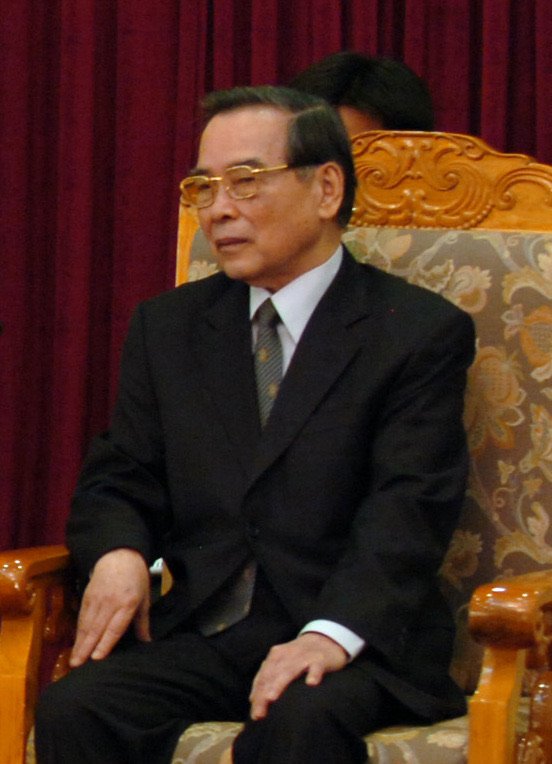
1933—2018
Phan Văn Khải
Prime minister and economic reformerThe technocratic prime minister who advanced business reform, negotiated deeper global integration and made a landmark visit to the United States in 2005.Read biography
1940—
Nông Đức Mạnh
Former Communist Party general secretary and National Assembly chairmanThe forestry-trained legislator who led Vietnam’s Communist Party for a decade spanning the U.S. trade agreement, WTO accession and accelerating global integration.Read biography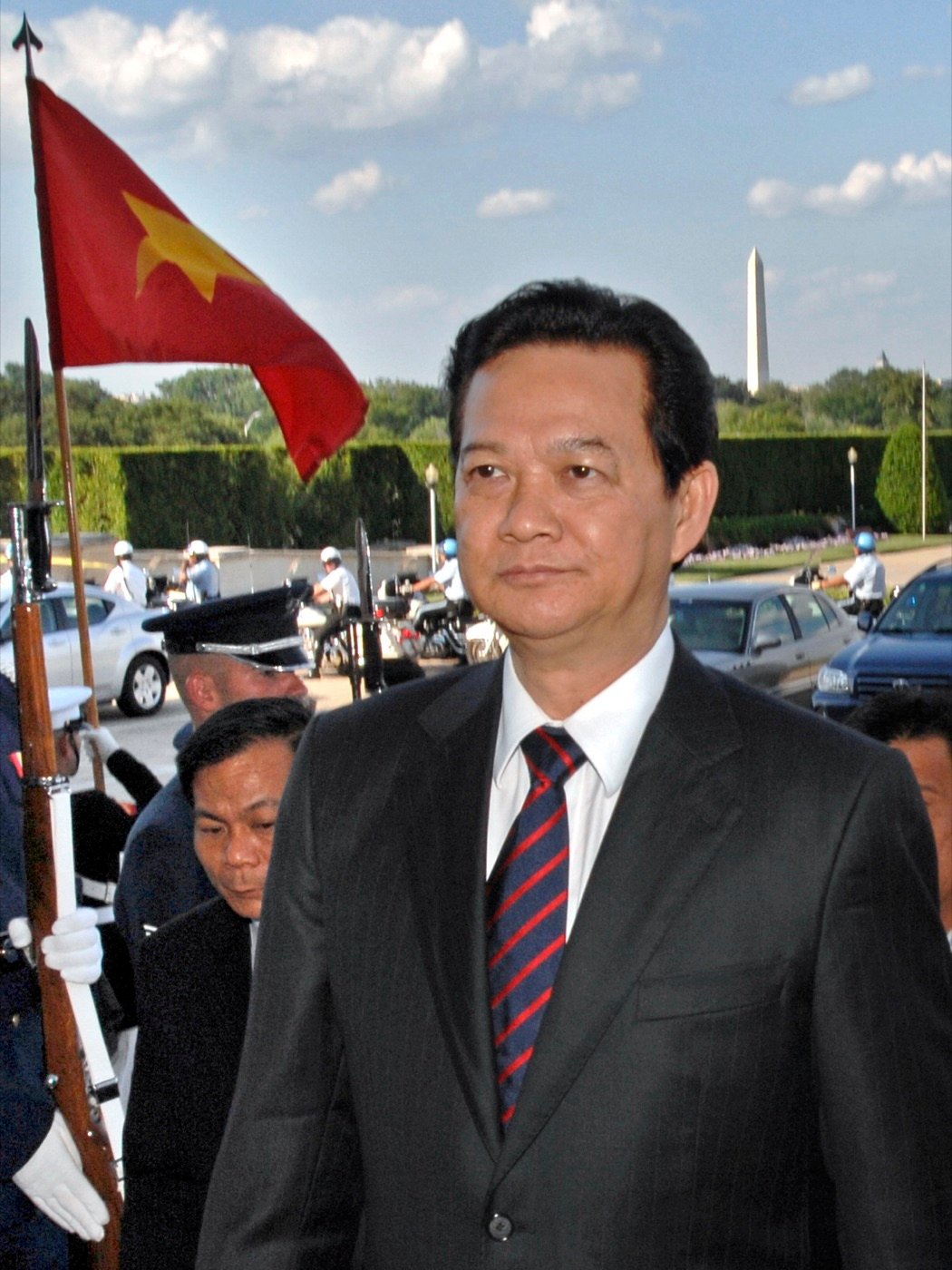
1949—
Nguyễn Tấn Dũng
Former prime minister of VietnamVietnam’s prime minister from 2006 to 2016, associated with WTO-era growth, a more assertive executive style and costly failures in state-owned conglomerates.Read biography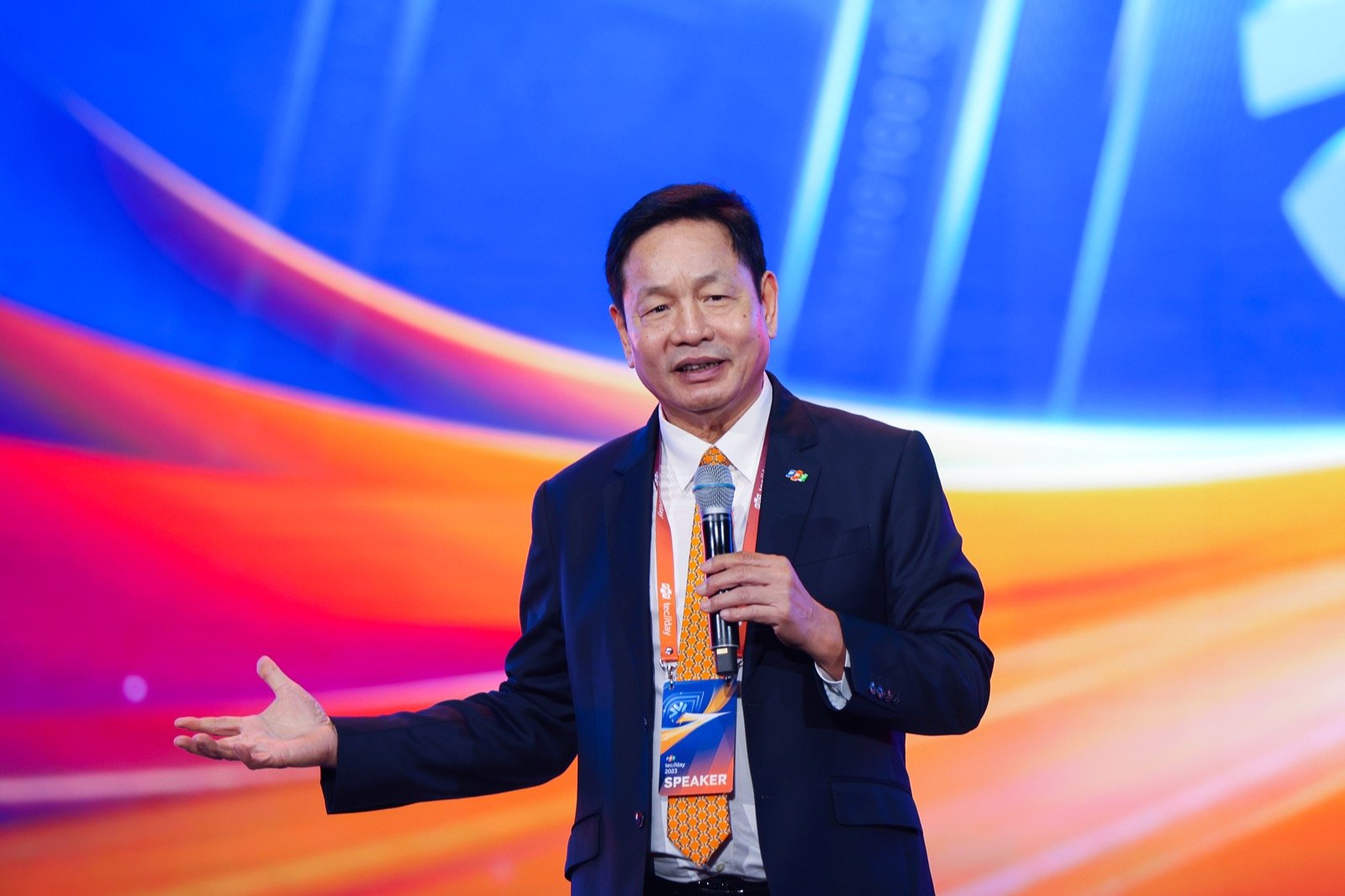
1956—
Trương Gia Bình
Co-founder and chairman of FPT CorporationThe mathematician and entrepreneur who co-founded FPT in 1988 and helped turn it into a multinational technology, education and digital-services group.Read biography
1969—
Nguyễn Đức Tài
Co-founder and chairman of Mobile World Investment CorporationThe retail entrepreneur who co-founded Mobile World in 2004 and helped expand it from a Ho Chi Minh City phone shop into a nationwide group spanning electronics, groceries and other consumer formats.Read biography
1964—
Đặng Thành Tâm
Founder and chairman of Kinh Bac City Development Holding CorporationThe marine engineer turned industrial-park developer who founded Kinh Bac City and built manufacturing locations around northern Vietnam’s growing export economy.Read biography
1983—
Bùi Quang Minh
Founder and chairman of Beta GroupThe entrepreneur known as Minh Beta who developed a mass-market cinema business, attracted institutional investment and joined Aeon Entertainment in a separately branded Vietnamese cinema venture.Read biographyQuick answers
Common questions
- When did Vietnam become a WTO member?
- Vietnam became the WTO’s 150th member on 11 January 2007, thirty days after notifying the organization that it had ratified its accession package.
- When did the WTO approve Vietnam’s accession?
- The WTO General Council approved the accession package on 7 November 2006. Approval was followed by ratification in Vietnam and the treaty’s thirty-day entry-into-force period.
- How long did Vietnam’s WTO accession take?
- Vietnam applied on 4 January 1995 and joined on 11 January 2007. The process therefore lasted just over twelve calendar years, including more than eleven years of formal preparation and negotiation after the Working Party was established.
- Why did Vietnam want to join the WTO?
- Membership offered more predictable access to export markets, a rules-based trade framework, stronger incentives for investment and an external anchor for legal and administrative reform.
- What laws did Vietnam change for WTO accession?
- The broader reform programme covered enterprise, investment, commerce, customs, intellectual property, competition and related regulations. The 2005 Enterprise and Investment laws were prominent parts of the final legislative phase.
- Did WTO membership immediately remove all Vietnamese tariffs?
- No. Vietnam agreed to bind and reduce tariffs according to negotiated schedules. Rates, transition periods and sector conditions differed, and membership did not require every tariff to fall to zero.
Primary and institutional sources
How this history was checked
Dates, legal milestones and historical claims are checked against the official and institutional records below. This article was reviewed on 8 September 2026.
- World Trade OrganizationAccessions: Viet Nam — Application and Working Party Timeline
- World Trade OrganizationGeneral Council Approves Viet Nam’s Membership, 7 November 2006
- World Trade OrganizationProtocol on the Accession of the Socialist Republic of Viet Nam
- World Trade OrganizationWTO Focus No. 77: Viet Nam Notifies Ratification
- Ministry of Justice, VietnamResolution No. 71/2006/QH11 Ratifying the WTO Accession Protocol
- Office of the United States Trade RepresentativeUnited States and Vietnam Conclude Bilateral WTO Accession Agreement
- U.S. Government Publishing OfficeProclamation 8096: Extending Nondiscriminatory Treatment to Vietnam
- Wikimedia Commons and U.S. Department of DefenseNguyễn Tấn Dũng portrait and public-domain record