In this biography
Quick facts
- Born
- 20 October 1918
- Died
- 25 July 1999
- Birthplace
- Manila, Philippines
- Country
- Philippines
- Nationality
- Filipino
- Known for
- Running a reform campaign in the 1965 presidential election and later leading Philippine foreign affairs after democratic restoration
- Senate term
- 1961–1967; reelected in 1987
- Presidential campaign
- Party for Philippine Progress candidate, 1965
- Foreign affairs
- Secretary in 1957 and again from 1987
- Wartime unit
- Hunters ROTC Guerrillas
Why this life matters
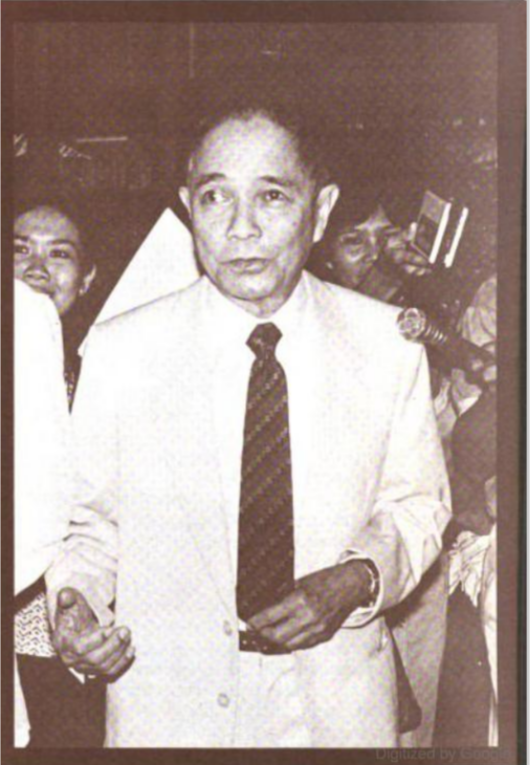
Manglapus carried the reform politics of the Magsaysay generation into a third-party presidential campaign, an exile opposition movement and the diplomacy of restored democracy.
Timeline
Key moments
Born in Manila
Born on 20 October into a family active in public life.
Imprisoned and joined the resistance
Japanese military police detained him for propaganda activity; after escaping Muntinlupa, he joined the Hunters guerrillas.
Entered foreign-affairs leadership
Served first as undersecretary and then briefly as secretary of foreign affairs in the Magsaysay–Garcia transition.
Won a Senate seat
Began a six-year term and later chaired the Blue Ribbon and Revision of Laws committees.
Ran for president
Led the Party for Philippine Progress ticket against Ferdinand Marcos and incumbent Diosdado Macapagal.
Returned to government
Won election to the restored Senate and was appointed foreign secretary by Corazon Aquino.
War and the Magsaysay reform generation
Raul Sevilla Manglapus studied law at the University of Santo Tomas and became known as an orator and writer. During Japanese occupation he was imprisoned at Fort Santiago and Muntinlupa for propaganda activity, escaped in August 1944 and joined the Hunters guerrillas.
After passing the bar, he worked in law, journalism and civic organisations. Ramon Magsaysay appointed him undersecretary of foreign affairs in 1954, and Carlos P. Garcia made him foreign secretary in 1957. Those posts placed Manglapus inside a generation that presented accessibility, clean government and national development as an alternative political style.
A third choice in the 1965 election
Manglapus served in the Senate from 1961 to 1967 and chaired committees responsible for investigations and legal revision. In 1965 he ran for president under the Party for Philippine Progress with Manuel Manahan as his vice-presidential candidate.
The campaign offered voters an alternative to incumbent Liberal president Diosdado Macapagal and Nacionalista challenger Ferdinand Marcos. Manglapus received fewer than 400,000 votes, but the ticket remains important evidence that the election was a three-way contest over reform, corruption and the direction of the postwar republic.
Exile, opposition and democratic return
After Marcos imposed martial law, Manglapus became part of the overseas democratic opposition. From exile he helped organise against authoritarian rule and argued for constitutional government rather than accepting the closure of electoral politics at home.
He returned after the 1986 People Power Revolution, won a Senate seat in 1987 and soon became Corazon Aquino’s foreign secretary. His final period in office linked a restored legislature to diplomacy during the withdrawal of U.S. bases and the reconstruction of democratic institutions.
Quick answers
Frequently asked questions about Raul S. Manglapus
- Who was Raul S. Manglapus?
- Raul S. Manglapus was a senator, foreign secretary and democratic opposition leader. Manglapus carried the reform politics of the Magsaysay generation into a third-party presidential campaign, an exile opposition movement and the diplomacy of restored democracy.
- What is Raul S. Manglapus best known for?
- Raul S. Manglapus is best known for running a reform campaign in the 1965 presidential election and later leading Philippine foreign affairs after democratic restoration.
- When and where was Raul S. Manglapus born?
- Raul S. Manglapus was born on 20 October 1918 in Manila, Philippines.
- When did Raul S. Manglapus die?
- Raul S. Manglapus died on 25 July 1999.
Sources and further reading
How this biography was checked
Core dates and offices are checked against the sources below. This profile was last reviewed on 9 September 2026.