The short answer
UPKO began as PDS during Sabah’s disputed 1994 realignment, adopted a historic acronym in 1999 and spent most of its first 24 years inside BN. It later joined the Warisan-led government and PH, left PH before winning three seats in 2025, and entered GRS in 2026 under Ewon Benedick.
Election record
PDS–UPKO results in Sabah state elections
The party reached its modern high of six seats in 2008, fell to one in 2020 and recovered to three after contesting independently in 2025.
| Election | Seats won | Coalition or alignment | Political outcome |
|---|---|---|---|
| 1999 | 2 of 48 | BN · contested as PDS | Dompok lost Moyog; party soon adopted UPKO name |
| 2004 | 5 of 60 | BN | Part of BN’s 59-seat landslide |
| 2008 | 6 of 60 | BN | Won all six allocated constituencies |
| 2013 | 4 of 60 | BN | Lost two seats as BN’s regional partners declined |
| 2018 | 5 of 60 | Elected under BN | Party leadership left BN after the poll |
| 2020 | 1 of 73 | Warisan Plus | Ewon retained Kadamaian; bloc lost government |
| 2025 | 3 of 73 | Independent party campaign | Won 64,471 votes and backed Hajiji after the poll |
Chronology
A timeline of the turning points
The Seri Gaya resolution precedes PDS
Bernard Dompok and other former PBS leaders organised Parti Demokratik Sabah after the election and assembly realignment that ended PBS rule.
Bernard Dompok becomes chief minister
The PDS president took the non-Muslim-bumiputera phase of BN’s rotating chief-minister arrangement.
PDS adopts and relaunches the UPKO name
Party leaders approved the change after a poor state election, deliberately reconnecting with an earlier Kadazandusun political tradition.
UPKO reaches six Sabah seats
The party won every state constituency allocated to it by BN, its strongest result in the 60-seat assembly era.
Wilfred Madius Tangau takes over
Dompok ended two decades as president and Tangau began leading the party through a major coalition transition.
UPKO leaves BN and supports the new government
The party leadership backed a Warisan–PH administration, and Tangau became a Sabah deputy chief minister.
UPKO adopts a more inclusive identity
The English and Malay names were reframed around a progressive Kinabalu organisation, while the familiar acronym was retained.
Ewon Benedick becomes the sole winner
UPKO contested twelve constituencies but retained only Kadamaian as the Warisan Plus government lost office.
UPKO joins Pakatan Harapan
PH’s presidential council accepted the Sabah party as its fourth component ahead of GE15.
Ewon Benedick becomes president
The Penampang MP and federal minister succeeded Tangau, who became the party’s honorary president.
UPKO leaves PH and wins three seats
The party contested independently, won Kadamaian, Tamparuli and Moyog, then supported Hajiji Noor’s new government.
UPKO applies to and enters GRS
It applied on 29 May; GRS later confirmed it as a component, completing another turn toward a Sabah-based coalition.
What is UPKO?
UPKO is a Sabah-based political party led by Ewon Benedick. Its current English name is United Progressive Kinabalu Organisation, while its Malay name is Pertubuhan Kinabalu Progresif Bersatu.
The party began as Parti Demokratik Sabah, or PDS, in 1994. It adopted the UPKO acronym in 1999, broadened its formal identity in 2019 and moved through BN, a Warisan-led government, PH and finally GRS as Sabah’s coalition system changed.
UPKO’s official objectives combine Sabah and MA63 rights with parliamentary democracy, religious freedom, inclusive development, environmental protection and greater participation by women and young people.
How did PDS emerge from the 1994 Sabah crisis?
PBS won a narrow majority in the February 1994 state election, but defections soon transferred assembly control to BN. Bernard Dompok, formerly a PBS deputy president, and allied representatives organised PDS during that realignment.
UPKO’s own history identifies a 14 March Seri Gaya resolution as an important step in the new organisation. Pairin Kitingan resigned as chief minister on 17 March after the PBS majority collapsed.
The origin remains politically contested because party switching, rather than a second election, changed the government. For institutional history, the key distinction is that the present UPKO organisation traces its continuous line through PDS from 1994.
Why did PDS take the UPKO name in 1999?
PDS won only two seats in the March 1999 state election, and Dompok lost Moyog after serving roughly ten months as chief minister. The setback prompted debate over how the party could reunite Kadazandusun-Murut and other Indigenous communities.
Its supreme council approved replacing the PDS name on 28 July. Delegates later endorsed the change, and UPKO was relaunched in Ranau on 30 October 1999.
The acronym recalled an earlier organisation associated with Donald Stephens in the 1960s. That historical inheritance matters to party identity, but the present organisation’s direct legal and electoral line begins with PDS rather than an uninterrupted entity dating to the formation of Malaysia.
What was UPKO’s role inside Barisan Nasional?
PDS and then UPKO spent most of 1994–2018 inside BN. That position gave its leaders state and federal cabinet access while providing BN with a party rooted in Kadazandusun-Murut constituencies.
Dompok served in the federal cabinet from 1999 to 2013, and Tangau became federal science minister in 2015. At state level, UPKO won five seats in 2004, six in 2008, four in 2013 and five in 2018.
The arrangement offered influence but also exposed the party to competition from PBS and opposition organisations appealing to similar communities. UMNO remained the dominant Sabah BN component during most of this period.
Why did UPKO leave BN in 2018?
The 2018 state result left BN and the Warisan–PH side tied at 29 seats, with STAR holding two. Acting UPKO president Wilfred Madius Tangau announced that the party’s supreme council had decided to leave BN and support a Warisan-led coalition government.
The decision was not initially accepted by every UPKO winner. Two members elected under the party later supplied support to Shafie Apdal’s bloc, while other former BN representatives also changed sides.
Tangau entered the new cabinet as a deputy chief minister. The move ended UPKO’s long BN membership and placed it inside a state administration alongside Warisan, DAP and PKR until the 2020 election.
Why was UPKO rebranded in 2019?
Delegates approved a new inclusive identity in November 2019. The current name shifted emphasis from a list of particular communities to a progressive organisation associated with Kinabalu while retaining the UPKO abbreviation.
Tangau said the party wanted to move from a race-centred public image toward universal and inclusive politics. That change opened membership more explicitly beyond its traditional Kadazandusun-Murut base.
The rebrand did not remove Indigenous or Sabah-rights priorities. Instead, the party’s stated programme places those commitments inside a wider platform covering democratic government, fair development, education, labour rights and environmental protection.
What happened to UPKO in the 2020 election?
UPKO contested twelve seats as part of the broader Warisan Plus alignment but won only Kadamaian. Ewon Benedick’s victory left him as the party’s sole elected state representative.
The result reduced UPKO from five seats won under the BN label in 2018 to one. GRS partners performed strongly in several predominantly Kadazan-Dusun-Murut constituencies, while Warisan Plus as a whole finished five seats short of a majority.
Ewon’s survival changed the party’s internal balance. His constituency base and organisational career gave him the platform from which he later won Penampang, entered the federal cabinet and succeeded Tangau as president.
When was UPKO part of Pakatan Harapan?
PH’s presidential council accepted UPKO as a component on 26 August 2021. It joined PKR, DAP and Amanah after several years of electoral cooperation but remained the coalition’s only Sabah-rooted member party.
At GE15 in 2022, Tangau retained Tuaran and Ewon won Penampang under the PH banner. Ewon became minister of entrepreneur development and cooperatives, then took over the UPKO presidency in January 2023.
Membership lasted just over four years. UPKO withdrew on 10 November 2025, shortly before the Sabah election, citing the desire to unite local parties and disagreements connected to Sabah’s constitutional claims and representation.
How did UPKO perform in the 2025 Sabah election?
UPKO contested outside PH and won three of the 73 seats: Ewon retained Kadamaian, Tangau won Tamparuli and Donald Peter Mojuntin won Moyog. Its candidates received 64,471 votes, or about 5.7 percent of valid votes statewide.
The result placed the party behind GRS, Warisan, BN and the independent group by seats, but its three members mattered because no label reached the 37-seat majority threshold.
UPKO supported Hajiji after the result, and Ewon became Deputy Chief Minister III. The cabinet initially included GRS, UPKO, BN and PH representatives even though UPKO had not yet joined GRS formally.
Why did UPKO join GRS in 2026?
UPKO’s supreme council unanimously approved an application to join GRS on 25 May, and Ewon submitted it four days later. He presented the move as cooperation among Sabah-based parties and a platform for pursuing MA63 and constitutional rights.
The Sabah chief minister’s office says the GRS Supreme Council approved admission on 8 June. The membership was publicly confirmed later in June, making UPKO the coalition’s sixth component.
The move aligned the party’s formal coalition position with its post-election role in Hajiji’s government. It also completed a rapid sequence from PH component and federal ministry in 2025 to Sabah-based governing coalition in 2026.
Who leads UPKO now?
Ewon Benedick was returned as president for the 2026–2029 term, with Donald Peter Mojuntin as deputy president. Bernama reported that both positions and five vice-presidencies were uncontested at the August 2026 party election.
Wilfred Madius Tangau remains honorary president after leading the party from 2014 to 2023. Bernard Dompok, the founding PDS president, led the organisation for its first two decades.
The leadership sequence therefore marks three strategic eras: Dompok’s BN institution-building, Tangau’s exit from BN and inclusive rebrand, and Ewon’s movement from PH into GRS.
How is UPKO different from PBS, Warisan and GRS?
UPKO and PBS both have deep Kadazandusun political roots, but PBS began as the governing challenger in 1985 while PDS emerged from the 1994 split that ended PBS rule. Their later participation in BN and GRS does not erase that different origin.
Warisan was launched much later as an explicitly multiracial regional party with a strong east-coast base. UPKO also adopted a multiracial identity, but its organisation and strongest constituencies grew from west-coast and interior Indigenous representation.
GRS is a coalition rather than a single party. UPKO became one of its components in 2026, so references to the two as interchangeable would confuse a member organisation with the wider governing alliance.
Continue the chronology
Related history guides
STAR Sabah: History and Elections
Compare UPKO with another party competing for Indigenous and regionalist support.
Read the timelineFebruary–March 1994The 1994 Sabah Political Crisis
Start with the election, defections and government transfer from which PDS emerged.
Read the timeline12–13 March 1999The 1999 Sabah State Election
See the PDS setback and Dompok defeat that preceded the UPKO name change.
Read the timeline9–12 May 2018The 2018 Sabah State Election
Read how UPKO’s departure from BN affected the tied assembly and state government.
Read the timeline26–29 September 2020The 2020 Sabah State Election
Follow the election in which Ewon became UPKO’s sole winning candidate.
Read the timeline29 November–1 December 2025The 2025 Sabah State Election
Compare UPKO’s three seats with the fragmented result and post-election government.
Read the timeline2020–presentGabungan Rakyat Sabah: History and Parties
Understand the coalition UPKO entered in 2026 and its current six-party structure.
Read the timeline2015–presentPakatan Harapan: History and Parties
Place UPKO’s 2021–2025 membership inside the national coalition’s history.
Read the timeline1985–presentParti Bersatu Sabah: History and Leaders
Compare the party from which PDS founders split with UPKO’s later development.
Read the timeline2016–presentParti Warisan Sabah: History and Elections
Trace the regional party whose government UPKO supported from 2018 to 2020.
Read the timelineBiography context
Explore Sabah, Malaysia through connected lives
Ewon Benedick
Follow UPKO’s president from Kadamaian and Penampang to state and federal cabinets.
Explore the biographiesFounding presidentBernard Dompok
Read about the PDS founder, Sabah chief minister and two-decade party president.
Explore the biographiesSecond presidentWilfred Madius Tangau
See how Tangau led UPKO out of BN, through rebranding and into PH.
Explore the biographiesRegional archiveInfluential People from Sabah
Explore the leaders, elections and regional parties surrounding UPKO’s history.
Explore the biographiesConnected biographies
Nine biographies across PDS, UPKO, BN, PH and GRS
1983—
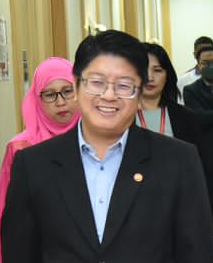
Ewon Benedick
Deputy Chief Minister of Sabah and President of UPKOThe Penampang MP and Kadamaian assemblyman who leads UPKO and became Sabah’s Deputy Chief Minister III after the 2025 state election.Read biography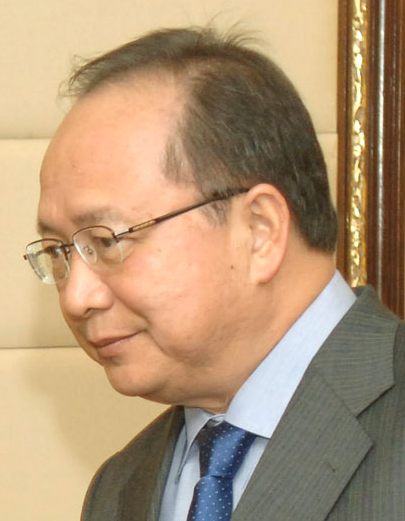
1949—
Bernard Dompok
Former Chief Minister of Sabah and Malaysian ambassadorThe land valuer turned political leader who served ten months as Sabah chief minister, led UPKO for two decades and later represented Malaysia at the Vatican.Read biography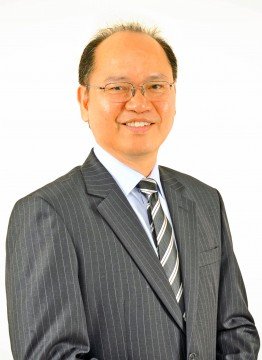
1958—
Wilfred Madius Tangau
Member of Parliament for Tuaran and Assemblyman for TamparuliThe forester and development researcher who became a long-serving Tuaran MP, led UPKO and won a second elected mandate in Tamparuli in 2025.Read biography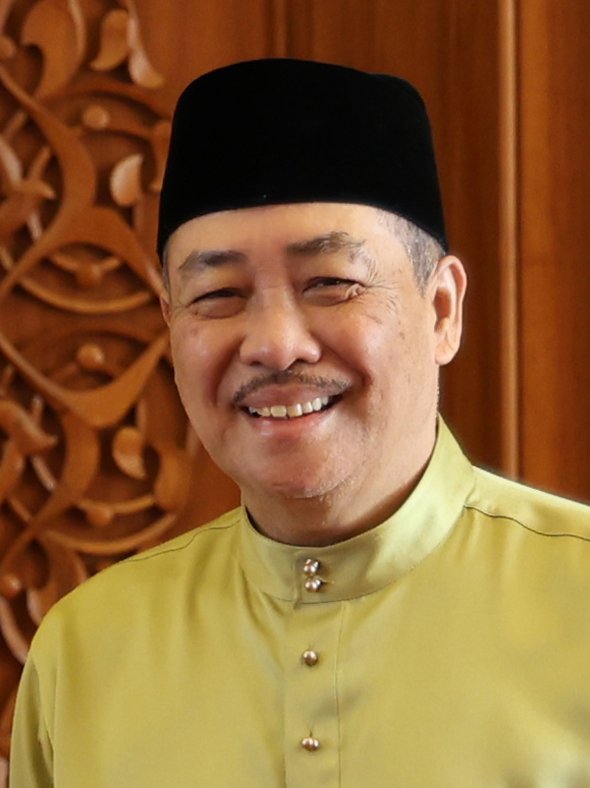
1955—
Hajiji Noor
Chief Minister of Sabah and Chairman of Gabungan Rakyat SabahThe long-serving Sulaman assemblyman who became Sabah chief minister in 2020 and won a second term at the 2025 state election.Read biography
1956—
Shafie Apdal
President of Parti Warisan and Member of Parliament for SempornaThe Semporna parliamentarian, former federal minister and Warisan founder who led Sabah from 2018 until the 2020 state election.Read biography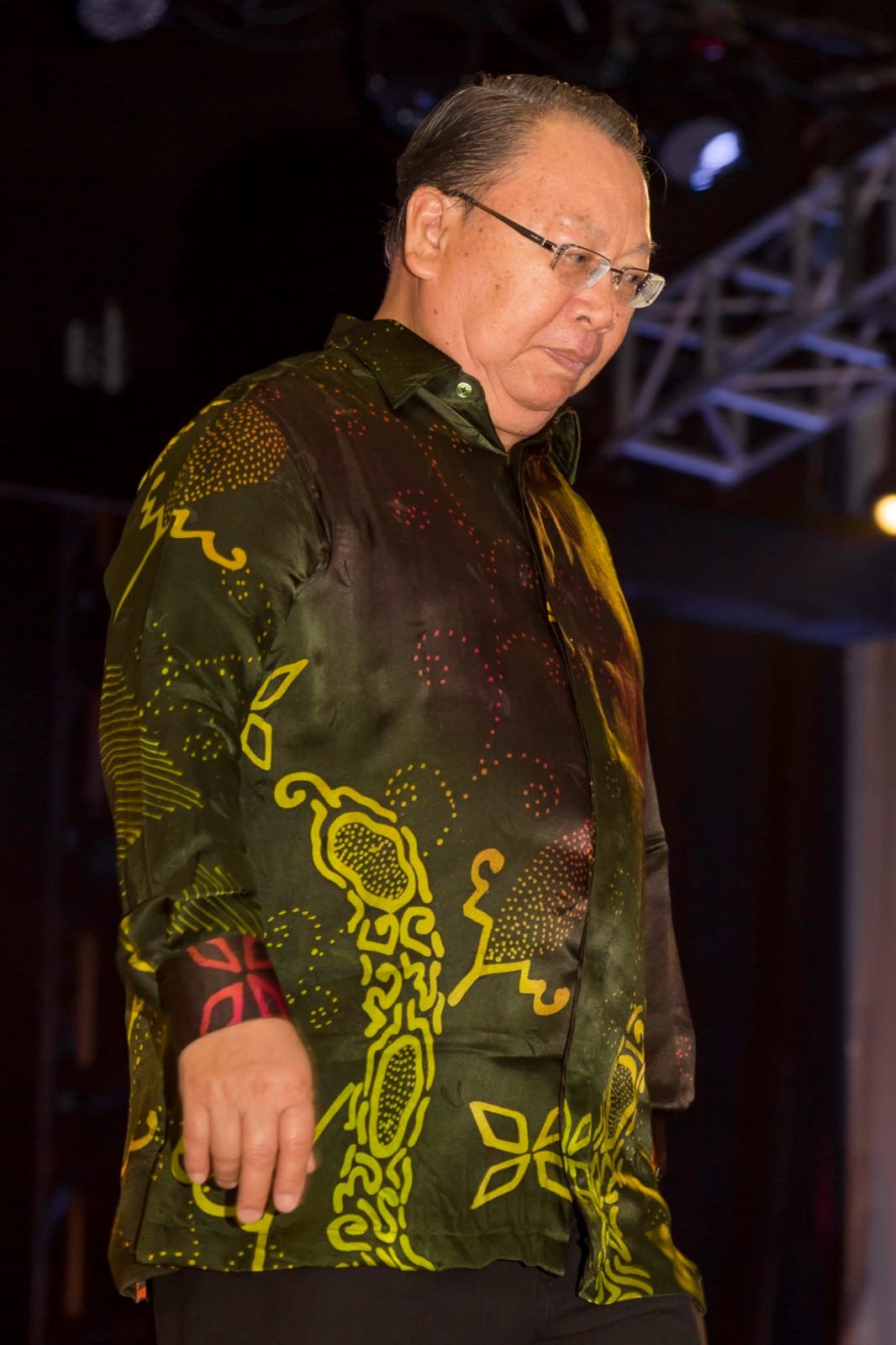
1940—
Joseph Pairin Kitingan
Founder of PBS and former Chief Minister of SabahThe lawyer and Kadazandusun leader who founded PBS, led four consecutive state-election victories and served as Sabah’s chief minister for nearly nine years.Read biography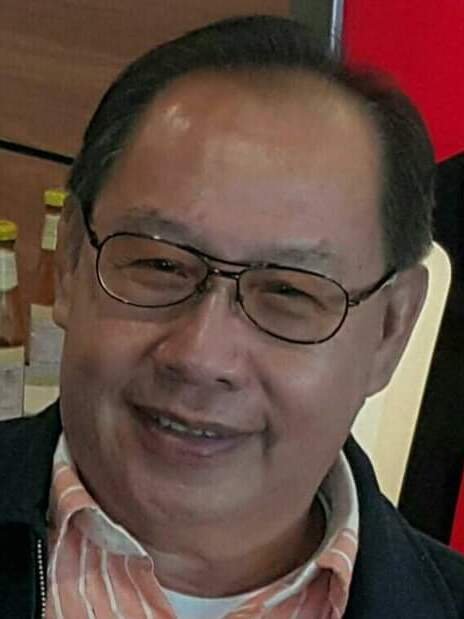
1948—
Jeffrey Kitingan
President of STAR and Member of Parliament for KeningauThe Keningau MP, Tambunan assemblyman and STAR founder whose long career centres on Sabah autonomy, MA63 and Indigenous political representation.Read biography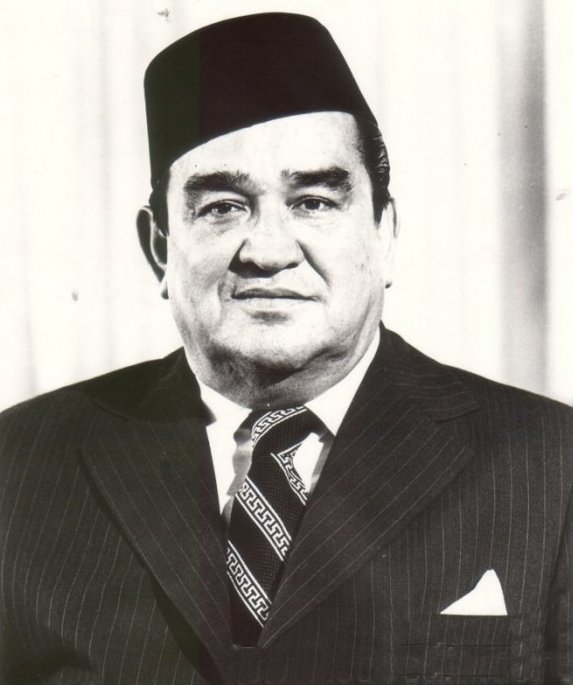
1920—1976
Fuad Stephens
First Chief Minister of SabahThe journalist and political leader who helped negotiate Sabah’s place in Malaysia, became the state’s first chief minister and later returned to the office in 1976.Read biography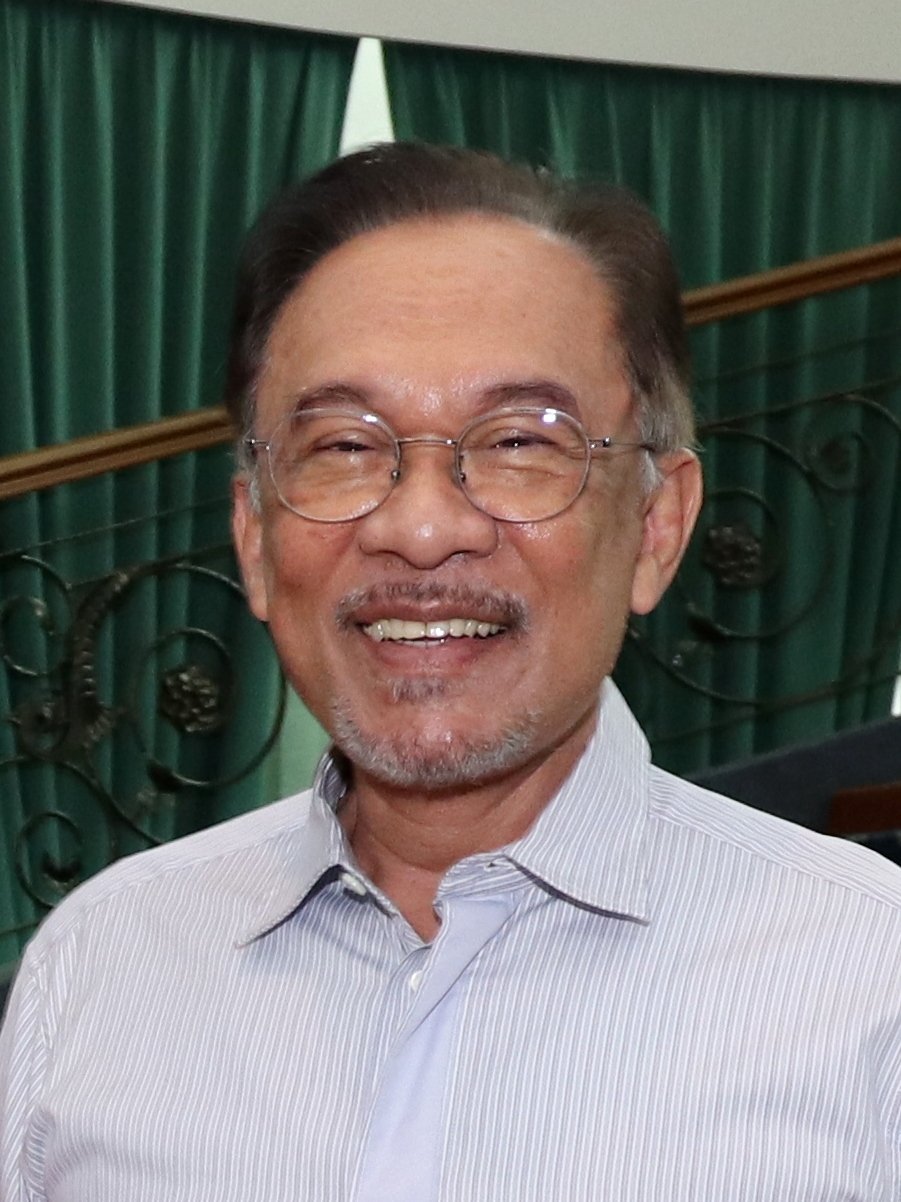
1947—
Anwar Ibrahim
Tenth Prime Minister of MalaysiaA student activist turned government minister, opposition leader and Malaysia’s tenth prime minister after one of the longest routes to national office.Read biographyQuick answers
Common questions
- When was UPKO founded?
- The present organisation began as Parti Demokratik Sabah in 1994 and adopted the UPKO name in 1999.
- Is today’s UPKO the same party as the 1960s UPKO?
- It deliberately inherited the earlier acronym and political tradition, but the current organisation’s continuous line begins with PDS in 1994.
- Who is the president of UPKO?
- Ewon Benedick is president and was returned for the 2026–2029 term. Donald Peter Mojuntin is deputy president.
- Who founded PDS–UPKO?
- Former PBS leader and Sabah chief minister Bernard Dompok was the founding president of PDS in 1994.
- When did UPKO leave Barisan Nasional?
- Its leadership announced the decision on 10 May 2018 and supported the Warisan-led state government formed after the election.
- When did UPKO join and leave Pakatan Harapan?
- PH accepted UPKO on 26 August 2021. UPKO withdrew on 10 November 2025 before the Sabah state election.
- How many seats did UPKO win in 2025?
- UPKO won three Sabah assembly seats: Kadamaian, Tamparuli and Moyog.
- When did UPKO join GRS?
- UPKO applied in May 2026. The Sabah chief minister’s office dates the GRS approval to 8 June, with entry publicly confirmed later that month.
- What does UPKO stand for?
- Its current English name is United Progressive Kinabalu Organisation; the Malay name is Pertubuhan Kinabalu Progresif Bersatu.
Primary and institutional sources
How this history was checked
UPKO’s own history and objectives establish the PDS–UPKO lineage and stated programme; Election Commission and election guides establish results; official coalition statements and the Sabah chief minister’s office date each alignment; Bernama establishes the current leadership term. This article was reviewed on 4 October 2026.
- United Progressive Kinabalu OrganisationThe Seri Gaya Resolution and PDS Origins, 14 March 1994
- United Progressive Kinabalu OrganisationThe 1999 PDS Congress and Adoption of the UPKO Name
- United Progressive Kinabalu OrganisationParty Aims and Objectives
- United Progressive Kinabalu OrganisationUPKO Supreme Council, 2026–2029
- Astro AwaniUPKO Announces Exit From BN and Support for a Warisan Government
- Daily Express / BernamaUPKO Rebrands as an Inclusive Party in 2019
- Pakatan Harapan / Parti Keadilan RakyatUPKO Accepted as a Pakatan Harapan Component, 26 August 2021
- BernamaUPKO Withdraws From Pakatan Harapan, 10 November 2025
- Election Commission of MalaysiaFull Results of the 17th Sabah State Election, 2025
- Office of the Chief Minister of SabahUPKO Entry Into GRS and Current State Role
- BernamaEwon and Donald Continue to Lead UPKO, 2026–2029
- Wikimedia CommonsEwon Benedick Portrait and CC BY 4.0 Record