
The short answer
PBS won Sabah’s February 1994 election by 25 seats to BN’s 23 and Joseph Pairin Kitingan formed a government. Defections erased that narrow majority within weeks, leading Pairin to resign on 17 March and Sakaran Dandai to form a BN administration.
Mandate versus government
How the majority changed after the 1994 election
The ballot result and the later government were not the same event. Separating them prevents the common error of reporting BN as the election winner.
| Stage | PBS position | BN position | Consequence |
|---|---|---|---|
| Election result | 25 seats; majority of one | 23 seats; opposition | PBS won and could form government |
| 21 February 1994 | Pairin sworn in and cabinet formed | BN remained outside government | The election result became an operating PBS administration |
| 17 March 1994 | Defections removed majority; Pairin resigned | Crossovers supplied governing support | Sakaran Dandai formed a BN government |
Chronology
A timeline of the turning points
PBS leaves Barisan Nasional
The Sabah governing party joined the opposition Gagasan Rakyat shortly before the federal election.
UMNO establishes a direct Sabah presence
The peninsula-based party expanded into the state after USNO’s political decline and entered the contest for government.
The Sabah assembly is dissolved
A snap election was called before the scheduled end of the state government’s term.
Sabah votes in 48 constituencies
PBS faced a BN slate led by UMNO and supported by several newer Sabah parties.
PBS wins 25 seats to BN’s 23
The ruling party retained the narrowest possible majority, down substantially from its 1990 result.
Pairin is sworn in after a delay
He formed a new PBS administration after waiting roughly 36 hours for an audience with the head of state.
PBS assembly members begin defecting
Departures erased the party’s two-seat advantage and supplied BN with the support needed to claim a majority.
Pairin resigns as chief minister
Sabah’s official chronology ends his term and begins Sakaran Dandai’s on the same date.
New parties absorb former PBS representatives
PDS and PBRS joined other BN-aligned organisations, reorganising the state party system around the new government.
Sabah’s earlier anti-hopping provision is repealed
Legal barriers had already been weakened by the 1992 Nordin Salleh ruling; the state provision was subsequently removed.
Federal and Sabah anti-hopping rules are adopted
Later constitutional reforms sought to limit individual party switching, though they do not erase the 1994 precedent.
What was the 1994 Sabah political crisis?
The crisis began with a close but clear election result. Parti Bersatu Sabah won 25 of the 48 elected seats on 18 and 19 February 1994, while the Barisan Nasional parties won the other 23.
Joseph Pairin Kitingan was sworn in again and formed a PBS cabinet. Within weeks, however, elected members left PBS and declared support for BN, depriving his government of assembly confidence.
Pairin resigned on 17 March and UMNO leader Sakaran Dandai became chief minister. The government therefore changed through post-election defections even though PBS had finished first and initially held a majority.
What led to the 1994 election?
PBS had governed Sabah since 1985 and won a large majority in 1990. Shortly before the 1990 federal election, it left BN and aligned with the opposition, creating a much more confrontational federal–state relationship.
UMNO then expanded directly into Sabah. Former USNO networks and newer local parties helped BN construct a multi-party challenge to PBS across Muslim-bumiputera, Chinese and mixed constituencies.
Pairin sought an early state mandate in 1994. Academic studies describe development, federal access, identity and the consequences of the PBS–BN split as major themes in a campaign that became sharply polarised.
What were the election results?
PBS won 25 seats, while BN won 23. Within the BN total, UMNO won 18, SAPP three, LDP one and AKAR one according to academic accounts of the result.
The numbers gave PBS a two-seat lead over BN but only a majority of one over all other assembly members. Compared with its 36 seats in 1990, PBS had lost the cushion that previously protected its government.
The seat pattern also exposed political division by region and community. James Chin’s contemporary study analysed the result as an end to the earlier unity around PBS among key Kadazandusun political elites.
Why was Pairin’s swearing-in delayed?
Although PBS held 25 seats, Pairin did not immediately receive an audience with the Yang di-Pertua Negeri. Accounts describe him waiting about 36 hours before he could be sworn in.
The delay revived memories of the disputed appointment following the 1985 election. It also gave the new government an appearance of vulnerability before its cabinet had fully settled into office.
Pairin was nevertheless appointed and served as chief minister for the initial post-election period. The crucial change came later through the movement of assembly members, not through a revised count of the ballots.
How did defections change the government?
With a 25–23 division, two PBS departures could remove the government’s majority and further departures could give BN a positive majority. That arithmetic made every assembly member strategically important.
Senior figures and other elected members left PBS in stages. Some formed or joined parties that supported BN, allowing a new majority to be assembled without returning to voters.
By 17 March, Pairin no longer commanded sufficient support and resigned. Sakaran Dandai began a BN administration, while continuing departures reduced PBS far below the 25 seats it had won less than a month earlier.
Did PBS win the election or did BN win?
PBS won the election in the ordinary results-based sense: it secured the most seats and crossed the 25-seat majority threshold. Pairin was therefore sworn in to lead the government.
BN later formed the government because the composition and declared confidence of the assembly changed after polling. Saying only that BN “won” 1994 collapses two separate events into one and obscures the defections.
The accurate sequence is: PBS won 25–23, formed a government, lost its majority through crossovers and resigned; BN then formed a new government under Sakaran.
Why was no anti-hopping law able to stop it?
Sabah had experimented with a state anti-defection provision after the instability of the mid-1980s. The constitutional position changed after the Supreme Court’s 1992 Nordin Salleh decision treated a similar Kelantan rule as inconsistent with freedom of association.
Legal scholarship explains that the ruling discouraged or neutralised state attempts to make party switching automatically vacate an elected seat. Sabah’s earlier provision was therefore not an effective barrier to the 1994 crossovers and was repealed in 1995.
Malaysia amended the Federal Constitution in 2022, and Sabah passed its own state amendment in May 2023. The modern rules include defined triggers and exceptions, so they should not be projected backward onto the 1994 assembly.
What was the long-term impact?
The crisis ended PBS’s nine-year control of the state government and established UMNO as the leading force inside Sabah BN. PBS remained in opposition until its later return to BN in 2002.
The defections also fragmented PBS’s leadership base and produced organisations that became part of the new governing coalition. That pattern helped make party realignment a recurring feature of Sabah politics.
Nationally, 1994 remains an important case in debates over mandate, assembly confidence and party hopping. Later crises in Sabah and other states repeatedly revived comparison with Pairin’s short-lived post-election government.
Continue the chronology
Related history guides
Sabah’s Chief Minister Rotation System
Continue from the defections into the coalition formula that produced six chief ministers in nine years.
Read the timeline1985–presentParti Bersatu Sabah: History and Leaders
Trace the party before and after the collapse of its state government.
Read the timelineJuly–October 1990The 1990 Sabah Election and PBS–BN Split
Read the landslide and coalition rupture that set up the 1994 contest.
Read the timeline20–21 April 1985The 1985 Sabah State Election
Read the first PBS victory and the earlier dispute over government formation.
Read the timeline1955–presentHow Malaysia’s Elections Work
Understand seat majorities, confidence and the appointment of a government.
Read the timeline2020–presentGabungan Rakyat Sabah: History and Parties
Compare the 1994 crisis with Sabah’s more recent coalition changes.
Read the timelineBiography context
Explore Sabah, Malaysia through connected lives
Influential People from Sabah
Browse the lives behind Sabah’s elections, parties and institutions.
Explore the biographiesOfficeholder referenceChief Ministers of Sabah
Compare the Pairin–Sakaran transition with every administration since 1963.
Explore the biographiesCountry archiveExplore Malaysia
Place the crisis inside Malaysia’s wider political and constitutional history.
Explore the biographiesConnected biographies
Nine figures connected to PBS, defections and Sabah’s party system

1940—
Joseph Pairin Kitingan
Founder of PBS and former Chief Minister of SabahThe lawyer and Kadazandusun leader who founded PBS, led four consecutive state-election victories and served as Sabah’s chief minister for nearly nine years.Read biography
1953—
Maximus Ongkili
Chairman of the Energy Commission of Sabah and former PBS PresidentThe researcher-turned-politician who represented Sabah in Parliament for twenty-seven years, led several federal ministries and became PBS’s second president.Read biography
1948—
Jeffrey Kitingan
President of STAR and Member of Parliament for KeningauThe Keningau MP, Tambunan assemblyman and STAR founder whose long career centres on Sabah autonomy, MA63 and Indigenous political representation.Read biography
1918—1995
Datu Mustapha Datu Harun
First Yang di-Pertua Negeri of SabahA Sabah formation-era leader who became the state’s first head of state, later served as chief minister and expanded education through the Sabah Foundation.Read biography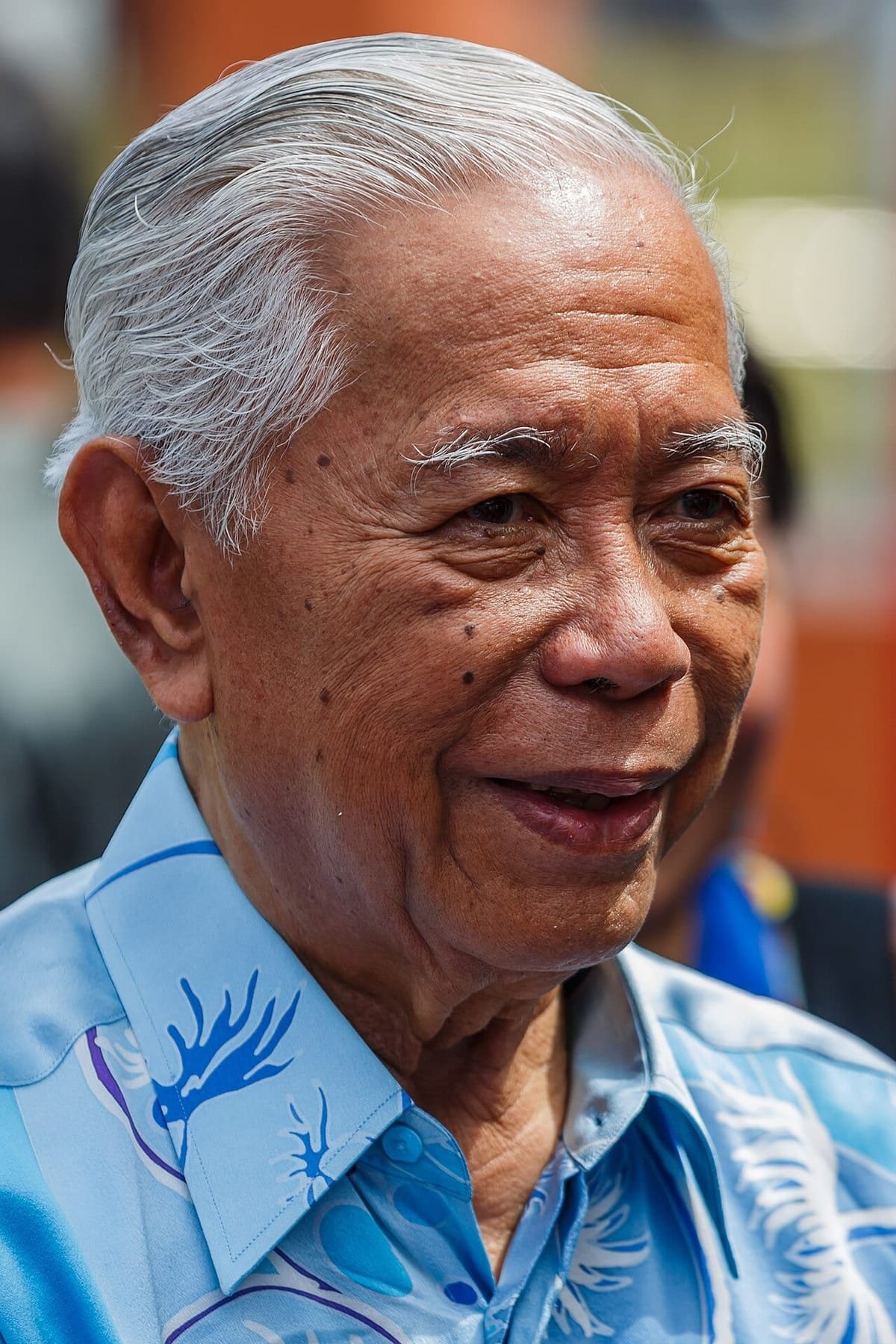
1930—2021
Sakaran Dandai
Former Chief Minister and Yang di-Pertua Negeri of SabahThe Semporna political organiser who rose through USNO and UMNO to become chief minister in 1994 and governor from 1995 to 2002.Read biography
1957—
Salleh Said Keruak
Former Chief Minister of Sabah and federal ministerThe Kota Belud politician who led Sabah from 1994 to 1996, later chaired the state assembly and joined the federal cabinet.Read biography1958—
Yong Teck Lee
President of the Sabah Progressive PartyThe lawyer and former PBS deputy leader who founded SAPP in 1994, led Sabah from 1996 to 1998 and later returned as a nominated assemblyman.Read biography
1949—
Bernard Dompok
Former Chief Minister of Sabah and Malaysian ambassadorThe land valuer turned political leader who served ten months as Sabah chief minister, led UPKO for two decades and later represented Malaysia at the Vatican.Read biography1949—
Osu Sukam
Former Chief Minister of SabahThe Papar politician and long-serving member of Parliament who led Sabah for two years after the 1999 state election.Read biographyQuick answers
Common questions
- Who won the 1994 Sabah state election?
- PBS won 25 of 48 seats, while the BN parties won 23. PBS therefore formed the first post-election government.
- When was the 1994 Sabah election held?
- Polling took place on 18 and 19 February 1994.
- Why did PBS lose power after winning?
- Elected PBS members defected after the election, removing the party’s assembly majority and giving BN enough support to form a government.
- How long did the new PBS government last?
- Pairin was sworn in on 21 February and resigned on 17 March 1994, less than a month later.
- Who replaced Joseph Pairin Kitingan?
- Sakaran Dandai became chief minister on 17 March 1994 according to Sabah’s official record.
- How many seats did UMNO win in 1994?
- UMNO won 18 of BN’s 23 seats; SAPP won three, while LDP and AKAR won one each.
- Was there an anti-hopping law in 1994?
- Sabah had adopted an earlier provision, but the 1992 Nordin Salleh judgment had undermined state anti-hopping rules, and it did not prevent the crossovers.
- When did Sabah pass its current anti-hopping reform?
- The Sabah State Legislative Assembly passed a constitutional amendment on 25 May 2023 following the federal reform adopted in 2022.
Primary and institutional sources
How this history was checked
Contemporary and later academic studies establish the result and defections; Sabah’s official officeholder list fixes the change-of-government date; legal scholarship and government reporting explain the anti-hopping context. This article was reviewed on 4 October 2026.
- Kajian Malaysia, Universiti Sains MalaysiaPilihanraya Negeri Sabah 1994
- University of California Press / Asian SurveyThe Sabah State Election of 1994: End of Kadazan Unity
- Universiti Malaysia SabahThe 1999 Sabah State Election: A Case Study
- IRASEC / Universiti Malaysia SarawakPolitical Development in Sabah, 1985–2010
- ISEAS – Yusof Ishak InstitutePolitical Turmoil in Sabah: Attack of the Kataks
- Government of SabahFormer Chief Ministers of Sabah
- Monash UniversityThe Federal Court Overrules Nordin Salleh: Party-Hopping Law
- Jebat, Universiti Kebangsaan MalaysiaSabah’s Anti-Party-Hopping Enactment and Its 1995 Repeal
- BERNAMASabah to Table Anti-Party Hopping Bill
- Wikimedia CommonsJoseph Pairin Kitingan Portrait and Licence Record